The Real Cost of Poor Property Management in 2026
Do You Know What Passive Property Management Is Quietly Costing You?
Most landlords assess property management performance using a very simple benchmark: is the rent being paid on time?
If the answer is yes, the arrangement feels functional. The property appears stable. There are no obvious disputes, no dramatic failures, and no urgent red flags. From a surface perspective, everything seems to be working.
However, in 2026, this benchmark is no longer sufficient.
In a lending environment defined by tighter serviceability assessments, elevated buffers, and increased scrutiny around income consistency, property management has become a structural component of portfolio performance. It influences rental growth, vacancy exposure, maintenance forecasting, compliance positioning, valuation stability, and ultimately, borrowing capacity.
This is why structured oversight matters. Effective Property Management is not simply about rent collection, but about protecting income stability, reducing volatility, and aligning day-to-day decisions with long-term portfolio outcomes.
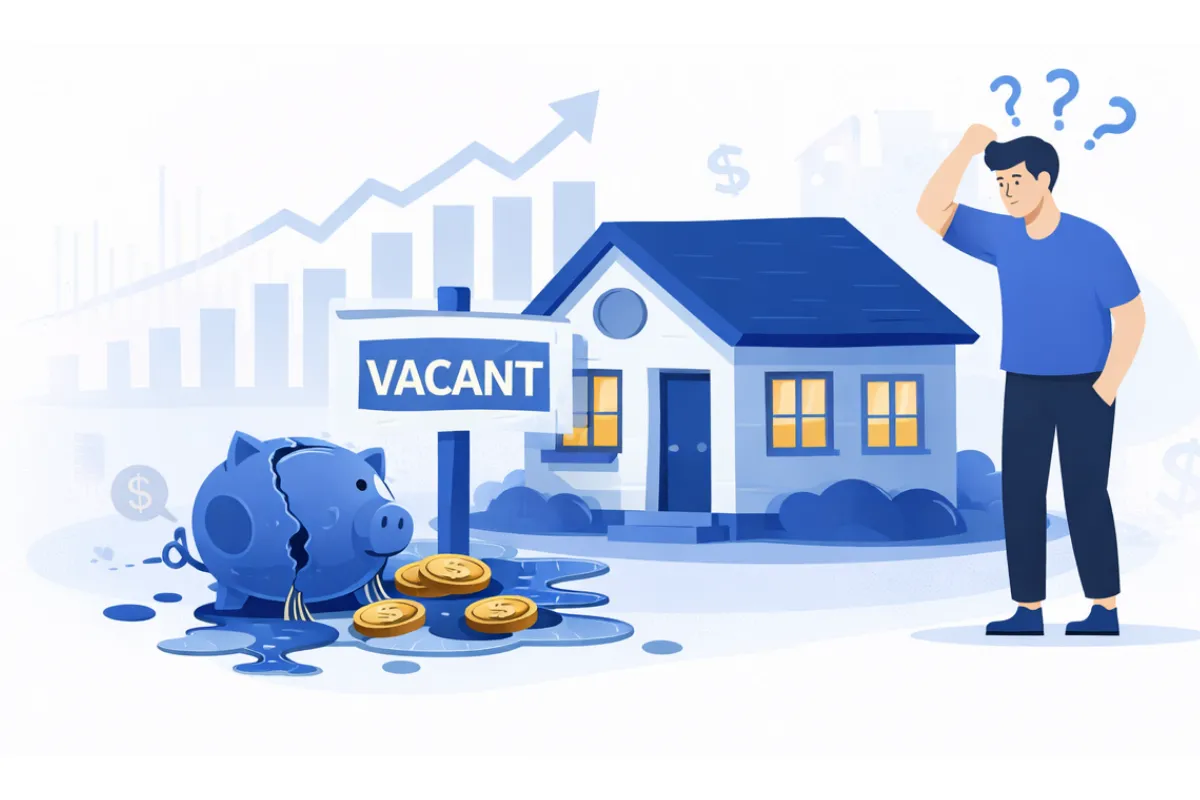
Poor property management rarely causes visible collapse. It does not usually produce crisis-level outcomes that force immediate correction. Instead, it produces gradual underperformance. Income drifts below potential. Vacancies extend slightly longer than necessary. Repairs cost marginally more than they should. Compliance risk accumulates quietly in the background.
Over time, that slow drift becomes materially expensive.
Why “Nothing Is Going Wrong” Can Be a Misleading Signal
One of the most common misconceptions among landlords is that absence of problems equals strong performance. If the tenant is paying rent, inspections show no major damage, and maintenance requests are handled when reported, the arrangement feels stable.
The difficulty with this assumption is that stability without optimisation is not the same as performance. A property can appear stable while still underperforming relative to its potential.
Without proactive rent reviews aligned to current market conditions, rental income can gradually fall behind comparable properties. Without structured preventative maintenance planning, minor issues may evolve into larger, costlier repairs. Without active communication and oversight, tenancy quality can subtly decline over successive lease cycles. Without systematic compliance tracking, regulatory risk may remain unaddressed until triggered by dispute or insurance claim.
None of these shortcomings feel urgent in isolation. That is precisely why they persist.
In a market where lending margins are narrower than in previous cycles, passive management is no longer neutral. It is quietly expensive.
The Compounding Effect of Small Financial Leaks
The cost of poor property management rarely appears as a single large expense. Instead, it manifests as a series of small, incremental inefficiencies that compound over time.
Rental income may sit slightly below market. Vacancy may extend by an additional week or two each year. Maintenance may be reactive rather than preventative, increasing long-term cost. Compliance documentation may be technically adequate but not strategically structured. Tenant turnover may occur more frequently than necessary.
Each of these factors alone may feel manageable. Together, they alter the performance trajectory of the asset.
If we consider the broader framework discussed in Yield vs Growth in Property Investing, rental stability and income optimisation directly influence both cash flow comfort and equity creation. When management suppresses rental performance, it weakens not only short-term income but also long-term portfolio scalability.
Small leaks compound just as effectively as small gains.
At FPW, borrowing capacity mapping, loan structuring, and portfolio progression planning are informed by real rental performance data, not assumptions. When income is optimised and stabilised at the management level, it strengthens lending strategy, refinancing leverage, and future acquisition timing. Our finance team integrates ongoing reviews, lender selection strategy, cash flow modelling, and structure optimisation to ensure that property performance translates into usable capacity, not hidden constraint. You can explore how our Finance Strategy approach aligns lending with portfolio growth here.
Rental Income Underperformance: The Most Common Oversight
One of the most widespread and underestimated issues in property management is rental income lag. A gap of $30 to $50 per week between current rent and achievable market rent does not typically trigger urgency. Yet over a twelve-month period, this difference equates to several thousand dollars in unrealised income. Over multiple years, that shortfall compounds significantly.
Rental markets across Australia in 2026 remain active in many metropolitan corridors, but rental growth does not occur automatically. Effective rent optimisation requires consistent market analysis, appropriate timing, clear communication with tenants, and confidence in negotiation.
This is particularly relevant for investors exploring alternative strategies such as rentvesting, where income optimisation and borrowing capacity must work in tandem. As discussed in Rentvesting in Australia: How to Build Wealth Without Compromising Lifestyle, the ability to build wealth while maintaining lifestyle flexibility depends heavily on how effectively each asset performs. When rental income lags behind market conditions, it does not simply reduce short-term cash flow; it can also constrain serviceability, delay additional acquisitions, and limit strategic options. Ensuring rent reflects true market position therefore becomes a foundational element of any scalable property strategy, especially for investors balancing lifestyle choices with long-term portfolio growth.
Managers who avoid incremental increases in order to preserve convenience or minimise tenant friction may unintentionally suppress landlord returns. While short-term harmony may feel preferable, long-term under-pricing directly affects borrowing capacity modelling and reduces equity accumulation.
Rental performance is not simply about achieving the highest possible figure. It is about aligning income with market reality in a structured, sustainable manner.
Vacancy Is Influenced by Execution, Not Just Demand
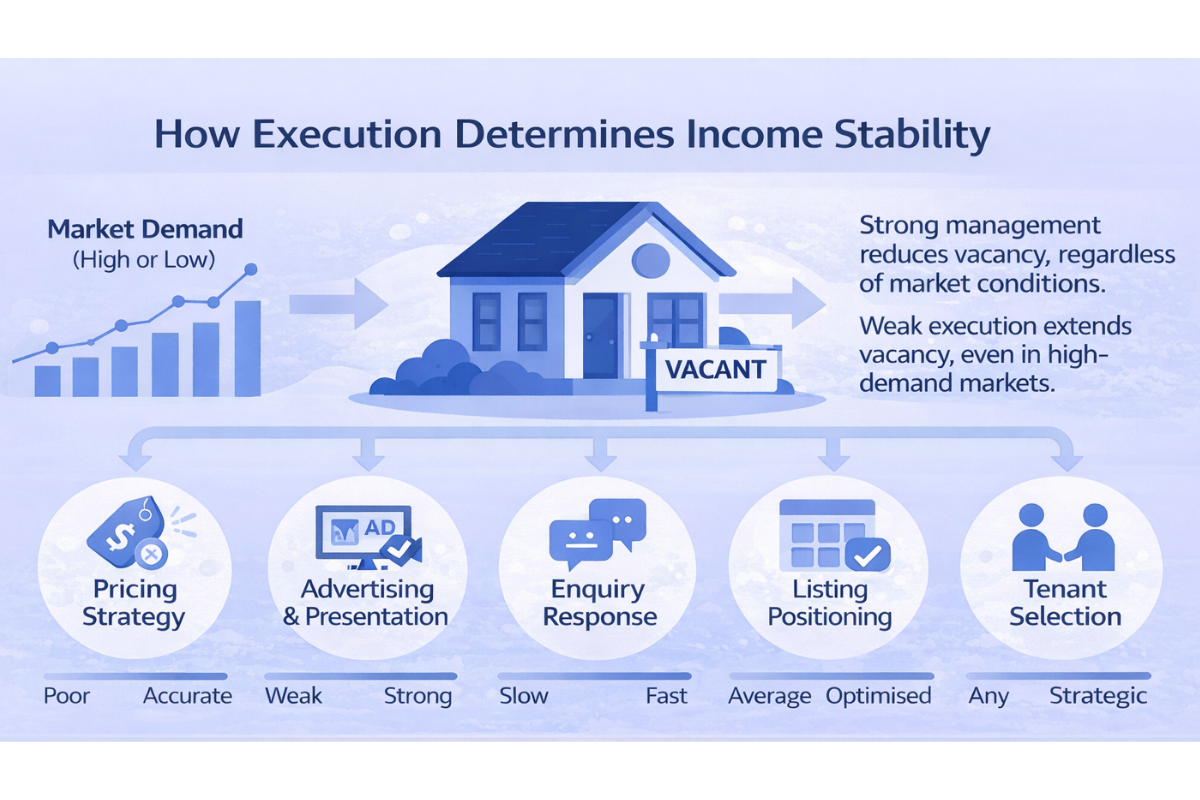
Vacancy is often viewed as a function of broader market conditions. While supply and demand certainly play a significant role, management execution materially influences vacancy duration.
Accurate pricing strategy, high-quality advertising, professional presentation, responsiveness to enquiries, and strategic tenant selection all determine how efficiently a property leases. Even in low-vacancy environments, poor listing positioning or slow communication can extend vacancy unnecessarily.
Each additional vacant week represents income that cannot be recovered. Over time, reducing vacancy exposure by even a single week per annum improves effective yield and strengthens income consistency.
As explored in Tenant Selection and Investment Outcomes, vacancy reduction should not be pursued through speed alone. Filling a property quickly with a poorly aligned tenant may introduce greater long-term instability. Precision, not urgency, protects performance.
Preventative Maintenance as a Financial Strategy
Maintenance philosophy significantly influences long-term asset performance. Preventative maintenance aims to identify and address minor issues before they escalate. Reactive maintenance defers intervention until a failure occurs.
The financial implications of this difference are substantial. A small plumbing issue addressed early may cost a few hundred dollars. Left unattended, it may lead to structural water damage, flooring replacement, or mould remediation. Deferred servicing of air conditioning systems can result in emergency callouts during peak demand periods, increasing both cost and tenant dissatisfaction.
Beyond direct expense, reactive maintenance affects tenancy stability. Tenants who perceive neglect are more likely to exit at lease renewal, increasing turnover and vacancy exposure.
This is where the right Property Management becomes an advantage. Preventative planning is not simply about keeping the property in good condition; it is about protecting rental continuity, reducing avoidable disruption, and maintaining tenant confidence. Structured maintenance oversight ensures issues are identified early, budgets are forecasted realistically, and the asset continues operating without unnecessary volatility. In a portfolio context, that consistency is not operational detail, it is strategic protection.
In 2026, where lenders assess rental consistency and portfolio stability, predictable maintenance planning contributes directly to serviceability strength. Stability is not accidental; it is structured.
Compliance as Structural Risk Management
Regulatory oversight in Australian property management has become increasingly complex. Safety checks, tenancy notice requirements, documentation standards, and dispute procedures require ongoing attention. Compliance failures rarely surface during smooth tenancy periods. They emerge during disputes, tribunal proceedings, or insurance claims.
When documentation is incomplete or procedural steps are mishandled, landlords may face fines, delayed claim processing, or adverse tribunal outcomes. These events can materially affect both cash flow and lender perception of portfolio risk.
Compliance is therefore not an administrative afterthought. It is a foundational risk management system. In 2026, compliance requires consistency, systems, and active oversight rather than reactive correction.
The Relationship Between Management Quality and Borrowing Capacity
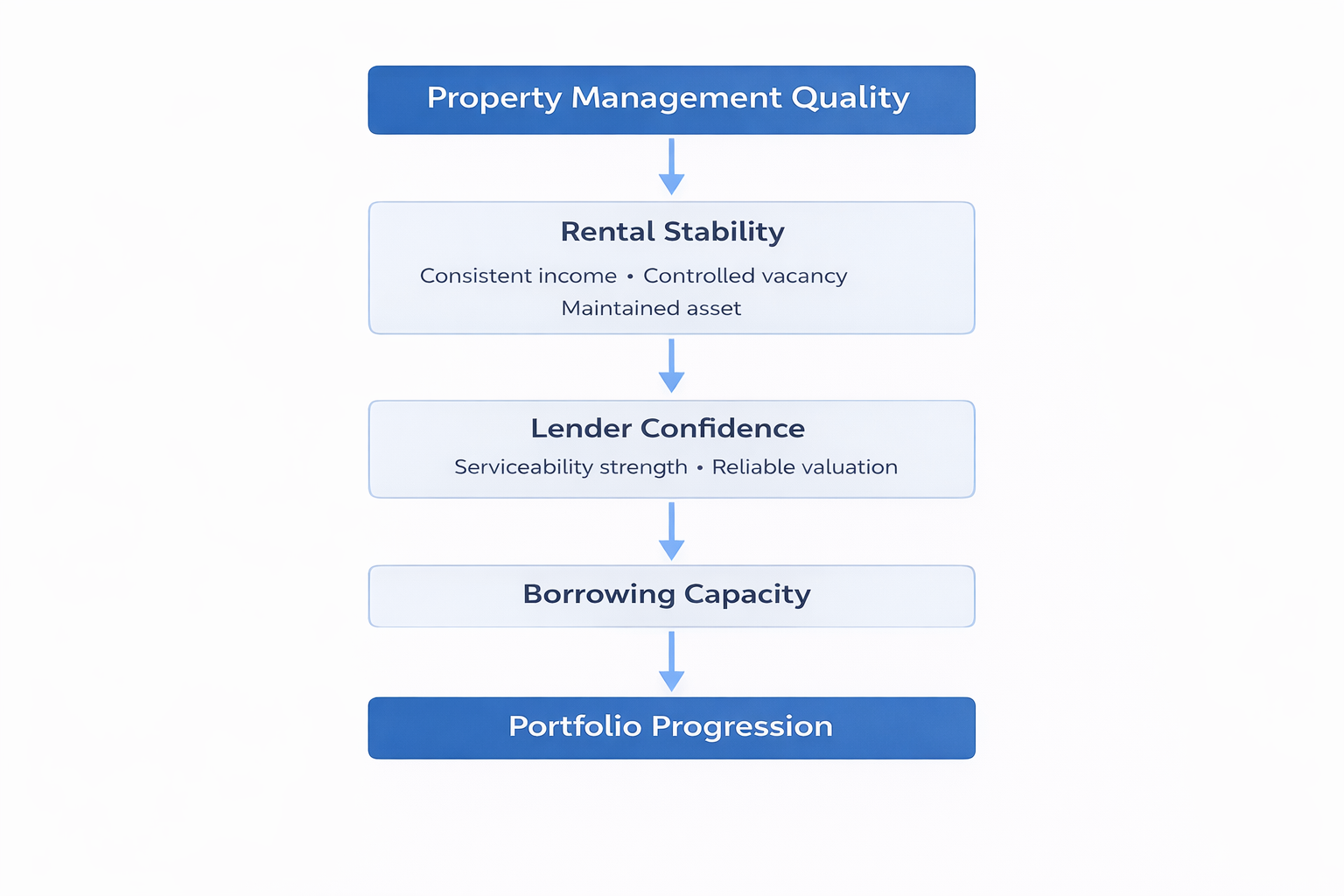
The connection between property management and borrowing capacity is frequently underestimated. Lenders assess rental income stability, vacancy history, lease strength, and overall asset condition when evaluating serviceability and equity release potential.
Inconsistent income patterns or repeated turnover may compress usable borrowing capacity. Deferred maintenance that affects valuation perception can influence equity calculations. Reduced rental growth lowers assessable income used in servicing models.
This is why finance strategy cannot be separated from property performance. At FPW, our finance team maps borrowing capacity, loan structure, and equity strategy using real rental data and asset performance, not theoretical projections. Explore how our Finance Strategy approach aligns lending structure with portfolio stability to ensure your properties support progression rather than restrict it.
Across a multi-property portfolio, these subtle compressions accumulate. What appears to be minor underperformance at an individual asset level can collectively slow acquisition timelines and limit scalability.
Property management, therefore, should be viewed as a component of landlord property strategy, not merely an operational necessity.
How FPW Treats Property Management as Portfolio Architecture
Property Management at FPW is approached as a performance system rather than a transactional service. The objective is not simply to collect rent or respond to maintenance requests. It is to optimise the asset’s contribution to the wider portfolio.
This includes structured market-aligned rent reviews, proactive vacancy minimisation strategies, preventative maintenance planning, rigorous compliance oversight, and transparent performance reporting. Management decisions are considered within the broader context of borrowing capacity, equity progression, and long-term portfolio sequencing.
Explore our website to understand how management integrates with acquisition, finance structure, and strategy design. The goal is to ensure that each property actively strengthens the portfolio rather than simply existing within it.
A Strategic Question for 2026
As we move through 2026, landlords would be well served to pause and assess whether their property is genuinely performing at its potential. If rent has not been reviewed against current market conditions, if maintenance decisions are largely reactive rather than planned, or if communication with your property manager occurs only when something goes wrong, there is a strong possibility the asset is underperforming.
Importantly, this underperformance is not always a reflection of suburb quality or broader market conditions. In many cases, it stems from a management framework that is passive rather than strategic. When oversight becomes routine instead of performance-driven, small inefficiencies begin to accumulate beneath the surface.
In a lending environment where serviceability is tightly assessed and income stability directly influences borrowing capacity, passivity has structural consequences. Poor property management rarely feels urgent. That is precisely what makes it dangerous. It suppresses rental growth incrementally, extends vacancy exposure by small but meaningful margins, increases long-term maintenance costs through delayed intervention, and introduces compliance risk without triggering immediate alarm.
By contrast, strategic management operates with intention. It protects income stability, preserves asset condition, and strengthens lender confidence by ensuring rental performance remains consistent and well-documented. Over time, this stability supports equity growth and portfolio scalability. The property transitions from being a passive holding to an actively managed component of a broader wealth strategy.
Effective property management does not simply prevent problems from occurring. It enhances performance in measurable ways. If there is uncertainty about whether your property is optimised for sustainable growth or quietly drifting below its potential, a structured review can provide clarity and direction.