

Adelaide Property Investment Guide 2026: Best Suburbs, Yields and Risks
Adelaide property investment has gone from a quiet sideline to one of the most discussed strategies in the country, and the numbers explain why. Dwelling values across the city rose 12.3% in the year to mid-2026, while the rental vacancy rate sat near 0.8%, the tightest of any capital. Houses recently passed a median of $1 million for the first time, yet Adelaide still costs far less to enter than Sydney or Melbourne.
That mix of growth, scarcity and relative affordability is the draw. It is also where the risk hides. Several years of double-digit gains have pushed prices into territory that tests borrowing power, and your borrowing capacity now decides more about your options than the headline median does. This guide covers where the market sits, which suburbs deserve a look, what yields to expect, and the risks to manage before you buy.
Is Adelaide Still a Good Property Investment in 2026?
Short answer: yes, but with sharper conditions than a year ago. Adelaide was the standout capital through 2025 and into 2026, recording annual dwelling growth of 12.3% while Sydney and Melbourne values slipped. The city has roughly doubled in value over the past decade and gained close to 80% in just five years.
Affordability is the engine. A buyer servicing Adelaide's median dwelling carries a smaller loan than someone chasing the equivalent in the eastern capitals, which leaves more room when rates move. That gap is closing as interstate money arrives, but it has not closed yet.
Forecasters expect the pace to ease rather than reverse. PropTrack tips 6% to 9% growth for 2026, KPMG models 8.2% for houses, and the major banks sit between 4% and 6%.
Adelaide Price Growth Forecasts for 2026
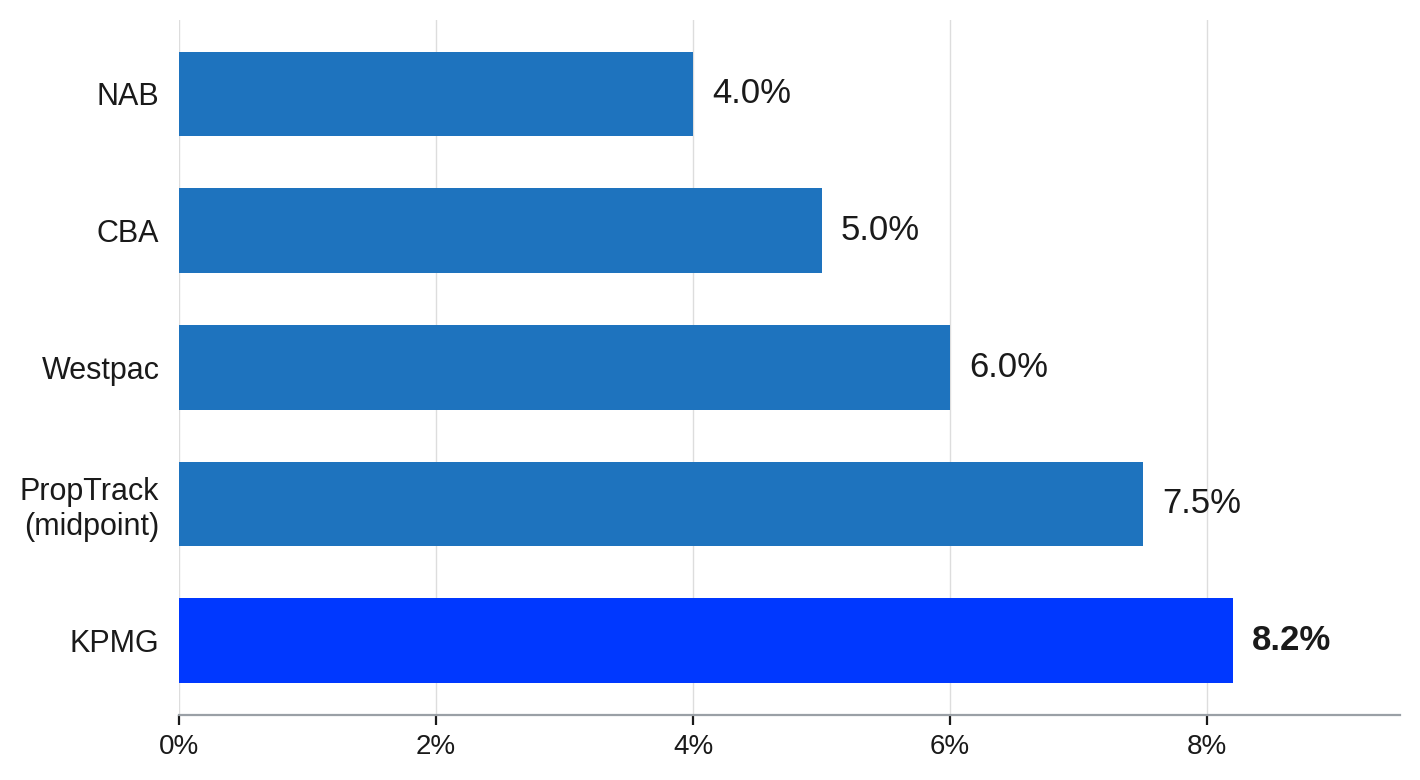
Source: PropTrack and KPMG, 2026
What Is Driving Adelaide's Property Market Growth?
Three forces are doing most of the work: population, supply and defence spending.
Greater Adelaide is home to about 1.5 million people and keeps absorbing the bulk of South Australia's interstate and overseas migration. Demand for housing is steady and broad, not concentrated in one pocket.
Supply cannot keep up. Listings have been running roughly a third below their five-year average, the largest deficit of any capital. Fewer homes for sale against consistent demand is the simplest explanation for why Adelaide prices held firm while other cities wobbled.
Then there is the defence pipeline. The AUKUS submarine program is building a construction yard at Osborne in the northern suburbs, a project valued in the tens of billions over coming decades and expected to create thousands of skilled jobs. The $15.4 billion North-South Corridor, the state's largest ever road project, runs through the same northern and western suburbs. For how these drivers fit the national picture, see our guide to property investment in Australia.
Adelaide Annual Dwelling Sales by Property Type
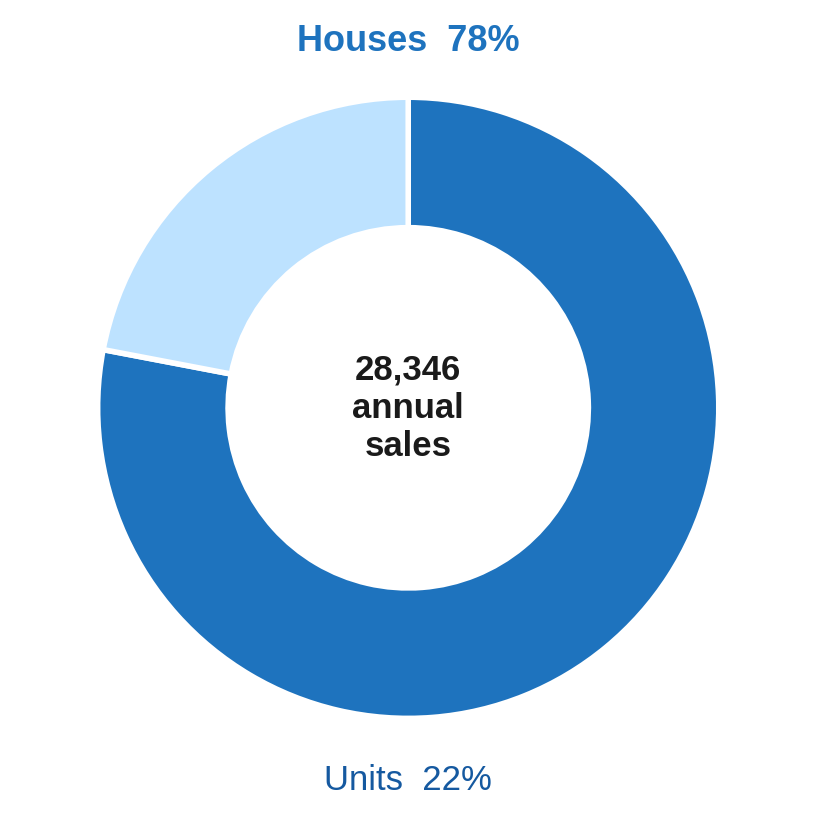
Source: Cotality, 2026
Best Adelaide Suburbs for Property Investment in 2026
The metro median hides more than it reveals. Growth in 2026 has been concentrated in middle and outer markets where buyers can still find value, not the premium inner east.
Growth-focused suburbs
Salisbury led the city with 16.7% annual growth, followed by Campbelltown at 15.1% and Tea Tree Gully at 14.5%. These are not boutique pockets. They are established, affordable suburbs with deep tenant demand.
Top Adelaide Growth Suburbs by Annual Value Change
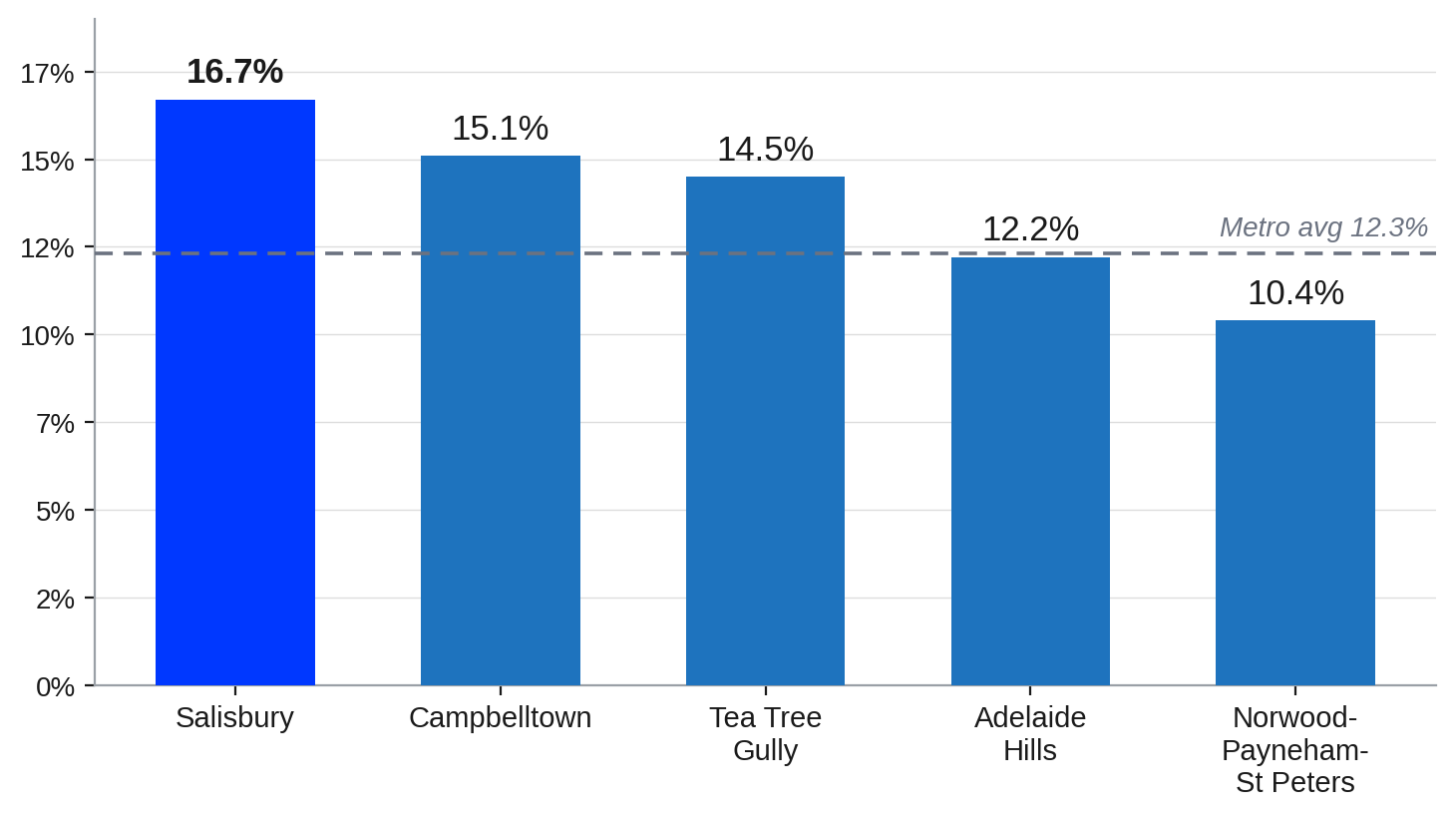
Source: APRA Serviceability Guidelines 2024 / FPW Group Analysis
Balanced and affordable entry suburbs
For investors weighing growth against cash flow, the northern corridor of Elizabeth, Davoren Park and Munno Para offers sub-$600,000 entry points with yields that can work from day one. Coastal suburbs such as Christies Beach and Moana trade some growth for lifestyle appeal and stronger tenant retention.
Choosing well is less about chasing last year's winner and more about how to choose investment-grade suburbs. Supply constraints, vacancy, owner-occupier appeal and infrastructure all matter more than a single headline growth figure.
FOR EXAMPLE
A $560,000 house in Elizabeth renting at $480 a week returns roughly 4.5% gross. With vacancy below 1%, that rent covers a meaningful share of holding costs in a higher-rate year, before any capital growth is counted.
Adelaide Rental Yields and the Suburbs That Deliver Them
Adelaide's gross rental yield averages about 3.5% across all dwellings, modest on the surface. That average is doing a lot of hiding. The metro figure is dragged down by expensive inner suburbs where prices have run ahead of rents.
Move to the northern corridor and selected unit markets, and the picture changes. Walkerville units, Salisbury units and Woodville Gardens houses have delivered gross yields between 5.8% and 6.4%, well above the metro average.
High-Yield Adelaide Suburbs vs the Metro Average
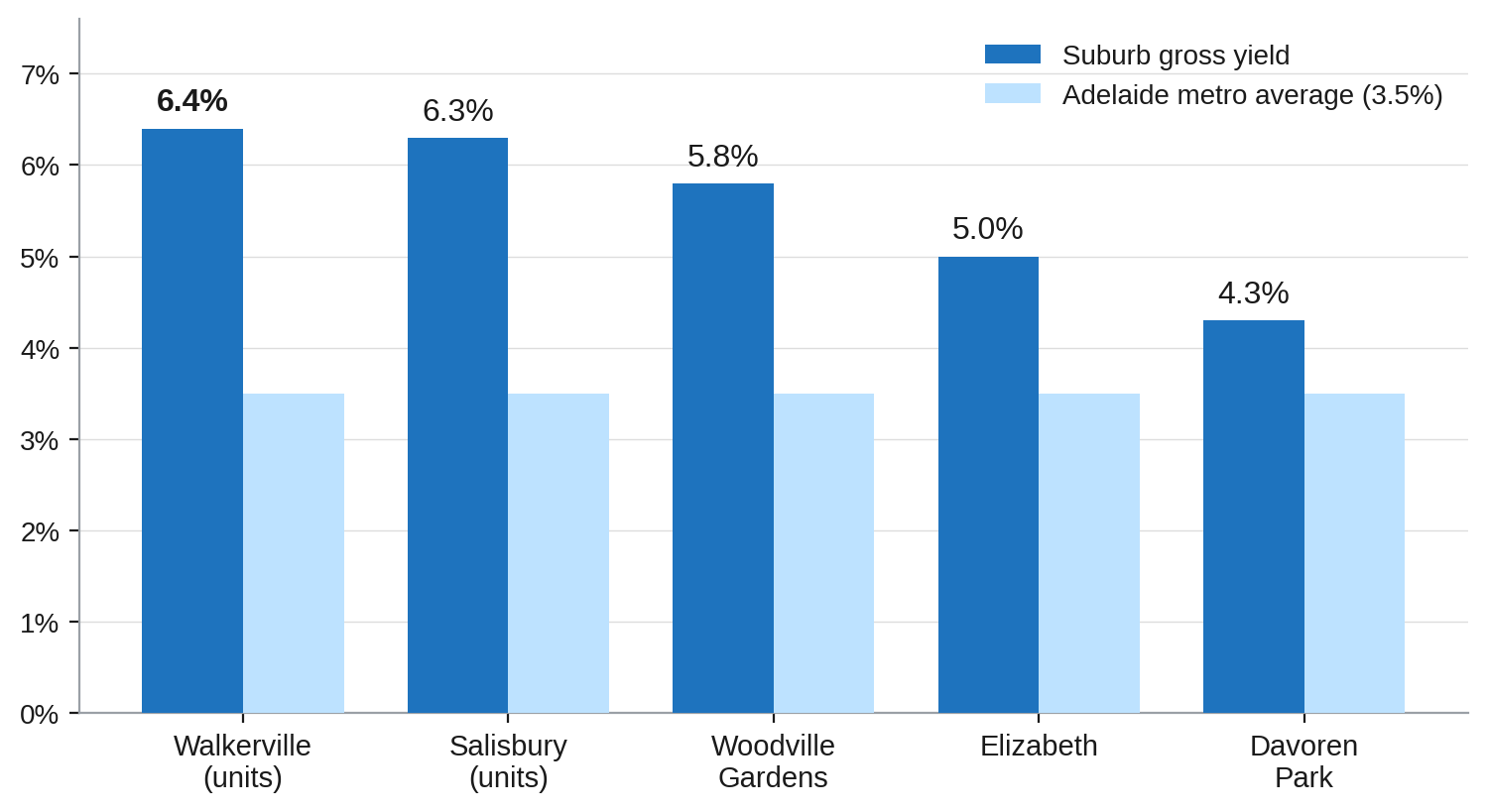
Source: Cotality, 2026
Yield traps are real. Some CBD and West End apartment buildings carry oversupply and high body corporate costs that erode the headline return. A strong advertised yield on an unrenovated property in a stigmatised pocket can mask weak resale and higher tenant turnover.
Where to Invest in Adelaide Based on Your Strategy
There is no single best suburb. There is a best suburb for your goal.
Capital growth investors
Focus on supply-constrained middle suburbs with owner-occupier appeal and infrastructure tailwinds, accepting lower starting yields in exchange for stronger long-term appreciation.
Cash-flow investors
Lean north, where entry prices are low and yields sit well above the metro average, keeping holding costs manageable while rates remain elevated.
Portfolio builders
Balance the two. Buying purely for yield can stall borrowing capacity later, while buying purely for growth can strain cash flow. Weighing yield against capital growth is the decision that shapes a portfolio more than any single purchase.
Adelaide Property Investment Risks Investors Should Understand
Most Adelaide coverage skips this part. It should not.
Affordability is the first ceiling. More than 200 suburbs now carry median house prices above $1 million, and several years of strong gains have pushed borrowing power to its limit for many buyers. The common view is that 2026 splits into two halves: solid growth early, then a slowdown as affordability bites later in the year.
Interest rates are the second. With the cash rate back near 4.35% and inflation still above target, holding costs are higher than many investors modelled in 2021. A property that looked comfortably positive then can sit closer to neutral now.
Oversupply is the third, though it is localised. Remote northern fringe estates with thin amenity, and pockets of the apartment market, carry higher vacancy and weaker growth than the headline figures suggest.
Policy is the fourth. From 1 July 2027, negative gearing on established properties bought after 12 May 2026 will be limited, and the capital gains tax discount will change, with new builds exempt. The detail matters for after-tax returns and is worth modelling before you buy.
Final Thoughts
Adelaide property investment in 2026 is a story of strength meeting limits. The fundamentals are genuinely supportive: tight supply, low vacancy, steady population growth and a defence-led jobs pipeline that few cities can match. At the same time, prices have climbed far enough that the easy part of the cycle is over.
The investors who do well from here will not be the ones who simply buy Adelaide. They will be the ones who buy the right suburb for their strategy, at a price that still makes sense at today's rates, with the coming tax changes already in their numbers. Adelaide remains one of the country's most dependable markets. It now asks for more precision in return.
Frequently Asked Questions
Recommended Reading
Two pages selected based on what readers of this article are most likely to need next.
Recommended Video
Most investors are still positioned in capital cities, but in 2026, that allocation gap is creating real opportunity cost. In a market where timing, positioning, and yield profiles compound into long-term outcomes, that disconnect matters more than most people realize.