

Investment Property Tips: 10 Lessons Most Buyers Learn Too Late
Most investment property tips arrive too late. The advice that matters is rarely the advice that sounds exciting. It is the quiet, unglamorous detail that separates a property that builds wealth from one that quietly drains it for a decade.
The buyers who do well are not the ones who found a secret suburb. They are the ones who understood how lenders assess what they can borrow before they fell for a listing, and who treated property as a financial decision rather than an emotional one. This guide covers ten lessons investors usually learn the hard way. Most cost money. A few cost years.
Why the Best Investment Property Tips Start Before You Buy
The most expensive property mistakes are made before anyone signs a contract. Buyers fixate on the property itself, when the decisions that shape the outcome happen earlier: the finance, the location filter, and the numbers behind the listing. Get the groundwork right and an average property still performs. Get it wrong and even a strong one struggles to recover.
Tip 1: Buy an Investment-Grade Location, Not a Suburb You Like
Location sets the ceiling on your returns. A property can be renovated, but it cannot be moved. Investment-grade suburbs share a pattern: steady population growth, employment and infrastructure investment, and limited new supply competing with your asset. Knowing how to choose investment-grade suburbs is the single highest-leverage skill an investor can build. The suburb you would happily live in is not always the one that performs.
Tip 2: Look Past a Cheap Price
Cheap is not the same as good value. A low price often reflects weak demand, oversupply, or a structural problem that follows you to resale. The cheapest property in a strong suburb usually beats the best property in a weak one. What matters is the relationship between price, demand, and growth, not the headline number.
Tip 3: Check Rental Demand Before You Buy
Rental demand is the difference between an income stream and an empty property. National vacancy sat near 1.2 percent in 2026, but city averages hide enormous variation between suburbs. Check vacancy at the suburb level, not the city level. Look at who actually rents in the area, and whether the dwelling suits them: a three-bedroom house in a suburb full of downsizers serves a different tenant than a family chasing school catchments.
Tip 4: Know Your Real Borrowing Capacity
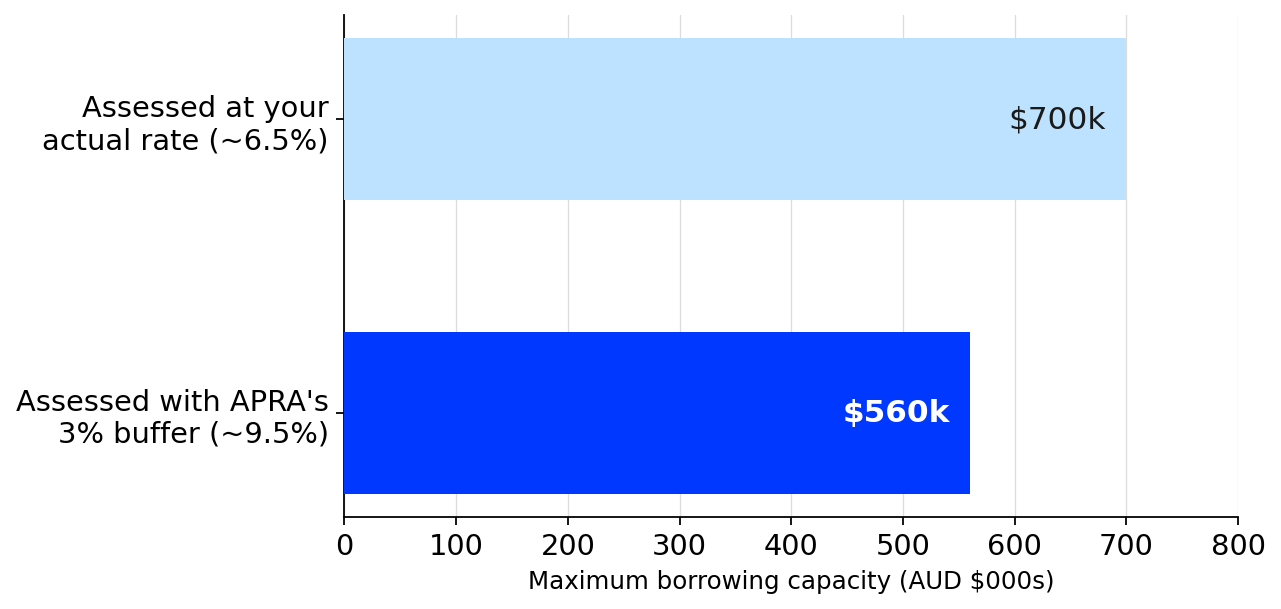
Your borrowing capacity is not what a repayment calculator suggests. Lenders assess your loan at roughly 3 percentage points above the rate you will pay, a buffer set by APRA. With variable rates near 6.5 percent in 2026, that means being tested around 9.5 percent. A debt-to-income cap now applies too, with most lenders reluctant to lend beyond about six times gross income. Speaking to a mortgage broker before you shortlist tells you your real ceiling, not your hoped-for one.
Borrowing Power Before and After APRA's 3% Buffer
Source: APRA, 2026
Tip 5: Calculate the True Cost of Owning an Investment Property
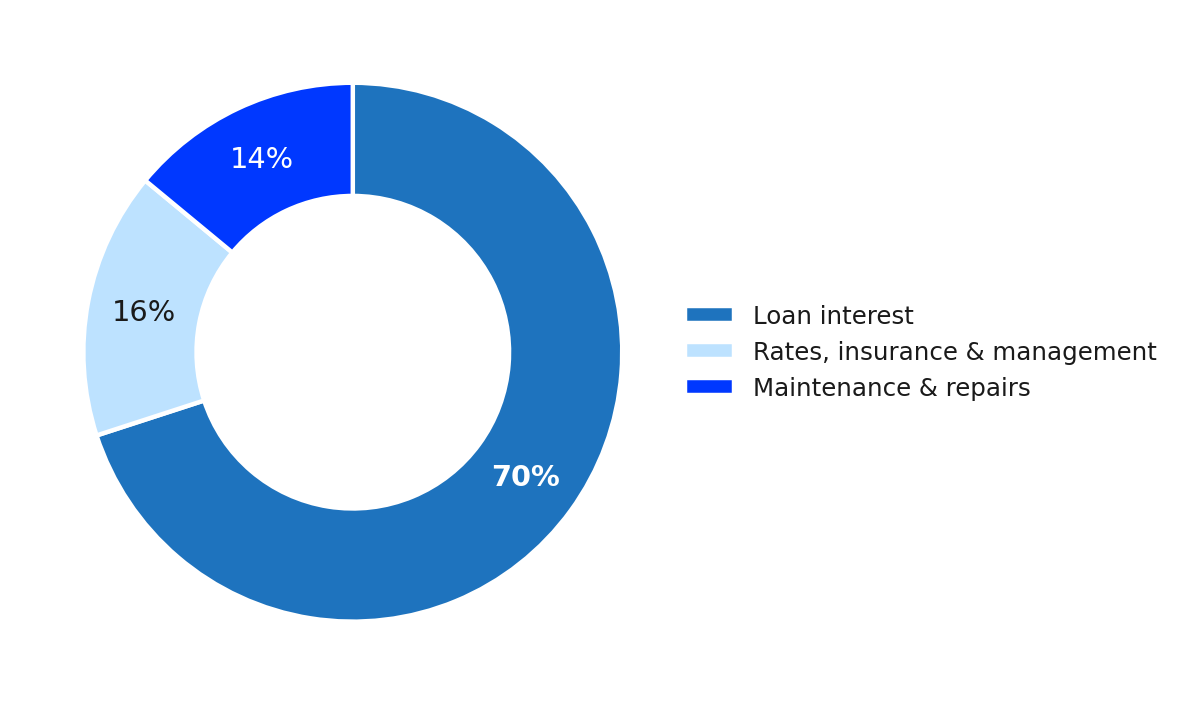
The purchase price is the start of the spending, not the end. Holding costs decide whether a property is sustainable: loan interest, council and water rates, landlord insurance, management at around 7 to 8 percent of rent, and maintenance near 1 percent of value a year. On a metro property yielding about 3.5 percent gross, these often exceed the rent before any tax effect.
Where the Money Goes on a Typical Investment Property
Source: ASIC MoneySmart, 2026
FOR EXAMPLE
A $650,000 property renting at $575 a week earns about $29,900 a year. After roughly $32,000 in loan interest, $2,400 in management, $3,000 in rates, and $6,500 in maintenance, it runs at a cash-flow loss before tax. That gap is the real cost of holding it.
Tip 6: Do Not Chase Rental Yield Alone
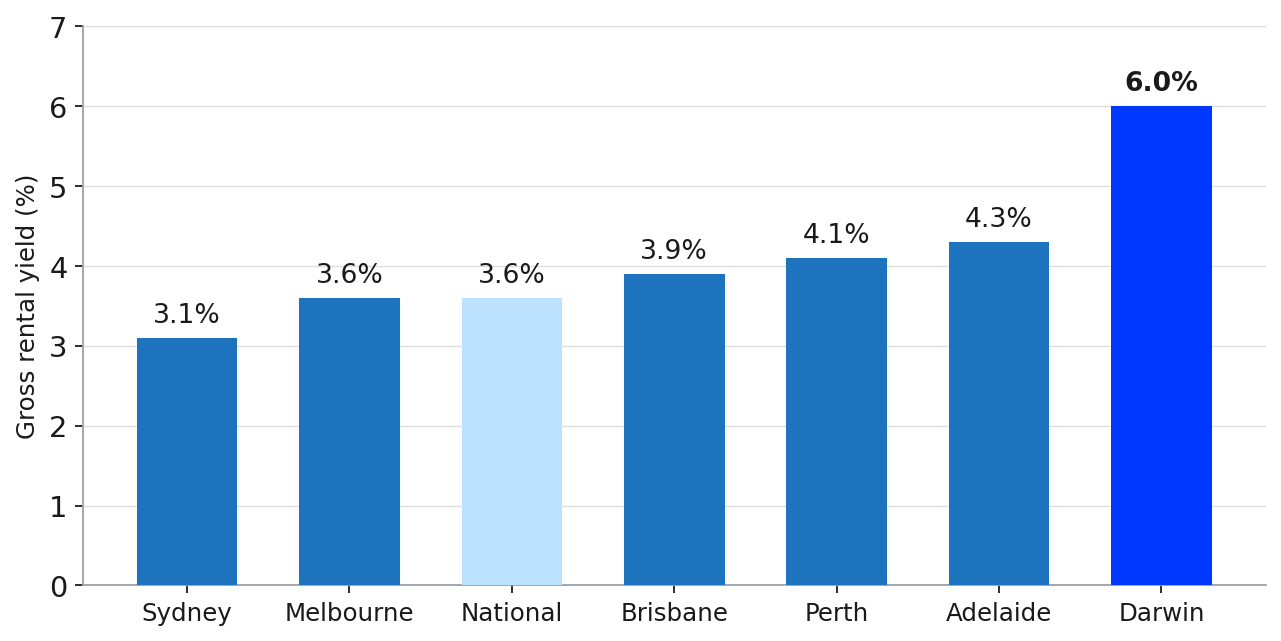
A high yield is not automatically a good investment. The highest-yielding markets are usually the cheapest, with the weakest long-term capital growth. Sydney yields around 3.1 percent while Darwin reaches about 6 percent, yet the two markets behave nothing alike. Total return is yield plus capital growth, and after-tax effects like negative gearing, the picture shifts again. Treat yield as one input, not the verdict.
Gross Rental Yield by Capital City, 2026
Source: Cotality (CoreLogic), 2026
Tip 7: Complete Proper Due Diligence
Due diligence is where good deals are confirmed and bad ones are caught. Building and pest inspections, strata and body corporate records on a unit, and local planning and zoning all belong on the checklist before you commit. Competition can tempt buyers to waive conditions. That is exactly when the risk is highest.
Tip 8: Take the Emotion Out of the Decision
Emotion is the enemy of returns. Buyers who picture themselves living in a property pay for features tenants will not. Lifestyle appeal and investment performance are different things. Set objective criteria, a checklist, and a maximum price, then hold to them when the auction heats up.
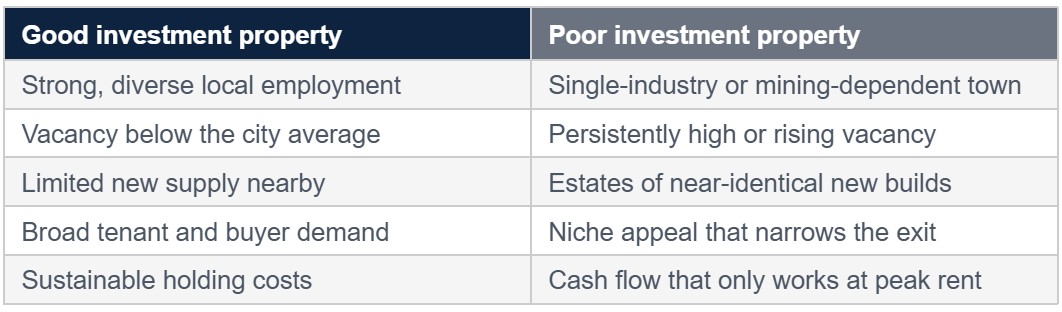
Good vs Poor Investment Property at a Glance
Tip 9: Learn From the Mistakes That Catch First-Time Investors
The common mistakes are predictable, which is what makes them avoidable. Paying too much in a hot moment. Ignoring the exit before the entry. Buying without a written plan. Each one comes from acting before thinking, and each is far easier to prevent than to fix.
Tip 10: Build a Long-Term Investment Property Strategy
One property is a purchase. A sequence of them is a strategy. Investors who build real wealth treat each property as a step toward a portfolio: how equity is recycled, how cash flow holds up, and how the plan survives a rate rise or a vacancy. That also means reviewing the portfolio regularly, not buying and forgetting.
Final Thoughts
The best investment property tips are rarely dramatic. They are about doing ordinary things in the right order: confirming finance, choosing location on evidence, running the real numbers, and removing emotion from the decision. Treat property investment as a disciplined financial process and the results tend to follow. The buyers who learn these lessons early simply make fewer costly mistakes, and in property, avoiding the big mistakes is most of the game.
Frequently Asked Questions
Recommended Reading
Two pages selected based on what readers of this article are most likely to need next.
Recommended Video
These are not dramatic mistakes or rare worst-case scenarios. They’re the pressure points that often show up after purchase—when the property is already settled, the loan is in place, and the reality of ownership starts to unfold. From growing cashflow pressure and tenant risk to interest rate changes, rising ownership costs, overpaying at the start, and making structural decisions too late, this episode explains why even good properties can start to feel heavy when these issues aren’t understood early.