

Sunshine Coast Property Market Forecast 2026: Buy Now or Wait?
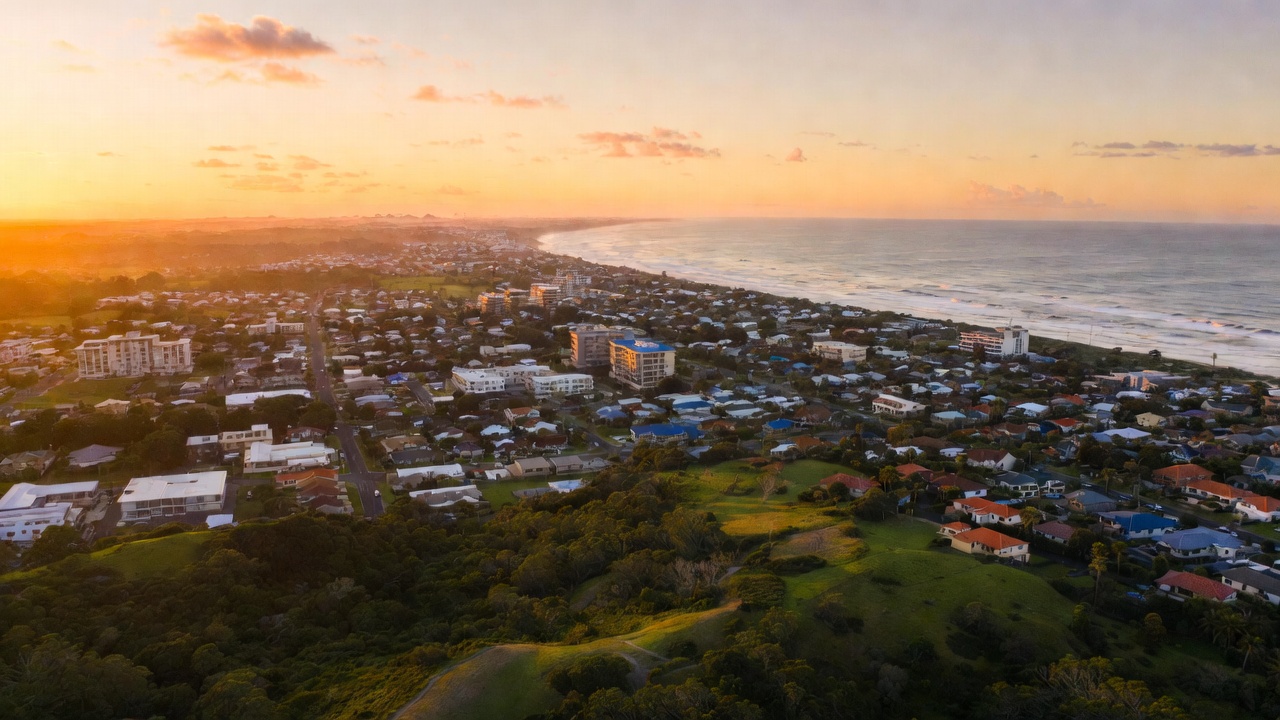
For most buyers, waiting for the Sunshine Coast property market to become more affordable is likely to cost more than it saves. House prices rose 13.6 percent over the year to the March 2026 quarter, and the forces behind that growth, tight rental supply, a swelling population and an Olympic infrastructure pipeline, show no sign of easing.
That does not make every purchase a good one. Affordability is stretched, and the Reserve Bank has spent 2026 lifting rates rather than cutting them.
This article breaks down the Sunshine Coast property market forecast 2026, current prices and growth, what could shape performance over the next five years, where demand is strongest by suburb, and whether to buy now or wait.
Sunshine Coast Property Market Forecast 2026
Any Sunshine Coast property market forecast 2026 has to start with a market still moving upward, just less sharply than a year ago. House prices reached a median of $1.29 million in the March 2026 quarter, up 13.62 percent over the year, according to REIQ. Units gained 12.08 percent annually, and days on market sit around 30, well below what a balanced market would show.
That momentum rests on three structural drivers. Population growth of 2 to 2.5 percent a year is pushing the region from about 384,500 residents in 2025 toward 440,000 by 2032. A $19.5 billion infrastructure pipeline tied to the 2032 Olympics, including the Maroochydore City Centre redevelopment and The Wave rail project connecting Beerwah to Birtinya, is already under construction rather than merely promised. And rental vacancy has held near 1.5 percent, with some pockets as tight as 0.6 percent, keeping upward pressure on both rents and prices.
Rental Vacancy Rate: Sunshine Coast vs South East Queensland

Source: Alto Property, May 2026
The main risk to this forecast is affordability. The dwelling value to income ratio has pushed out to about 12.4 times median household income, and the Reserve Bank spent 2026 lifting rates rather than cutting them. A market this stretched has less room to absorb a shock, whether that is a further rate rise or a sharper than expected slowdown in interstate migration.
Sunshine Coast Property Prices and Growth
Sunshine Coast property prices and growth over the past five years tell a story of a market that has moved from affordable coastal alternative to premium regional market. House values have climbed around 67 percent since 2021, according to Cotality, taking the median from roughly $769,000 to $1.285 million in early 2026.
Sunshine Coast Median House Value: Five Year Growth

Growth has not been even across property types or locations. Houses have generally outpaced units, reflecting stronger demand for space and land content. Within houses, the gap between suburbs is wide: Noosa's median sits at $1.68 million after 8.39 percent annual growth, while Nambour, further inland, carries a median closer to $871,000.
Sunshine Coast prices also remain lower than Brisbane's on a like for like basis. A median Sunshine Coast house at $1.29 million sits roughly $170,000 below Brisbane LGA's $1.46 million, a gap that continues to pull Brisbane based buyers toward the coast.
Sunshine Coast vs Brisbane: Median House Price, March 2026

Source: REIQ, March 2026 quarter
Sunshine Coast Property Forecast: What Could Happen Over the Next 5 Years
Looking at the Sunshine Coast property forecast for next 5 years, the honest answer is that several forces pull in different directions, and none of them point to a clean, predictable outcome. The factors below are what will most likely shape performance out to 2031, rather than a single price target.
Population growth is the strongest tailwind, with the region forecast to grow from around 384,500 residents in 2025 to roughly 440,000 by 2032. Infrastructure delivery reinforces that growth rather than promising it: the $19.5 billion Olympic-linked pipeline is under construction now, with most of it scheduled to land before the 2032 Games, which tends to support prices gradually rather than in a single speculative jump.
Affordability works the other way. With the dwelling value to income ratio already near 12.4 times median household income, there is a real ceiling on how much further prices can run without wage growth catching up or buyer appetite cooling, which is why Cotality expects slower growth through the rest of 2026.
Interest rates are the wildcard. The Reserve Bank lifted the cash rate three times in 2026, and cuts are not forecast until 2027 at the earliest. A rate cutting cycle from 2027 would likely reignite demand, while a longer hold would keep growth slower but more sustainable. Rental undersupply, meanwhile, is unlikely to resolve quickly, since new supply through greenfield estates like Aura takes years to come online at scale.
Which Sunshine Coast Suburbs Are Showing Strong Demand?
Demand across Sunshine Coast suburbs is coming from several directions at once, and the suburbs attracting the strongest interest are not all doing so for the same reason.
Family and owner-occupier demand is heavily concentrated in the region's master planned growth corridors. Baringa, part of the Aura community, has become a magnet for the Sunshine Coast suburbs family homes upsizing market 2026 buyers are searching for: young families trading smaller homes closer to the coast for larger blocks and better school access, while staying within commuting distance of the Bruce Highway. Five year growth of 64 percent in Baringa reflects genuine owner-occupier competition, not just investor speculation, and the suburb was named in realestate.com.au's Hot 100 for 2026.
Established, land-scarce suburbs such as Noosa Heads, Mooloolaba and Buderim continue to attract upsizing local families and lifestyle relocators from Sydney and Melbourne who prioritise location and long term capital security over yield. These areas typically show lower turnover and thinner rental yields, but a deep and consistent buyer pool at resale.
Investor demand is more concentrated in suburbs offering a clearer cash flow case. Nambour, with a median near $871,000 and yields around 4.4 percent, continues to draw investors prioritising rental return, supported by its role as a transport and services hub along the Bruce Highway. Moffat Beach and Golden Beach have delivered some of the sharpest recent gains, up 6 percent and 12.5 percent respectively over the past year, with Moffat Beach properties spending a median of just 14 days on market. Maroochydore sits between the investor and owner-occupier camps, with a median near $1.25 million and annual growth of 15 to 19 percent, driven directly by the $2.5 billion city centre redevelopment.
Price point matters just as much as suburb. At around $650,000, buyers are largely limited to units or entry-level houses in growth corridors like Baringa, while a budget closer to $1.2 million opens up established houses in suburbs such as Maroochydore. Further inland, Peachester, on the hinterland fringe, is attracting buyers priced out of coastal suburbs who still want land and space within the Sunshine Coast region.
Sunshine Coast Property Market: Should You Buy Now or Wait?
Yes, the Sunshine Coast is still worth considering in 2026, but the case rests on income diversification and a genuine long-term hold, not just capital growth. Gross yields on houses sit broadly between 2.8 and 4.1 percent depending on the suburb, below what many yield focused investors typically target, though vacancy near 1.5 percent supports consistent occupancy and steady rent growth that partly offsets the thinner yield.
Investors leaning toward buying now can point to limited stock, a rental market that is not loosening, and an infrastructure pipeline that is already under construction rather than speculative. Waiting for a downturn in a market with this little available supply has, historically, meant missing growth rather than avoiding it.
The case for waiting rests on the cost of capital and stretched affordability. The Reserve Bank lifted the cash rate three times in 2026, from 3.60 percent to 4.35 percent, and while a hold is expected through the rest of the year, cuts are not forecast until 2027. Buyers stretching to meet the current median price have less room to absorb another rate movement or an unexpected vacancy period.
The honest answer is that timing the market matters less than matching the purchase to your own serviceability, cash flow needs and holding period. Checking your borrowing capacity formula before you shortlist suburbs will do more for the outcome than waiting for a headline rate cut.
Final Thoughts
So, what about the Sunshine Coast specifically, now that the broader Queensland market has cooled? The market has moved from a pandemic era surge into a more mature, better supported growth phase. Prices are elevated and yields are thin by national standards, but the population growth, infrastructure delivery and rental scarcity behind the market are structural rather than speculative.
Investors with strong serviceability and a genuine long-term horizon have more reason to act than to wait. Buyers closer to their borrowing limits should treat 2026 as a year for preparation and suburb research rather than a year to force a purchase into a stretched budget. Sunshine Coast property growth is unlikely to reverse meaningfully from here, even if the pace slows.
Frequently Asked Questions
Recommended Reading
Two pages selected based on what readers of this article are most likely to need next.
Recommended Video
Most investors are still positioned in capital cities — but in 2026, that allocation gap is creating real opportunity cost. In a market where timing, positioning, and yield profiles compound into long-term outcomes, that disconnect matters more than most people realize.