

Sydney Property Market 2026: Is Sydney Still Worth Buying In?
Sydney property market remains a popular choice for Australians seeking long-term capital growth, but is it still worth buying in 2026?
While the city's property market has cooled through the first half of 2026, it continues to benefit from strong population growth, a diverse economy and resilient housing demand. However, entry now depends on price point, property type, and hold period.
This guide explores Sydney's property prices, rental yields, vacancy rates and future market outlook to help you determine whether Sydney is the right investment for your portfolio.
Sydney Property Market at a Glance
Sydney's median dwelling value sits at roughly $1.28 million, easing 0.9% in the latest month and 2.1% over the quarter, though annual growth is still positive at 2.3%. Values now sit about 2.1% below the November 2025 peak, and growth has not stopped everywhere: outer western and southwestern corridors are still posting double-digit annual gains.
At this price level, what a lender approves matters as much as the headline median. Our borrowing capacity formula breaks this down.
Is Sydney Property Still a Good Investment?
For long-term investors, the case has not fundamentally changed. Sydney's median price has risen close to 28% since the pandemic began, and the drivers behind that, undersupply and population growth, remain in place.
Buyers focused on investment grade suburbs are better placed to ride out a soft patch than those chasing the cheapest listing, though buyers stretching to the top of their budget in premium suburbs are entering during a correction, not a recovery.
What's Driving the Sydney Property Market?
Population growth remains the strongest tailwind, with Greater Sydney adding more than 100,000 residents a year against persistently low housing approvals, the core reason prices have not fallen further despite higher rates.
The Reserve Bank lifted the cash rate to 4.35% across three moves in 2026, tightening what buyers can borrow, though the expanded First Home Guarantee is partly offsetting that for buyers under the price threshold.
Houses vs Apartments: Which Offers Better Returns?
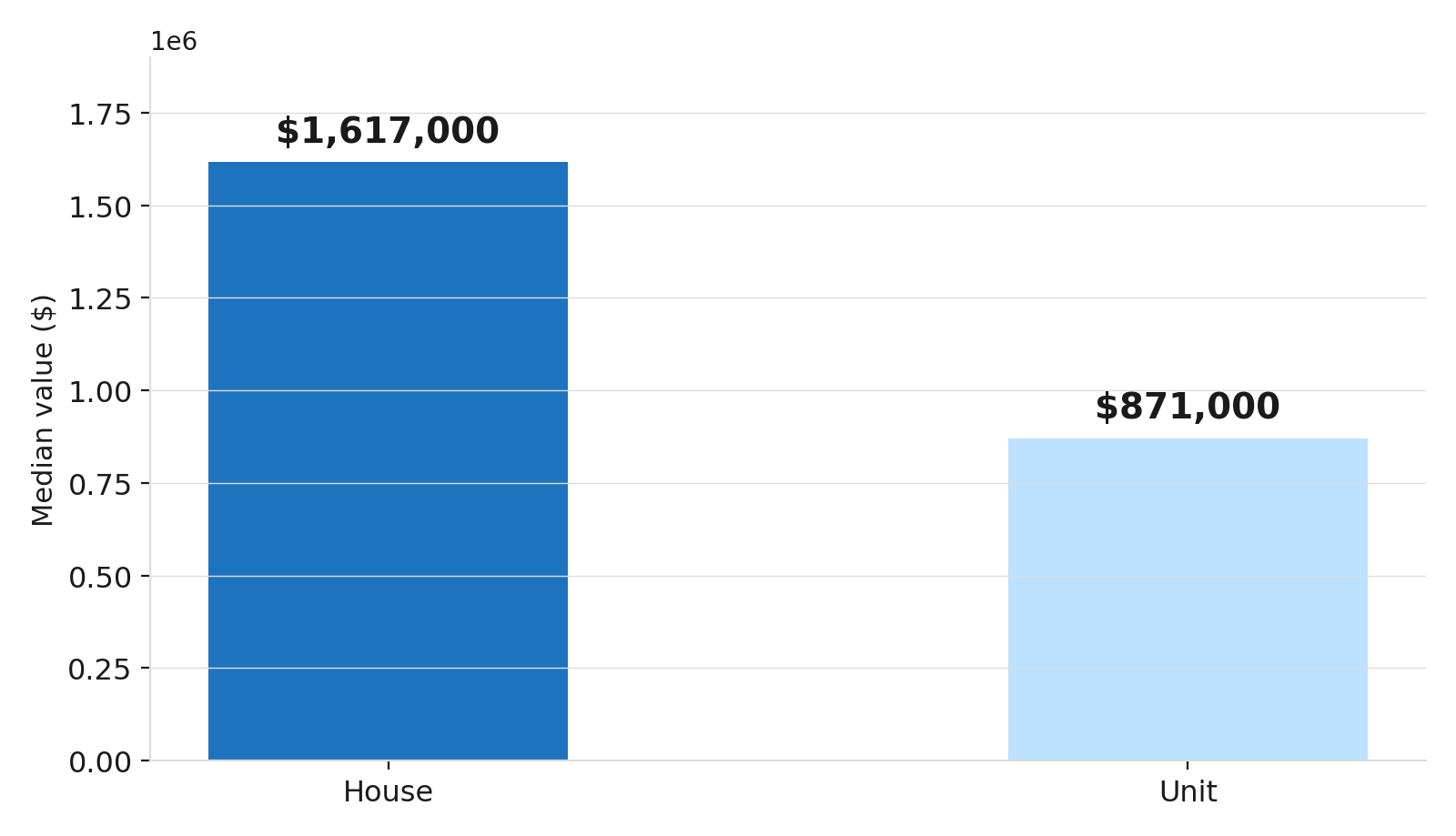
Houses continue to command the larger price tag and the stronger long-term growth story, while units offer a lower entry point and a higher rental yield.
Sydney Median Value: House vs Unit
Source: PropTrack Home Price Index, 2026
Units also carry a lower deposit hurdle and less exposure to the affordability ceiling capping premium house markets.
FOR EXAMPLE
An investor comparing a $1.6 million house in the middle ring against an $870,000 unit closer to the city will usually find the unit services more comfortably on the same income, even though the house carries the stronger long-term growth case.
Sydney vs Other Australian Property Markets
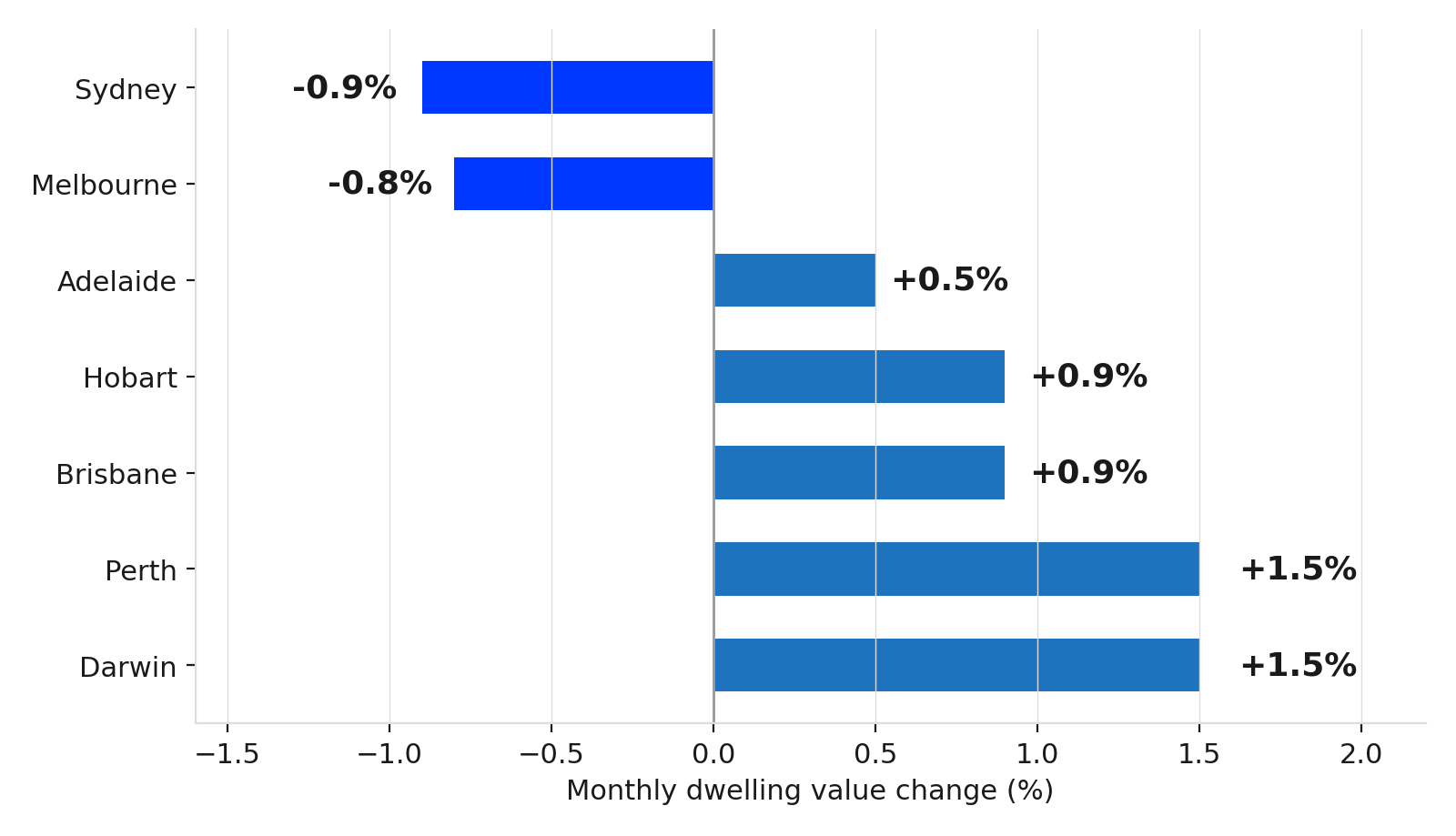
Sydney is no longer the national growth leader. Perth and Darwin posted the strongest monthly gains, while Sydney and Melbourne were the only capitals to record a monthly decline.
Monthly Dwelling Value Growth by Capital City
Source: CoreLogic Home Value Index, 2026
That does not make Sydney a worse market, only a different one for now. Investors who understand property investment interest rates will read this as a cycle stage, not a decline.
Risks Investors Should Consider
Affordability is Sydney's defining constraint. Mortgage repayments absorb a large share of average household income, limiting how much further prices can run without wage growth catching up, so borrowers should understand how to increase borrowing capacity before assuming last year's budget still applies. Vacancy risk is currently low at 1.7%, supporting rental income, but the bigger risk sits with buyers who overextend on price.
Final Thoughts
Sydney remains a market with genuine long-term fundamentals, but 2026 rewards selectivity over momentum. A buyer's agent who knows which pockets are growing and which are correcting is worth more in this phase than in a straightforward boom.
Frequently Asked Questions
Recommended Reading
Two pages selected based on what readers of this article are most likely to need next.
Recommended Video
Australia's record migration surge — peaking at over 528,000 people in a single year — created unprecedented housing demand almost overnight. We explain why the government used population growth as a deliberate tool to avoid recession, how that decision flows directly into property prices Australia-wide, and why rents have surged to record highs as a result.