

Buyer's Agent vs Real Estate Agent: Which Is Better for Property Investors?
For most property investors, a buyer's agent gives a genuine advantage over relying solely on the seller's real estate agent, but only when the fee is weighed against what that agent's negotiation, research and access can realistically add to a specific purchase. A real estate agent works for and is paid by the seller. A buyer's agent works for and is paid by you.
That distinction shapes everything else in a transaction: how a price is defended in negotiation, what gets disclosed, and whose interests sit behind the advice you are given. Buyer's agent fees in Australia typically run from around $8,000 to over $20,000, or a percentage of the purchase price, which means the decision is less about paying for representation in general and more about whether independent buyer representation adds value to this specific purchase and your own experience.
What Is the Difference Between a Buyer's Agent and a Real Estate Agent?
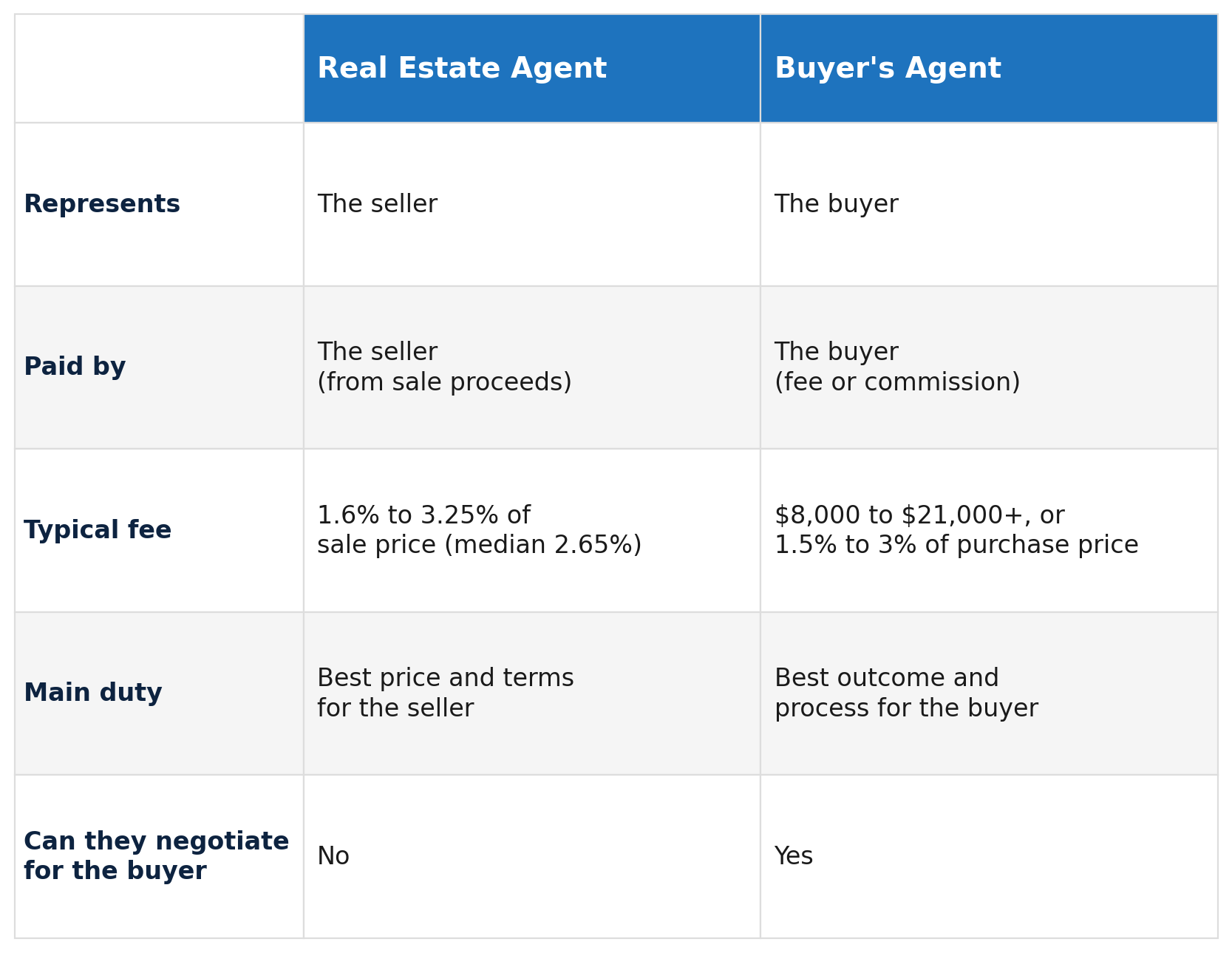
A real estate agent, sometimes called a selling agent, is engaged and paid by the person selling a property. Their job is to market the property, manage inspections and offers, and negotiate the best possible price and terms for the seller.
A buyer's agent, sometimes called a buyer's advocate, is engaged and paid by the person buying. Their job is to search for suitable properties, assess them, and negotiate on the buyer's behalf, with no financial relationship to the seller or the property being sold.
The confusion between the two usually comes from a simple assumption: that a real estate agent you deal with during a purchase is somehow acting for you too, because they are friendly, informative and helpful throughout the process. They are usually doing their job well. That job is still to secure the best outcome for the seller, not for you.

Who Does Each Agent Actually Represent?
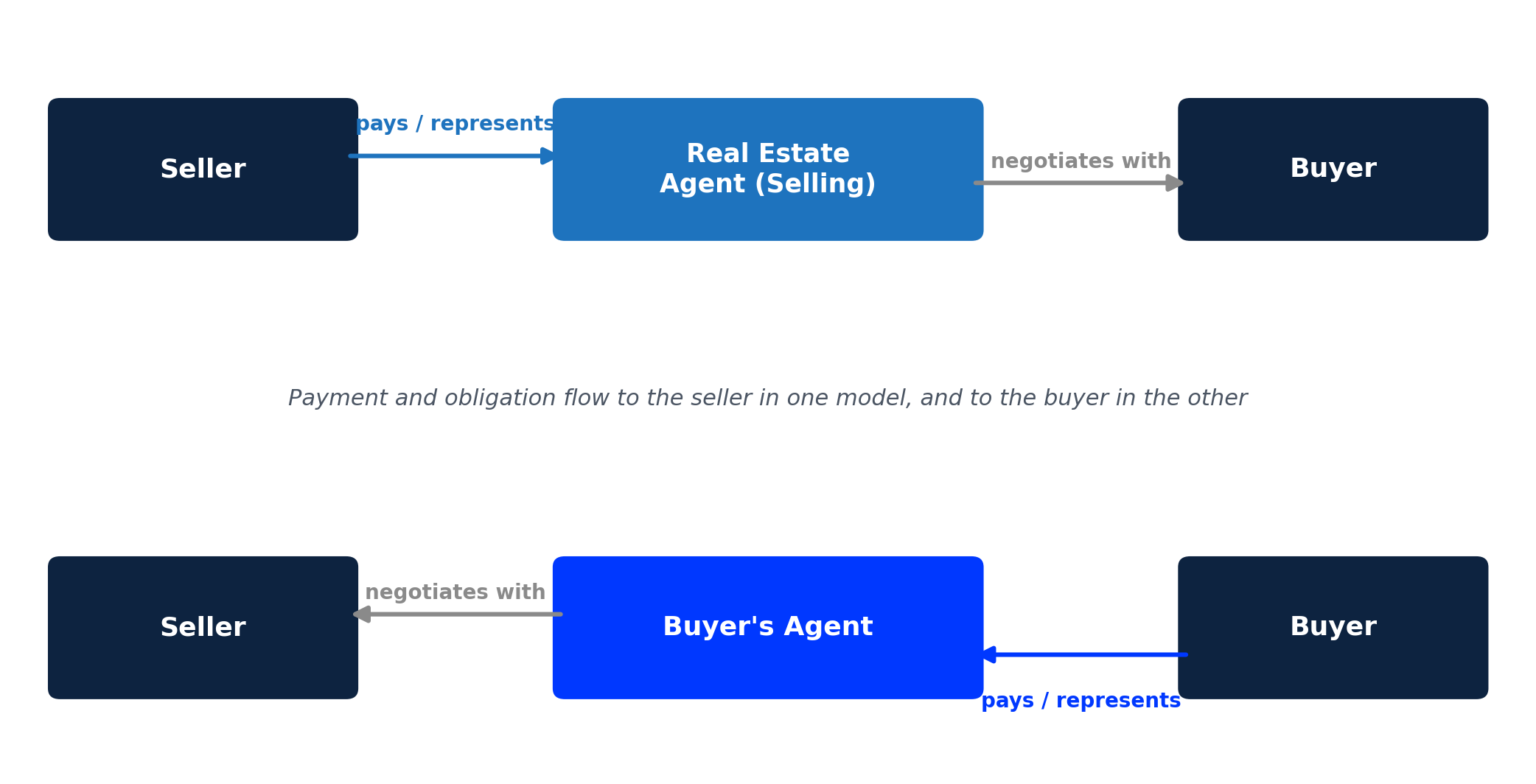
Representation determines whose interests sit behind the advice you receive at every stage of a purchase, not just at the final negotiation.
A selling agent's obligation runs to the seller. That shapes what they disclose, how they present a property's flaws, and how hard they push back on your offer. None of that makes a selling agent dishonest. It means their legal and financial obligation points in one direction, and it is not yours.
A buyer's agent's obligation runs to you. They are engaged to act in your interest, which changes how they research a property, what they tell you about its risks, and how they approach negotiation. Because their fee is not tied to the sale price in most flat-fee arrangements, a buyer's agent has less structural incentive to push you toward paying more.
This is the practical difference an investor is actually paying for: not access to listings, which are largely public, but a negotiating position with someone whose obligation runs to you rather than the other side of the transaction.
Who Works for Whom: Representation Under Each Model
Source: FPW Group analysis, 2026
What Does a Buyer's Agent Do for a Property Investor?
For an investor specifically, the value of a buyer's agent tends to concentrate in four areas: sourcing properties that fit an investment brief rather than a lifestyle preference, running due diligence that goes beyond a standard building and pest report, negotiating from a position that is not emotionally attached to a particular property, and managing the practical process through to settlement.
Interstate investors get a version of this that is harder to replicate alone. A buyer's agent working in a market you do not live in can shortlist and inspect properties on your behalf, and flag issues a local agent's marketing would never mention.
Knowing how to increase borrowing capacity matters here too. An investor who knows their real borrowing position before engaging an agent, of either kind, negotiates from a position of certainty rather than hope, and avoids falling in love with a property that was always outside their limit.
How Much Does a Buyer's Agent Cost, and Is It Worth It?
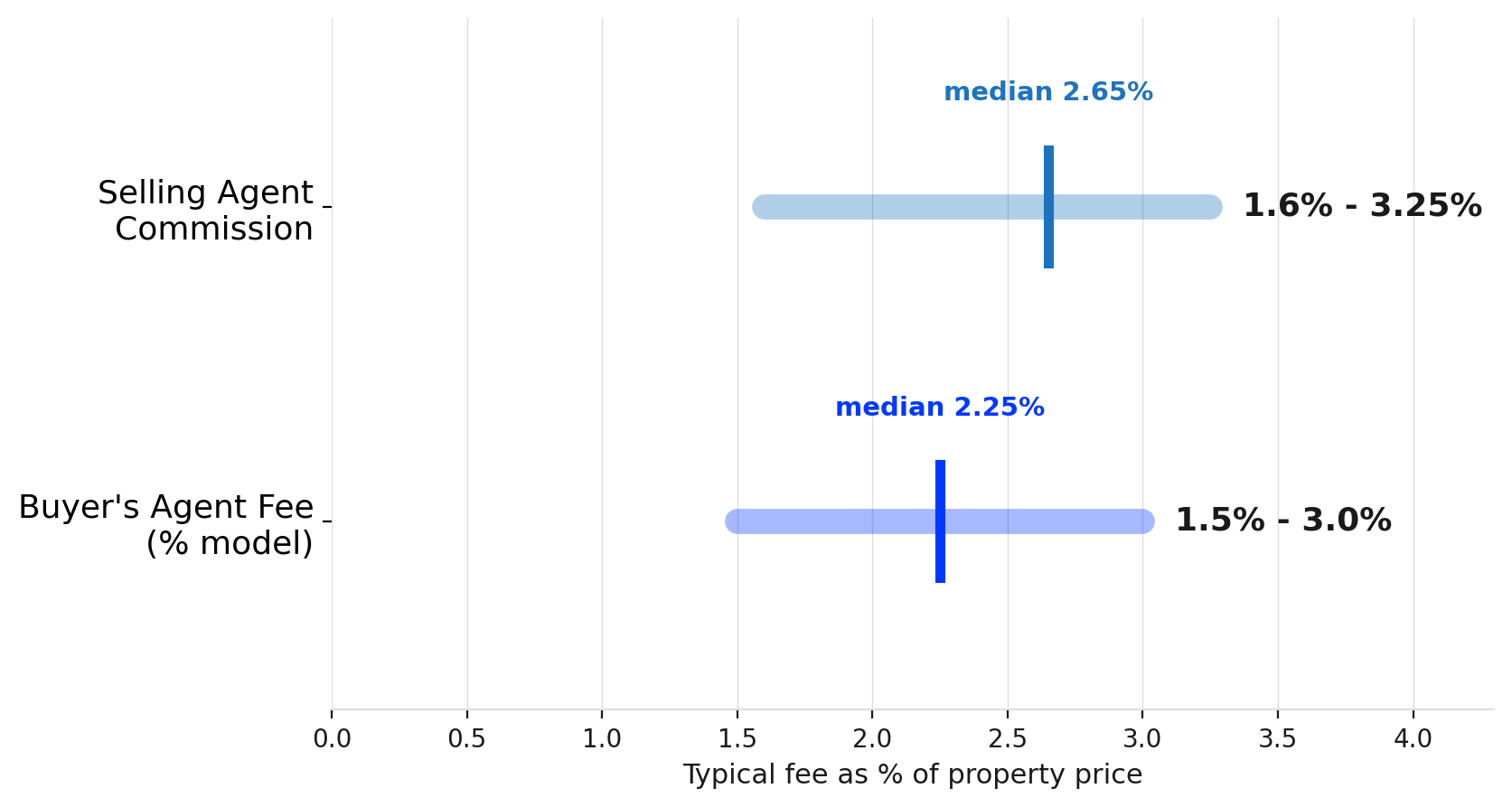
Real estate agent commission in Australia sat at a national median of 2.65 per cent in 2026, ranging from around 1.6 per cent in competitive metropolitan markets to 3.25 per cent in Tasmania, according to industry commission data. That fee is paid by the seller out of the sale proceeds, and it is effectively built into the price a buyer pays regardless of who represents them.
Buyer's agent fees typically run from around $8,000 to $21,000 or more for a flat-fee full-service engagement, or 1.5 to 3 per cent of the purchase price under a percentage model, according to industry data referenced by REBAA-accredited agencies. On a $700,000 purchase, that is a fee somewhere between $8,000 and $21,000, paid directly by the buyer, separate from anything the seller pays their own agent.
Whether that fee is worth it depends on what it replaces. a look at common property investment mistakes first-time investors make shows some of the most expensive errors first-time investors make are avoidable with better due diligence and a level head in negotiation, which is exactly what a buyer's agent is paid to supply. For an experienced investor buying locally, in a market they already understand well, that same fee may simply be a cost with no equivalent benefit.
Typical Fee Range: Buyer's Agent Versus Selling Agent Commission
Source: Right Agent Commission Rates Report and REBAA-referenced industry data, 2026

Buyer's Agent or Real Estate Agent: Which Should You Use?
A buyer's agent tends to earn its fee for investors who are buying interstate or in an unfamiliar market, are time-poor and cannot attend inspections or negotiate directly, are early in their investing journey and want an independent second opinion, or are buying in a competitive market where local relationships and negotiation experience genuinely change outcomes.
An experienced investor buying locally, with strong market knowledge, spare time to research and inspect properties, and a track record of negotiating well, may reasonably decide the fee outweighs the benefit. That is a legitimate choice, not a mistake.
Getting pre-approved with a mortgage broker alongside either agent type is worth arranging early, since a purchase moves fastest when your finance is already structured before you find the property, rather than after.
The honest answer to buyer's agent versus real estate agent is that they are not interchangeable options for the same job. A real estate agent will always be part of the transaction, because they represent the seller. The question is only ever whether you also want someone representing you.
Buyer's Agent Versus Real Estate Agent: Quick Comparison
Source: FPW Group analysis, 2026
Final Thoughts
A real estate agent and a buyer's agent are not competing versions of the same service. One represents the seller, is paid by the seller, and will be part of any purchase you make. The other represents you, is paid by you, and is entirely optional.
For interstate, time-poor or less experienced investors, that independent representation tends to justify its cost through better due diligence and a stronger negotiating position. For experienced, time-rich investors buying locally, the same fee may add less than it costs.
Weigh the decision against your own situation and the specific purchase in front of you, rather than a general rule about what every investor should do.
Frequently Asked Questions
Recommended Reading
Two pages selected based on what readers of this article are most likely to need next.
Recommended Video
These are not dramatic mistakes or rare worst-case scenarios. They’re the pressure points that often show up after purchase—when the property is already settled, the loan is in place, and the reality of ownership starts to unfold. From growing cashflow pressure and tenant risk to interest rate changes, rising ownership costs, overpaying at the start, and making structural decisions too late, this episode explains why even good properties can start to feel heavy when these issues aren’t understood early.