

Investment Property Best Locations: Should You Buy Local or Go Interstate?

Investment property best locations are not automatically the suburbs closest to home. The market you know best and the market that fits your investment strategy are often two different answers, and treating them as the same thing is one of the most common ways investors limit their own returns.
Over the year to August 2026, Sydney and Melbourne dwelling values fell 4.6% and 4.7%, while Perth rose 15.6% and Brisbane 10.8%, according to Cotality. Deciding whether to stay local or buy interstate now has real numbers behind it, and working through those numbers matters more than reading another list of Australia's best capital cities.
What Makes an Investment Property Location Worth Buying?
A location earns a place in a portfolio on three things: rental demand, capital growth drivers and whether the entry price fits your borrowing capacity. Everything else is detail sitting underneath those three.
Rental demand comes down to vacancy and tenant competition. National vacancy sat at 1.9% in August 2026, still tight by historical standards even after climbing from a record low of 1.5% in February, according to Cotality. Capital growth depends on population growth, employment, infrastructure and supply constraints working together, not any single headline.
Affordability decides whether the first two even matter, since a market can look attractive and still be out of reach once borrowing capacity and debt-to-income limits are factored in.
Is Investing Locally Really Less Risky Than Investing Interstate?
Local investing has genuine advantages. You can inspect a property yourself, you likely understand which streets and school zones matter, and you probably already have a feel for local tenant demand.
The risk sits in what familiarity quietly replaces. Knowing a suburb well can feel like due diligence when it is just comfort, and comfort does not show up in a capital growth chart. Staying local also concentrates an entire portfolio in one city's economic cycle, one job market and one set of planning decisions.

Local vs Interstate: Comparing the Real Risks and Advantages
Neither option is automatically safer. Each comes with a different mix of advantages and trade-offs, and the table below lines them up side by side rather than declaring a winner.
Which City Do Investors Prefer? 2026 Sentiment Survey
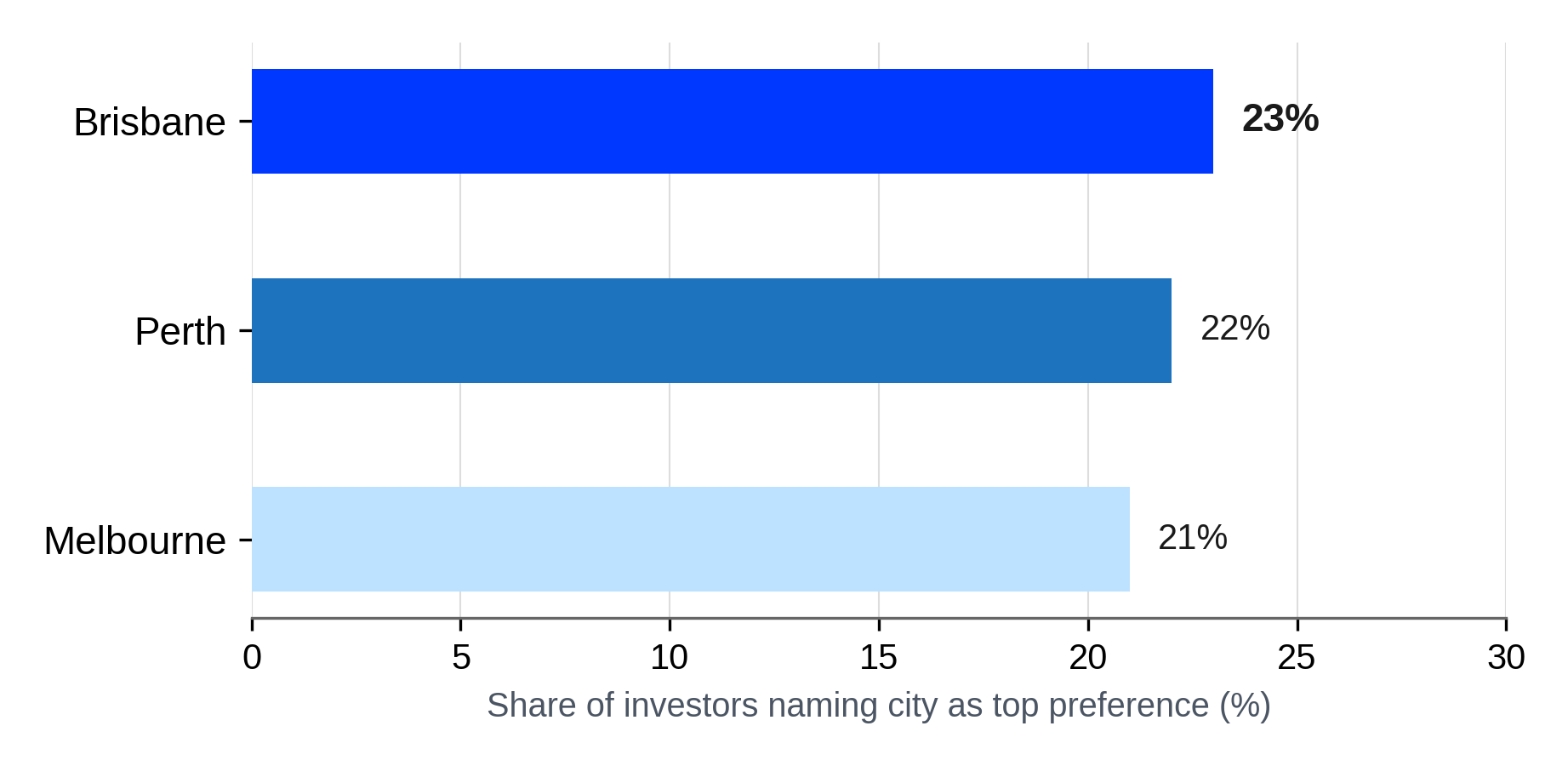
Source: Momentum Wealth, 2026 Property Investor Sentiment Survey, via Smart Property Investment
Interstate investing genuinely does introduce new risks. Remote property management, unfamiliar tenancy law, and different state land tax rules all need managing, and buying on a hotspot headline alone without checking suburb-level data is a real trap. Local investing carries its own quieter risk in concentration and home-market bias, which shows up more slowly but can be just as costly.
How Should Investors Compare Two Property Markets?
A consistent framework beats gut feeling in either direction. The same five checks apply whether the second market is two suburbs away or across the country.
Median Dwelling Value vs 12-Month Growth
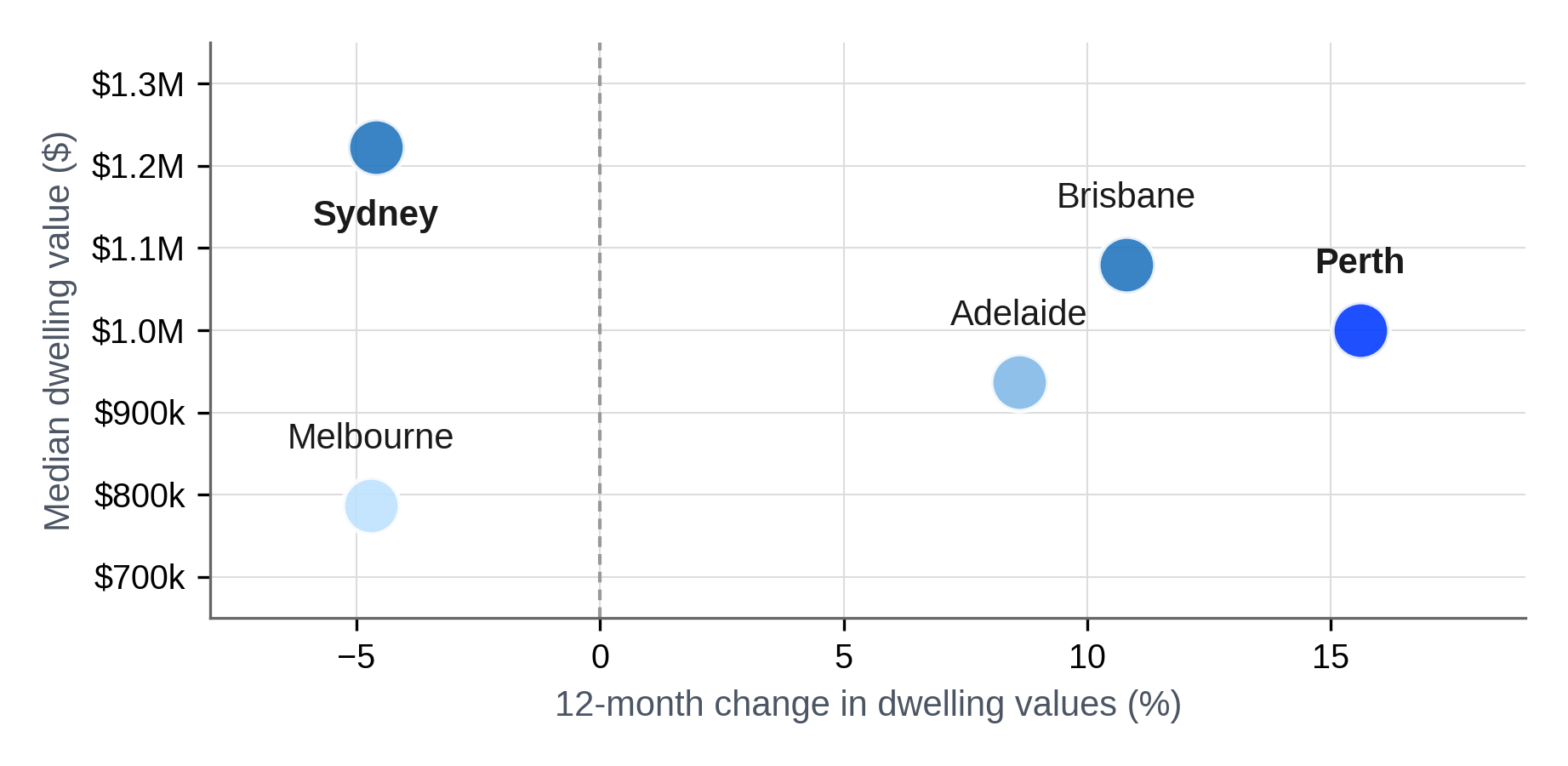
Source: Cotality, Home Value Index, 31 August 2026
Start with entry price and borrowing capacity, since a market you cannot afford to enter is irrelevant no matter how strong its fundamentals look. Then compare rental demand and cash flow, followed by what is driving capital growth rather than just the historical number.
Check supply and future development next. A construction pipeline can turn a tight rental market into an oversupplied one within a couple of years, and infrastructure spending only supports prices when it is genuinely new, not already priced in. Finish with taxes and regulation, since land tax and stamp duty differences between states can change a return meaningfully once they are added up.
So, Should You Invest Locally or Interstate?
Local investing tends to make more sense when your own market still scores well on the fundamentals, when you have a specific opportunity you understand deeply, or when direct oversight matters more to you than maximising growth.
Interstate investing tends to make more sense when your own market is expensive relative to its growth outlook, when another city offers a stronger combination of affordability, demand and growth, or when your portfolio needs geographic diversification. Working with a buyer's agent for your first interstate purchase can close some of the local-knowledge gap without requiring you to become an expert in a market you've never lived in.
Final Thoughts: Use the Same Criteria Either Way
Neither local nor interstate investing is inherently the safer or smarter choice. The decision comes down to which market, once tested against the same criteria, gives your portfolio the best combination of growth, cash flow and risk.
Investors who apply that test honestly, rather than defaulting to the suburb they already know, tend to end up with stronger portfolios over time. The location is only ever the first decision. The property still has to earn its place after that.
Frequently Asked Questions
Recommended Reading
Two pages selected based on what readers of this article are most likely to need next.
Recommended Video
Most investors are still positioned in capital cities — but in 2026, that allocation gap is creating real opportunity cost. In a market where timing, positioning, and yield profiles compound into long-term outcomes, that disconnect matters more than most people realize.