

SMSF Property Investment After the LRBA Ban: What Existing Investors Need to Know

The LRBA ban that came into effect on 10 August 2026 stops new limited recourse borrowing arrangements from being used to purchase SMSF residential investment property. But if you already hold property inside your SMSF, the ban does not automatically unwind what you have. Your existing arrangement continues. The more pressing question is what the new rules allow you to do next, and that answer is more nuanced than most commentary suggests.
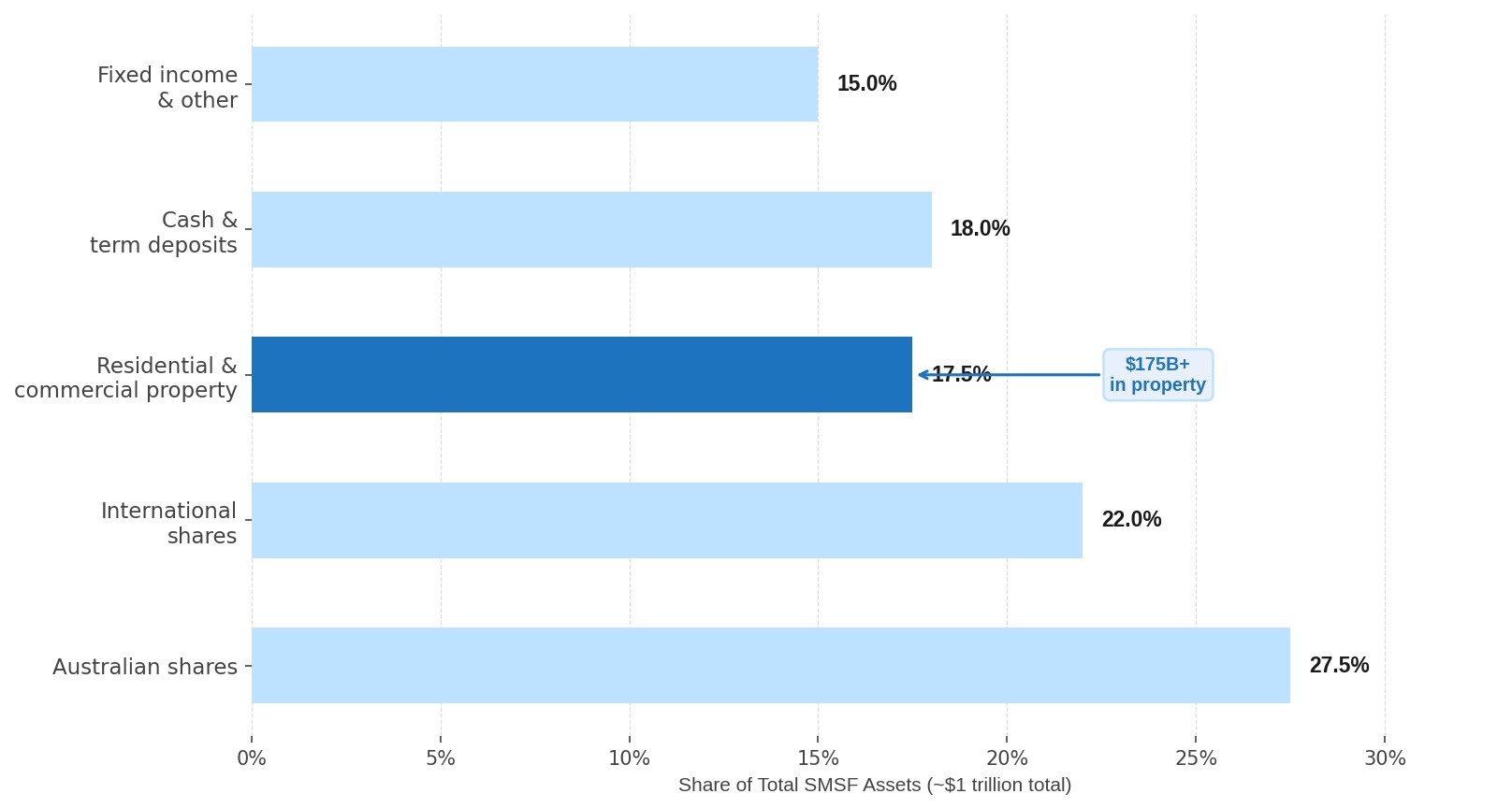
Across more than 653,000 SMSFs holding over $1 trillion in assets as of 31 December 2025 (ATO), approximately 17.5% of total SMSF assets are held in residential and commercial property. That is a significant portion of Australian retirement savings sitting inside structures now subject to tighter rules. Understanding where SMSF property investment now sits inside this stricter framework is essential before making any changes.
The LRBA Ban: What Changed and What It Actually Prevents
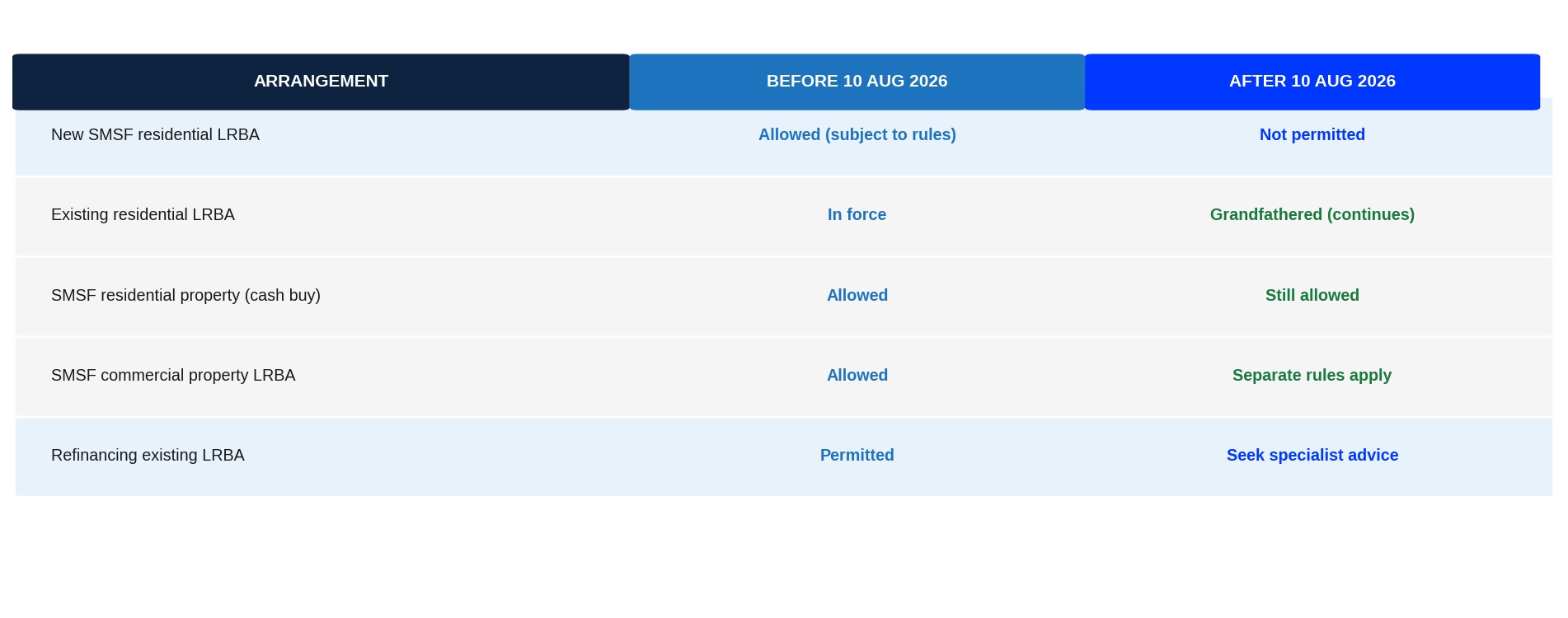
The legislation introduced from 10 August 2026 prevents new limited recourse borrowing arrangements from being used to acquire residential investment property inside an SMSF. Before that date, SMSFs could borrow to purchase property using an LRBA structure, where the lender's recourse was limited to the asset itself rather than the fund's entire pool of assets. That option is now closed for residential property.
The ban does not prevent SMSFs from owning residential property outright using fund cash or existing assets. It is specifically the borrowing mechanism that has been removed for new residential acquisitions. The rules applying to SMSF commercial property remain governed by separate provisions and are not directly affected by this change.
SMSF Residential Property Borrowing: Before vs After August 2026
Source: ATO, SMSF Borrowing Rules (2026)
What Happens to Existing SMSF Property Loans
The most important question for existing investors is whether their current arrangement is protected. The answer, broadly, is yes. Existing LRBAs that were in place before 10 August 2026 are grandfathered under transitional provisions. You can continue making repayments, collecting rent, and managing the property within the terms of your existing loan structure.
The ban does not force a sale. It does not impose a deadline by which you must exit the property. What it does change is the environment around that property: the borrowing environment is tighter, the exit options may be more limited if you need to refinance under pressure, and the scrutiny on SMSF lending has increased.
What Happens When the Existing Loan Reaches Maturity
When your LRBA reaches the end of its term, the loan is repaid and the property transfers from the bare trust into the SMSF's name. This process is not affected by the ban itself. The complication arises if you need to roll the loan over or modify its terms before maturity, which takes the question into refinancing territory.
Understanding your current loan maturity date and the fund's capacity to service the debt through to that date is now a baseline planning requirement, not an optional review.
Can Existing SMSF Property Investors Change Their Loan
This is where the practical complexity begins. Continuing to make repayments on an existing LRBA is clearly permitted under the grandfathering provisions. Refinancing is a different matter. Whether a refinanced LRBA is treated as a continuation of the existing arrangement or as a new borrowing arrangement depends on the specific structure of the change and how the relevant legislation is interpreted.
A straightforward refinance with the same lender, same asset, and no material change to the loan structure may fall within acceptable parameters. A more substantial restructuring, such as changing the lender, increasing the principal, or altering the bare trust arrangements, carries a higher risk of being treated as a new arrangement. The ATO has not yet released comprehensive guidance covering every refinancing scenario, which means individual circumstances need to be assessed by a licensed SMSF specialist.
What investors should avoid is assuming that because the existing arrangement is grandfathered, all changes to it are automatically permitted. The grandfathering protects the original arrangement. It does not necessarily protect every modification to that arrangement.
What Existing SMSF Property Investors Can Still Do
Permitted Actions for Existing SMSF Property Holders
Source: ATO SMSF Statistical Report, December 2025
The practical scope of what you can still do remains substantial. You can hold the property, receive and reinvest rent, continue loan repayments, and eventually sell when the investment case supports it. What has changed is the forward-looking dimension: the fund cannot use new residential borrowing to grow further in that direction, and the refinancing environment has become more constrained.
The decision to hold or sell should be driven by the investment fundamentals of the specific property, not by a reactive interpretation of the ban itself. A property with strong rental yield and manageable cash flow inside the SMSF remains a sound holding.
Residential vs Commercial Property: Why the Distinction Matters

The LRBA ban applies specifically to residential investment property. SMSF commercial property, in particular business real property, operates under a different set of rules and is not subject to the same prohibition on new borrowing. An SMSF can still use an LRBA to acquire business real property used entirely in a related party's business, provided the existing SMSF investment rules are met.
This distinction is relevant for SMSF investors who are also business owners. The ability to hold business premises inside an SMSF and pay rent to the fund at market value remains intact.
Understanding how different property types fit within a broader property investment strategy is now a more consequential decision for SMSF investors, given the structural constraints on residential borrowing going forward.
The Risks Existing SMSF Property Investors Need to Reassess
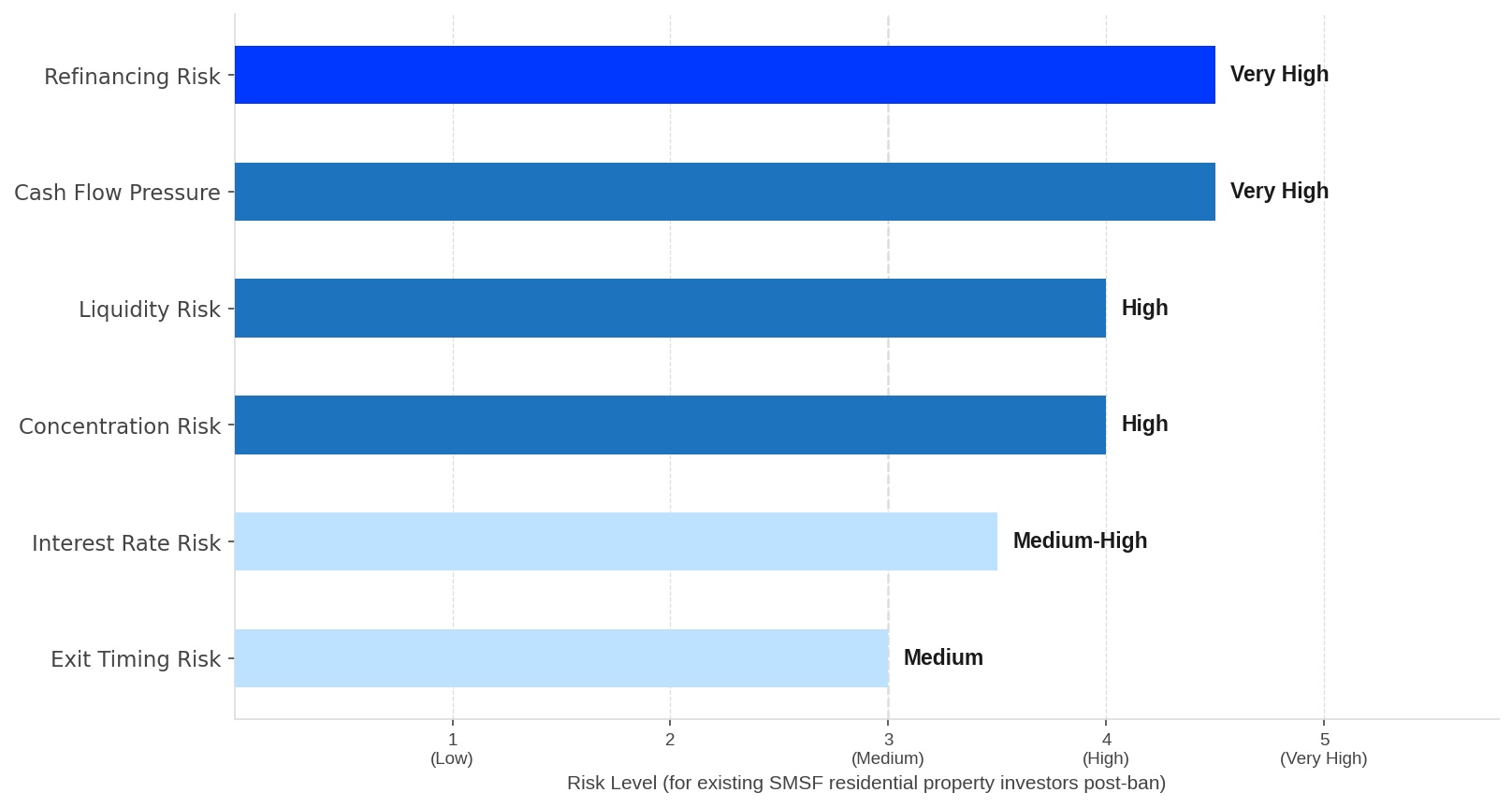
The ban does not create new risks for existing investors. But it changes the environment in which those existing risks play out. Cash flow pressure, interest rate sensitivity, concentration risk, liquidity constraints, and exit timing have always been relevant. What the ban changes is the degree of flexibility available when those risks materialise.
Key Risk Factors for Existing SMSF Property Holders
Source: MoneySmart, SMSF and Property (2026)
Cash flow pressure is the most consistent risk for SMSF property investors. The fund must generate sufficient income to cover loan repayments, property expenses, and minimum pension payments if the fund is in retirement phase.
Investors who have not stress-tested their fund's serviceability position against a higher interest rate environment should do that calculation now. Understanding how lenders assess borrowing capacity is relevant here, because the refinancing options that would previously have provided relief are now more constrained.
What Existing SMSF Property Investors Should Check Now

The regulatory change is a practical trigger for a structured review. This does not mean making immediate changes. It means understanding the current position clearly enough to know what changes, if any, are warranted.
1. Review Current Loan Terms and Maturity Date
Confirm the remaining term of your LRBA, the interest rate and whether it is fixed or variable, the lender's appetite for the loan going forward, and the conditions under which refinancing would be sought.
2. Check the Fund's Cash Flow Position
Model the fund's income and expense position across a range of interest rate scenarios. If the fund is close to pension phase, model the combined impact of mandatory pension payments and loan repayments against projected rental income.
3. Confirm What Changes Are Permitted Before Acting
If you are considering any change to your existing LRBA structure, get licensed SMSF advice before approaching a lender. A conversation with your investment property adviser can clarify where your arrangement sits before you commit to any change.
4. Review the Property's Investment Performance
Evaluate the property against current market conditions: rental yield relative to the cost of debt, capital growth trajectory, vacancy trends, and whether the asset is still performing against the original investment thesis.
Final Thoughts
The LRBA ban represents a structural shift in what SMSF property investment looks like going forward. For new entrants, the residential borrowing pathway is closed. For existing investors, the arrangement continues, but the environment around it is tighter and the flexibility is reduced.
The single most useful thing existing investors can do is treat the policy change as a planning prompt rather than a panic trigger. Review the loan terms, model the cash flow, confirm the refinancing position, and assess the property's performance. Then make decisions based on that review rather than on a generalised reaction to the regulatory change.
The ban does not automatically determine whether your existing SMSF property is a good or bad investment. That question depends on the specific numbers, the fund's position, and your retirement timeline, and those are questions worth answering carefully, with advice from someone who understands both the SMSF rules and the property market.
Frequently Asked Questions
Recommended Reading
Two pages selected based on what readers of this article are most likely to need next.
Recommended Video
Nine years later, one has $780,000 in equity and almost zero in friction costs. The other has $435,000 in equity and paid over $100,000 in tax and transaction costs getting there. Same market and asset class. Yet completely different outcomes because of one decision made early.