

When Should You Sell an Investment Property to Maximise Your Returns?
The right time to sell an investment property comes down to four things: growth potential, cash flow, the capital gains tax bill, and whether refinancing could get you the same result without a sale. Weigh those four honestly and the right call is usually clearer than any single market signal makes it look.
Most investors only ask when to sell an investment property after a bad valuation, a rate rise, or a life event forces the question, which turns a strategic decision into a reactive one.
A better approach treats every property in a property investment portfolio as a position reviewed on its own merits, on a schedule you control rather than one the market sets for you.
Why Investors Decide to Sell an Investment Property
Investors sell for a mix of financial and personal reasons, and the two rarely carry equal weight in a good decision.
Portfolio rebalancing toward better performing assets
Cash flow no longer supporting the household budget
A life event such as retirement, divorce, or relocation
Releasing equity to fund a larger or better located purchase
Emotional decisions tend to react to a single bad quarter or a single stressful tenant. Strategic decisions weigh the property against your financial goals over a multi year horizon, not against how the last six months felt.
Signs It Might Be Time to Sell
A handful of signals tend to show up together when a property has stopped working for you.
The property has reached its realistic growth potential for this cycle
Negative cash flow is affecting your broader portfolio, not just this asset
A better opportunity exists that this property is preventing you from funding
Major maintenance costs are eroding returns faster than rent can offset them
Your financial goals have changed since you bought it
If negative cash flow is the main driver, check whether the real constraint is the property or your borrowing capacity. A refinance that improves your position can sometimes solve the same problem without a sale.
When Holding May Be the Better Option
Selling is not the only lever available, and holding often wins on a longer time horizon.
Strong long term capital growth still ahead of the local cycle
Whether a market still has room to run often comes down to interest rates and where the local cycle currently sits.
Rental demand improving, tightening yield and reducing vacancy risk
Equity increasing, which can be accessed without a sale
Tax advantages of holding, including depreciation and negative gearing where relevant
Compounding growth, where each additional year adds to a base that is already larger
Selling too early trades a temporary feeling of certainty for a very real loss of future growth, particularly in a market that has not yet finished its cycle.
Should You Sell, Refinance, or Buy Another Property?
These three options are often treated as separate questions when they should be weighed against each other directly.
Sell vs Hold vs Refinance by Investor Scenario
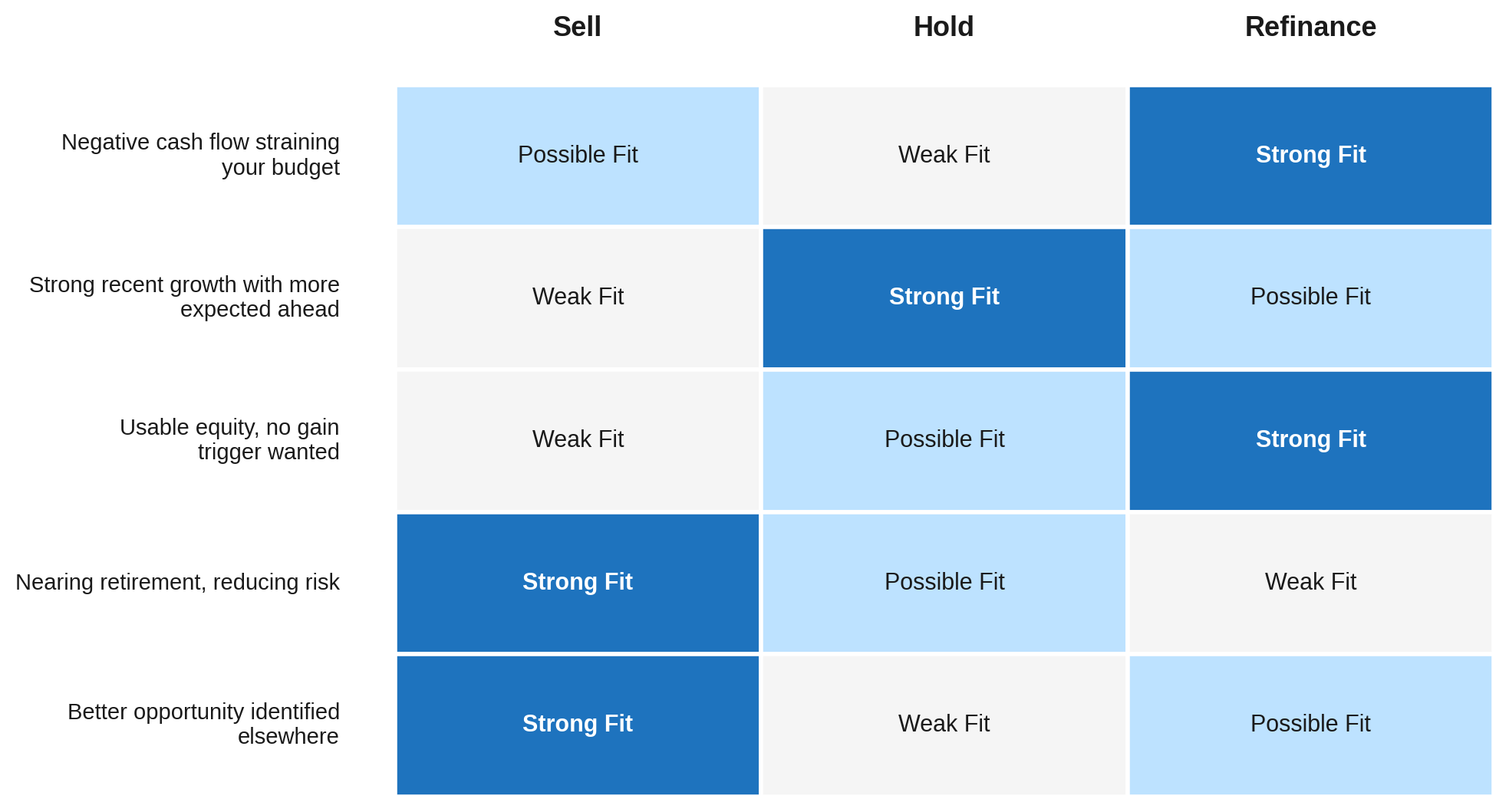
Source: FPW Group decision framework, 2026.
Diversifying across property types and locations, rather than concentrating risk in one asset, is often a stronger long term move than either selling or holding a single underperforming property in isolation.
A conversation with a mortgage broker before you list is the fastest way to find out which of the three options actually fits your numbers.
How Market Conditions Affect the Best Time to Sell
Property market cycles, interest rates, and local supply and demand all shift the calculus, sometimes within the same quarter.
A suburb still absorbing population growth behaves differently to one where new stock is catching up with demand. Buyer sentiment can move faster than either, particularly around rate decisions.
None of these factors should be read alone. A rate cut that lifts buyer sentiment in a supply constrained suburb is a very different signal to the same rate cut in an oversupplied one.
Tax Considerations Before Selling an Investment Property
Capital Gains Tax is usually the largest single cost of selling, and timing changes the outcome more than most investors expect. The Australian Taxation Office applies a 50% CGT discount to individuals who have held the asset for 12 months or more.
The 12 Month CGT Discount Threshold
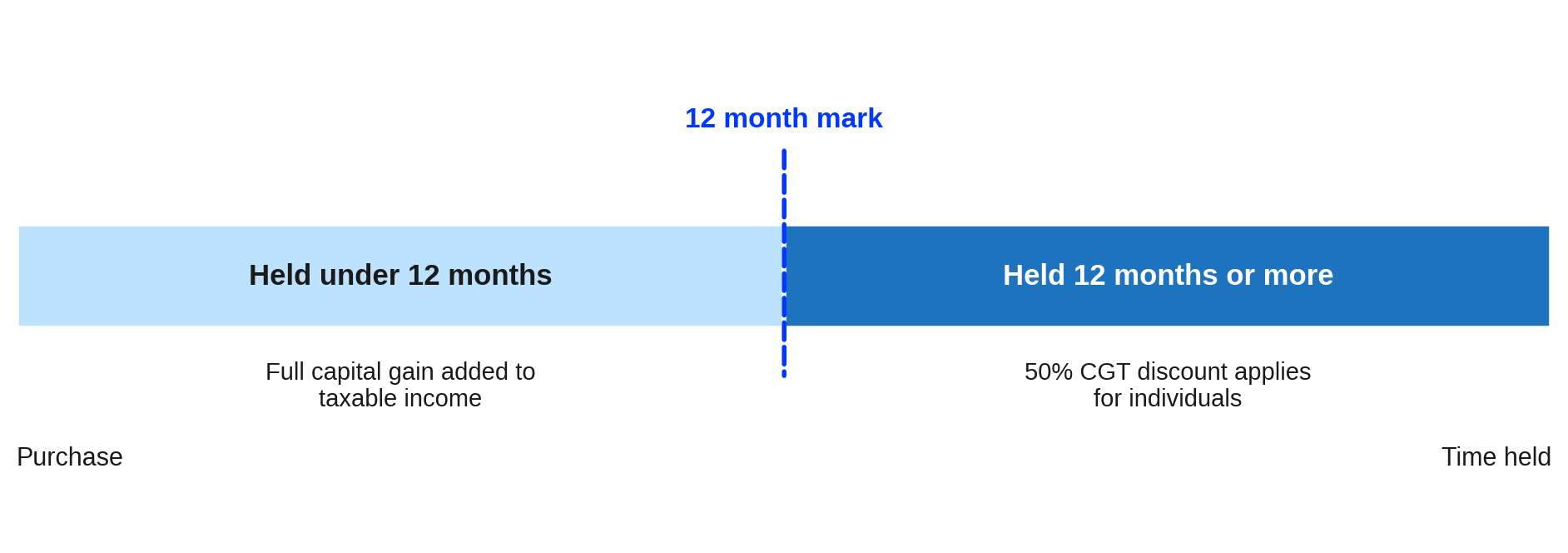
Cost base, selling costs, and any depreciation previously claimed all adjust the final figure, which is why a tax professional should confirm the number before you commit to a settlement date.
Questions to Ask Before Selling
Has the property achieved the purpose you bought it for?
Is cash flow improving or getting worse from here?
What will the proceeds actually be used for?
Could refinancing achieve the same outcome without a sale?
Does selling now align with your long term wealth strategy, or just resolve short term discomfort?
Mistakes Investors Make When Selling Too Early
The most expensive mistakes rarely look like mistakes at the time. They look like reasonable, cautious decisions.
Chasing a short term gain instead of the property's full cycle
Selling because of a temporary dip rather than a structural change
Ignoring future growth drivers such as confirmed infrastructure
Failing to calculate transaction costs before deciding
Letting one stressful year make a ten year decision
Selling Costs vs Refinancing Costs
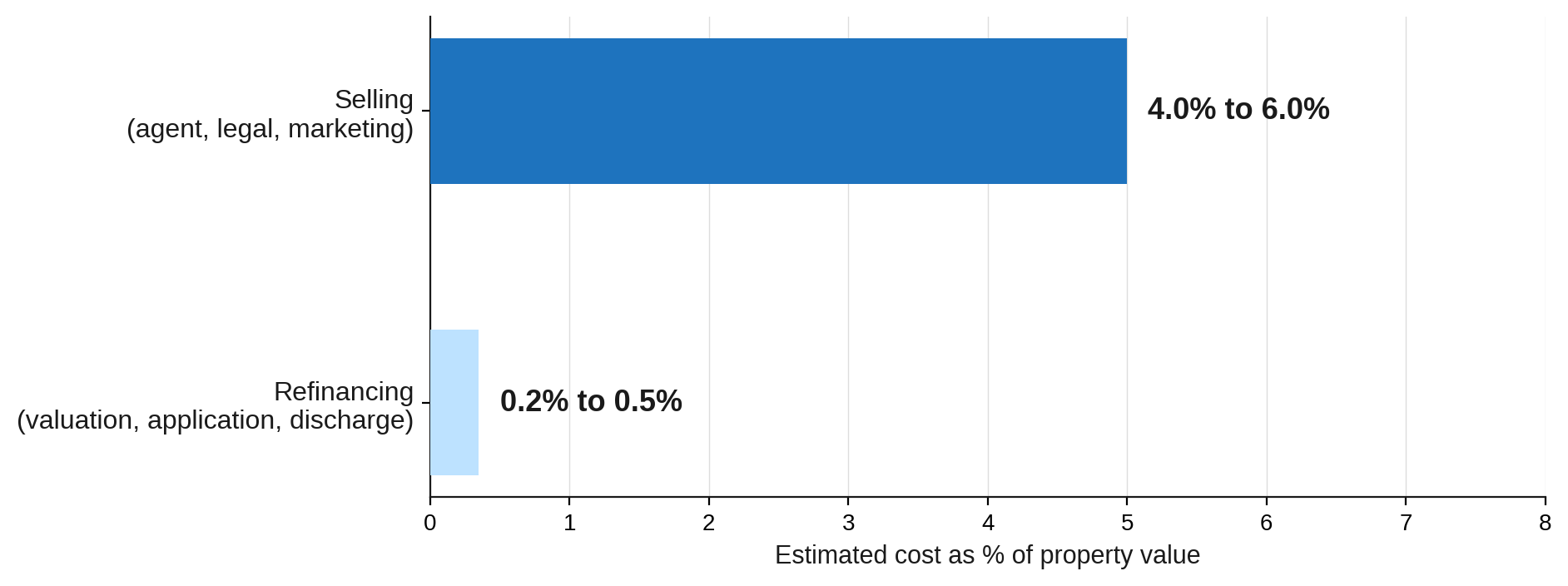
Source: CoreLogic, 2026.
FOR EXAMPLE
An investor sold a property eleven months after buying it to avoid a further rate rise.
Waiting one more month would have added the 50% CGT discount, and the market recovered within the following quarter.
The combined cost of the early sale, in tax and lost growth, exceeded the amount they were trying to protect against.
Final Thoughts
Selling an investment property is rarely a single decision. It is the sum of a growth assessment, a cash flow check, a tax calculation, and an honest look at whether refinancing solves the same problem.
Investors who get this right tend to review each property against fixed criteria on a schedule they control, rather than waiting for the market or a stressful year to force the question.
Frequently Asked Questions
Recommended Reading
Two pages selected based on what readers of this article are most likely to need next.
Recommended Video
With rising rents, tight vacancies, and increasing demand in key Australian property markets, more investors are realising that growth comes from structure, not luck. This plan focuses on finance first — usable equity, borrowing power, refinancing cycles, buffers, and sustainable cash flow — before choosing the right investment property.