

Does HECS Debt Affect Your Borrowing Capacity?
If you have a university debt, one question matters before you apply for a mortgage: Does HECS debt affect your borrowing capacity? The short answer is yes, though less than it used to. Lenders do not treat your HECS-HELP balance like a normal loan. They look at your compulsory annual repayment and count it as a fixed expense, which lowers the income left to service a home loan.
That single line in a serviceability assessment can move your approved amount by tens of thousands of dollars. The rules also shifted in 2025, so older advice is now out of date. This guide explains how lenders assess HECS, what it costs your borrowing capacity, and whether clearing it early is worth it.
What HECS debt is and how repayments now work
HECS-HELP is the government loan that covers university tuition for eligible students. It charges no interest. Instead, the balance is indexed once a year on 1 June, using the lower of inflation or wage growth. Around 3 million Australians carry a HECS debt, with an average balance near $26,500.
You do not repay it through a monthly bill. The ATO collects a compulsory repayment through your tax return once your income passes a set threshold.
From 1 July 2025, that system changed. The minimum repayment threshold rose to $67,000, up from $54,435. Repayments now work like income tax brackets, so you only pay on income above each threshold rather than on your whole salary. You can see the current repayment thresholds and rates on the ATO website.
How much you repay on HECS at each income level
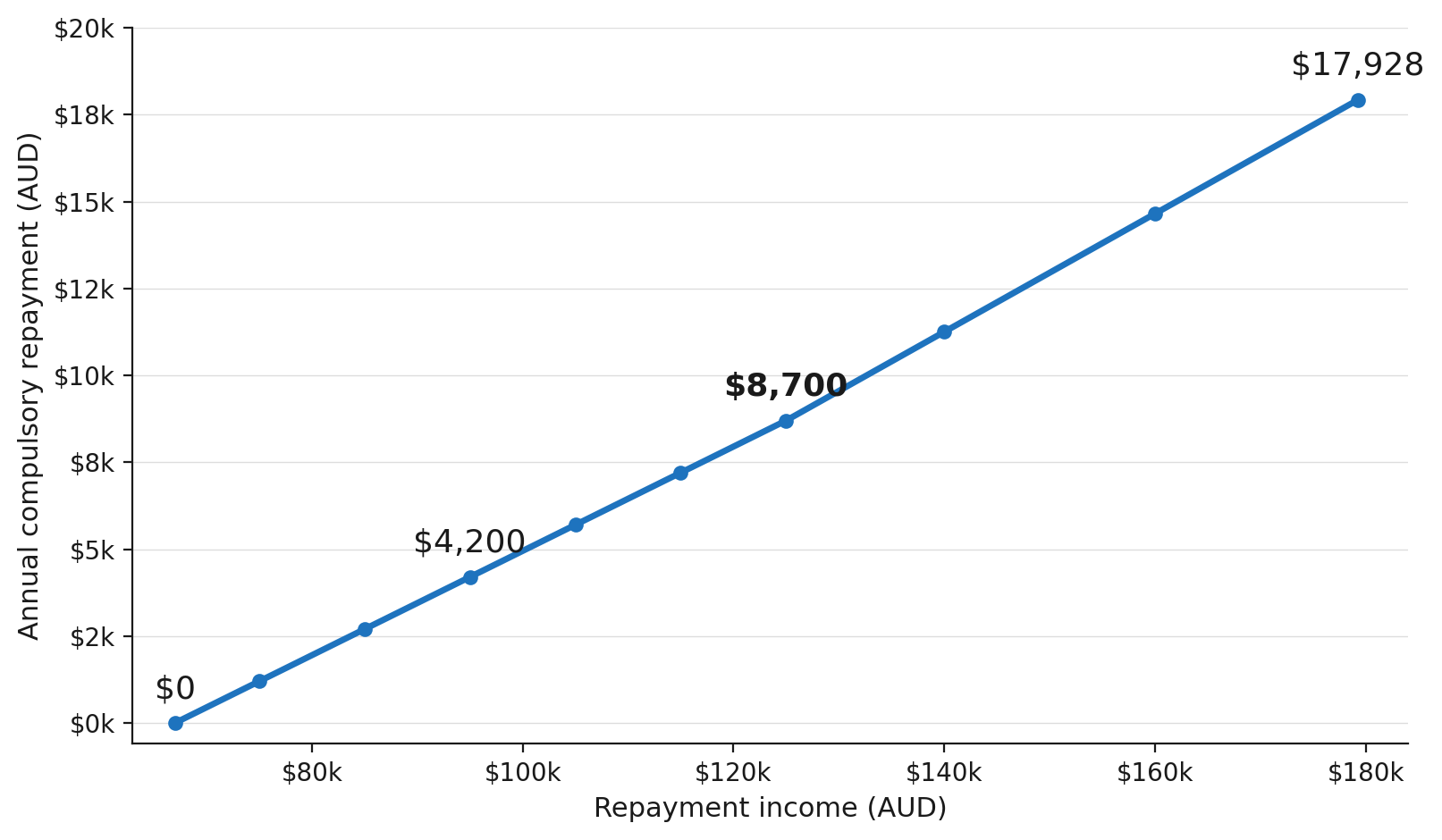
Source: Australian Taxation Office, 2026.
Does HECS debt affect your borrowing capacity?
Yes, and the reason is mechanical. When a lender runs a serviceability check, it adds up your income and subtracts your living costs and existing commitments. Your compulsory HECS repayment sits in that second column. To understand the full calculation, it helps to know how banks calculate borrowing power.
HECS is unusual. It does not appear on your credit report, and it charges no interest. Even so, lenders have long treated it like a car loan or credit card, because the repayment still reduces the cash available each month.
This is also why HECS feeds into your debt to income ratio. The larger your repayment obligation, the less room you have under a lender's risk limits.
How much can HECS reduce your borrowing power?
The honest answer is that it depends on your income. The more you earn, the larger your compulsory repayment, and the bigger the reduction. As a rough guide, HECS can lower borrowing capacity by anywhere from $15,000 to $80,000 for a single applicant.
Estimated borrowing capacity with and without HECS debt
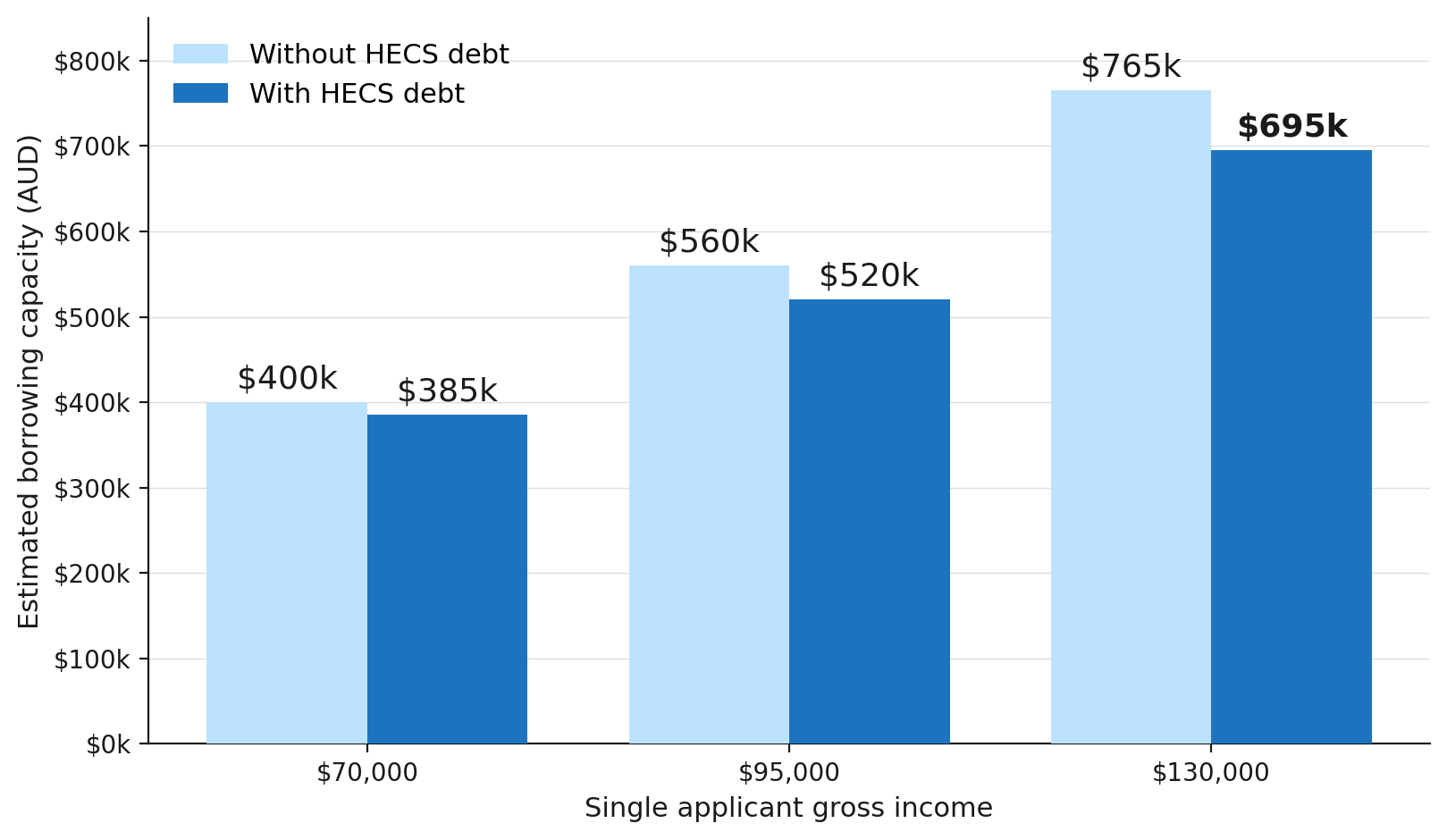
Source: illustrative estimate based on ATO study and training loan repayment rates and APRA serviceability settings, 2026.
FOR EXAMPLE
A single applicant earning $95,000 with HECS might be assessed for around $40,000 less than an identical applicant without it. On a tight budget, that can be the difference between an approval and a knock-back.
How lenders assess HECS debt in 2025 and 2026
This is where the ground shifted. For years, every lender folded your HECS repayment into serviceability the same blunt way. In 2025 the regulators stepped in.
From 30 September 2025, updated APRA guidance lets banks leave HECS out of serviceability when the debt is close to being repaid. All lenders must now also exclude HECS from the debt to income ratio they report to APRA.
The result is that lenders no longer assess HECS the same way. The differences are real and worth knowing.
Commonwealth Bank ignores HECS in serviceability when the balance will clear within 12 months, and applies a reduced buffer where it is due within five years.
NAB disregards HECS entirely where the balance is $20,000 or less, with evidence from the ATO.
Other lenders still count the full repayment in their assessment.
Should you pay off HECS before a home loan?
Sometimes. Not always. Clearing HECS removes the repayment from serviceability, which can lift borrowing power. The catch is that the same money usually has a better job to do.
For most buyers, cash works harder as a larger deposit. A bigger deposit lowers your loan to value ratio and can help you avoid lenders mortgage insurance. HECS also charges no interest, so there is no urgency from a cost angle.
HECS indexation has fallen for three years running
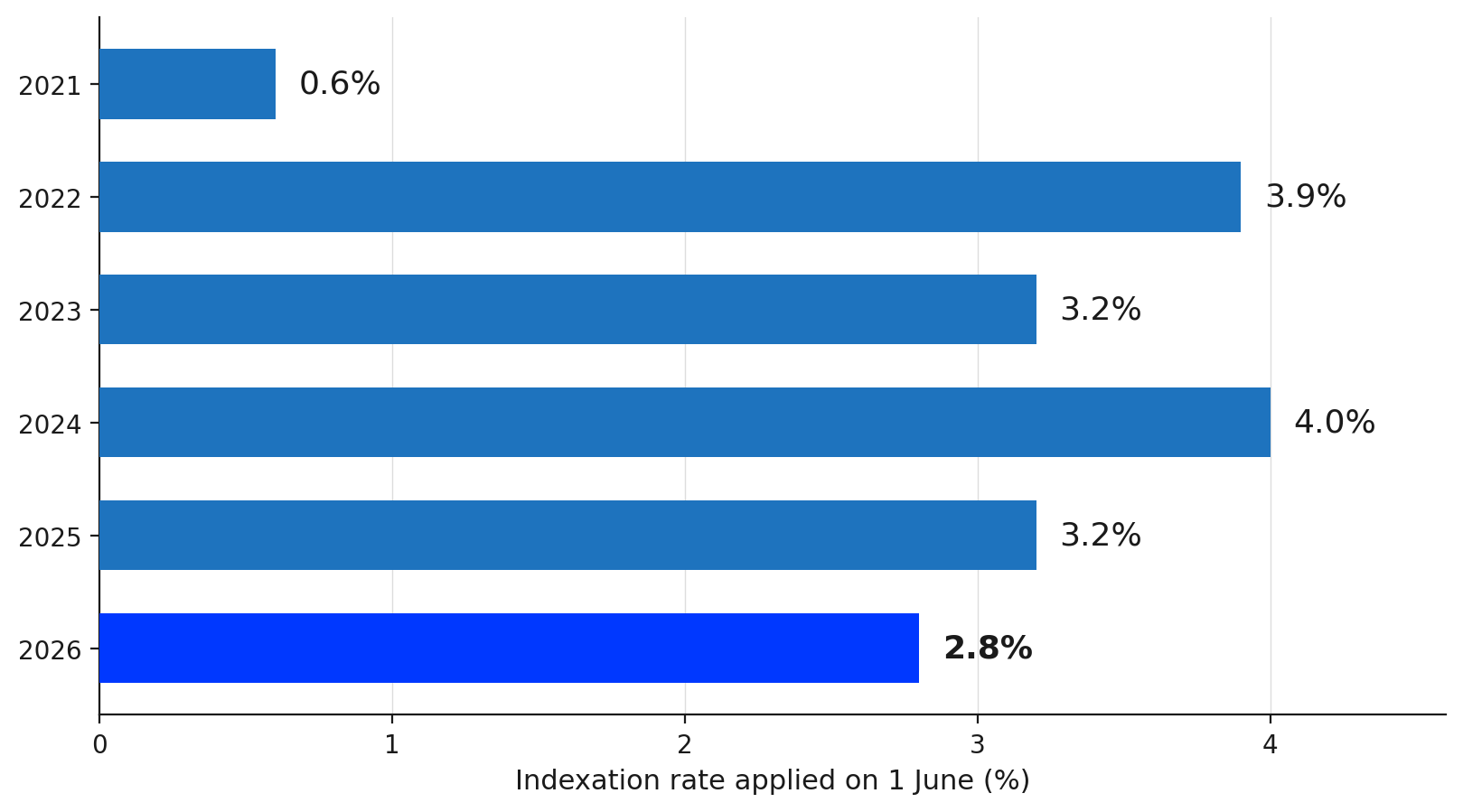
Source: Australian Taxation Office, 2026.
FOR EXAMPLE
If your HECS balance is under $20,000 and your income is high, clearing it might unlock a lender like NAB and add meaningfully to your borrowing power. If your balance is large, repaying it rarely moves the needle enough to justify the cost.
How to improve your borrowing position with HECS debt
You have more levers than HECS alone. Lenders look at the whole picture, so small changes across several areas often beat one large repayment.
A few steps tend to help. Reduce or close unused credit card limits, since lenders assess the limit rather than the balance. Clear high-interest personal and car loans first. Keep your spending clean in the months before you apply. Compare lenders rather than accepting the first assessment. There are also ways to improve your borrowing position that have nothing to do with student debt.
Final Thoughts
HECS debt does affect your borrowing capacity, but the picture in 2026 is friendlier than it was. The repayment, not the balance, is what lowers your borrowing power, and the 2025 changes cut that repayment for most people. Lenders now differ in how they treat student debt, which means the right lender can be worth more than an early repayment.
Paying off HECS helps in narrow cases, usually a small balance paired with a high income. For everyone else, a larger deposit and a clean financial profile do more. Before you apply, it pays to model your real position with someone who knows which lenders assess HECS most favourably for your situation.
Frequently Asked Questions
Recommended Reading
Two pages selected based on what readers of this article are most likely to need next.
Recommended Video
Australia Just Changed Property Investment Rules
Australia has just changed the property investment rules in one of the biggest shake ups in decades through the 2026 Federal Budget. The question is, are you prepared for what this actually means?