

Does Rental Income Increase Borrowing Capacity?
Rental income looks like free borrowing power on paper. In practice, lenders only count part of it, and the rules behind that decision shape exactly how much extra a property investor can borrow.
Understanding rental income borrowing capacity matters before you sign a contract, not after. This article breaks down how banks assess rental income, why they shade it, and what that actually means for your next purchase.
What Is Rental Income?
Rental income is the money a tenant pays you for living in your investment property. Lenders split it into two versions. Gross rental income is the full weekly or annual rent before any costs come out. Net rental income is what is left after expenses like agent fees, insurance, and maintenance.
Banks work from gross rent first, then apply their own adjustments. That distinction matters because two lenders can look at the same property and land on different numbers, simply because their starting calculation differs. The gap becomes more noticeable once an investor starts building a property portfolio, since small differences in shading compound across multiple loans.
How Lenders Assess Rental Income
Lenders never use the full rental figure in their calculations. Instead, they apply a haircut, known as shading, before the income enters your serviceability test. Most banks count somewhere between 70 percent and 90 percent of gross rent.
Shading exists because rent is not guaranteed income. Properties sit vacant between tenants. Maintenance bills appear without warning. A lender that assumed 100 percent occupancy forever would be taking on risk it cannot price properly, so it shaves the number down before it ever reaches the serviceability formula.
How Much Rental Income Counts Towards Borrowing Capacity
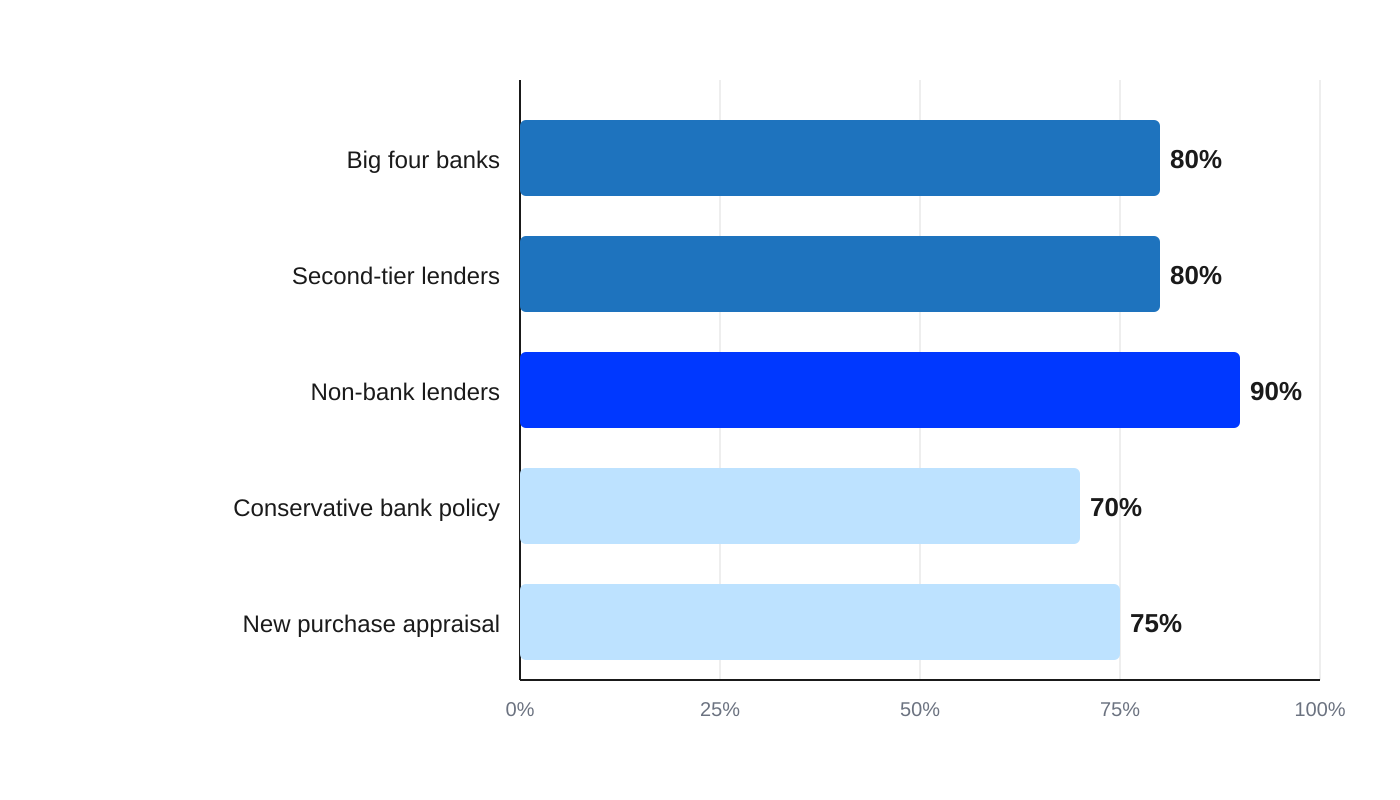
Source: APRA, 2026
Does Rental Income Increase Borrowing Capacity?
Yes, in most cases it does. Rental income gets added to your assessable earnings, which increases the total income side of the serviceability equation. The size of the increase depends on your existing income, your debts, and how much the lender shades the rent.
For an investor earning a moderate salary, a single rental property can shift borrowing capacity by tens of thousands of dollars. For an investor already carrying multiple loans, the same rental income might barely move the number, because existing debt repayments are eating into the gain.
Borrowing Capacity with and Without Rental Income
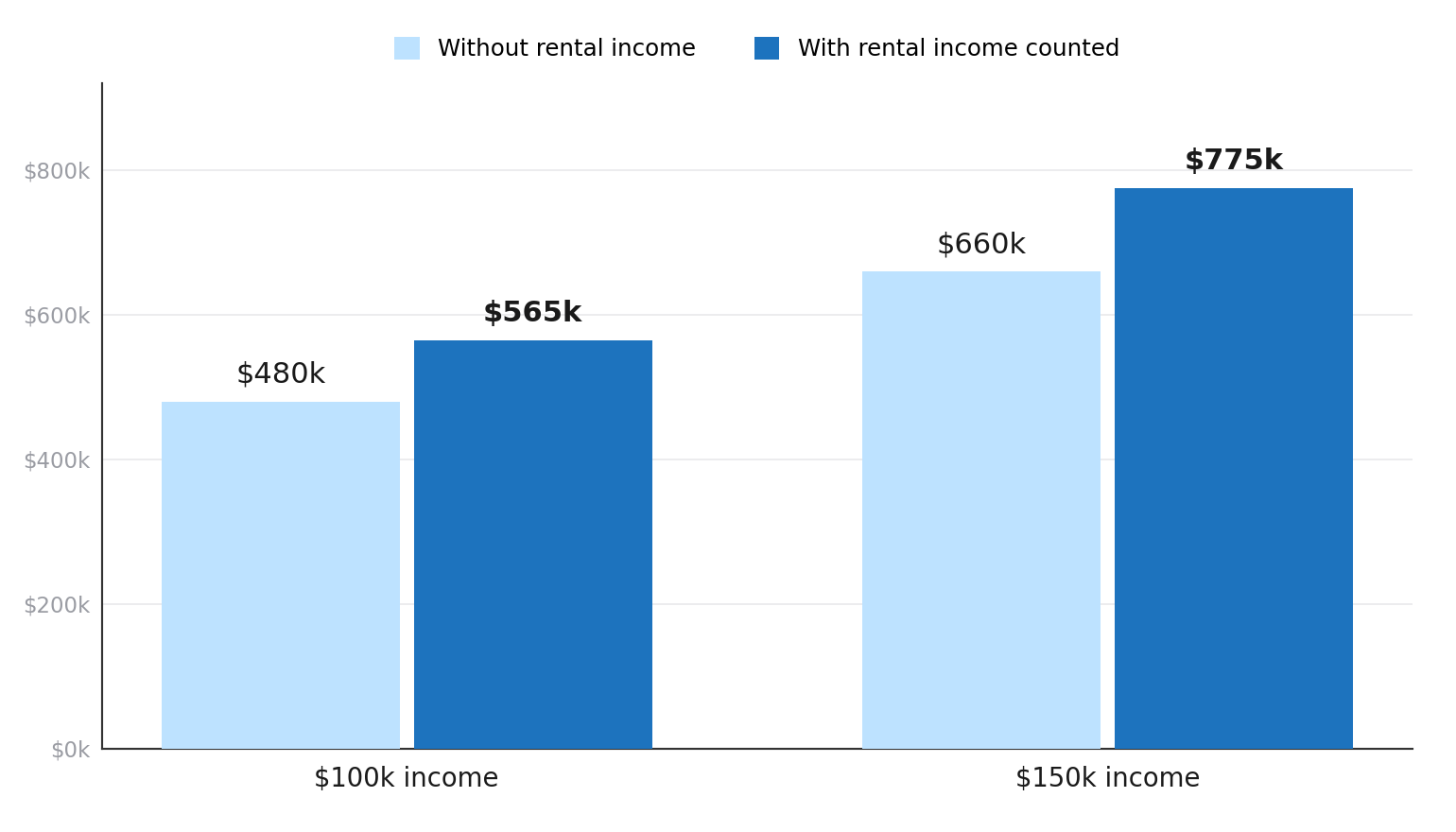
Source: MoneySmart, 2026
How Much Rental Income Do Banks Count?
The amount counted depends on whether the property already has a tenant or is still being purchased. Existing rental income is usually backed by a current lease or recent bank statements showing rent received. Lenders trust this evidence because it reflects real, recent cash flow.
Projected rental income works differently. If you are buying a new investment property, the bank relies on a rental appraisal from a property manager or real estate agent. Some lenders apply a more conservative shading rate to projected rent simply because it has not been proven yet.
From Gross Rent to Assessable Income
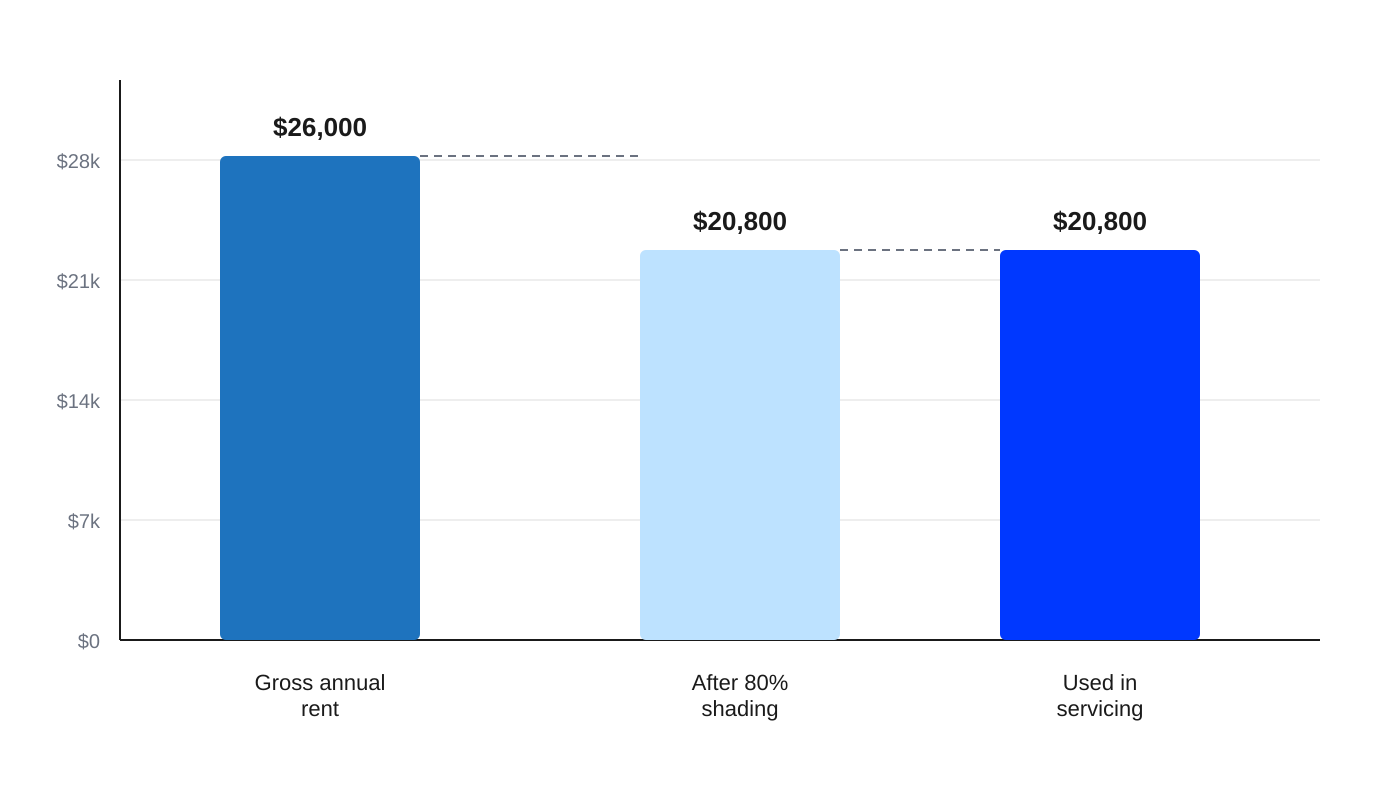
Source: APRA, 2026
Commonwealth Bank's Rental Income Boost for Owner-Occupiers
This article focuses on rental income from an investment property, but a related policy is sometimes confused with it. Commonwealth Bank now allows owner-occupier first home buyers to declare boarder income, up to $150 a week from renting a spare room to a friend or family member, as part of their loan serviceability assessment. National Australia Bank has offered a similar allowance since 2021.
This is a separate mechanism from the investment property rental shading described above. Boarder income applies only to owner-occupiers living in the property, requires a signed declaration, and can lift borrowing capacity by roughly $40,000 to $50,000 for an eligible buyer. It does not apply to investors renting out a wholly separate investment property, which is assessed under the standard shading rules covered in this article.
Rental Income and Mortgage Serviceability
Serviceability is the lender's test of whether you can comfortably repay a loan, not just at today's interest rate, but at a higher buffer rate built into their assessment. Rental income is one input among several, sitting alongside your salary, your debt to income ratio, and living expenses.
Lenders test your loan at a higher interest rate than you pay. That means you may be approved for less than you expect, even with rental income included, because the serviceability buffer reduces how far any income stretches.
Can Rental Income Help You Get a Bigger Home Loan?
For a first-time investor, the answer is usually a clear yes. Adding one rental property to the income side of the equation, with no matching increase in debt obligations beyond the new loan itself, tends to produce a meaningful lift in borrowing capacity.
For an investor already holding two or three properties, the picture gets more complicated. Each additional property adds rental income, but it also adds loan repayments, strata fees, insurance, and council rates. In practice, the net gain per property tends to shrink as a portfolio grows.
Borrowing Capacity Gain Across a Growing Portfolio
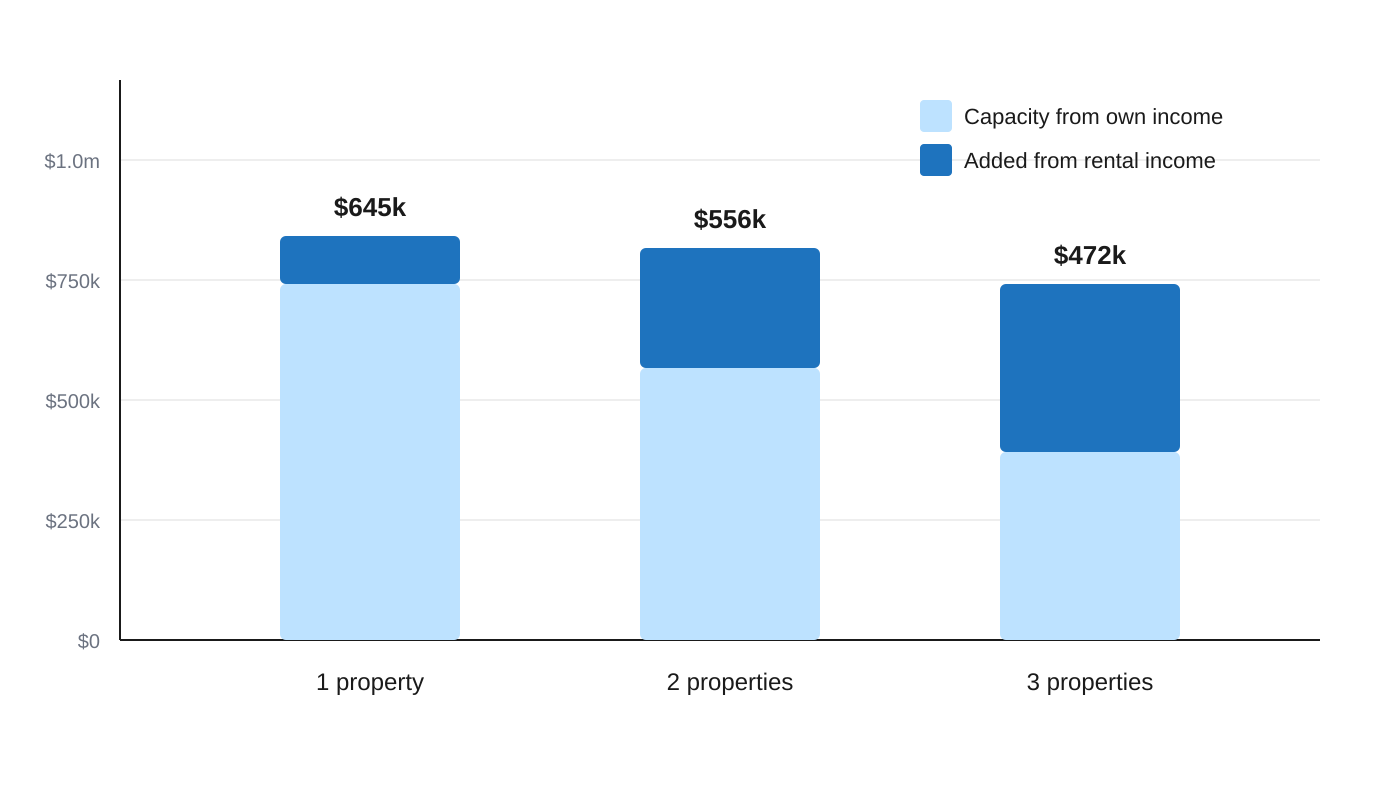
Source: CoreLogic, 2026
Factors That Can Reduce the Benefit of Rental Income
Vacancy periods are the most obvious drag, and they tie directly into the broader rental crisis affecting vacancy rates in many capital cities. A property sitting empty for even four weeks a year reduces the real income behind the number a lender already shaded. Property management fees, typically 5 to 8% of rent, come off the top as well.
Negative gearing adds another layer. If a property is negatively geared, the holding costs outweigh the rental income on paper, which lenders factor into their serviceability test as a net cost rather than a net gain. Existing debts compound the effect further, since every dollar of rental income added is measured against everything you already owe.
How to Improve Borrowing Capacity Using Rental Income
Increasing rental yield through minor upgrades, better tenant selection, or repositioning a property in a stronger rental market can lift the income side of the equation directly. Reducing non-deductible debt, such as credit cards or car loans, frees up serviceability room that rental income alone cannot create.
Improving cash flow across an existing portfolio, even modestly, often does more for borrowing capacity than chasing a slightly higher rental figure on a single property. A mortgage broker who structures finance with this in mind tends to get better outcomes for investors planning a third or fourth purchase.
Final Thoughts
Rental income does increase borrowing capacity, but never by the full amount sitting in a lease agreement. Shading, serviceability buffers, and existing debt all shape how much of that rent counts.
Treat rental income as one part of a bigger calculation, not a guaranteed top up to your budget. Understanding how your lender shades and assesses rent before you apply puts you in a stronger position to negotiate and avoid surprises at approval stage.
Frequently Asked Questions
Recommended Reading
Two pages selected based on what readers of this article are most likely to need next.
Recommended Video
Nine years later, one has $780,000 in equity and almost zero in friction costs. The other has $435,000 in equity and paid over $100,000 in tax and transaction costs getting there. Same market and asset class. Yet completely different outcomes because of one decision made early.