

Harry and Meghan's $21 Million Mansion: The Real Cost of Holding Property
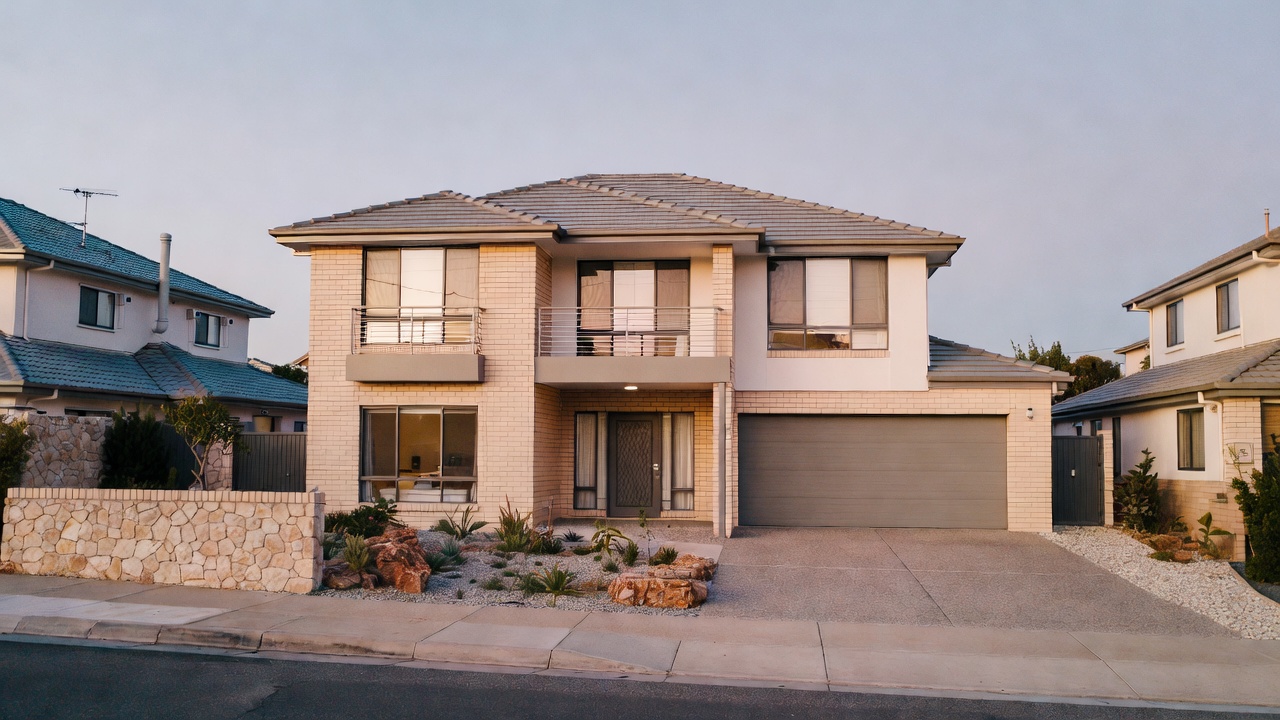
Harry and Meghan left their $21 million Montecito mansion in August 2026 without warning. Neighbors say the family disappeared overnight. No moving trucks. No farewell. Even their children's school was reportedly kept in the dark.
They left the koi fish behind.
This is not just a tabloid detail. Professional koi pond maintenance runs around $200 to $300 a month. The water needs testing, the filters need cleaning, and the fish need feeding whether the owners are home or not. The property barely noticed anyone had left.
That’s what holding property really costs. A house does not stop costing money the moment nobody is living in it. Loan repayments, insurance, landscaping, maintenance and council charges keep arriving whether the house is occupied or empty, and the rental income must cover all of it.
A $21 million mansion and a $650,000 Australian investment property face the same arithmetic. The numbers are just a lot smaller.
Why an Empty $21 Million Mansion Still Costs a Fortune
Harry and Meghan bought the Montecito property in 2020 for a reported $14.65 million, according to multiple outlets covering the couple's move. Six years later, industry estimates put its value at around $21 million, with some reports suggesting a sale could fetch even more.
None of that changes what it costs to hold the property. A house of that size still needs insurance, security, landscaping, maintenance and property taxes, and those bills do not pause because the owners are overseas.
This is not a comment on whether Harry and Meghan can afford to hold an empty property. They clearly can. It is a reminder that owning property and holding property are two different financial commitments, and the second one does not stop just because the first one is settled.
What It Actually Costs to Hold an Investment Property in Australia
Most Australian investors underestimate this figure because they focus on the mortgage repayment and forget everything sitting underneath it.
Loan interest: the largest ongoing cost for most investors, and the most sensitive to interest rate movements.
Property management fees: typically 5 to 12 percent of weekly rent, averaging close to 7.5 percent nationally.
Council rates and land tax: these vary by council and state, and land tax can apply once landholdings pass a threshold.
Landlord insurance: commonly $1,000 to $1,800 a year for a standard house, depending on location and cover.
Repairs and maintenance: an ongoing allowance rather than a one off cost, since a property ages regardless of who lives in it.
Vacancy: even in a tight rental market, a property between tenants earns nothing while every other cost continues.
Landlord insurance alone has risen 3.65 percent nationally over the past year. A closer look at current landlord insurance costs shows how much that single line item can vary by state and property type.
How Holding Costs Affect Your Investment Returns
Gross rental yield only measures rent against the purchase price. It ignores every cost of holding the property, which is why two properties with the same yield can produce very different outcomes for their owners.
Net cash flow tells a different story. It takes the rent a property earns and subtracts everything it costs to hold, which is the number that determines whether an investor needs to contribute money each year.
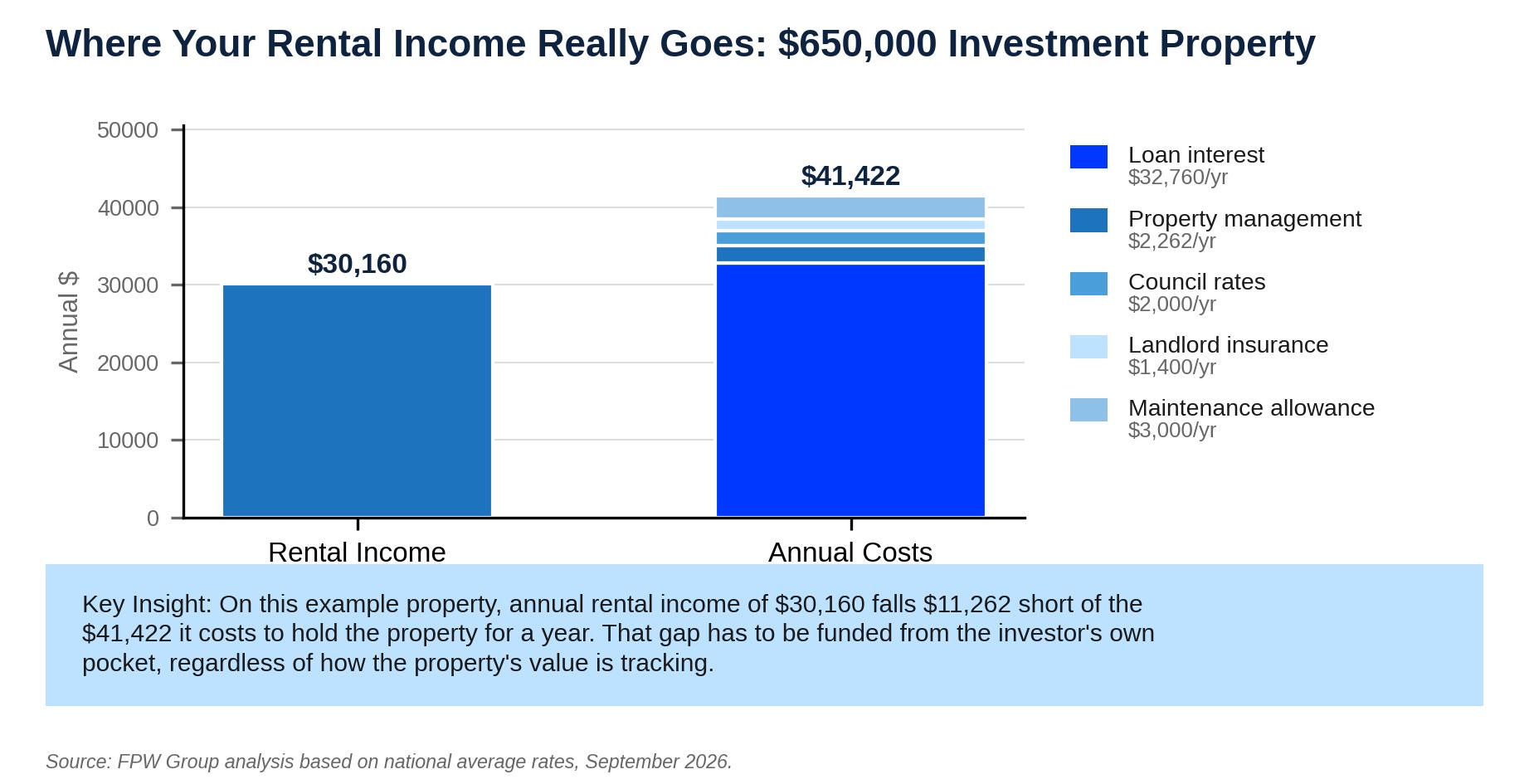
Over five years, that shortfall alone adds up to more than $56,000, before accounting for a single rate rise, rent reduction or unplanned repair. Capital growth may still make the property worthwhile, but it does not erase the cash that has to be found along the way.
Stress Testing Your Numbers Before You Buy
Lenders already stress test your borrowing capacity by assessing your ability to service a loan at a higher interest rate than you will actually pay. It is worth applying the same discipline to your own numbers before you commit to a property.
The table below applies four common pressures to the same $650,000 example property: a one percent rate rise, a five percent rent reduction, a six week vacancy and a single $10,000 repair.
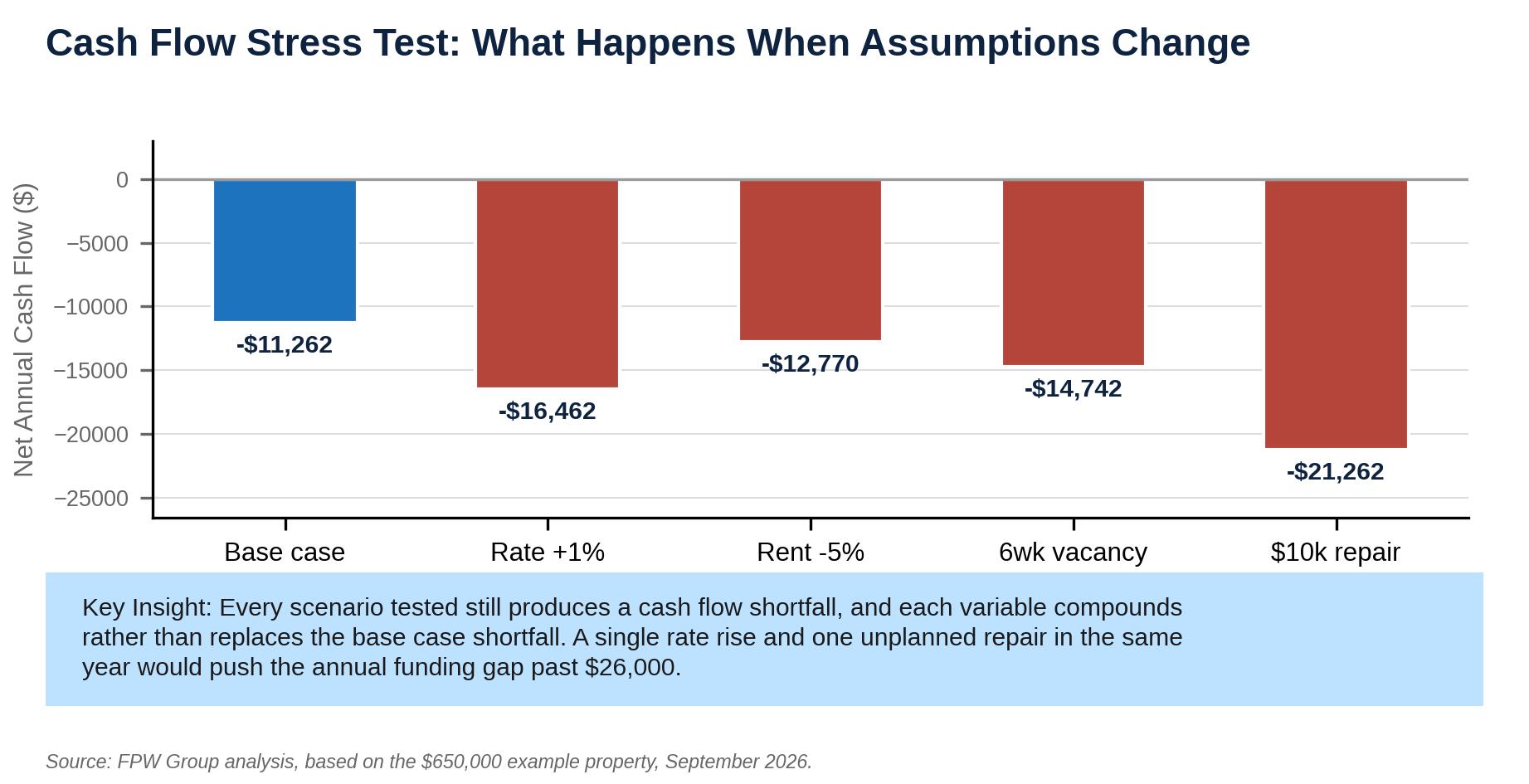
Every scenario tested still produces a shortfall. That does not automatically mean the property is a poor investment. It means the investor needs a buffer large enough to fund the gap without being forced into a decision under pressure.

The Hidden Cost Most Investors Forget
Every dollar contributed to cover a shortfall is a dollar that cannot be used elsewhere, whether that is paying down another loan, building a buffer or saving for the next deposit. That is the opportunity cost of a negative cash flow property, and it rarely shows up in a listing.
A property that consumes a large share of your serviceability can also limit your borrowing capacity for the next purchase, even if your income has not changed. Understanding how lenders calculate this before you buy can prevent one property from quietly closing the door on your next one.
This is why holding costs belong in every property investment strategy from the outset, rather than an afterthought once settlement is done.
What Harry and Meghan's Situation Really Teaches Australian Investors
Harry and Meghan's situation is an extreme version of a very ordinary problem. They can comfortably absorb the cost of holding an empty $21 million property while they decide what to do with it.
Most Australian investors do not have that buffer. A property that quietly drains $11,000 a year, or considerably more once a bad scenario hits, needs to be planned for rather than discovered after settlement.
The lesson here has nothing to do with mansions or celebrities. The real test of a property investment is not the purchase. It is whether you can comfortably hold it through a bad year, not just a good one.
The Bottom Line for Australian Property Investors
A property's price tag is only the starting point. What it costs to hold, and whether the numbers still work when a rate rise, a vacancy and a repair bill hit at the same time, decides whether it builds wealth or drains it.
Before your next purchase, run the full holding cost calculation, not just the mortgage repayment. If the numbers do not comfortably survive a stress test, that is worth knowing before you sign a contract, not after.
Frequently Asked Questions

Recommended Reading
Two pages selected based on what readers of this article are most likely to need next.
Recommended Video
As rates rise, many people immediately assume it is no longer a good time to invest. But in reality, the opportunity has not disappeared—it has simply shifted. This episode explains why higher interest rates do not automatically remove your ability to invest, but they do change your borrowing power, your cash flow, and the price point that makes sense for you.