
Pet-Friendly Rental Laws in Australia: What Has Changed?
Pet-friendly rental laws now apply in every Australian state and territory, and the biggest change is simple: a landlord can no longer refuse a pet just because they would rather not have one. A refusal now needs a legal reason, the landlord must reply within a set deadline, and in several places a tribunal has to agree.
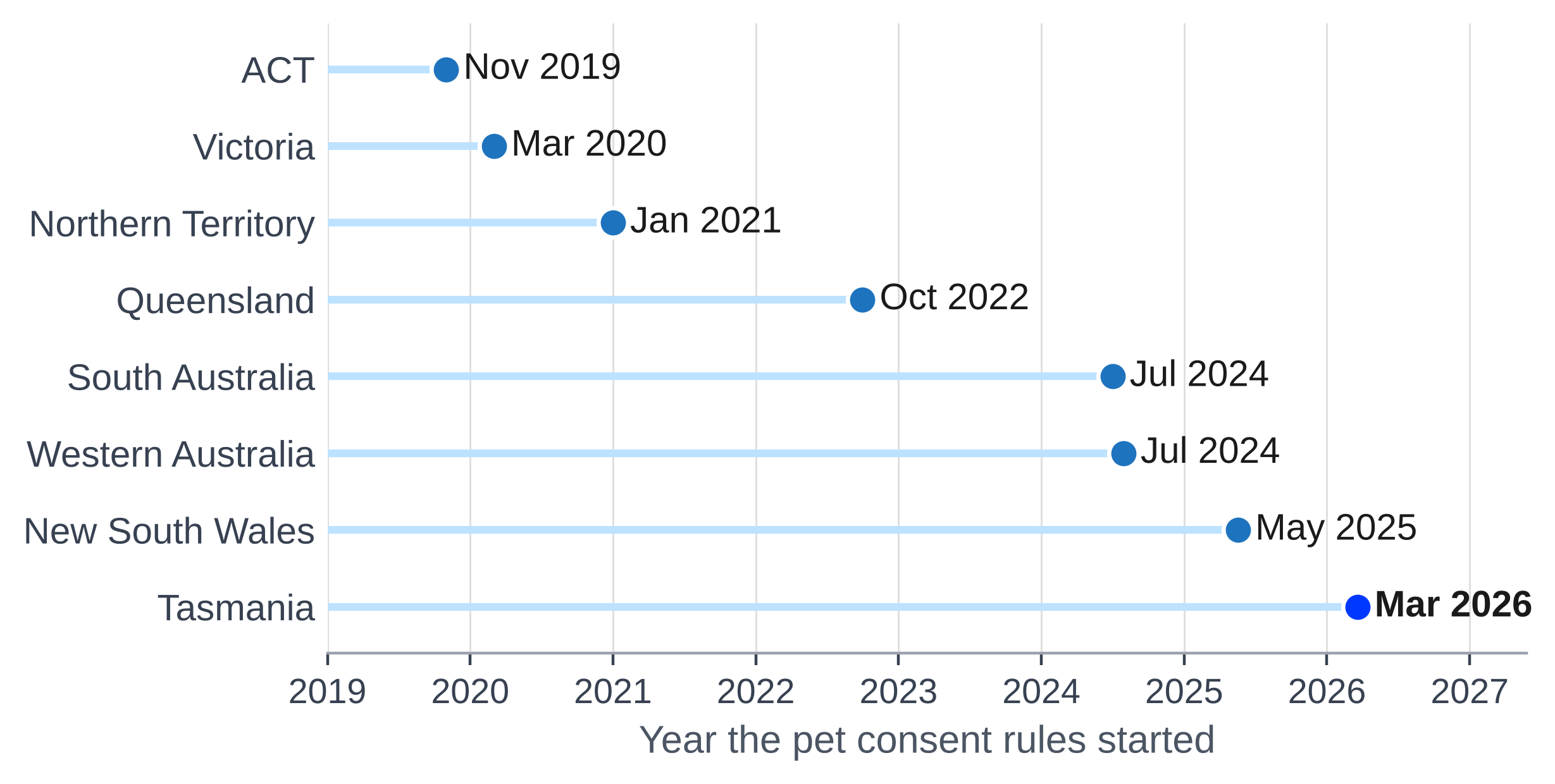
Tasmania became the last state to change on 20 March 2026. That means the rules have shifted in all eight jurisdictions in under seven years, and many leases have not caught up.
For landlords, the bigger risk is the process, not the pet. Miss one deadline or rely on the wrong reason, and the pet can be approved automatically with no conditions attached. Below, we compare the rules in each state, the two numbers that decide most outcomes, and what the changes mean for property investment in Australia.
What Has Changed in Australia's Pet-Friendly Rental Laws?
Why Governments Have Changed Pet Rental Rules
Governments have pointed to a clear gap between how many people own pets and how few rentals allow them. When South Australia announced its reforms in June 2023, it said 68% of South Australians had pets, while less than 20% of rental properties were advertised as allowing them.
The reforms try to close that gap by moving the starting point from no to yes, with a set list of reasons to refuse.
When Pet-Friendly Rental Laws Started in Each State and Territory
Under the old rules, a landlord could usually refuse a pet for any reason, or none at all. Now the landlord must reply in writing within a set time, and any refusal has to fit an approved ground.
When Pet-Friendly Rental Laws Started in Each State and Territory
Source: NSW, VIC, QLD, SA, WA, TAS, ACT, NT, 2019 to 2026
Which Changes Apply to Landlords Now?
Every reform in the timeline is already in force. Existing approvals usually carry over, and in Tasmania consent given before 20 March 2026 continues under the new law.
A property that sits empty during a pet dispute earns no rent, and rent is part of how lenders treat rental income when they assess your next loan.
Pet-Friendly Rental Laws by State and Territory
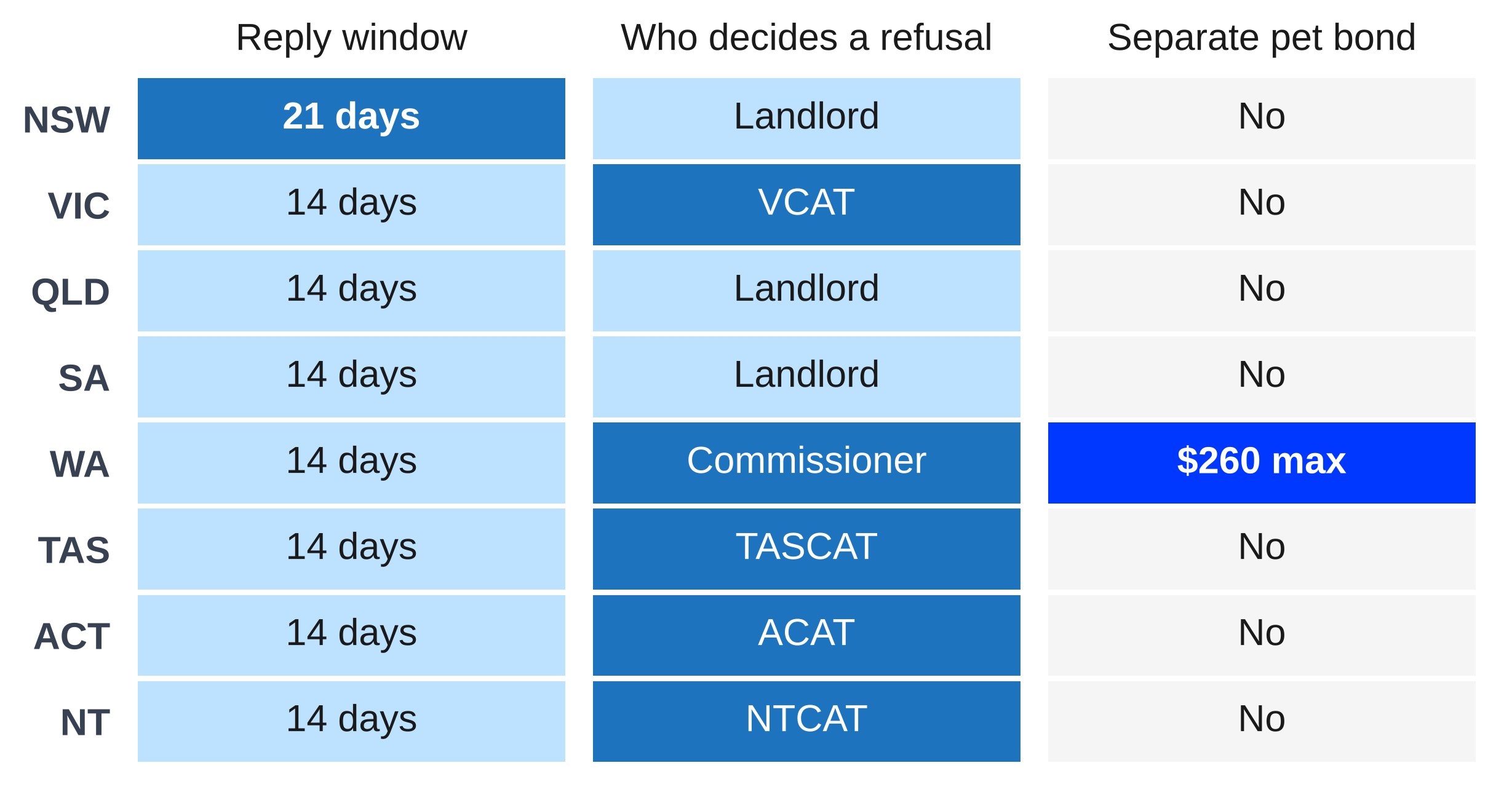
Everywhere, a tenant asks in writing and the landlord answers in writing before a deadline. The states split mainly on who gets the final say.
How Pet Rental Rules Compare Across Australia
Source: NSW, VIC, QLD, SA, WA, TAS, ACT, NT, 2024 to 2026
New South Wales Pet Rental Laws
NSW changed its rules on 19 May 2025. Landlords now have 21 days to respond to a pet application, and if they miss it, the pet is approved without conditions.
A refusal must use a listed ground, such as unsuitable fencing or damage highly likely to cost more than the bond. A strata by-law that bans all pets is not valid in NSW
Queensland Pet Rental Laws
Queensland's pet rules started on 1 October 2022. Owners and managers must respond in writing within 14 days, and a missed deadline or a refusal without proper reasons means the request is approved.
Valid grounds include a body corporate by-law that prohibits the pet and unsuitable premises. Queensland also bans extra rent, bond or other security in exchange for allowing a pet.
Victoria and the Australian Capital Territory
In Victoria, a rental provider who wants to refuse has 14 days to apply to VCAT, or the renter can keep the pet.
The ACT works the same way, with a 14 day limit to apply to ACAT. Neither allows a separate pet bond
Western Australia, South Australia, Tasmania and the Northern Territory
Western Australia's reforms began on 29 July 2024. Landlords have 14 days to respond, and most refusals need the Commissioner's approval.
In a market as tight as Perth's lowest vacancy suburbs, a drawn-out refusal can cost more in lost rent than the pet ever would.
South Australia's changes started on 1 July 2024. Landlords have 14 days to reply in writing, can refuse only on set grounds, and cannot charge a separate pet bond.
Tasmania's law started on 20 March 2026, ending blanket no pets clauses. Refusing means applying to TASCAT within 14 days.
In the Northern Territory, leases made after 1 January 2021 let tenants keep a pet unless NTCAT agrees with the landlord's objection, lodged within 14 days. Pet bonds are not permitted.
Can Landlords Refuse Pets in Rental Properties?
Yes, but only for reasons the law accepts, and only if the landlord follows the process on time.
What Are the Permitted Grounds for Refusing a Pet?
Most lists cover too many animals, a property that cannot suit the animal, damage likely to cost more than the bond, a safety risk, or a law or by-law that forbids it.
What is not accepted matters just as much. In NSW, a landlord cannot refuse because of their own allergy unless they live in the home, and in Queensland a plain "no pets allowed" is not a valid reason.
What Happens If a Landlord Does Not Respond to a Pet Request?
Silence counts as a yes. In NSW the pet is approved without conditions after 21 days, and in most other places the same result follows after 14 days.
An agent on leave or an email in a spam folder can turn a manageable request into an approval with no conditions at all.
Can Landlords Set Conditions for Keeping Pets?
Yes, if they are reasonable and relate to the pet. Examples include keeping an outdoor animal outside, end of lease carpet cleaning for indoor pets, and fumigation for animals that can carry fleas.
Conditions cannot be used as a price. In NSW, Queensland and South Australia, they cannot require higher rent, a bigger bond or other security.

Who Pays for Pet Damage in a Rental Property?
The tenant does. Every state and territory keeps tenants responsible for pet damage beyond fair wear and tear.
Pet Damage Versus Fair Wear and Tear
Fair wear and tear are the slow decline from normal living, such as light carpet wear. Chewed door frames, deep floor scratches and urine stains are damage, and can be claimed from the bond or beyond it.
The catch is proof. Without a detailed entry condition report and dated photos, it is hard to show the scratches were not already there.
Can Landlords Charge a Pet Bond or Extra Rent?
Mostly, no. Western Australia allows a pet bond of up to $260, no matter how many pets live there, and it can only be used for fumigation.
Everywhere else, landlords rely on the standard bond. In Tasmania, for example, that bond is capped at four weeks' rent, and pet conditions cannot require higher rent or bond.
Does Landlord Insurance Cover Pet Damage?
Sometimes, but it depends on the policy wording. Some landlord insurance policies exclude pet damage, some only cover it above the bond, and some cap the amount, so read yours before you approve the next request.
What Do Pet-Friendly Rental Laws Mean for Property Investors?
Demand is not the same as higher rent, though. No strong official data shows pet-friendly rentals earn more or sit empty for less time.
What the numbers do show is a bigger pool of tenants. Pet owners have felt the rental crisis in Australia more than most, and in markets with low vacancy rates a larger applicant pool can matter as much as the rent itself.
these laws are really about tenants. Pet owners make up a large share of renters.
Could Pet-Friendly Policies Affect Tenant Demand?
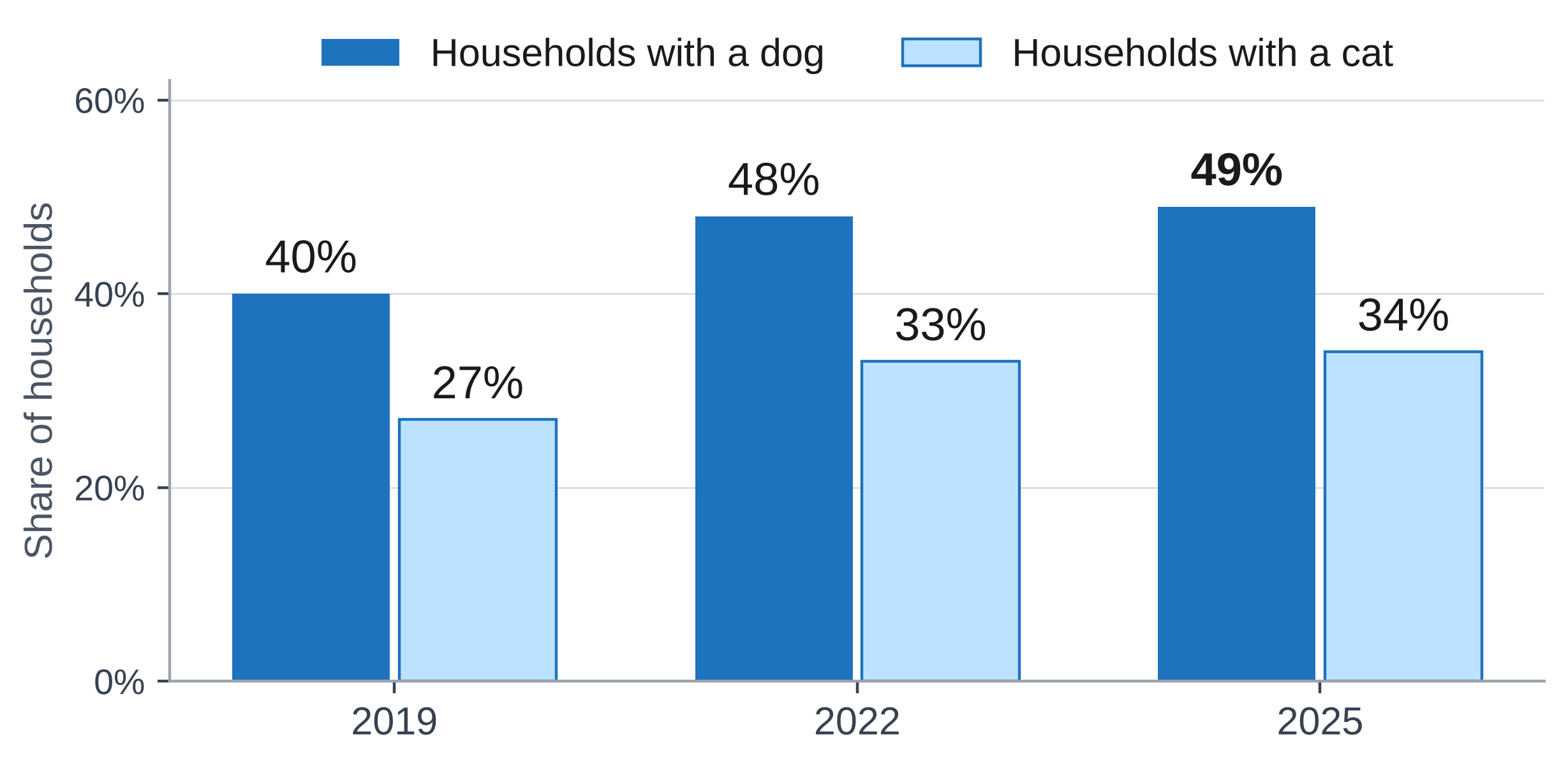
Pet ownership keeps climbing. Animal Medicines Australia's 2025 study found 73% of Australian households now have at least one pet, with dogs in almost half of all homes.
How Many Australian Households Own a Dog or Cat?
Source: Animal Medicines Australia, Pets in Australia, 2025
Demand is not the same as higher rent, though. No strong official data shows pet-friendly rentals earn more or sit empty for less time.
What the numbers do show is a bigger pool of tenants. Pet owners have felt the rental crisis in Australia more than most, and in markets with low vacancy rates a larger applicant pool can matter as much as the rent itself.
What Risks Should Landlords Assess Before Approving a Pet?
Start with the property, not the animal. Check the fencing, the flooring and whether a body corporate has its own rules, which is one reason the house vs apartment decision matters for investors.
Good fencing, hard floors and outdoor space also make a home easier to rent to pet owners, which is part of what makes a good investment property.
What Risks Should Landlords Assess Before Approving a Pet?
A few habits remove most of the risk:
Log every pet request the day it arrives, with the 14 or 21 day deadline marked.
Use the official state form and always reply in writing.
Keep a short list of reasonable conditions ready for common pets.
Add dated photos of floors, doors and yards to the entry condition report.
Check body corporate or strata by-laws before you reply, not after.
What Should Landlords Do Next?
Check the Laws That Apply to the Property
Use the tenancy authority for the state where the property sits, not where you live
Review Insurance, Agreements and Body Corporate Requirements
Check your policy for pet exclusions, remove blanket no pets clauses from new leases, and get a copy of any by-laws.
Keep Records of Applications and Decisions
Keep the request, your reply, the date sent and any conditions agreed. Clear records usually win tribunal disputes.
Final Thoughts
Pet-friendly rental laws have changed the starting point in every Australian state and territory. A pet request is now a formal application with a deadline, and in most places silence means yes.
Refusals still exist, but they need a legal reason and, in four jurisdictions, a tribunal's approval. Damage remains the tenant's responsibility, so a landlord's protection now sits in condition reports, sensible conditions and a policy they have read.
Handled well, these rules can work in a landlord's favour. Close to half of Australian homes have a dog, and a property that suits pets is suiting a big part of the rental market.

Frequently Asked Questions
Recommended Reading
Two pages selected based on what readers of this article are most likely to need next.
Recommended Video
Australia's record migration surge — peaking at over 528,000 people in a single year — created unprecedented housing demand almost overnight. We explain why the government used population growth as a deliberate tool to avoid recession, how that decision flows directly into property prices Australia-wide, and why rents have surged to record highs as a result.