

Auction Clearance Rates Are Falling. Is That Bad for Investors?
Australia property auction clearance rates have been falling through 2026, but a lower clearance rate is not automatic proof that prices are about to drop. It is a signal about competition on a single Saturday, not a forecast of where a property's value is heading.
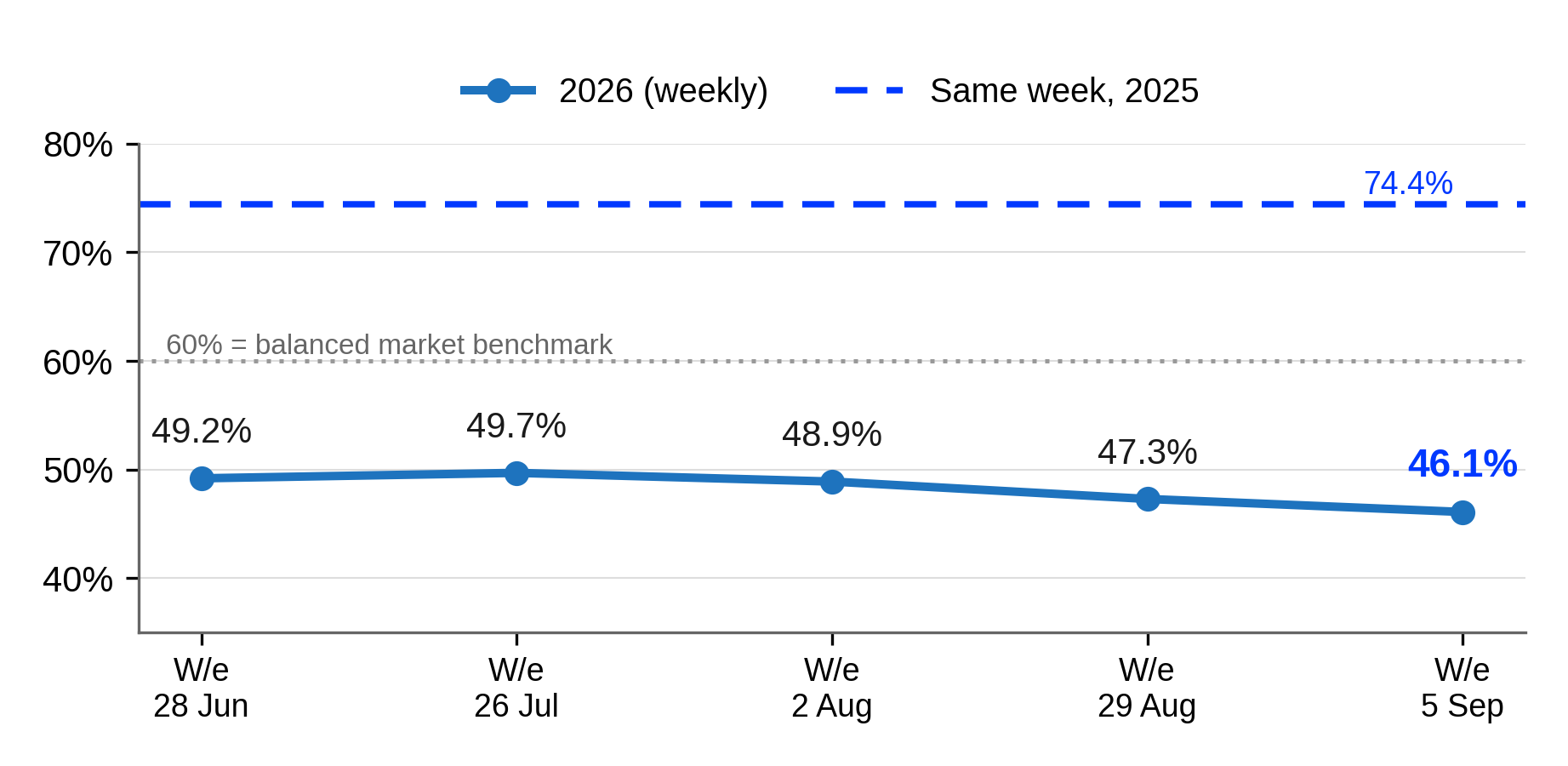
The national preliminary rate sat at 46.1% for the week ending 5 September 2026, well under the 74.4% recorded in the same week of 2025. What that number can and cannot tell an
investor, and what else needs checking before it changes a buying decision, is the real question worth answering, more useful than reading the wider market slowdown from one weekly figure alone.
What Australia's Auction Clearance Rate Is Actually Showing Right Now?
Australia property auction clearance rates have fallen through most of 2026, and the trend has kept moving in one direction since winter. The national preliminary clearance rate was 46.1% for the week ending 5 September 2026, down from 47.3% the week before and well under the 74.4% recorded in the same week of 2025, according to Cotality
A rate above 60% is generally seen as a balanced market. Every major capital has spent recent months below that mark, and some weeks have landed well below it, including a preliminary reading of 49.2% in late June that Cotality expected to fall closer to 40% once final results were counted.
What Does a Mortgage Broker Do?
Source: Cotality, weekly auction results, 2026
Is a Falling Clearance Rate a Warning Sign or Just a Signal?
Where a genuine property investment adviser tends to add value is in property selection and suburb research, matching a purchase to an investor's actual goals rather than just approving a loan. Every property investment strategy eventually needs someone assessing whether a specific property fits the plan, not only whether the finance will be approved.
Is a Falling Clearance Rate a Warning Sign or Just a Signal?
A clearance rate is a signal, not a forecast. It measures how many properties found a buyer at auction that week, which reflects competition and confidence on the day, not the value of any property twelve months from now.
Cotality's head of research has linked the shift partly to affordability. Three interest rate rises this year have reduced how much buyers can borrow, and that shows up in auction rooms before it
shows up in price data. Checking debt-to-income limits and serviceability buffers explains part of why fewer bidders are showing up, regardless of what any single suburb is doing.
Why the National Number Hides What's Happening in Your City
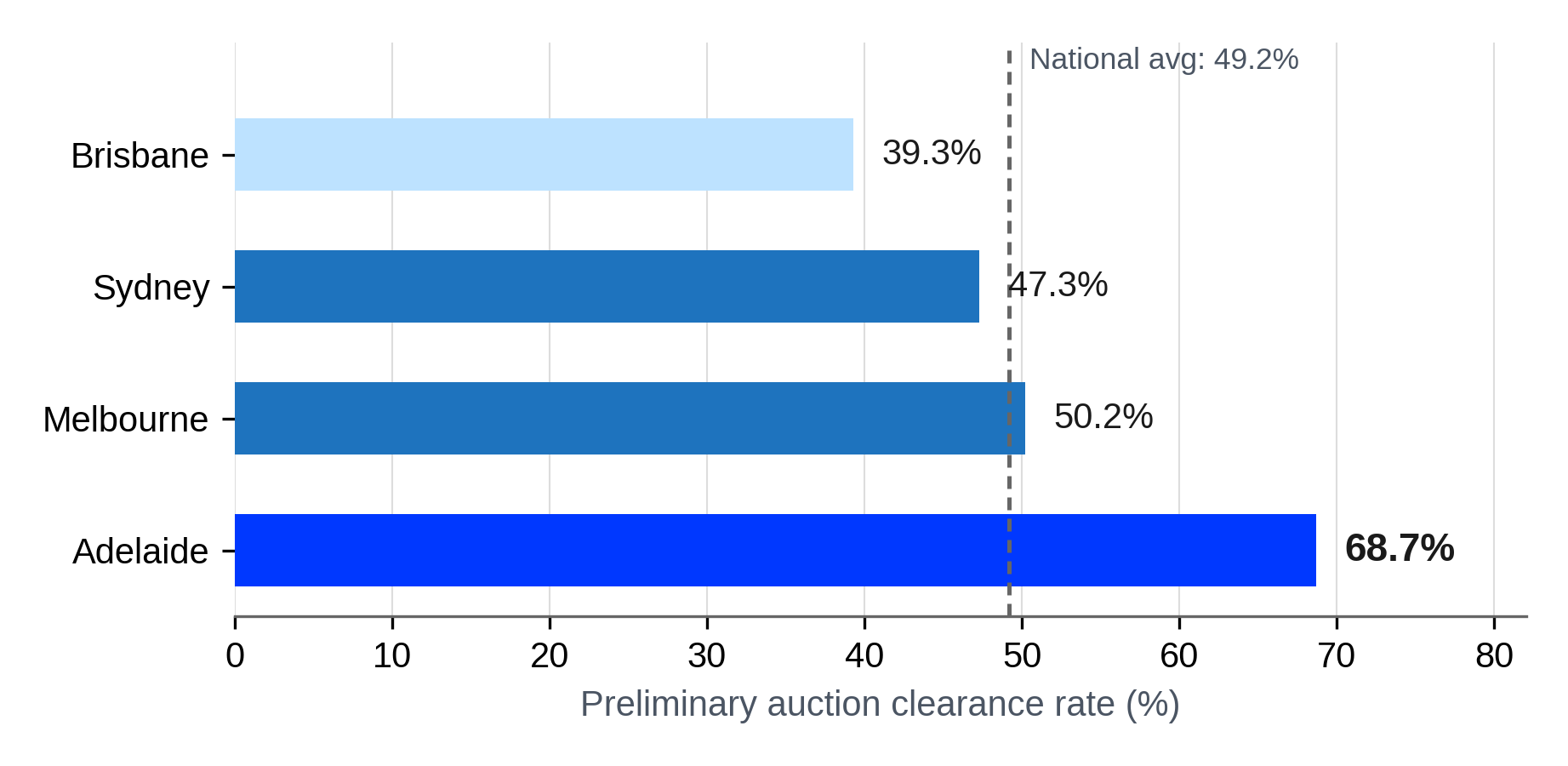
Australia does not have one property market, and a single national clearance rate can conceal very different conditions from city to city. The week ending 28 June 2026 makes the point clearly.
Auction Clearance Rates by Capital City, Week Ending 28 June 2026
Source: ABC News, citing Cotality, 28 June 2026
A falling national clearance rate does not mean every suburb is weakening, and a healthy national figure does not guarantee your target market is strong either. Comparing capital cities directly is a better starting point than reading the national number as a single verdict on the country.
Clearance Rate Isn't the Whole Story: Volume, Passed In and Withdrawn Sales
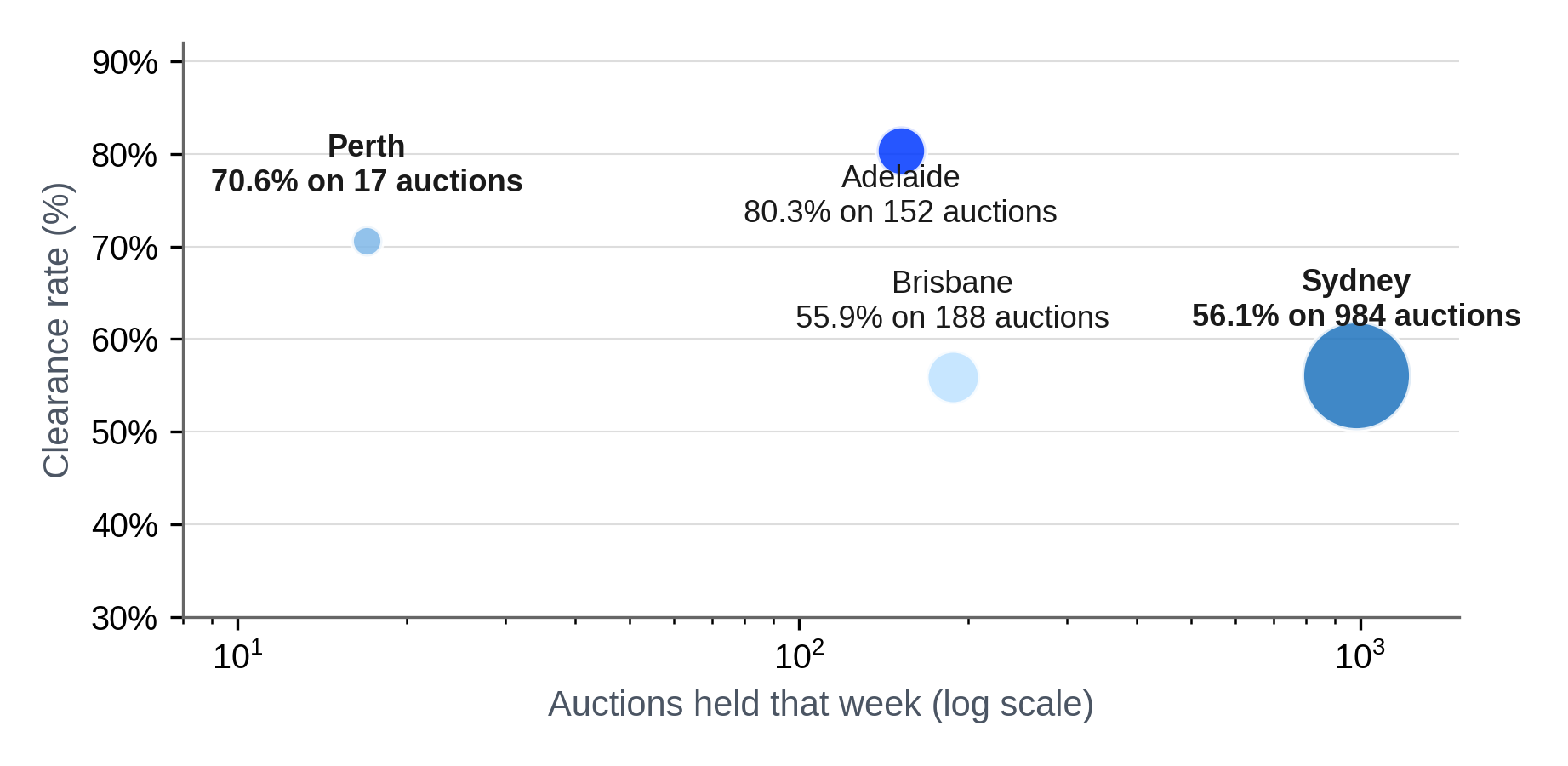
A clearance rate on its own says nothing about how many properties were actually offered, or how those that didn't sell were handled. Both details change what the headline number is really telling you.
Auction Volume vs Clearance Rate by City
Source: Mortgage Professional Australia, citing Cotality, March 2026
A property that is passed in was tested at auction and did not reach reserve. A withdrawn property never faced that test at all, often because the vendor sensed weak interest beforehand. Reading the two the same way overstates how many properties genuinely failed to sell.
Preliminary figures also move. Cotality typically publishes a Sunday estimate, then revises it across the week as more results are confirmed, which is why understanding what makes a property a good investment should rest on more than one weekend's headline.
What Falling Clearance Rates Mean for Buyers and Investors
For buyers, a weaker auction market usually means less competition, more properties passing in, and more room to negotiate after the auction ends. That does not automatically mean bargains are everywhere.
For investors, the calculation is broader again. Purchase price, borrowing capacity, rental income, vacancy risk and long-term growth all matter alongside whatever the auction data says that week. Reviewing common red flags before buying and confirming what a lender will actually approve both matter more than the headline clearance number.
Final Thoughts: Read the Signal, Don't Guess the Forecast
Falling auction clearance rates point to weaker buyer competition, and the current run of data shows that clearly across most of the country. They are not, on their own, proof that prices are about to fall or that every market is moving the same way.
The stronger approach is to treat the clearance rate as one input among several: auction volumes, city-level differences, borrowing conditions and the fundamentals of the specific property. Investors who check all of it tend to make steadier decisions than those reacting to a single Saturday headline.

Recommended Reading
Two pages selected based on what readers of this article are most likely to need next.
Recommended Video
While many investors spend time researching growth areas and property types, this discussion highlights a different reality—your ability to continue investing is often determined not by what you buy, but by how your loans are structured and how your borrowing power is managed over time.