

Best Darwin Rental Property Suburbs: What the Data Reveals in 2026
Darwin rental property is delivering the highest yields of any Australian capital right now, but that alone does not tell you where to buy. Vacancy across the city sits near 0.3 per cent, the tightest of any capital, and annual rent growth has reached 10.1 per cent, also a national high.
The harder question is which suburbs turn that rental strength into a genuine investment case once purchase prices, growth and risk are weighed together, not just which suburb has the biggest headline yield.
What's Happening in the Darwin Rental Market Right Now?
Darwin's rental market is the tightest in the country by a clear margin. Vacancy sitting near 0.3 per cent means landlords are approving tenants within days, and that scarcity is what has pushed annual rent growth to 10.1 per cent, the highest of any capital city, according to Cotality (CoreLogic) data. For context, national rent growth over the same period sat closer to 7 per cent.
That combination of scarcity and rent growth is why Darwin now carries the highest average rental yields in the country. Gross yields average 5.8 per cent for houses and 7.5 per cent for units citywide, well above the national average of roughly 3.0 per cent for houses and 4.3 per cent for units. Investors chasing cash flow have taken notice, and interstate buyer activity has become a meaningful share of Darwin's purchaser base over the past year.
Yield this high usually signals either genuine undersupply or elevated risk. In Darwin's case, tight vacancy, population growth from Defence and resource-sector employment, and constrained new dwelling approvals all point toward the former. That does not mean every suburb is a safe bet. It means the citywide backdrop is unusually supportive of rental income, which still needs to be tested suburb by suburb.
Darwin Housing Prices: What Are Investors Actually Paying?
Darwin remains Australia's most affordable capital city to buy into, with a median dwelling value around $560,000 as of late 2025, according to Cotality. But that affordability is eroding quickly. Darwin's median value rose close to 20 per cent over the past year, the second fastest pace of any capital behind Perth, and Palmerston, Darwin's fastest growing corridor, posted annual growth above 21 per cent to reach a median near $676,000.
The housing shortage in Darwin mirrors what is happening in the rest of the country, but the effect is sharper here because the market is so much smaller. A modest shift in buyer demand moves prices more visibly than it would in Sydney or Melbourne, which is part of why Darwin suburb data can look more volatile than data from larger cities.
At this price point, financing is rarely the binding constraint it is in Sydney or Melbourne, but it still matters. Understanding your own borrowing capacity formula before you shortlist suburbs prevents the common mistake of falling for a yield story that your own serviceability cannot support.
Best Darwin Rental Property Suburbs in 2026
The suburbs below were selected using the same combination of factors that should drive any suburb decision: rental yield, recent growth, vacancy conditions and affordability, rather than a single standout number. Nightcliff appears twice, as both a house and a unit market, because the split between the two is one of the most useful data points in this entire comparison.
Median Price by Suburb
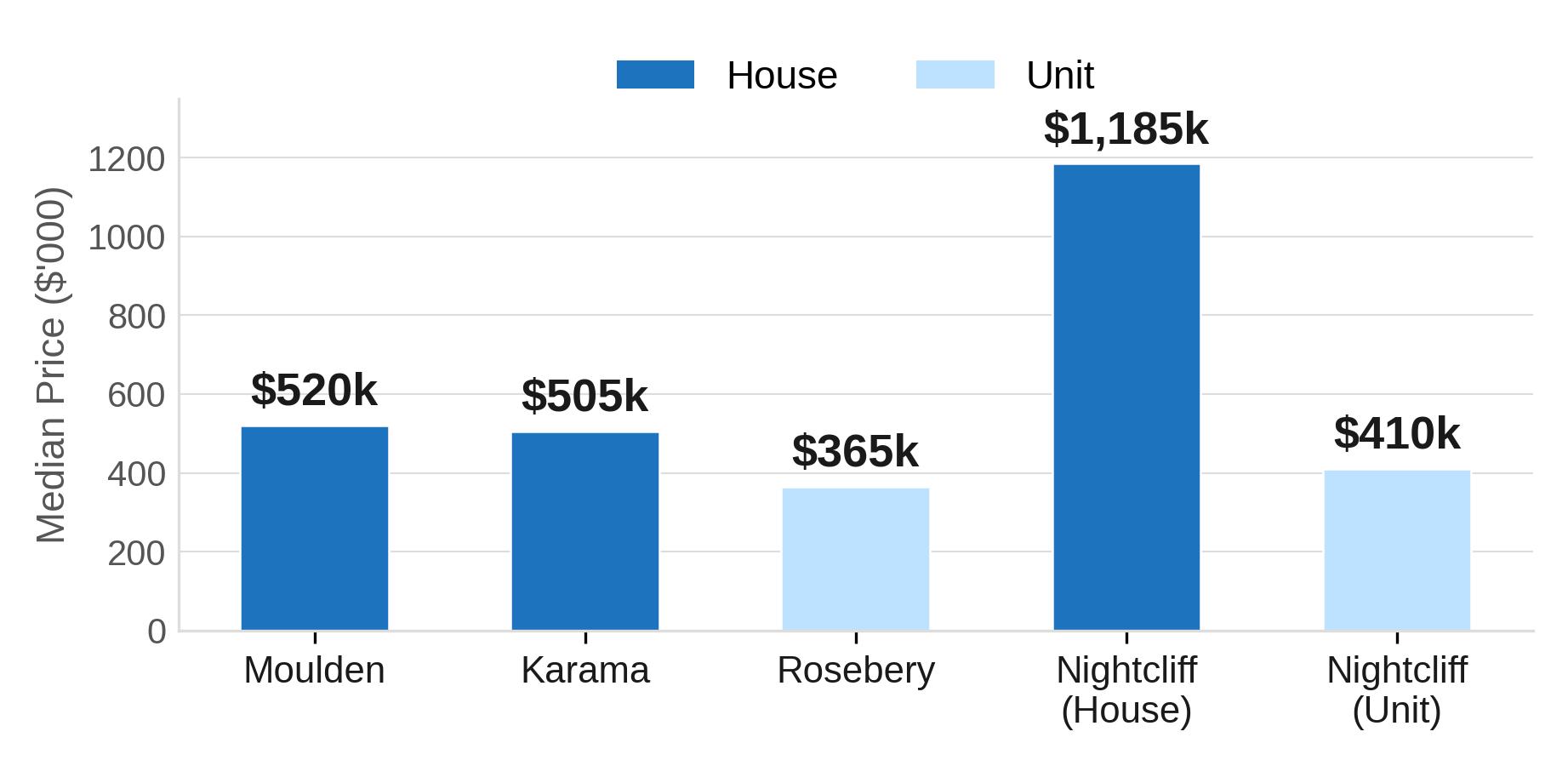
Source: Cotality (CoreLogic) suburb data, 2026
Moulden and Karama, both in Darwin's more affordable northern and Palmerston corridors, combine strong yields with growth well above the national average, according to CoreLogic-sourced suburb data. Rosebery offers the lowest entry price on this list at $365,000, suited to investors prioritising cash flow over capital growth in the near term.
Nightcliff illustrates the trade-off most clearly. Its house market has delivered the strongest growth on this list at 27.4 per cent annually, but that scarcity premium has compressed the yield to 4.4 per cent. Its unit market tells a different story entirely, with a lower entry price, stronger yield and steadier growth, which makes it a genuinely different investment depending on which property type you choose within the same postcode.
Working out which of these fits your own strategy is easier with a framework for how to choose investment grade suburbs, rather than ranking suburbs purely on the highest yield or the fastest growth in isolation.

Houses vs Units: Which Makes More Sense in Darwin?
Darwin is one of the few Australian capitals where units consistently out-yield houses by a wide margin, often more than two percentage points citywide. That gap exists because Darwin's unit stock, concentrated in the CBD and inner suburbs, was built for a rental market rather than an owner-occupier one, keeping entry prices low relative to achievable rent.
Growth vs Yield Across the Shortlist
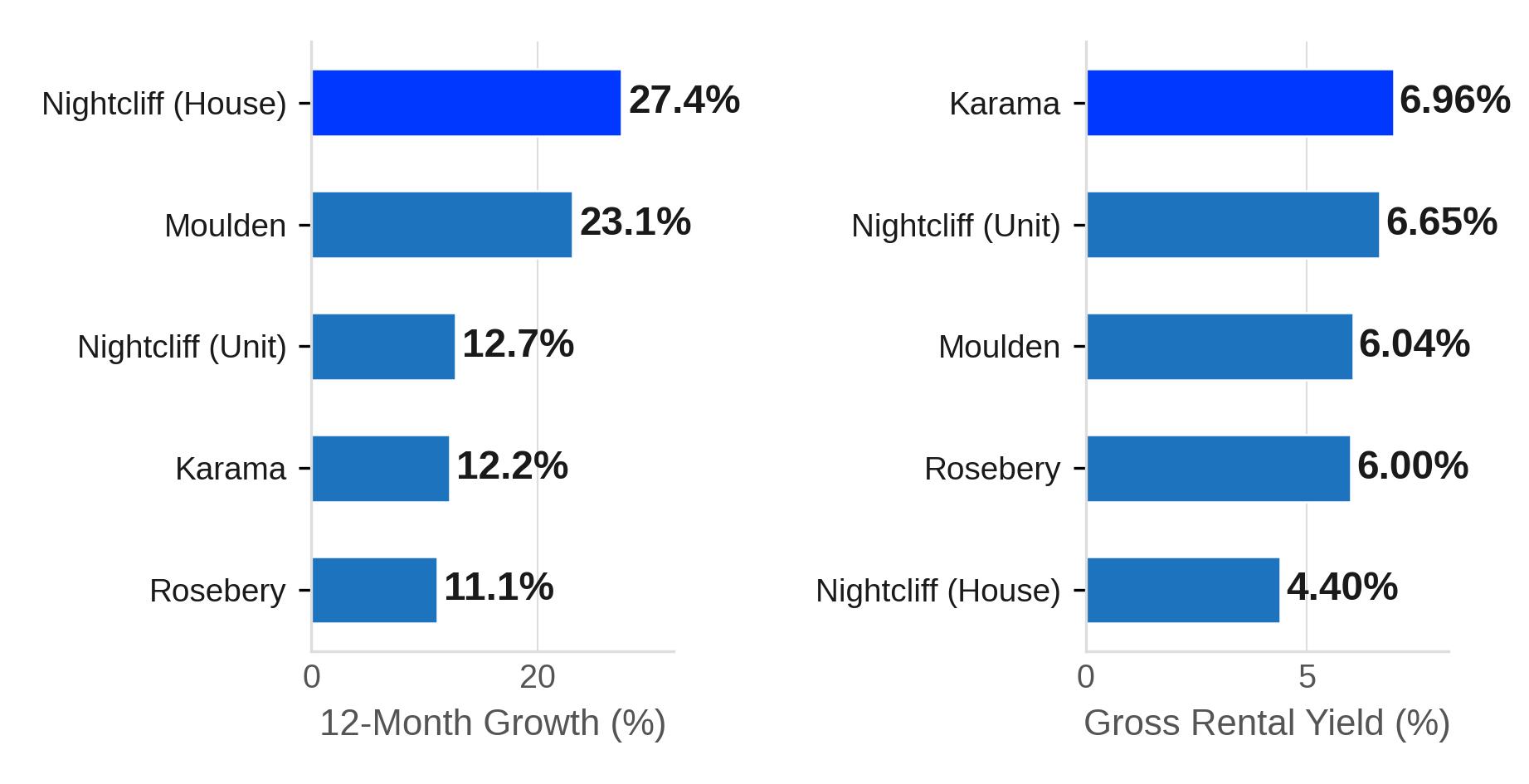
Source: CoreLogic and OpenAgent suburb data, 2026
Houses carry the land component that has historically driven Darwin's stronger long-term growth, particularly in family-oriented suburbs like Karama and Moulden where owner-occupier demand competes directly with investors. Units trade that growth potential for immediate cash flow, which matters more to an investor who is close to their borrowing limit or who wants the rental income to cover holding costs from day one.
Body corporate costs and building quality deserve real scrutiny before buying a Darwin unit. Older stock in a tropical climate carries higher maintenance costs than equivalent buildings further south, which can quietly erode a headline yield once expenses are factored in.
Is Darwin Rental Property Still Worth Considering in 2026?
Yes, but the case rests on income more than speculative growth. Darwin's fundamentals, tight vacancy, strong population growth from Defence and resource-sector employment, and a constrained pipeline of new dwellings, support continued rental strength. Whether individual suburbs keep pace with the growth seen over the past year is a separate question.
The clearest risk to this market is its size. Darwin's total dwelling stock and annual sales volume are a fraction of any other capital, which means a handful of large transactions or a shift in interstate investor sentiment can move suburb-level data more than the same activity would elsewhere. The rental crisis in Australia has kept vacancy tight in almost every capital, but Darwin's starting point was already the tightest, leaving less room for conditions to ease before rents plateau.
Final Thoughts
Darwin rental property in 2026 offers a genuinely different investment case than the rest of the country. Tight vacancy and the highest yields of any capital city make cash flow achievable in a way southern markets rarely allow at this price point.
The suburbs that make the most sense are not always the ones with the highest single number, whether that is yield or growth, but the ones where price, rent and demand line up together. Moulden, Karama, Rosebery and Nightcliff each offer a different balance, and the right one depends on whether your strategy needs income now or growth over time.
Frequently Asked Questions

Recommended Reading
Two pages selected based on what readers of this article are most likely to need next.
Recommended Video
These are not dramatic mistakes or rare worst-case scenarios. They’re the pressure points that often show up after purchase—when the property is already settled, the loan is in place, and the reality of ownership starts to unfold. From growing cashflow pressure and tenant risk to interest rate changes, rising ownership costs, overpaying at the start, and making structural decisions too late, this episode explains why even good properties can start to feel heavy when these issues aren’t understood early.