

Brisbane vs Perth Gross Rental Yields 2026: Where Will Investors Earn More?
Investors comparing Brisbane and Perth in 2026 want one answer first: which city pays more rent relative to price. Perth currently holds a narrow edge on the average Brisbane Perth gross rental yield 2026 comparison, particularly on houses, while Brisbane's more affordable unit market closes most of that gap.
But neither city can be judged on yield alone. Price growth, vacancy, and infrastructure spending, including Brisbane's 2032 Olympics pipeline, will shape the actual return just as much as today's percentage.
This guide breaks down the current Brisbane Perth gross rental yield 2026 figures, cash flow, vacancy pressure and long-term growth drivers for both cities, using 2026 data rather than a headline percentage, so you can weigh the decision properly.
What Is Rental Yield?
Gross rental yield is annual rent divided by property value, expressed as a percentage. It ignores costs, so a $700 a week rental on an $845,000 property returns a gross yield near 4.3%, before rates, insurance and management fees are subtracted.
Net yield subtracts those costs and usually lands 1 to 1.5 percentage points lower. Use gross yield as a quick screen when comparing Brisbane and Perth, then run net yield before committing money, because a wide gap between the two figures usually means holding costs will eat further into the return than the headline number suggests.
Brisbane vs Perth Rental Yield Snapshot 2026
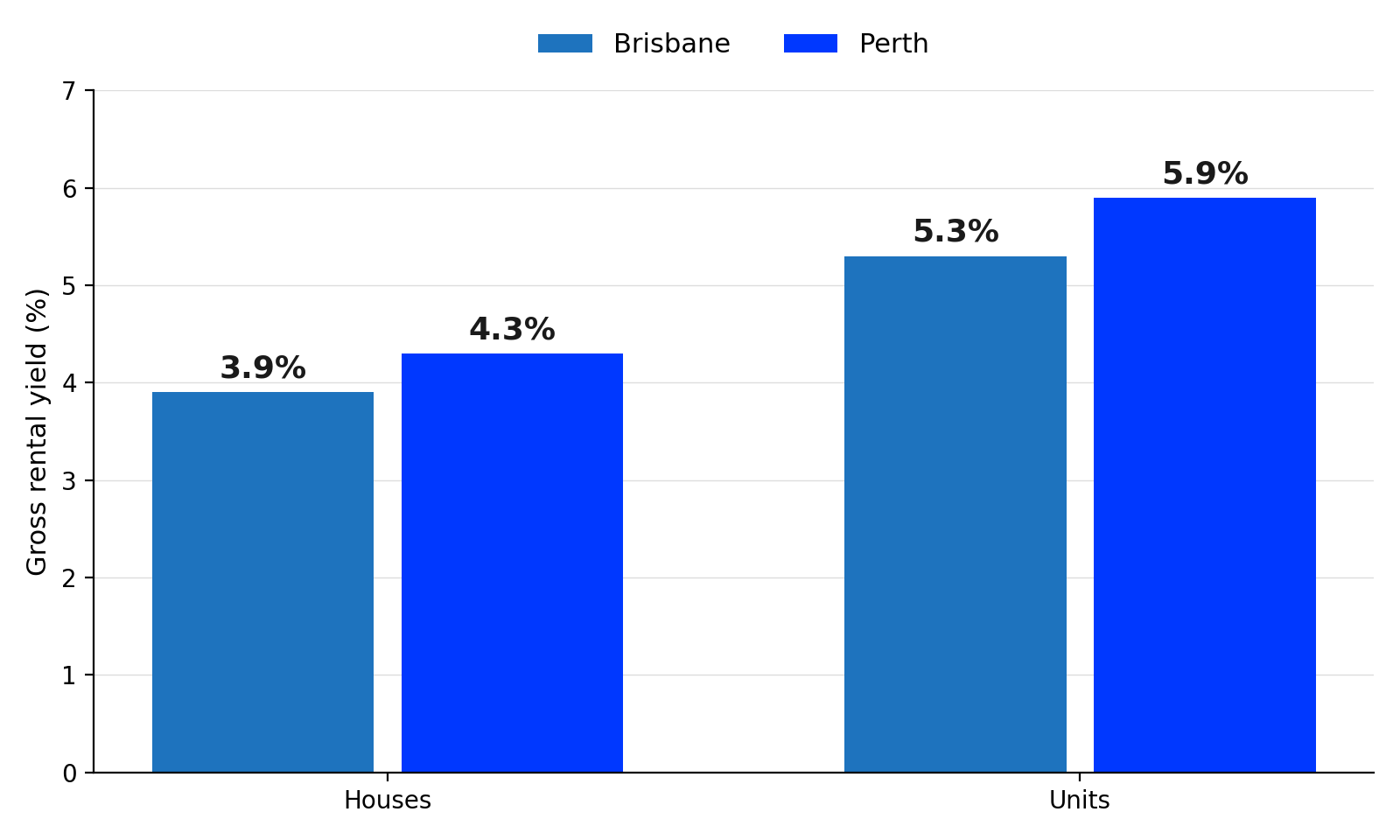
Perth currently holds the yield edge across both houses and units, though the Brisbane Perth gross rental yield 2026 trend shows Brisbane's unit market closing the distance.
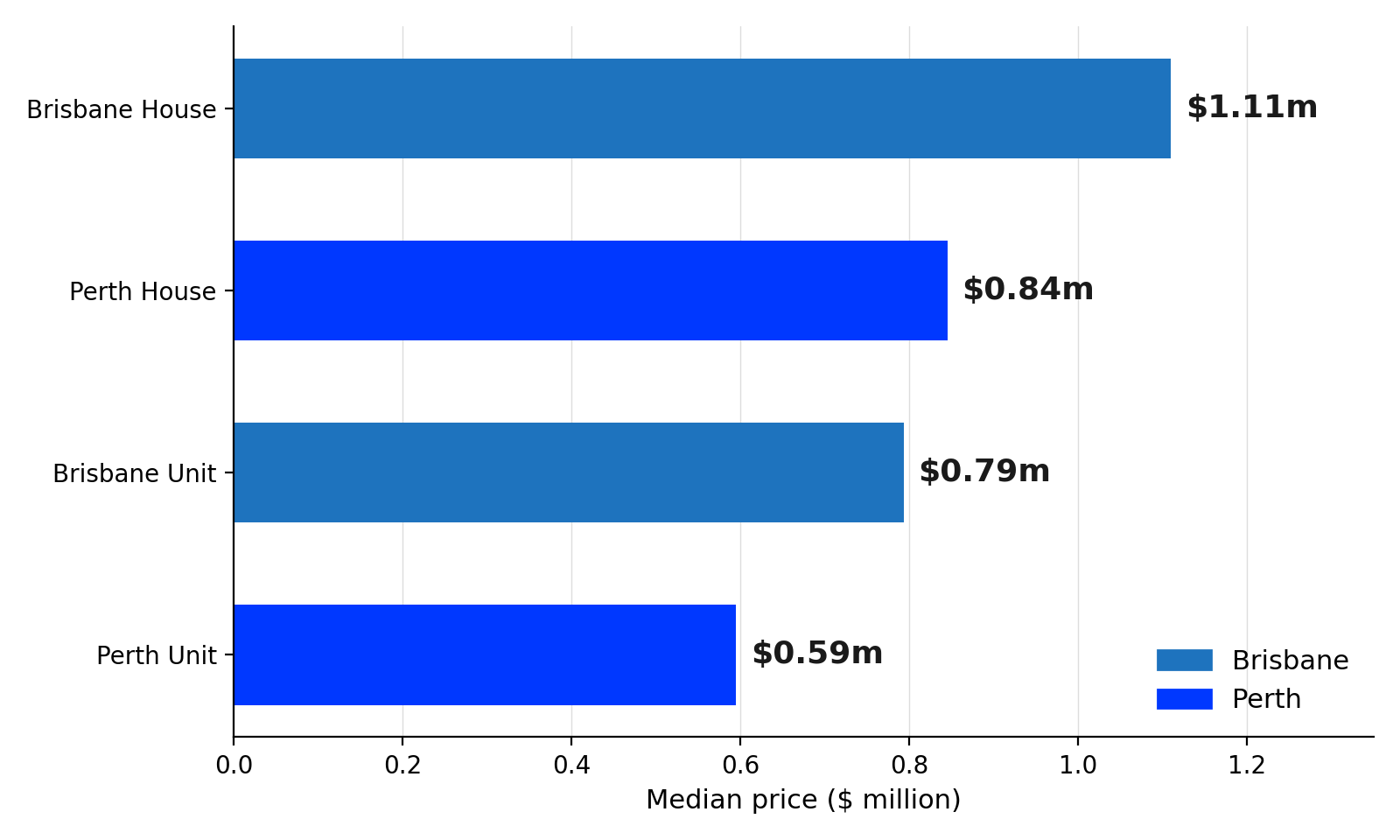
Perth's median house price of around $845,000 against a $700 weekly rent produces a gross yield near 4.3%, according to REIWA data.
Brisbane's median house sits considerably higher at roughly $1.11 million, which pulls its house yield down toward 3.5% to 4.5% despite a comparable weekly rent of $670.
Units tell a closer story. Brisbane's more affordable unit market, priced around $793,000 with rents near $626 a week, delivers a Brisbane gross rental yield 2026 figure of roughly 4.8% to 5.8%, within reach of Perth's 5.9% on a $595,000 median unit.
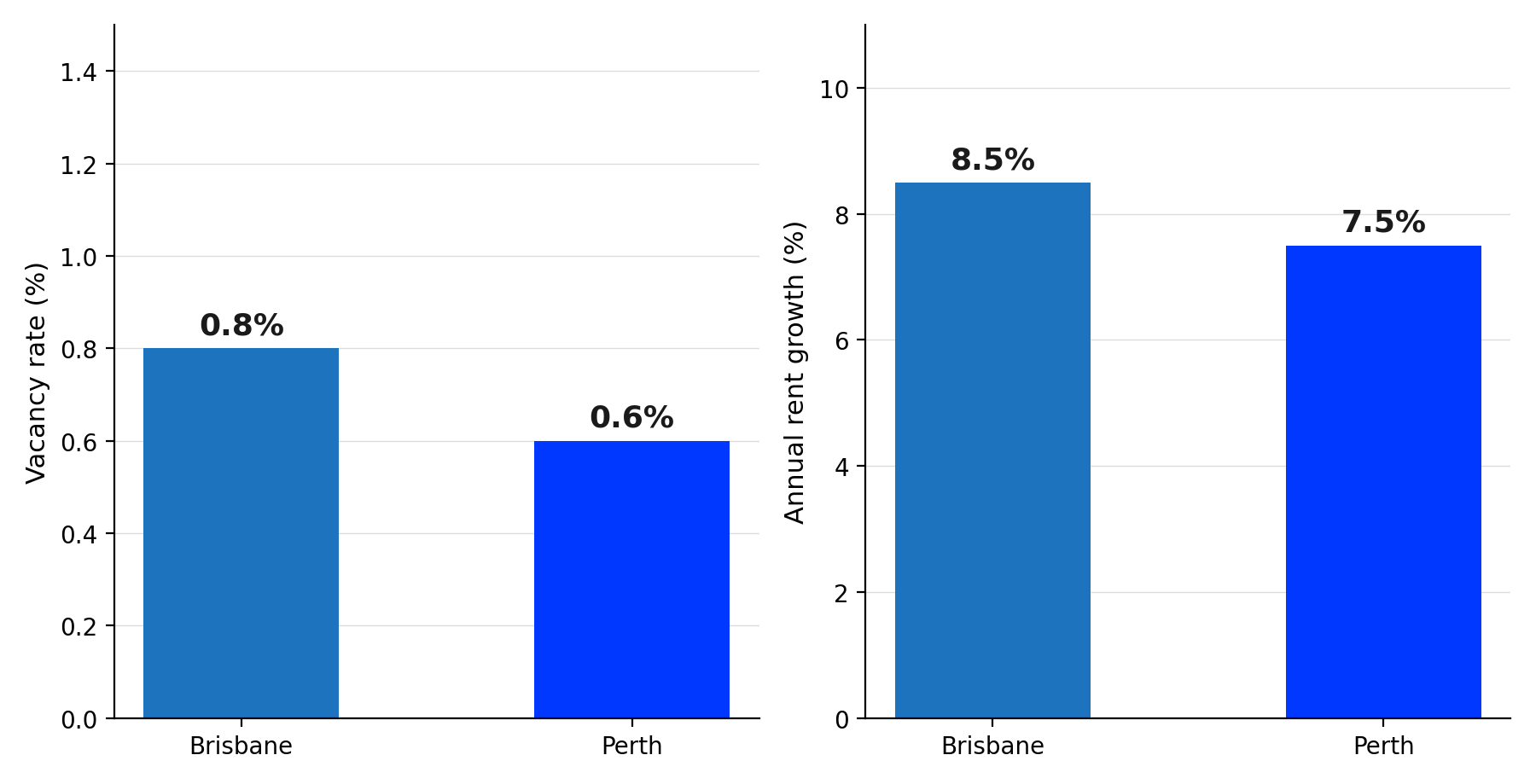
Both cities post vacancy rates under 1%, among the tightest of any Australian capital, which is keeping rents rising faster than the national average in both markets. Taken together, this is one of the clearest comparisons available this year, because both cities share the same undersupply pressure while starting from very different price bases.
Gross Rental Yield: Brisbane vs Perth, Houses and Units (2026)
Source: Cotality and REIWA, 2026
Median Dwelling Price: Brisbane vs Perth, Houses and Units (2026)
Source: Cotality and REIWA, 2026
Which City Generates Better Cash Flow?
Yield only tells half the story. What matters week to week is whether rent covers the loan repayment.
On an indicative interest only investor rate near 6.3%, an 80% loan against Perth's $595,000 median unit costs roughly $577 a week to service, against rental income of $670. That is a positive weekly margin before rates, insurance and management fees. The same loan structure against Brisbane's $793,000 median unit costs closer to $768 a week, against rent of $626, leaving a shortfall of more than $140 before other holding costs.
Investors weighing a wider gap between rent and repayments can look at how to increase borrowing capacity to see what buffer they are working with before they commit to either city.
Vacancy Rate and Annual Rent Growth: Brisbane vs Perth (2026)
Source: SQM Research, 2026
FOR EXAMPLE
Weekly cash flow, Brisbane unit vs Perth unit. Brisbane: rent $626, indicative interest only repayment $768, weekly shortfall $142. Perth: rent $670, indicative interest only repayment $577, weekly surplus $93. Figures are illustrative only, based on an 80% loan at an indicative 6.3% interest only rate, and exclude rates, insurance and property management fees.
Rental Yield Is Only Part of the Investment Case
Both cities have posted double digit annual capital growth through the current cycle, which changes how much weight yield should carry in the decision. Perth values rose close to 24% to 26% over the past year, while Brisbane climbed near 19% to 20%, both well ahead of Sydney and Melbourne.
Population growth is feeding both markets. Interstate and overseas migration into Southeast Queensland and Western Australia remains well above the national average, and neither state has approved enough new dwellings to match demand, a pattern covered in our guide to housing shortage in Australia. Infrastructure spending adds a further layer.
Brisbane's 2032 Olympics pipeline and Perth's resources driven jobs market both support long term rental demand, on different timeframes. Investors weighing this trade off in more detail can see our guide to yield versus growth in a balanced portfolio, and our comparison of property investors across Brisbane, Adelaide and Perth for how each interstate market is being used differently.
Which City Suits Which Investor?
Cash flow focused investors currently have a stronger case in Perth, where the unit market sits close to breakeven against a standard investor loan. Growth focused investors may still lean toward Brisbane, where the 2032 Olympics pipeline and a deeper owner occupier base support a longer dated thesis, even at a lower yield today.
First time investors weighing either city should start with suburb level criteria rather than the city average. Our guide to choosing investment grade suburbs sets out the filters worth applying before comparing a Brisbane pocket against a Perth one directly.
Common Mistakes When Comparing Rental Yields
Most yield comparisons break down the same way. Investors look only at the gross figure and skip vacancy and net cost, assume today's yield holds once prices move, and ignore how a rate rise widens the gap between rent and repayment. Buying purely for cash flow without checking growth fundamentals is the most common version of this mistake, and it shows up in both cities.
These are the same errors that show up in our guide to property investment mistakes first time investors make, regardless of which city they choose.
Final Thoughts on Brisbane vs Perth Rental Yields
Perth currently offers the sharper gross yield, particularly on houses, largely because its median price remains lower than Brisbane's for a comparable rent. Brisbane's unit market closes most of that gap and adds a stronger long term infrastructure case tied to the 2032 Olympics pipeline.
Neither answer is universal. A cash flow focused investor with a tighter servicing buffer may lean toward Perth's unit market today. An investor prioritising a decade long growth thesis may still prefer Brisbane, even at a lower yield. Whichever way the decision leans, treat the yield number as a starting filter, not the final word, and weigh it against the wider property investment strategy you are building.
Frequently Asked Questions
Recommended Reading
Two pages selected based on what readers of this article are most likely to need next.
Recommended Video
Most investors are still positioned in capital cities — but in 2026, that allocation gap is creating real opportunity cost. In a market where timing, positioning, and yield profiles compound into long-term outcomes, that disconnect matters more than most people realize.