

Why Was My Home Loan Declined? 10 Reasons Australian Banks Say No
Getting knocked back on a home loan is more common than most people expect. APRA data shows lenders assess applications against multiple risk thresholds, and many applicants are declined for reasons they could have fixed before applying. A declined application also leaves a mark on your credit file, making the next attempt harder.
Home loan approval in Australia is not just about earning enough. Banks assess income, expenses, debts, savings history, credit behaviour, and the property itself. Knowing where applications fail is the first step to fixing the problem.
What Lenders Actually Look At
Banks do not approve home loans based on income alone. Every application is assessed across six areas: income and employment stability, existing debts, living expenses, savings history, credit behaviour, and the property being purchased.
The borrowing capacity formula weighs all of these together. A strong salary does not compensate for a poor credit file or heavy existing debts. Lenders look at the full picture before deciding.
10 Reasons Banks Decline Home Loan Applications
Most declined applications trace back to one of these ten issues. Some are fixable in weeks. Others require months of deliberate preparation.
What Causes Most Home Loan Declines in Australia
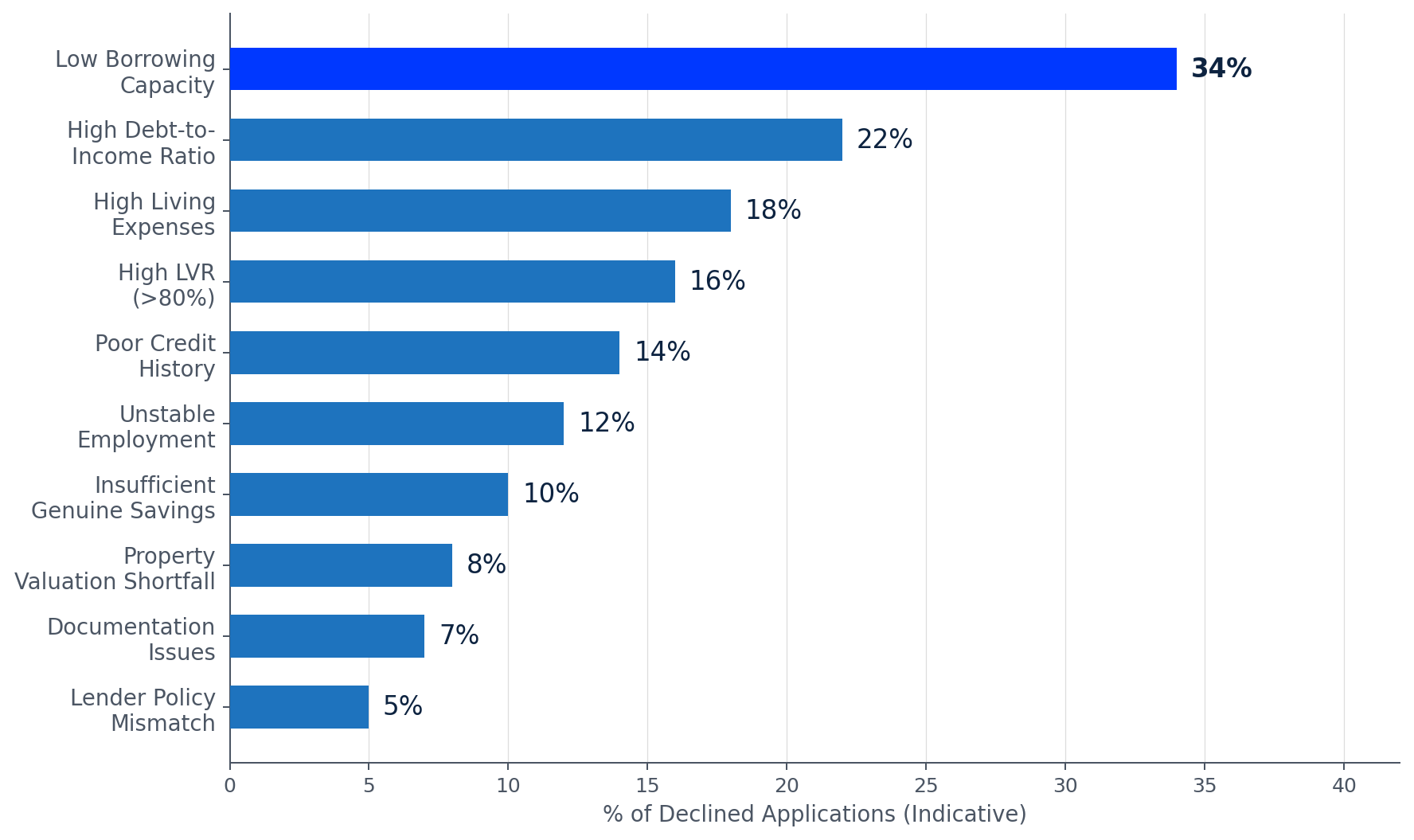
Source: APRA Quarterly ADI Statistics and Australian mortgage broker industry data, 2024-2025
How the APRA Serviceability Buffer Reduces What You Can Borrow
Under APRA prudential guidelines, all Australian lenders must assess repayment ability at your actual rate plus a 3% buffer. If you are applying at 6.2%, your loan is tested at 9.2%.
This is why borrowing capacity drops when interest rates rise even before repayments become painful. The buffer is a stress test, not the rate you pay. It is the single biggest reason approved loan amounts fall short of expectations.
Borrowing Capacity at Actual Rate vs Assessment Rate
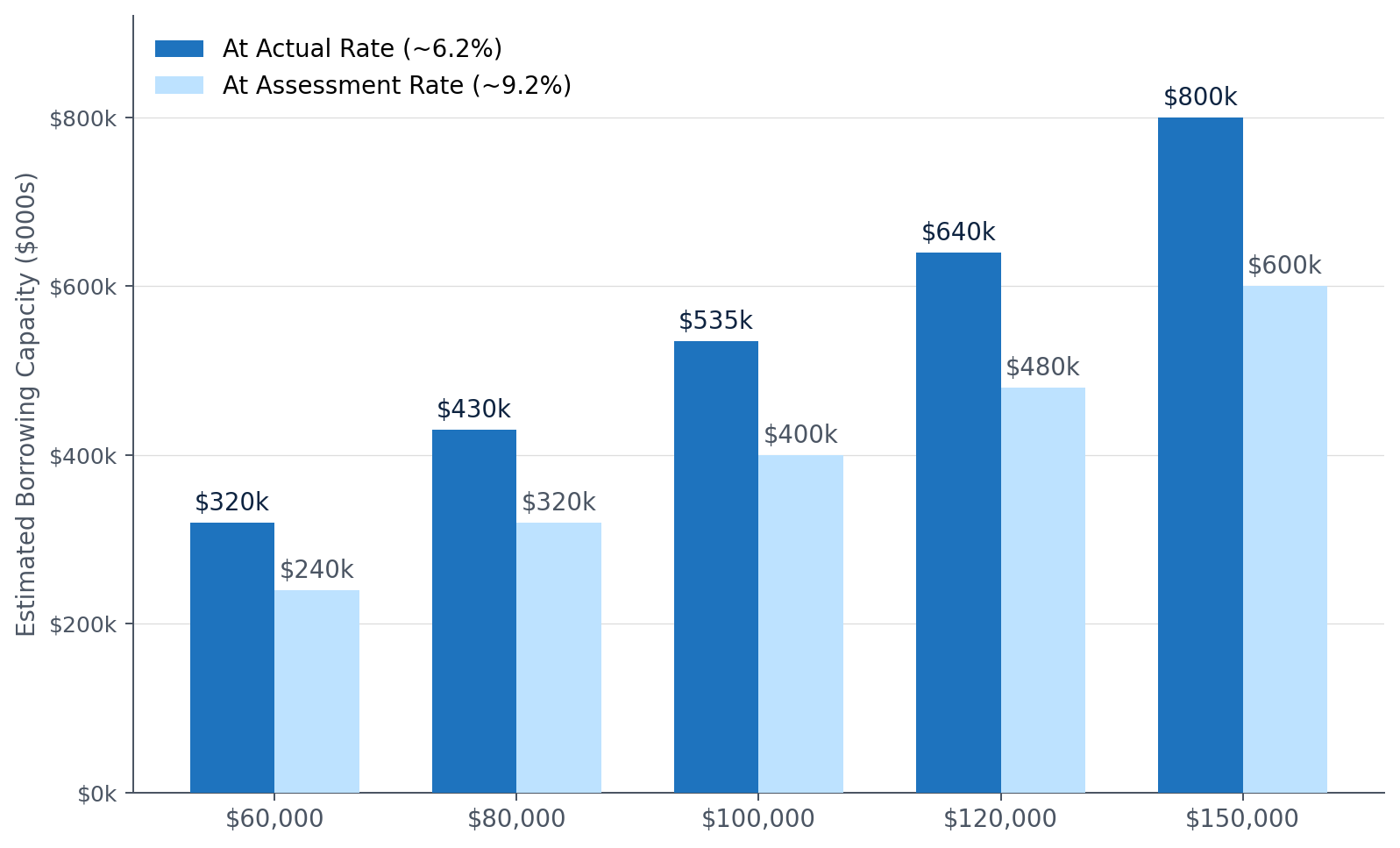
Source: APRA Prudential Practice Guide APG 223, Residential Mortgage Lending, 2022
FOR EXAMPLE
A borrower earning $100,000 may expect to borrow $535,000. After the APRA buffer, the approved limit may be closer to $400,000. An existing $25,000 personal loan reduces that further to around $310,000, before living expenses are factored in.
LVR and How It Affects Your Approval
The loan-to-value ratio (LVR) is the percentage of a property's value you are borrowing. For a $600,000 property with a $120,000 deposit, your LVR is 80%. This threshold matters because how lenders assess borrowing capacity changes significantly above 80%.
Above 80%, lenders require lender mortgage insurance (LMI). LMI protects the bank, not you, if you default. Costs range from $10,000 to over $40,000 depending on the loan amount and LVR band.
LVR Bands and Estimated LMI Cost
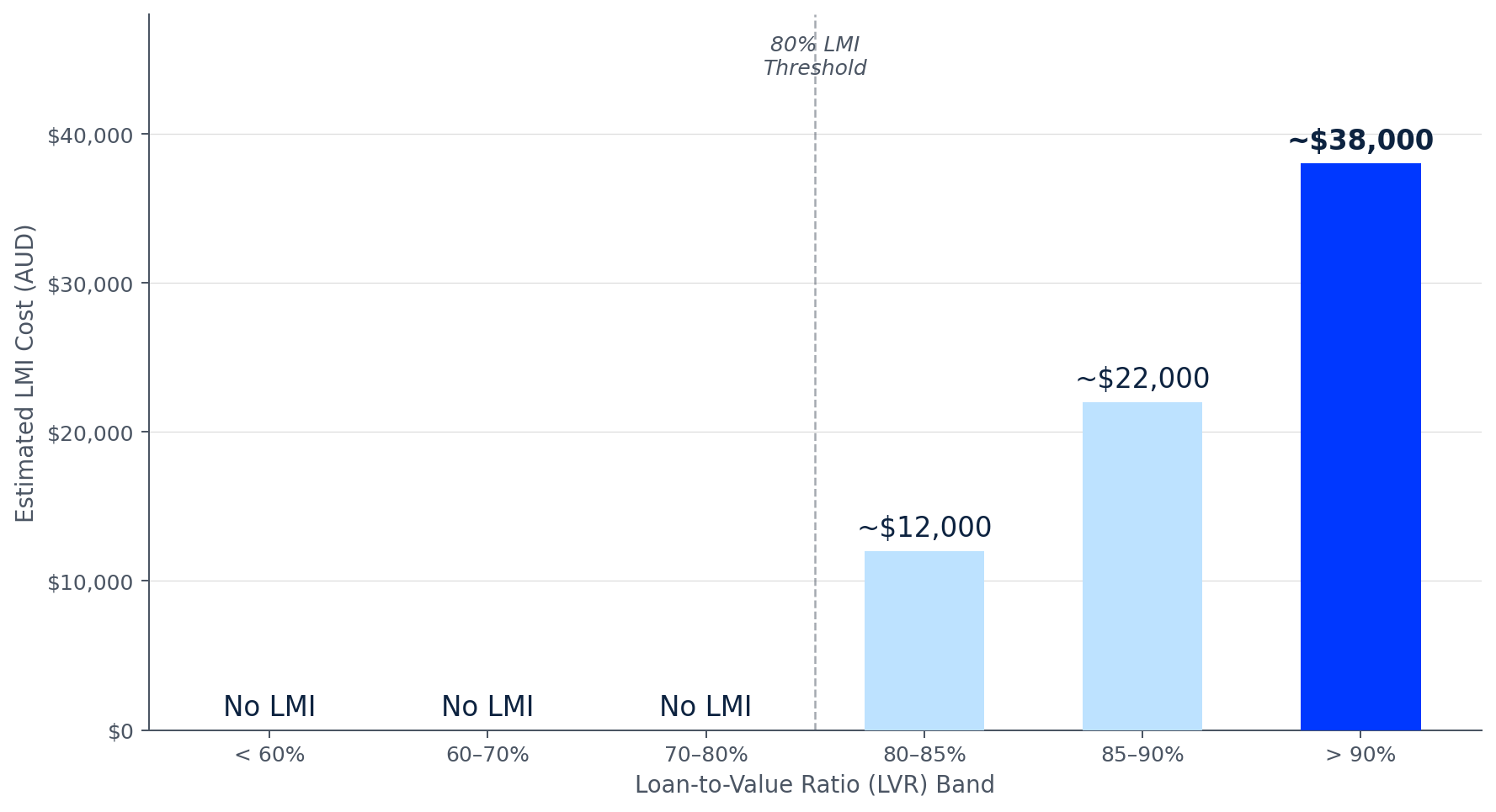
Source: Genworth and QBE LMI premium schedules; APRA lending standards, 2024-2025
How to Improve Your Chances Before You Apply
Before submitting another application, work through the following steps. Rushing to reapply is the most common mistake after a decline.
Reduce existing debt. High credit card limits reduce your borrowing capacity even when you never use them. Closing unused cards before applying makes a measurable difference to your assessed profile.
How to increase borrowing capacity is one of the most practical steps available. Paying down personal loans, cutting credit limits, and clearing buy-now-pay-later accounts all improve your debt-to-income ratio before the lender looks.
Check your credit file. Get a free report from Equifax, Experian, or illion before you apply. Look for errors, unexpected defaults, or multiple past enquiries. The MoneySmart credit guide explains how to access and dispute your file.
Work with a mortgage broker. Brokers access dozens of lenders and know which ones are most likely to approve your profile. Applying to the wrong lender wastes time and adds a hard enquiry you cannot undo.
What to Do After a Declined Application
Do not immediately apply to another lender. Every credit application creates a hard enquiry on your file. Multiple enquiries in a short period signal financial stress to banks and can compound the original problem. Understanding why debt-to-income ratio affects approval is more useful than chasing a quick second attempt.
Ask the lender for the specific reason your application was declined. Australian lenders are required to provide this under responsible lending obligations. Address the root cause directly before reapplying anywhere.
Final Thoughts
A declined home loan application is frustrating. It is rarely permanent. The vast majority of declined applications stem from issues that are fixable with time, the right strategy, and better lender selection.
The biggest mistake applicants make is reapplying too quickly without understanding what went wrong. Explore your full borrowing capacity options before applying again. Fix the underlying issue first, match your profile to the right lender, and you are far more likely to get a different answer.
Frequently Asked Questions
Recommended Reading
Two pages selected based on what readers of this article are most likely to need next.
Recommended Video
Refinancing is no longer about chasing a lower rate, it’s about building wealth, structuring smarter, and making your portfolio work harder every single year.