

Investment Property Loan Criteria: What Could Cost You Financially

An investment property loan is assessed on two things: whether you can afford it, and whether the lender will accept the property itself as security. Most guides only cover the first part, but the property you choose, its type, size, location and bank valuation, can change your required deposit and borrowing outcome.
Two buyers with identical incomes and identical $500,000 purchase prices can end up with different loan terms, because the property itself is part of the lender's borrowing capacity assessment, not just an afterthought once finance is arranged.
What Are Investment Property Loan Criteria?
The borrower-side criteria lenders assess
Lenders start with the borrower: income, existing debts, living expenses, deposit and credit history. These feed into a debt-to-income ratio and a serviceability test that sets your maximum borrowing capacity.
Why the property itself becomes part of the assessment
Meeting the borrower-side criteria does not automatically mean every property will be treated the same way. The property is the security behind the loan, so the lender also assesses its value and how easily it could be resold if the loan ever defaulted.
What Property Characteristics Can Affect Investment Property Lending?
Property type and size
Standard houses and townhouses are generally treated as straightforward security by most lenders. Studio apartments, very small units, and properties with unusual layouts can attract extra scrutiny, and sometimes a lower maximum LVR, because they can be harder to resell to a broad pool of buyers.
This is a separate question from whether a house or an apartment suits your strategy better. Our house versus apartment comparison covers that decision directly. This article focuses on how the lender treats the property once you've chosen one.
High-density buildings and lender exposure
Lenders also track how much exposure they already have to a single building or development. In a high-density tower with hundreds of similar units, a lender may cap how much it is willing to lend across that building, regardless of an individual applicant's financial position.

Properties worth extra checking before you commit typically include studio and very small apartments, high-rise and high-density developments, serviced apartments, and mixed-use or specialised buildings.
Location and postcode
Location affects lending in a similar way. Lenders care about resale demand, market depth and how quickly a property could be sold if needed, which is part of the same property investment picture as choosing where to buy in the first place. Regional and remote properties can face extra scrutiny where comparable sales are limited or the buyer pool is smaller.
How Property Valuation Can Change Your Investment Loan
Purchase price versus lender valuation
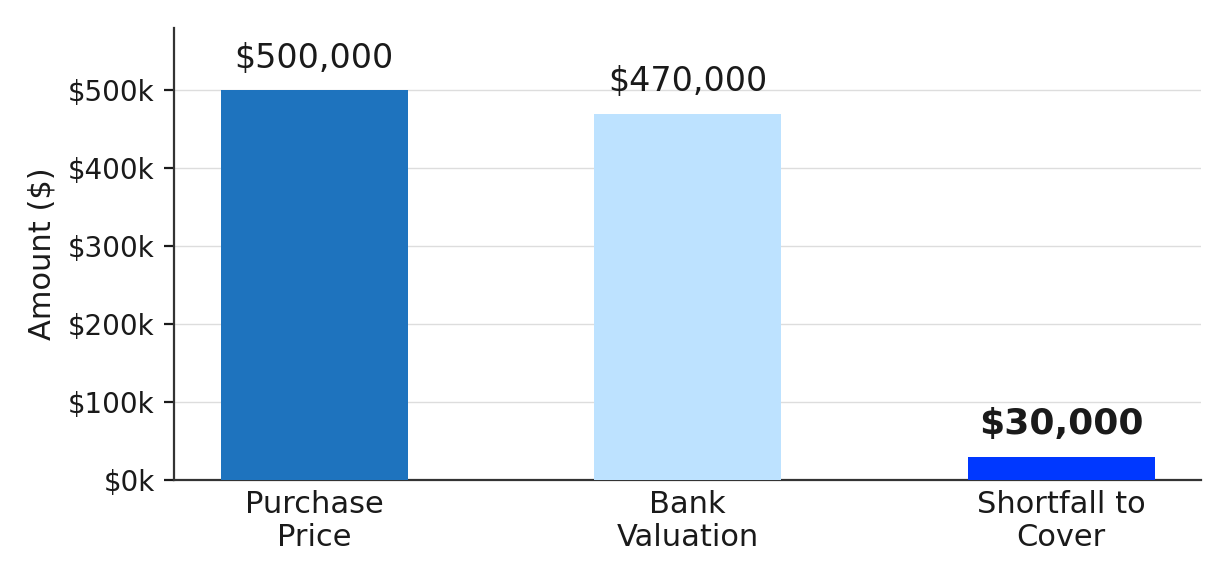
Agreeing on a purchase price with a seller does not guarantee the lender will value the property the same way. The bank orders its own valuation, and that figure, not the contract price, is what the loan is calculated against.
What happens when the valuation comes in below the purchase price
Purchase Price vs Bank Valuation
Source: FPW Group illustrative example based on standard lending mechanics
Why two $500,000 properties can have different lending outcomes
Bring the property type, its valuation and the lender's policy together, and it becomes clear why an identical purchase price does not guarantee an identical loan outcome. A pattern worth checking is covered in our guide on why home loans get declined, where valuation shortfalls are one of the more common and avoidable causes.

How LVR Fits into Investment Property Loan Criteria
What LVR means for lenders
Loan to value ratio, or LVR, is the loan amount expressed as a percentage of the property's value. A $400,000 loan against a $500,000 valuation is an 80 percent LVR, and the lower the LVR, the less risk the lender is carrying against that specific property.
Why the serviceability buffer and LVR work together
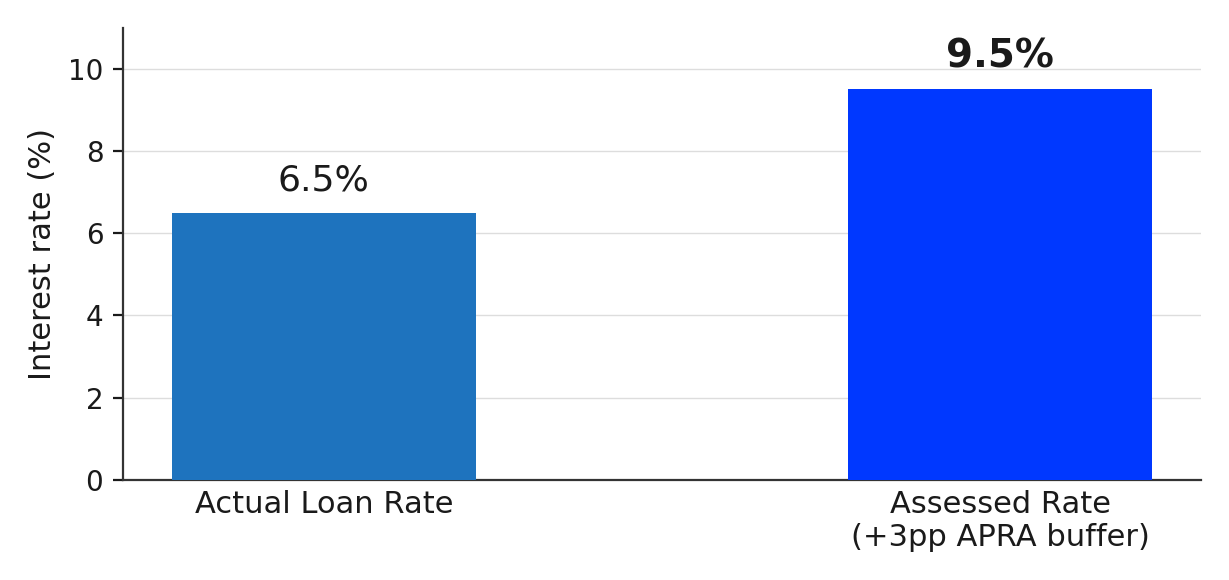
APRA requires lenders to assess new borrowers against an interest rate three percentage points above the actual loan rate, a setting APRA confirmed it would keep unchanged in its May 2026 review. Under APRA's capital framework, loans written at a higher LVR also require the lender to hold more regulatory capital, which is one reason lender policy tightens around properties seen as higher risk.
How the Serviceability Buffer Changes the Assessed Rate
Source: APRA, 2026
When a higher deposit may be required
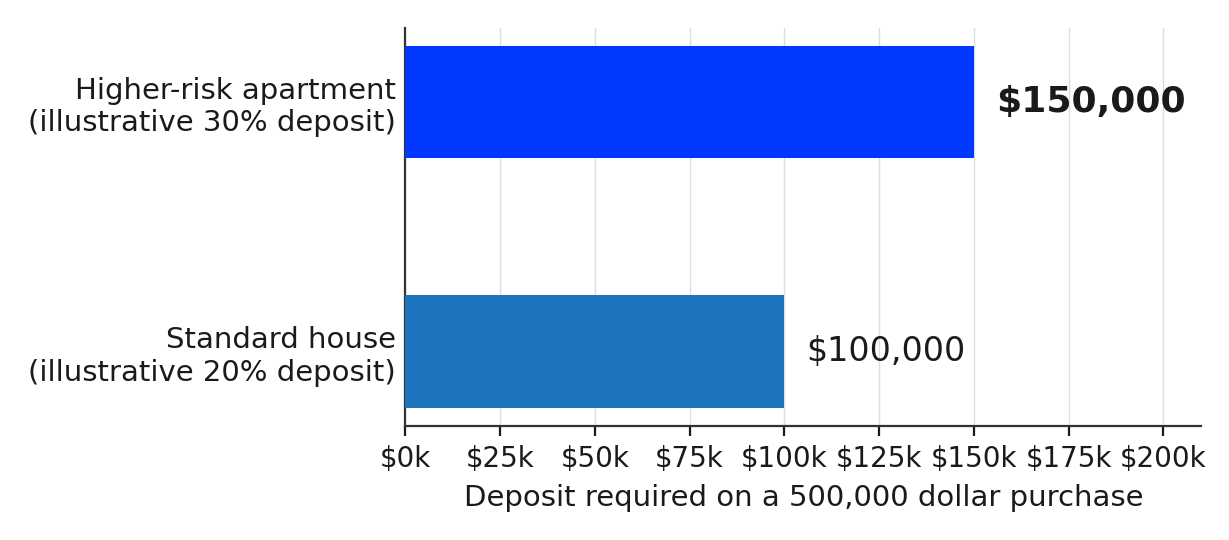
Lender policy on maximum LVR varies, and it can differ for the same borrower depending on the property being offered as security. Some lenders apply a lower maximum LVR to small apartments, high-density postcodes, or properties they consider harder to resell, which directly affects your maximum borrowing capacity on that specific purchase.
Illustrative Deposit Impact by Property Risk Profile
Source: FPW Group illustrative example, not a stated lender policy
What to Check Before Making an Offer
Confirm the property's lending acceptability
Before signing a contract, ask your broker or lender whether the specific property, not just your financial position, is likely to be accepted on the terms you expect. This is especially worth doing for apartments, high-density developments, and anything outside a standard house or townhouse.
Don't assume pre-approval guarantees the property will be accepted
Pre-approval confirms what you can borrow in principle. It does not guarantee that any specific property will be accepted as security on those terms, and our investment property loan approval checklist walks through the full process in more detail.
Before you make an offer, confirm: borrower eligibility and deposit, borrowing capacity against current rates, property type and size against lender policy, postcode or building exposure where relevant, valuation risk, and LVR with the required contribution in writing.
Working through this list with a mortgage broker before you make an offer is the easiest way to avoid a valuation or property-policy surprise after you are already under contract.
Final Thoughts
Investment property loan criteria are not just about your income and deposit. The property itself is part of the assessment, and its type, size, location and bank valuation can all change what a lender is willing to fund and on what terms.
A cheaper property does not guarantee simpler finance, and an identical purchase price does not guarantee an identical outcome. Checking a property's likely lending treatment before you make an offer, rather than after you are under contract, is the difference between a smooth settlement and an unwelcome valuation surprise.
Frequently Asked Questions

Recommended Reading
Two pages selected based on what readers of this article are most likely to need next.
Recommended Video
This is not just another policy update. It is a structural shift in how the entire market is being shaped. The 2026 Federal Budget introduces changes across negative gearing, updates to capital gains tax CGT, and a growing tax advantages.