

Property Investing in Your 30s: The Decade That Shapes Your Life

If you are working out how to build wealth in your 30s, start with a clear goal, steady cash flow and assets you can hold for decades while growth compounds. Property can be one of those assets, but only when it fits a plan, not because prices are moving or friends are buying.
Your 30s usually bring a higher income and more borrowing power. They also bring bigger bills, and the choices you make now carry further than in any other decade.
Below, we show why the last years of owning an asset do the heavy lifting, how a lender's test can cap your plans, and what a simple plan looks like. For the wider picture, see our guide to property investment in Australia.
Why Your 30s Can Be a Critical Wealth-Building Decade
Your income and borrowing capacity may be changing
For many Australians, the 30s are when income starts to climb. The ABS reported full-time adult average weekly ordinary time earnings of $2,083.70 in May 2026, about $108,000 a year, up 3.7% over 12 months.
A higher income lifts your borrowing capacity, which is the most a lender will let you borrow. That opens more options, but it also makes it easier to take on more debt than your plan needs.
You still have time on your side
Time is the one input you cannot buy back later. Growth builds on earlier growth, so the later years of holding an asset usually add the most value.
Value of a $700,000 Property Growing at 5% a Year, Age 32 to 62
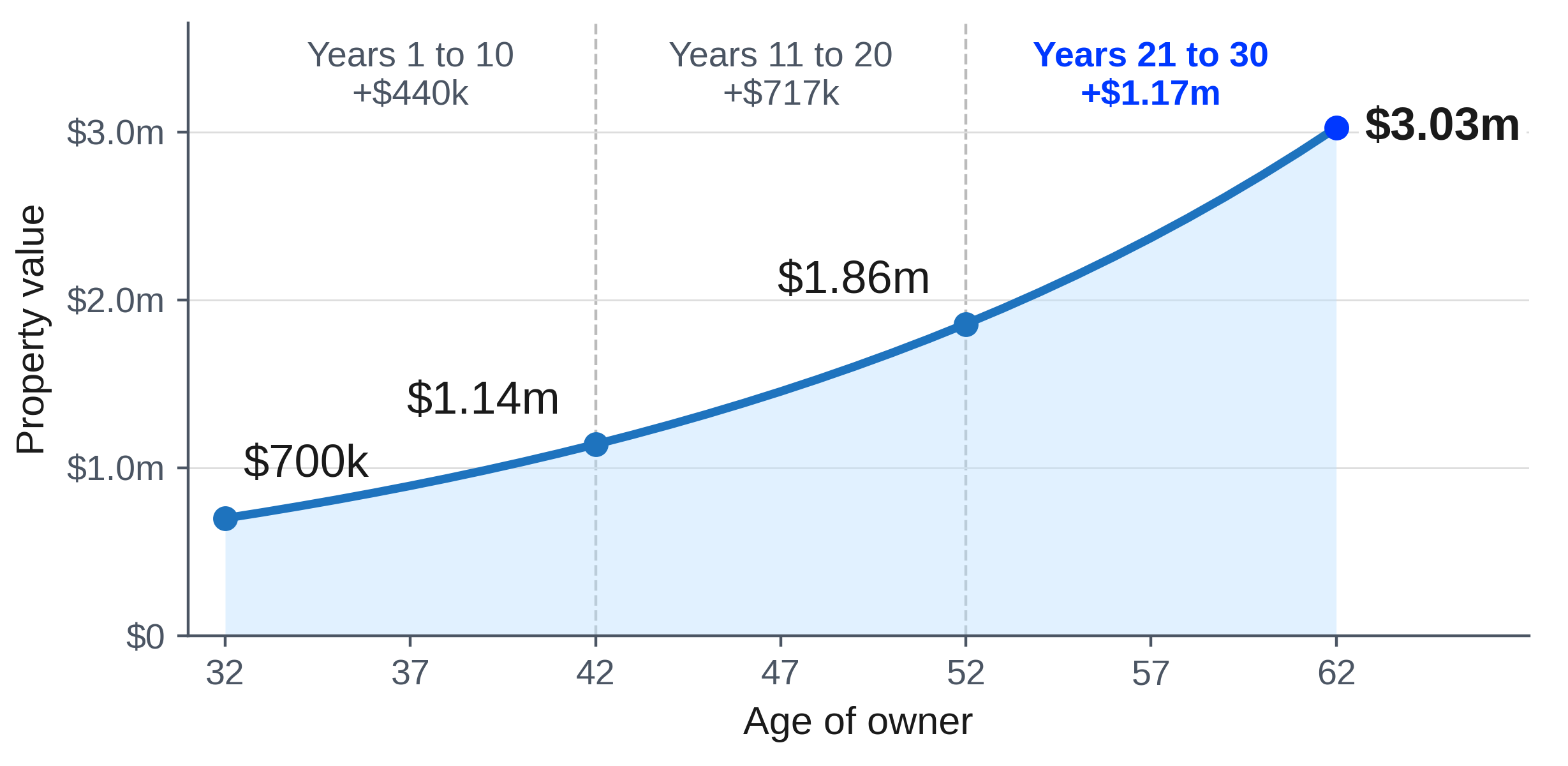
Source: FPW Group illustration assuming 5% average yearly growth. Not a forecast
Western Australia dominates the top of any Australian yield table, and the numbers are not close. South Hedland apartments post a 14.1% gross yield on a $310,000 median with $838 per week median rent. Newman apartments match that figure on a $225,000 median and $610 per week rent.
But financial commitments can increase too
Your 30s often bring a mortgage, children, childcare and a bigger car. Each one competes for the same income you want to invest, so a plan matters more than speed.
How to Build Wealth in Your 30s Without Losing Sight of the Bigger Picture
Start with a clear financial goal
A goal turns a vague wish into an investment plan. "Own $1 million in assets by 50" and "cover half my living costs from rent by 55" lead to very different purchases.
Write your goal down with a number and a date. Without one, it is hard to tell whether any property is helping.
Know what you can realistically invest
Start with three numbers: your deposit, your spare monthly cash flow and your emergency buffer. Lenders also check your debt to income ratio, which compares all your debts with your yearly income.
The minimum down payment for investment property loans is often 10% of the price, but many lenders charge lenders mortgage insurance below 20%. Stamp duty and buying costs come on top, so your real starting cash is higher than the deposit.
Decide what role property should play
Property is one tool, alongside super, shares and cash savings. Super shows why the mix matters.
Median Super Balance by Age and Sex, 30 June 2024
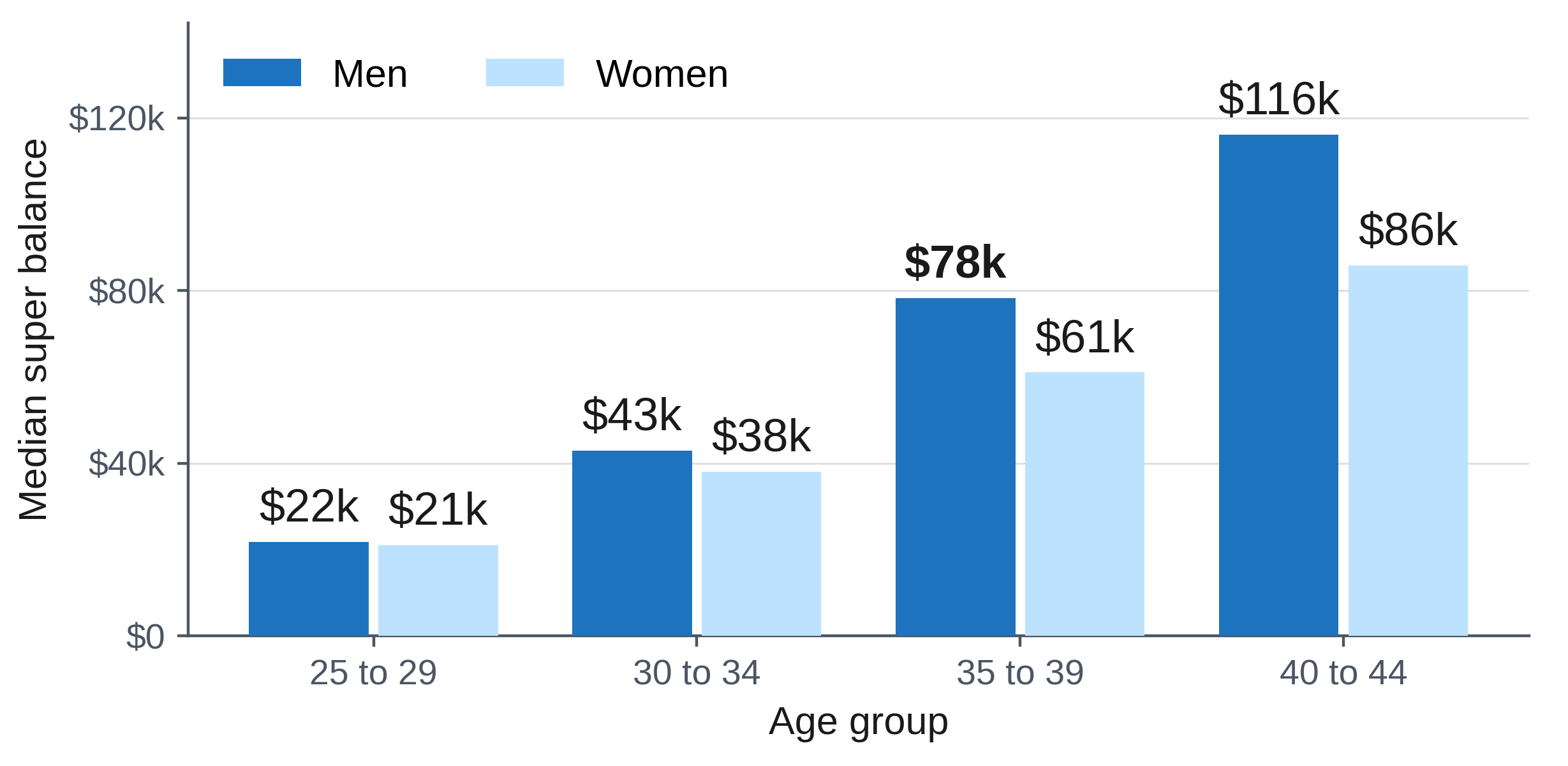
Source: Australian Taxation Office, Taxation Statistics 2023-24, Individuals statistics, released June 2026.
Property can help fill that gap because it can build usable equity well before retirement. Our guide to property vs super for retirement wealth compares the two in more detail
Building Wealth Through Property: What Should Your Strategy Consider?
Growth, cash flow or a balance of both?
A growth property aims for strong rises in value, but the rent often does not cover the costs. A cash flow property earns more rent for its price, but its value may rise more slowly.
Your rental property investment strategy should match your budget and stage of life.
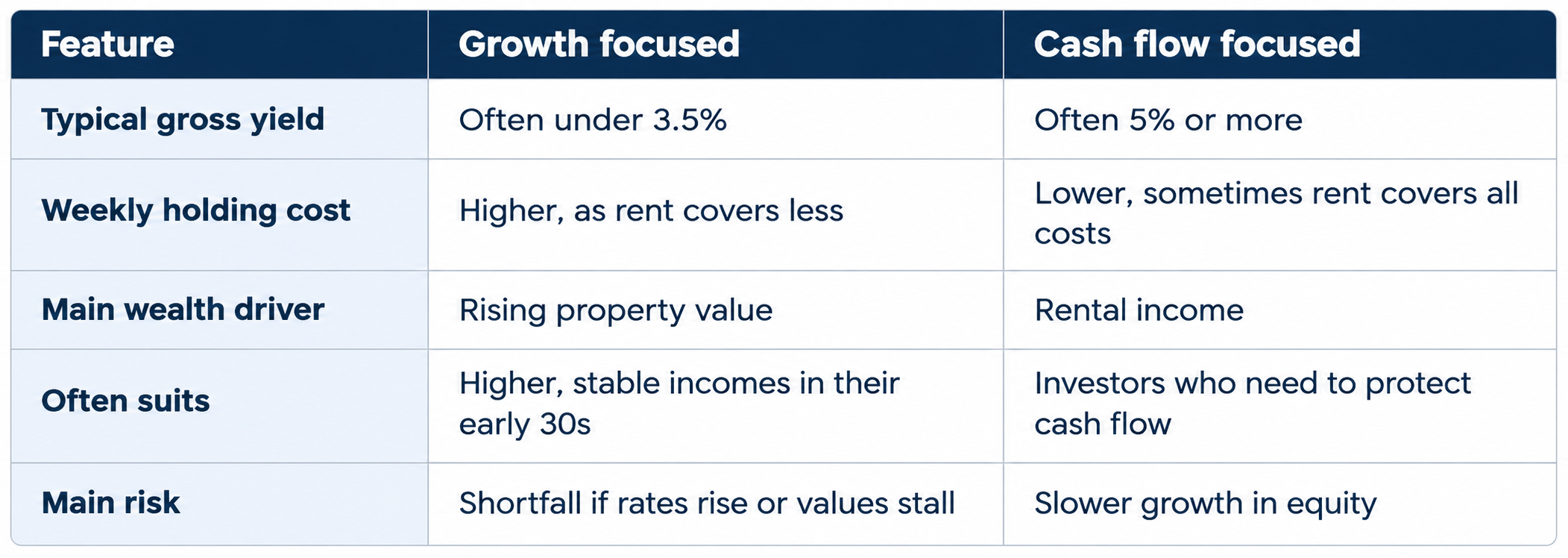
Yields are general ranges for illustration and vary by market and property type.
Many investors aim for a mix, as our guide to yield vs growth explains. There is no single best property investment strategy, only the one that suits your numbers.
Location matters, but so does the investment case
The suburb is only part of the decision. Our guide on how to choose investment grade suburbs covers the checks: rental demand, new supply, local jobs, infrastructure and affordability.
Markets move at different speeds. In the year to September 2026, Cotality recorded values up 10.1% in Perth but down 7.0% in Sydney. Compare the best places to invest in property in Australia
Consider the holding period before you buy
Decide how long you plan to hold before you choose the property. Stamp duty and selling costs can take years of growth to recover, so a short hold rarely works.

Property Investment Ideas to Consider in Your 30s
Buying your first investment property
Before you buy, get pre-approval, a clear price range and a buffer for three to six months of holding costs. See our guide to how to buy an investment property.
Using existing property equity
Equity is the value of a property minus the loan against it. Many lenders let you borrow up to 80% of the value, less what you owe, which can fund the deposit on your next purchase.
It also adds debt across your whole portfolio. When values fall, as they have nationally since March 2026, your usable equity shrinks too.

Building towards multiple properties
A multiple property investment strategy can build wealth faster, but only if each purchase can stand on its own. Owning more properties is not the goal. Owning ones you can keep through a rate rise or a slow market is.
Tax matters too. From 1 July 2027, losses on established homes bought after 12 May 2026 cannot reduce tax on wages, which reshapes real estate investment tax strategies. See the new negative gearing rules.
How Your Property Strategy May Change Through Your 30s
The 30s are not one stage. What matters at 32 is often different from what matters at 38.
Early 30s: establishing the foundation
This is the stage for building a clean borrowing profile and a buffer you do not touch. The first purchase matters most because later steps depend on it.
Mid 30s: reviewing and building
By now you can measure results. Check the rent, growth and loan rate, then decide whether to hold, refinance or use equity.
Late 30s: positioning for the next decade
The focus shifts to protecting what you have built. Manage total debt, keep buffers strong and make sure no single property can sink the plan
Example Portfolio Value, Loans and Equity Through Your 30s
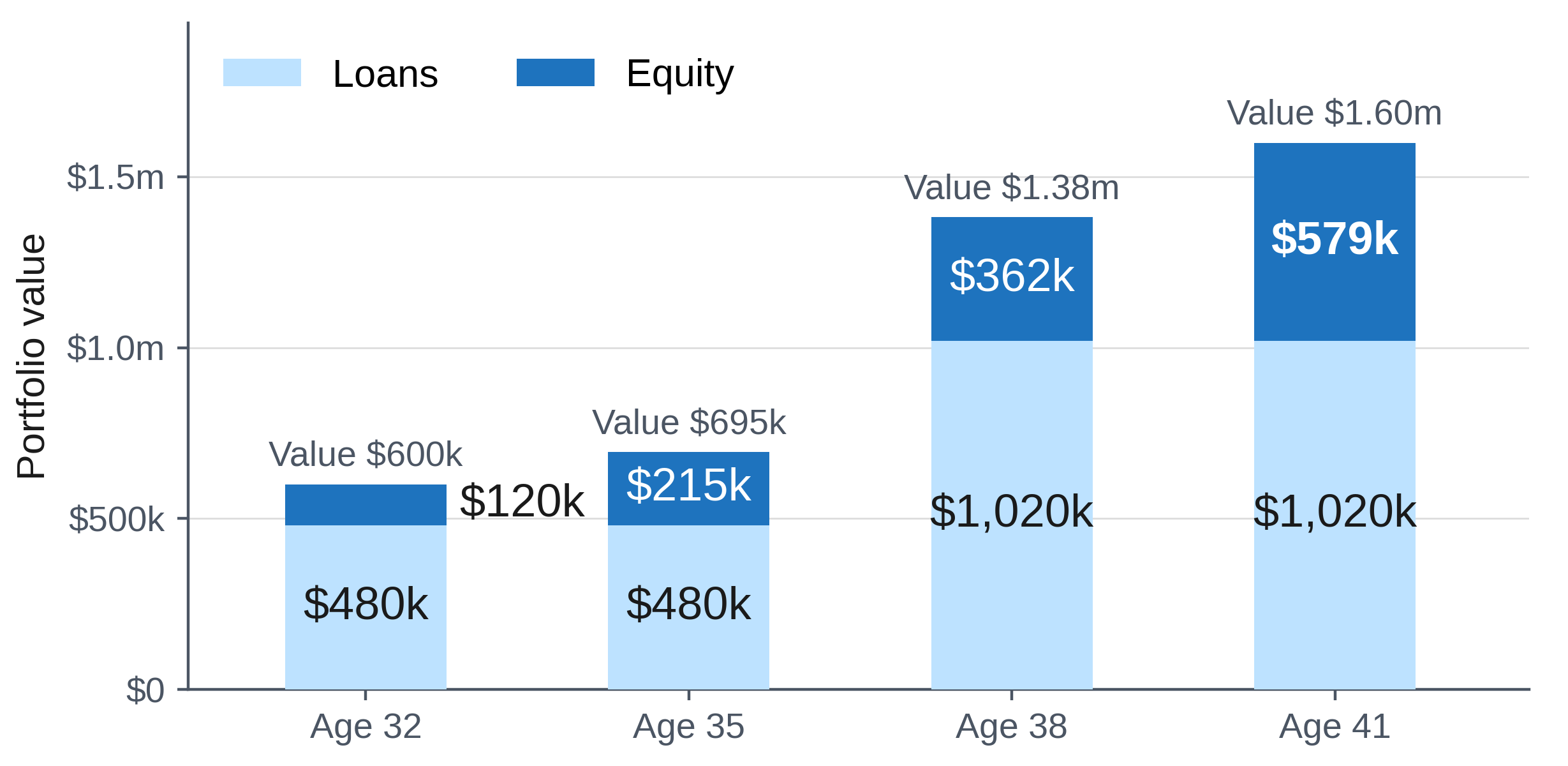
Source: FPW Group illustration assuming 5% yearly growth and interest only loans. Not a forecast.
Common Mistakes That Can Derail Wealth Building in Your 30s
Buying because you feel behind
Comparing yourself with friends who bought earlier pushes people into rushed decisions. A rushed purchase is harder to fix than a late one.
Stretching borrowing capacity too far
A lender's maximum is a limit, not a target. APRA has kept the rule that lenders test new loans at 3 percentage points above the actual rate, which is how interest rate buffers reduce borrowing power.
Rates are already climbing. The RBA lifted the cash rate to 4.60% on 29 September 2026, its fourth rise this year.
Monthly Repayments on a $600,000 Investment Loan at Different Rates
Source: FPW Group calculations assuming a 6.85% investor rate, 30 year term and 3 point buffer.
Treating every property as an investment
A home you love is not always a strong investment. Mixing the two up is one of the most common property investment mistakes first time investors make.
Focusing on short-term price movements
Monthly price data is useful, but it rarely decides a 20 year outcome. The plan behind the purchase matters far more.
What a Property Investment Plan Could Look Like

A property investment plan does not need to be long. It needs to answer four questions in the right order, and these are the steps to building wealth that many investors skip.
Define the objective: Write down what you want, by when, and how property helps you get there.
Set the financial limits: Confirm your deposit, borrowing capacity, cash flow, buffers and how much risk you can handle.
Set the property criteria: Choose the location, price, rental demand, supply and growth drivers you need.
Review the plan over time: Check it every year or two, and after any change in income, family or interest rates.
The Goal Isn't to Own Property. It's to Build Wealth.
A Property is a vehicle. The strategy decides whether it takes you where you want to go, and how safely you get there.
Learning how to build wealth in your 30s comes down to a few steady habits. Set a clear goal, keep cash flow and buffers strong, and buy assets you can hold long enough for growth to compound.
Rates are rising and prices are falling in many markets, so the plan matters more than the timing. Investors who know their numbers, review their position every year or two and buy only what fits will be best placed when the next decade starts.

Frequently Asked Questions
Recommended Reading
Two pages selected based on what readers of this article are most likely to need next.
Recommended Video
As of April 2026, Treasury is actively modelling potential changes ahead of the May Budget. This isn’t speculation—it’s confirmed. In this video, we unpack exactly what’s being proposed, who stands to benefit, who could be impacted, and what it could mean for investors, renters, and first home buyers across Australia.