

Melbourne Property Market: Should You Invest Now or Wait for Better Value?
Melbourne is worth serious attention as an investment market right now, but buying without a clear strategy could mean entering the wrong segment at the wrong price point. The city's dwelling median sits at $812,621 (Cotality, May 2026), still 3.2% below the March 2022 peak, with auction clearance rates around 52% and listings rising, all of which add up to genuine buyer leverage that hasn't existed in years.
What that leverage actually means for your portfolio depends on several factors working together: your borrowing position, your investment timeline, the property type you are targeting, and whether you are looking at inner-ring suburbs or outer growth corridors. For investors in property investment in Australia, Melbourne's current fundamentals tell a different story to the headline softness.
Melbourne Property Market at a Glance
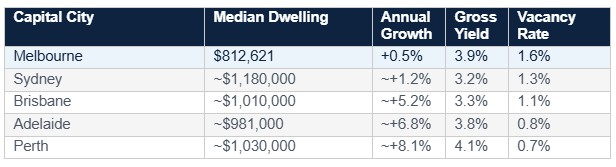
Melbourne's median dwelling value fell to $812,621 in May 2026, according to Cotality's Home Value Index, representing a monthly decline of 0.8% and annual growth of just 0.5%. That 0.5% annual growth is the softest of any Australian capital city and sits well below the 5-8% gains recorded in Perth and Adelaide over the same period.
Houses have been hit harder than units. The median house value sits at around $958,361, down 1.0% over the month and 2.8% over the quarter. Units have held up more steadily, with the median at $636,769 and flat annual growth of 0.0%, making the unit segment comparatively more defensible in the short term.
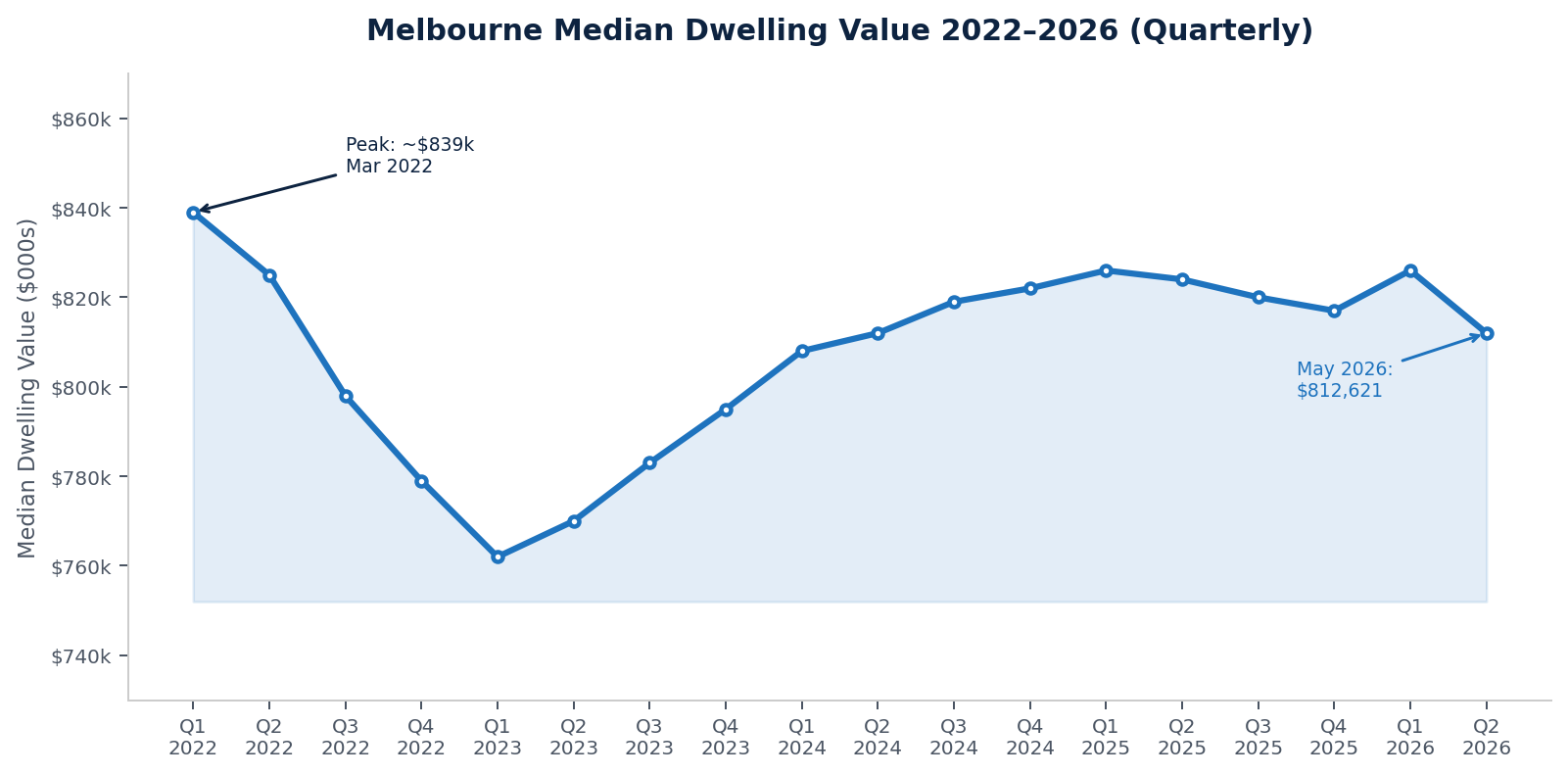
Source: Cotality Home Value Index, data to May 2026.
What the Auction Data Is Telling Investors
Auction clearance rates have fallen to around 52% in recent weeks, well below the decade average of 64% and clearly in buyer-favourable territory. Total listings are up 6.7% year on year and estimated sales are down 14.2% compared to a year ago, giving buyers more stock, more time, and more room to negotiate than they have had in years.
With around 328 properties passing in at auction in a typical Melbourne week, the opportunities to negotiate post-auction are real and worth building into your acquisition strategy. Passed-in properties and listings with extended days on market are where patient buyers can find pricing that doesn't reflect the property's underlying value.
Is Melbourne Undervalued Right Now?
Compared to the other major capitals, Melbourne now stands out as the most affordable option for house purchases. Melbourne's median house value is now lower than Brisbane, Perth, and Adelaide, a comparison that would have seemed impossible as recently as 2021.
The price gap between Melbourne and Sydney now exceeds $600,000, its widest margin since 2003. That relative affordability, combined with Melbourne being a city of 5.2 million people with strong population growth and a diversified economy, is drawing growing attention from interstate and institutional investors.
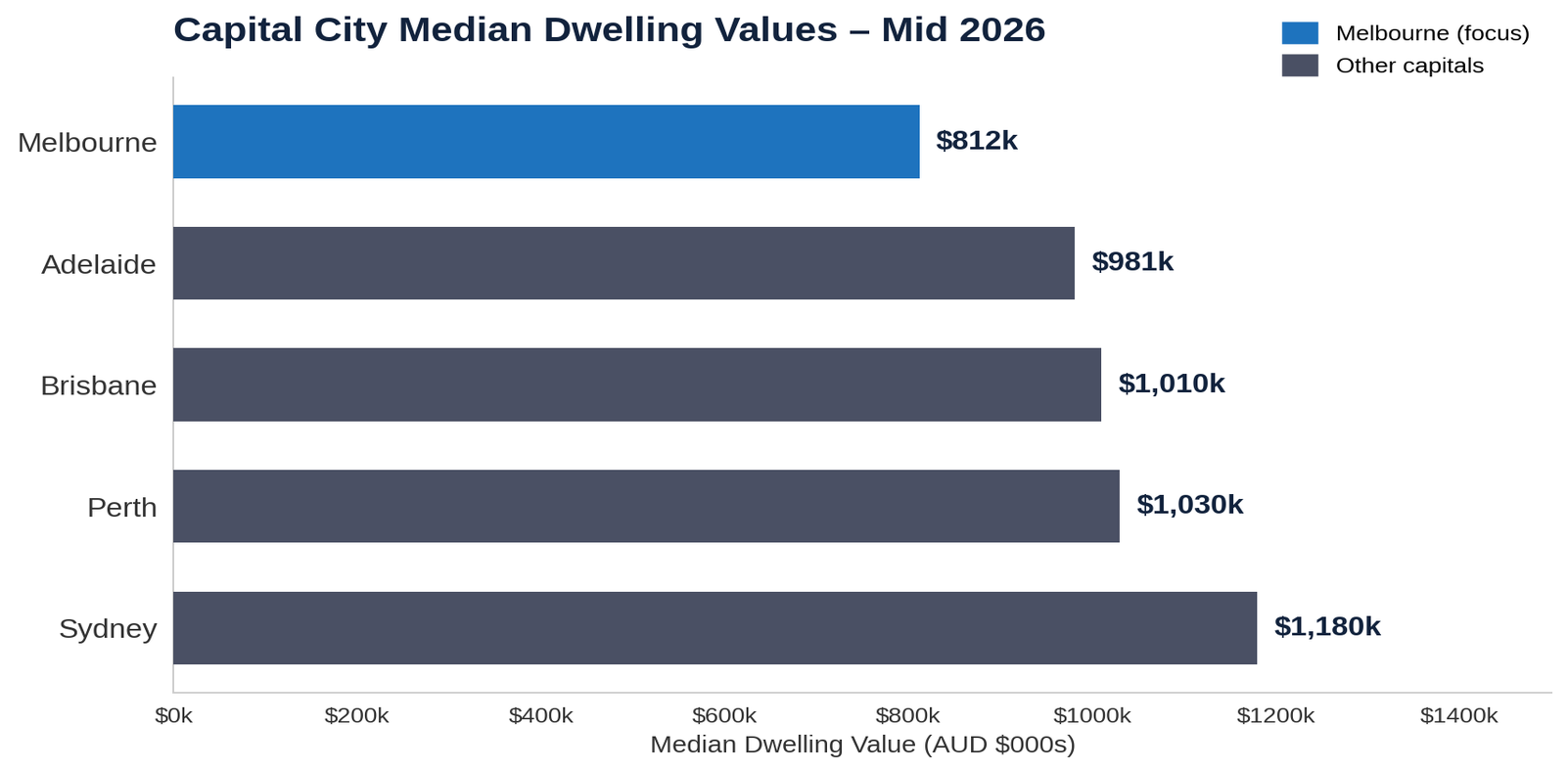
Source: Cotality Home Value Index, various sources, mid-2026.
Where Melbourne Sits in Its Price Cycle
Melbourne has underperformed the national average significantly over the past five years, growing around 3.3% while Brisbane and Perth both surged past 60%. Property markets don't move in sync across cycles. They rotate, and the cities with the longest periods of underperformance often produce the strongest rebounds when sentiment turns.
The pattern here mirrors what happened in Brisbane and Perth around 2019 to 2020: prolonged underperformance that preceded strong recovery cycles. That comparison is not a guarantee, but it does represent a structural argument for early positioning that today's buyers can act on before rates start falling.
Should You Buy Now or Wait?
This is the question that actually matters, and there is no universal answer. It depends entirely on your borrowing capacity, your investment timeline, and the type of property and suburb you are targeting.
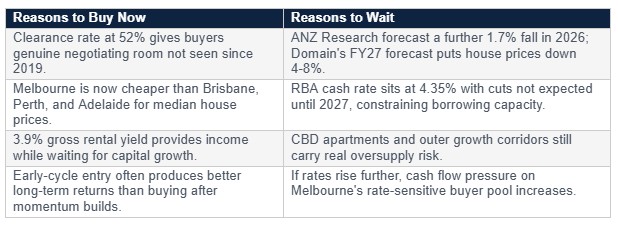
Who Should Buy Now Versus Who Should Wait
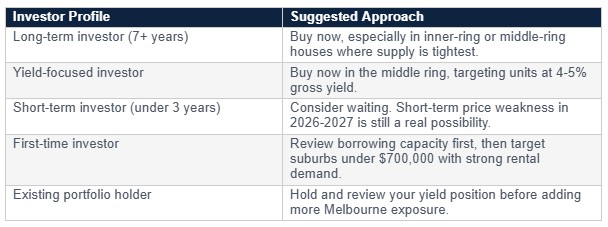
FOR EXAMPLE
An investor with a 10-year horizon buying a $700,000 house in Melbourne's middle ring today at a 3.9% gross yield would be collecting approximately $525 per week in rental income while positioned for a recovery cycle. If Melbourne replicates even half of Brisbane's post-underperformance growth, that entry point will look favourable in hindsight.
What Will Drive Melbourne Property Prices?
Interest Rates and Borrowing Capacity
The RBA's cash rate sits at 4.35% following several rises through early 2026, with further cuts not expected until well into 2027 at the earliest. That continued rate pressure is the single biggest headwind for Melbourne property buyers, and understanding how your borrowing capacity shifts as rates move is essential to timing your decision well.
Understanding how the borrowing capacity formula works is particularly important in a rate-sensitive market like Melbourne, where a higher proportion of mortgaged households means rate changes hit buyer demand harder than in cities with more outright ownership. For a deeper breakdown of rate risk for investors, the FPW article on how property investment interest rates affect returns covers the mechanics in detail.
Population Growth
Melbourne remains Australia's fastest-growing city by population, projected to reach 6.2 million residents by 2030 according to ABS projections. That underlying demand doesn't pause when interest rates rise. It converts into renters rather than buyers, which is exactly why vacancy rates have remained tight despite the softer sales market.
Housing Supply Constraints
New dwelling completions across Victoria have been running below what population growth requires. Building approvals have been sluggish and construction costs remain elevated after several years of inflation in the materials and labour sectors. That structural undersupply creates a price floor in well-located suburbs even when broader sentiment is soft. The ongoing housing shortage in Australia is most acute in Melbourne's inner and middle ring, where land scarcity compounds the undersupply problem significantly.
Source: Cotality Home Value Index, SQM Research, mid-2026.
Melbourne Suburbs Investors Are Targeting
The city-wide median obscures significant variation at the suburb level. Not all of Melbourne is moving at the same speed or in the same direction. Understanding which areas carry structural advantages is more important than knowing where the median sits today.
Inner and City-Fringe Suburbs
City-fringe suburbs with lifestyle amenity, good café strips, and proximity to transport are showing the most resilience against the broader softness. How to choose investment grade suburbs is worth reviewing before targeting specific postcodes, since investment grade criteria in Melbourne differ from what works in Brisbane or Perth.
Hawthorn, Armadale, and Brighton in the inner east and bayside belt still attract competitive bidding for well-presented period homes. Buyers competing in those areas should expect campaigns that regularly exceed quoted price ranges by 10 to 20%, even in a softer overall market.
Middle Ring Value Play
The middle ring, typically 10 to 20 kilometres from the CBD with good public transport connections, offers a better yield position without the premium price tag of the inner east. Balancing yield and capital growth in a property portfolio is the key strategic question in Melbourne right now, because the best middle-ring options tend to offer both rather than forcing you to choose.
Suburbs to Approach with Caution in 2026
CBD high-rise apartments, particularly stock built between 2015 and 2020, carry genuine oversupply risk that has not fully cleared. Outer growth corridors where land is still being released also remain vulnerable to further price weakness as borrowing capacity stays constrained and buyer demand concentrates in established areas.
Key Risks Investors Should Know About
Rate Risk
The RBA has already raised rates twice in 2026, and if rates rise further or remain elevated longer than markets currently expect, demand in Melbourne will feel another hit before any recovery begins. Westpac's forecast of further rises to 4.85% represents a scenario that buyers entering now should stress-test their borrowing position against.
Government Policy
Victoria's land tax increases have driven a significant wave of investor exits from the rental market over the past two years, adding supply to the sales segment while simultaneously tightening vacancy rates for tenants. The full impact of those exits on the sales market has not completely cleared, and any further policy changes affecting investors should be monitored closely.
Segment-Specific Oversupply
Not every Melbourne property segment is undersupplied. CBD apartments and outer corridor land releases carry real oversupply risk. Buyers in those segments face both price pressure and vacancy risk simultaneously, which is a difficult combination to recover from over any investment horizon.
Melbourne Property Market vs Other Capital Cities
Investor capital is mobile. If Melbourne's near-term risk profile does not match your strategy, understanding how it compares to the other capitals helps you allocate appropriately. How investors are comparing Brisbane, Adelaide, and Perth covers the case for interstate diversification in detail.
Source: Cotality Home Value Index, SQM Research, various sources, mid-2026. Figures are approximate.
Brisbane, Perth, and Adelaide have already completed strong growth cycles and are now moderating. Melbourne is arguably where those markets were three to four years ago: still in an underperformance phase but with growing structural conditions for a recovery that patient investors can position ahead of.
Final Thoughts
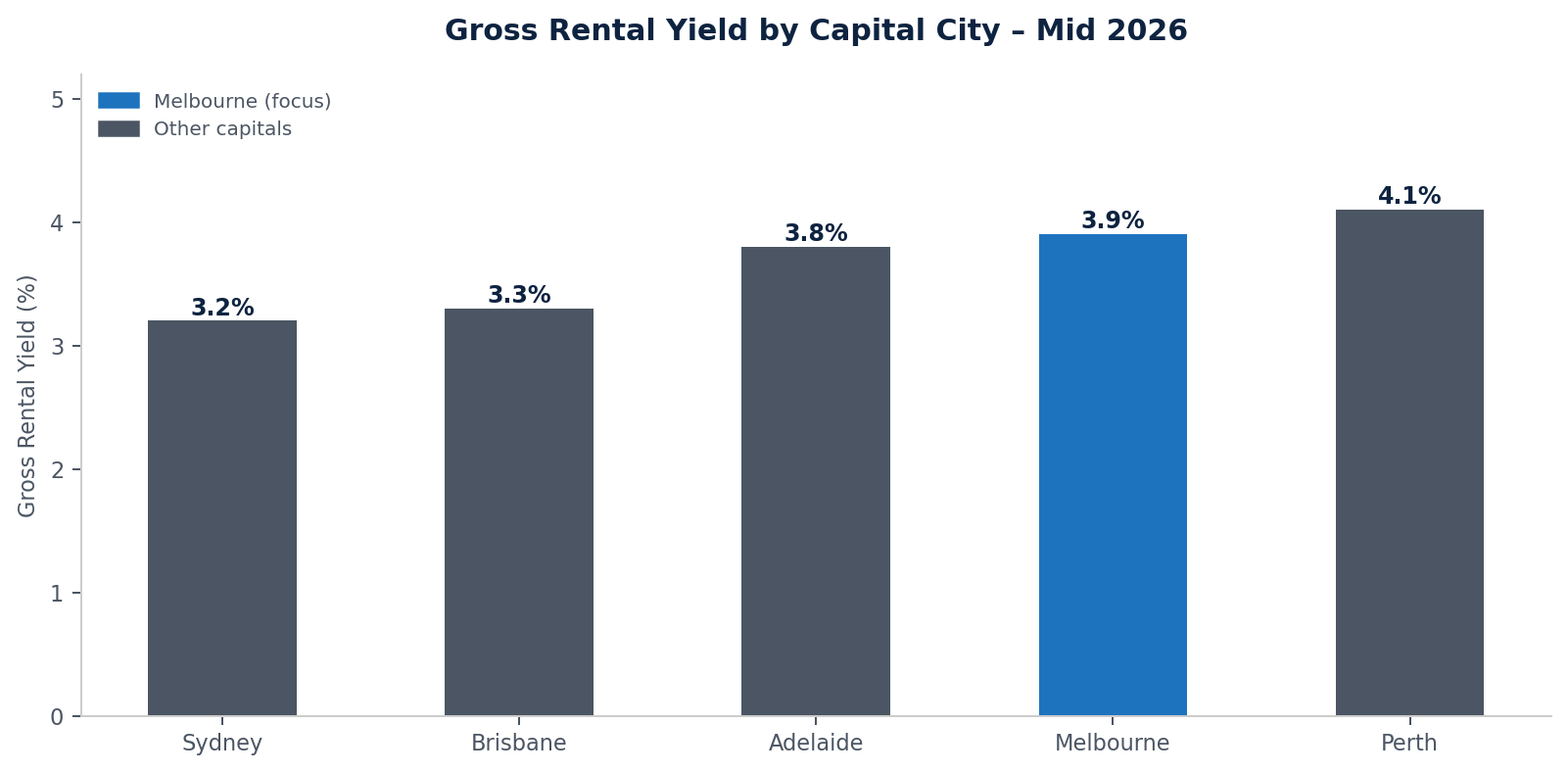
Melbourne is not a buy-everything market in 2026. But for investors with a 7-plus year horizon targeting the right suburbs and property types, the current conditions offer a genuine entry window that may close once rates start falling and buyer confidence returns. The combination of a 3.2% price discount from peak, a 3.9% gross rental yield that leads the major capitals, and structural undersupply in the right segments builds a credible long-term case.
The short-term risk is real: further rate rises, continued price weakness, and policy uncertainty around Victoria's property tax settings are all possible headwinds that should be factored into your entry strategy and cash flow modelling. The investors who tend to benefit most from markets like this are those who match their timeline to the risk profile and enter with a plan rather than a reaction.
Frequently Asked Questions
Recommended Reading
Two pages selected based on what readers of this article are most likely to need next.
Recommended Video
Most buyers think success comes from timing the market, but the real difference between people who build wealth and people who get stuck comes from buying the right asset with the right strategy, structure and support.