

Negative Gearing Changes Which Property Strategy Still Works

Negative gearing changes narrow the field rather than close it. From 1 July 2027, established residential property bought after 7:30pm AEST on 12 May 2026 loses the ability to offset its annual loss against other income, while eligible new builds keep that treatment and existing holdings stay grandfathered.
That single cutoff date reshapes which investment property strategy makes financial sense from here. The bigger question is not what the legislation says. It is what an investor should now look
What Are the Negative Gearing Changes and When Do They Start?
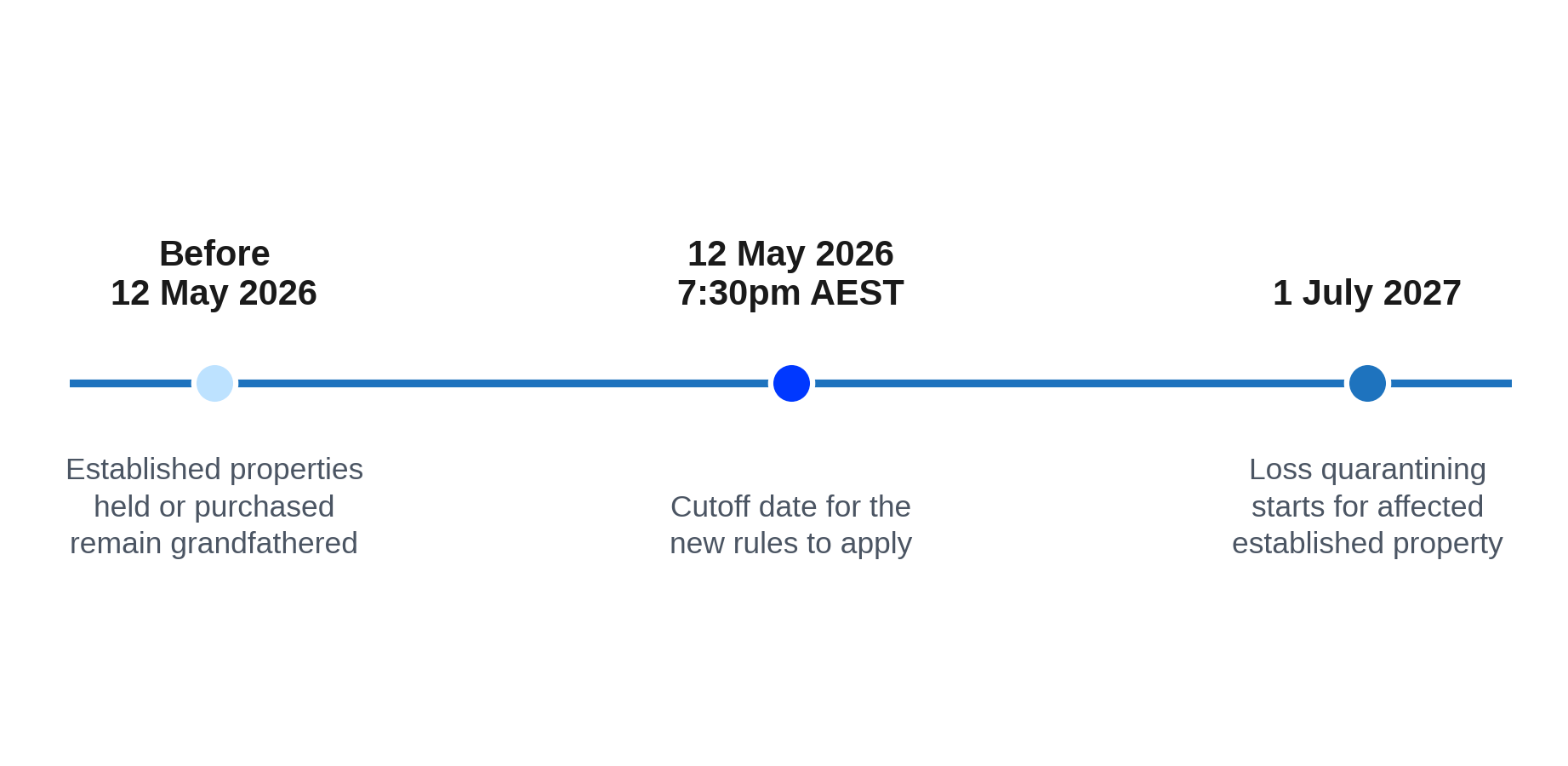
The reform is now legislated. Established residential property purchased after 7:30pm AEST on 12 May 2026 will move to loss quarantining from 1 July 2027, meaning the annual shortfall can only offset future rental profit or a capital gain on that same property, not the investor's other income.
Properties bought before that cutoff keep the existing treatment for as long as they are held. Eligible new builds are treated differently again. They retain full negative gearing regardless of when they are purchased, provided they meet the government's new build criteria.
Why the Changes Alter the Investment Property Strategy Equation
A tax deduction and an investment return are two different things, and the reform makes that distinction impossible to ignore. Negative gearing has always been a way to soften a shortfall, not a reason for the shortfall to exist in the first place.
Once the deduction is delayed rather than immediate, cash flow stops being a secondary consideration. An investor now has to ask whether the property would still be worth holding if the tax benefit disappeared for a few years, because for many purchases after the cutoff, it effectively has.
This is also why the 2026 federal budget changes matter beyond this one measure. Government policy is increasingly steering investors toward decisions that stand up on fundamentals, not just favourable tax timing.

Which Investment Property Strategies Are Most Affected?
Not every strategy carries the same exposure to this reform. The table below compares four common approaches on the factors that actually decide whether an investment property works, rather than assigning any of them a universal ranking.
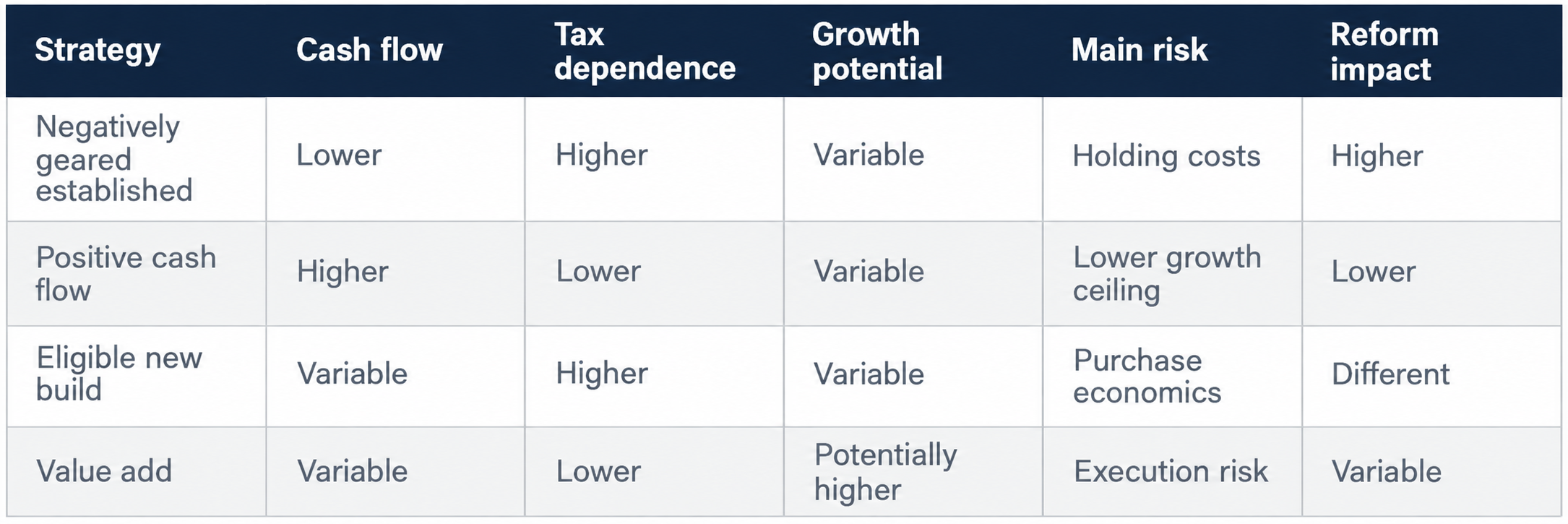
Positive cash flow properties were already less reliant on the deduction, so the reform changes little for that strategy. A balanced yield and growth approach now carries a clearer advantage over a strategy built mainly on a large, tax-offset loss.
New Build vs Established Property: What the Numbers Show
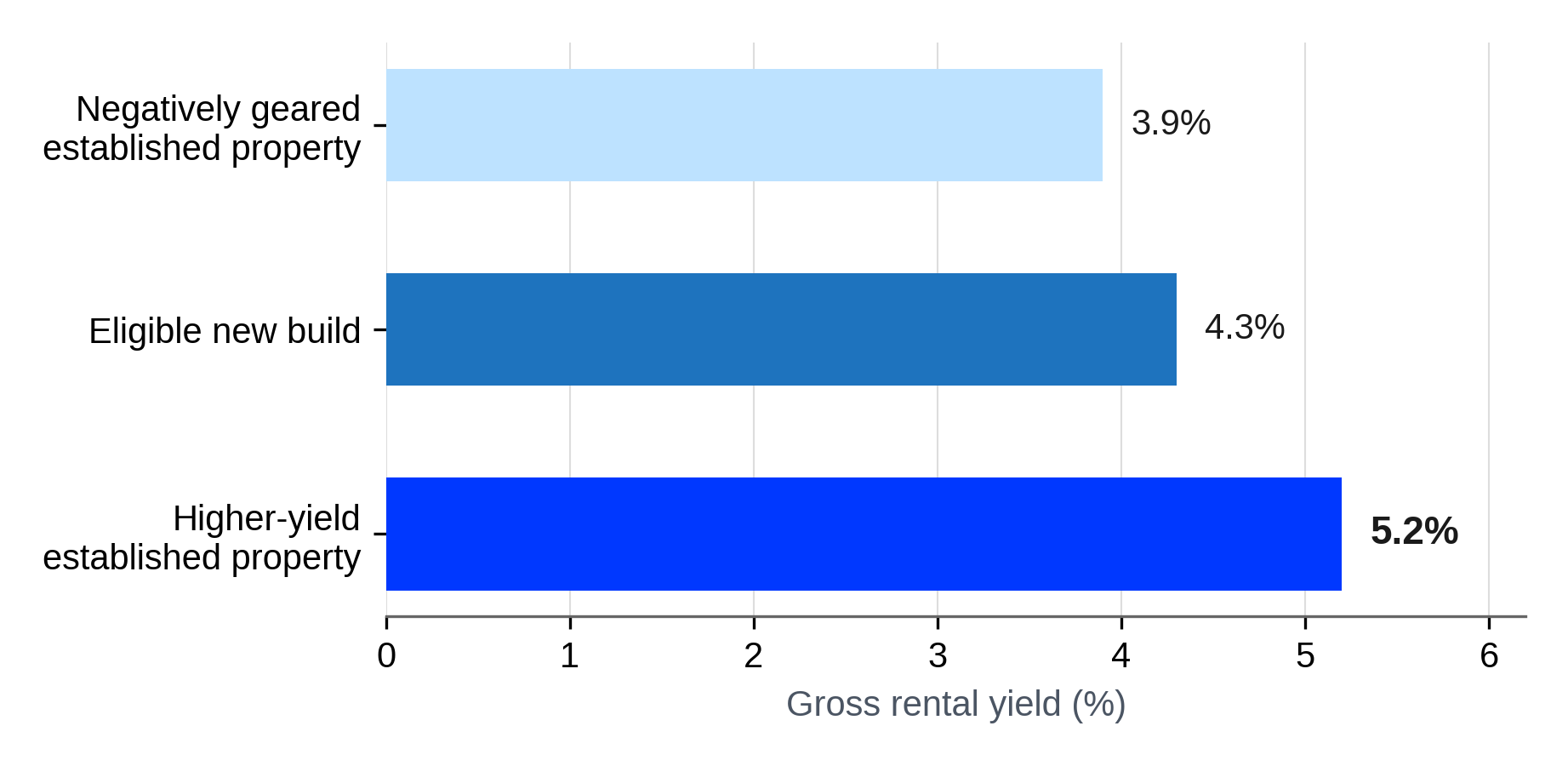
Retaining the tax deduction does not automatically make a new build the stronger investment. Purchase price, yield and growth potential still decide the outcome, and those figures vary property by property regardless of build type.
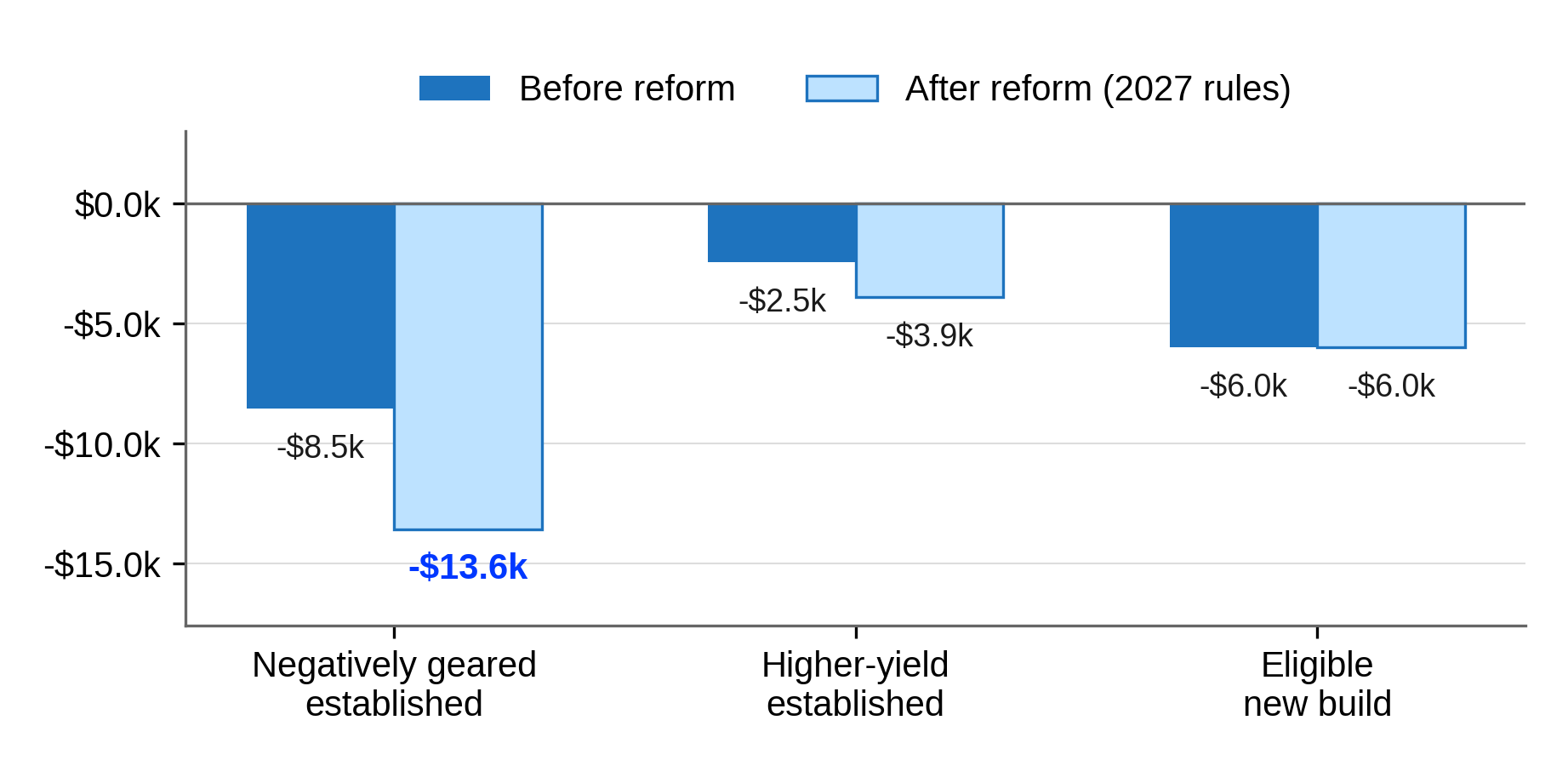
The scenarios below are illustrative only, based on a $650,000 to $700,000 purchase with a 6 percent interest rate and a marginal tax rate of 37 percent. They are not personalised advice, but they show the direction of the shift clearly.
After-Tax Cash Flow by Strategy: Before vs After Reform
Source: Treasury, Budget 2026-27 (illustrative modelling by FPW Group)
Gross Rental Yield by Strategy
Source: Treasury, Budget 2026-27 (illustrative modelling by FPW Group)
What Should Investors Assess Before Buying Now?
Borrowing capacity still sets the ceiling on what any strategy can achieve. Lenders assess debt-to-income ratios and serviceability buffers the same way regardless of how a property is taxed, so a strategy that looks appealing on paper still has to clear that hurdle first.
Rental yield, vacancy risk and realistic growth assumptions matter more once the deduction is delayed. A property in a tight rental market with sustainable income does more heavy lifting for an investor's cash flow than a larger loss ever did.
Key Dates for the Negative Gearing Reform
Final Thoughts: Don't Build a Strategy Around a Tax Benefit
The negative gearing changes alter the tax equation. They do not remove the need to test a property's cash flow, growth prospects, borrowing costs and role in the wider portfolio.
The stronger strategy after 1 July 2027 is the one that still stacks up without the deduction propping it up, a lesson that lines up closely with the common mistakes first-time investors make when a purchase is chosen for its tax outcome rather than its fundamentals.

Frequently Asked Questions
Recommended Reading
Two pages selected based on what readers of this article are most likely to need next.
Recommended Video
Most buyers think success comes from timing the market, but the real difference between people who build wealth and people who get stuck comes from buying the right asset with the right strategy, structure and support.