

Lessons from a $2.2M Property Investment Fraud
The main lesson from Queensland's $2.2 million developer fraud is that some serious property investment risks have nothing to do with the market. When one person controls both the money and the updates, a project can look on track while the money goes elsewhere.
Market falls, vacancies and rate rises usually cost investors part of their return. Fraud can cost them the money itself, and it gives fewer warning signs. That makes it a risk worth checking for before you sign, alongside the usual red flags when buying an investment property.
Below, we cover what the court case found and how fraud differs from normal risk. We also set out the checks that could have exposed the problems early
What the $2.2M Property Investment Fraud Reveals
How the Queensland developer fraud case unfolded
Ian Omar Chester was the sole director of about 18 companies used for five property development projects. In September 2026, he pleaded guilty to aggravated fraud and was jailed for nine years, with parole possible after three, according to ASIC.
From Collapse to Sentence: How the Case Unfolded
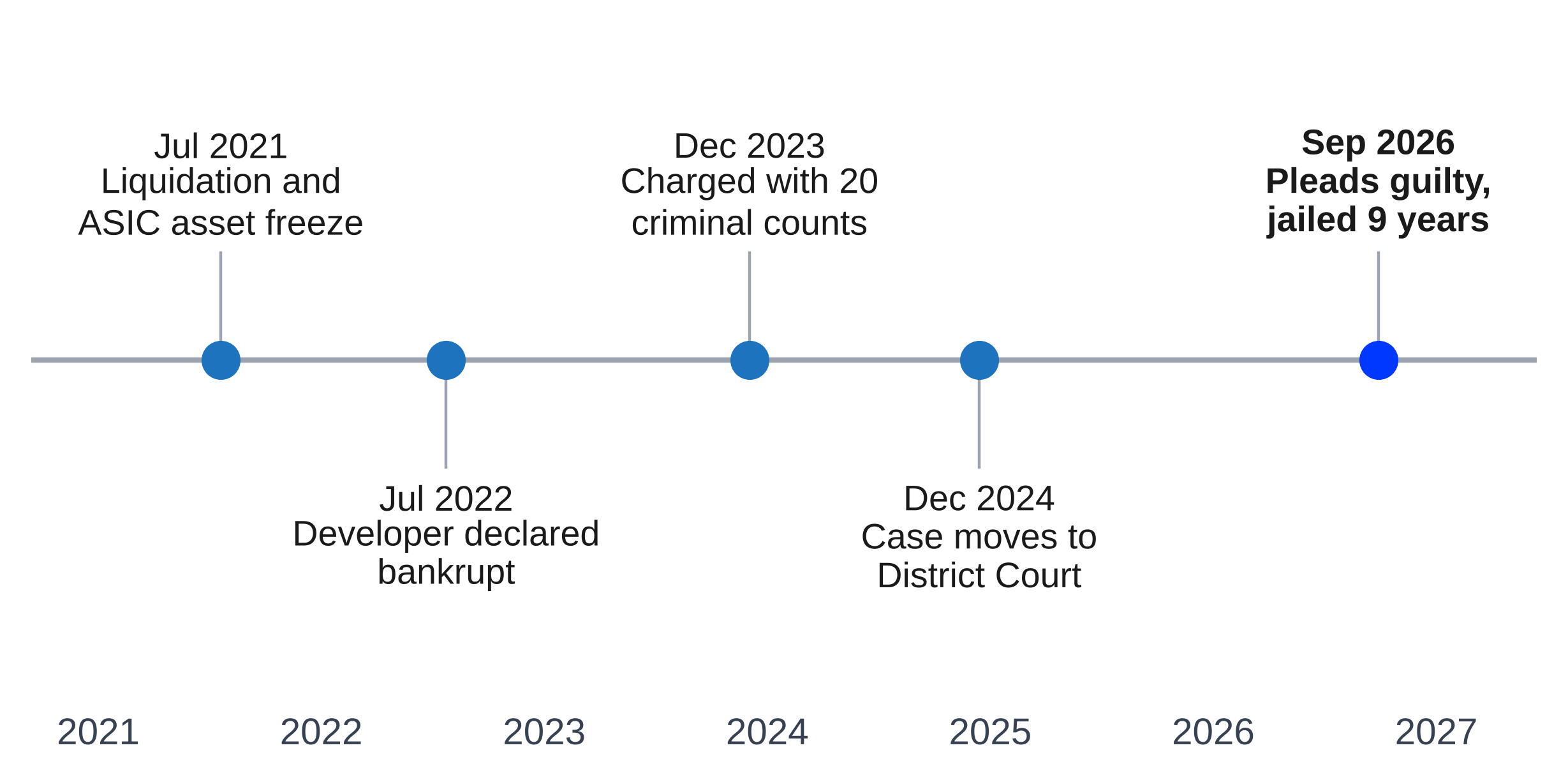
Source: ASIC media releases 21-188MR and 23-325MR, 2021 to 2026.
How the Queensland developer fraud case unfolded
The court heard he faked investor approvals to get money released. He used it to pay his own debts and moved some into accounts in his name. In one project, the land had already been sold to an unrelated party, yet an investor was told it was on track and invested.
How the Queensland developer fraud case unfolded
The 190 investors were not chasing a scam website. Many used their SMSFs to back what looked like normal property development. That is why the lesson applies well beyond this case.
Investment scams in general have fallen since 2022 but remain large. The National Anti-Scam Centre reported $837.7 million in investment scam losses in 2025, according to the ACCC.
From Collapse to Sentence: How the Case Unfolded
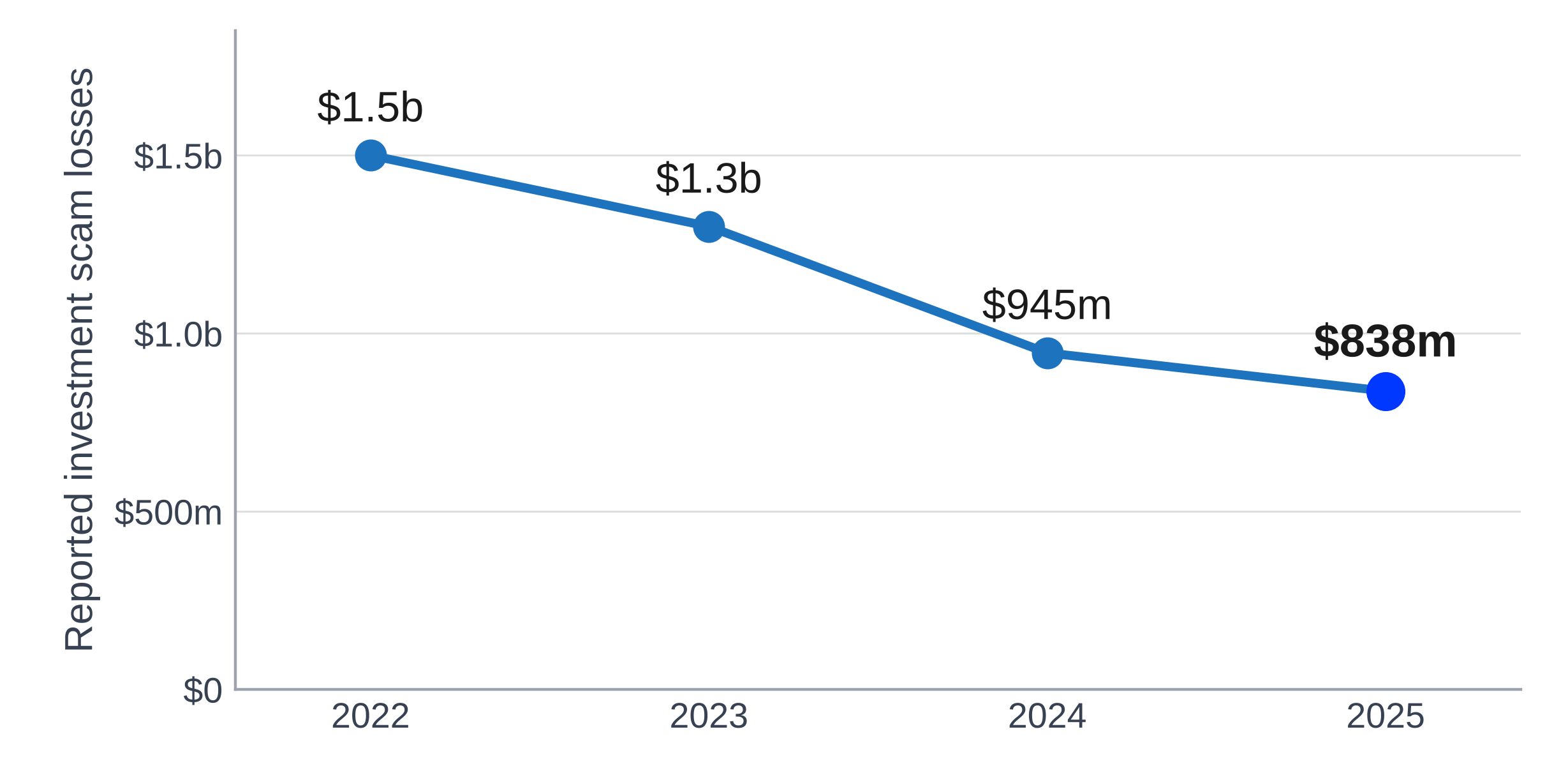
Source: ACCC, 2022, National Anti-Scam Centre, 2024 and ACCC, 2025 Targeting Scams reports.
The Property Investment Risks Investors Need to Understand
Moneysmart lists the familiar risks: costs, rate rises, vacancies, falling values and the difficulty of selling quickly. Fraud sits apart from these because it rarely shows up in market data.
Market risk, falling property values and oversupply
Values can fall when demand weakens or too many new homes arrive at once. This is why suburbs promoted as the next boom often disappoint, as we explain in why property hotspots never boom. Comparing property investment locations across Australia on supply and demand data lowers this risk.
Financial risk from borrowing costs, vacancies and cash flow
If rent does not cover your repayments, you fund the gap yourself. Knowing your borrowing capacity shows how big a shortfall you could carry. Our guide to property investment interest rates shows how fast that gap can grow.
Property development risks, including delays and project failure
Development adds risks that a finished home does not have: approvals, builder problems, cost blowouts and delays. If you pay before it is built, you rely on the developer to deliver. That is one reason new builds and established property carry different risks.
Fraud risk and misleading investment information
Fraud is different in kind. It means money is used dishonestly, not that a project simply went badly. It can hide behind normal updates for years.
How Different Property Investment Risks Behave
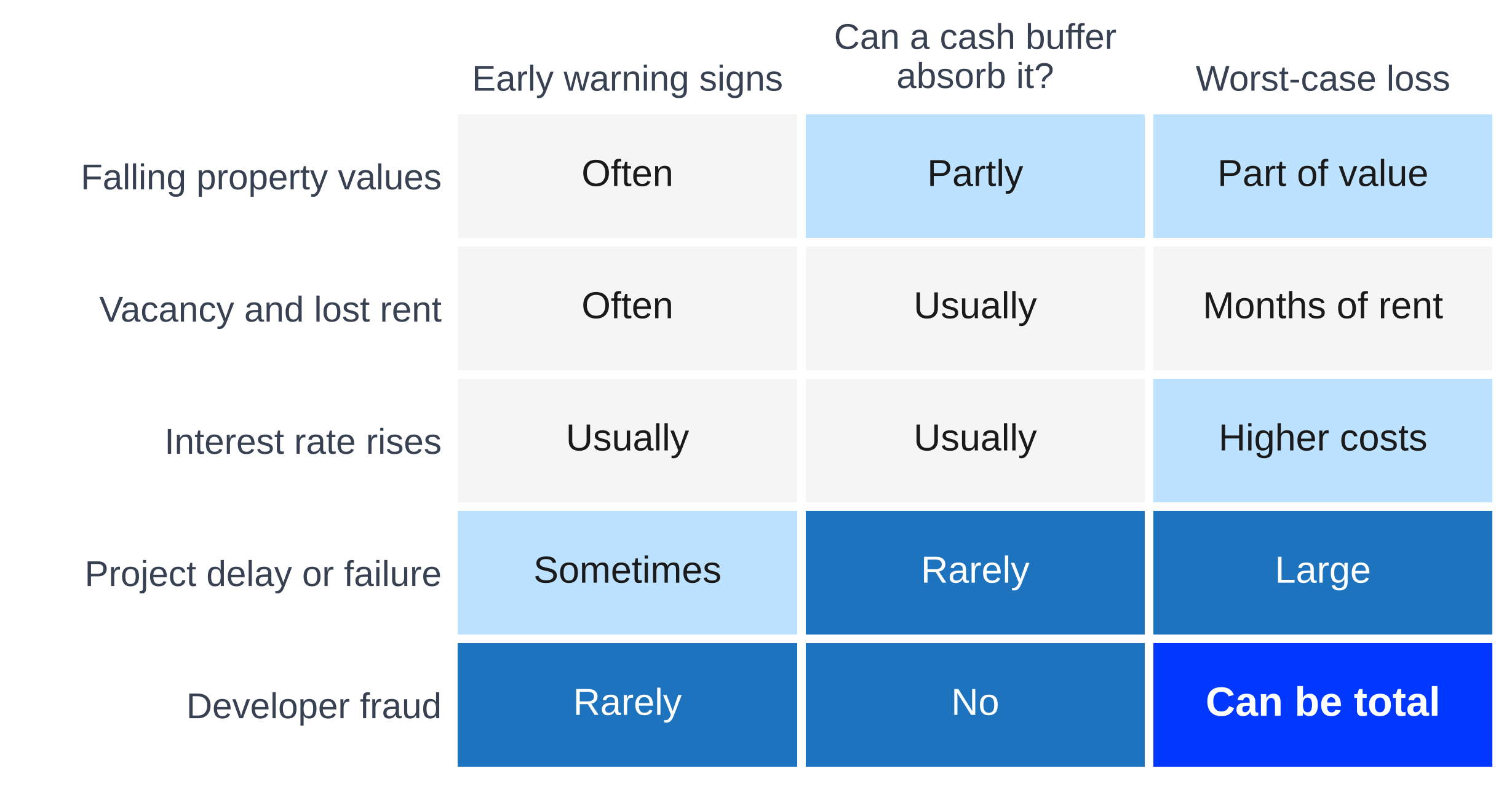
Source: FPW Group assessment, October 2026. A general guide, not a forecast for any property.
How Different Property Investment Risks Behave
Investment scams caused the biggest losses of any scam type in 2025, according to the ACCC.
Reported Scam Losses by Type in Australia, 2025
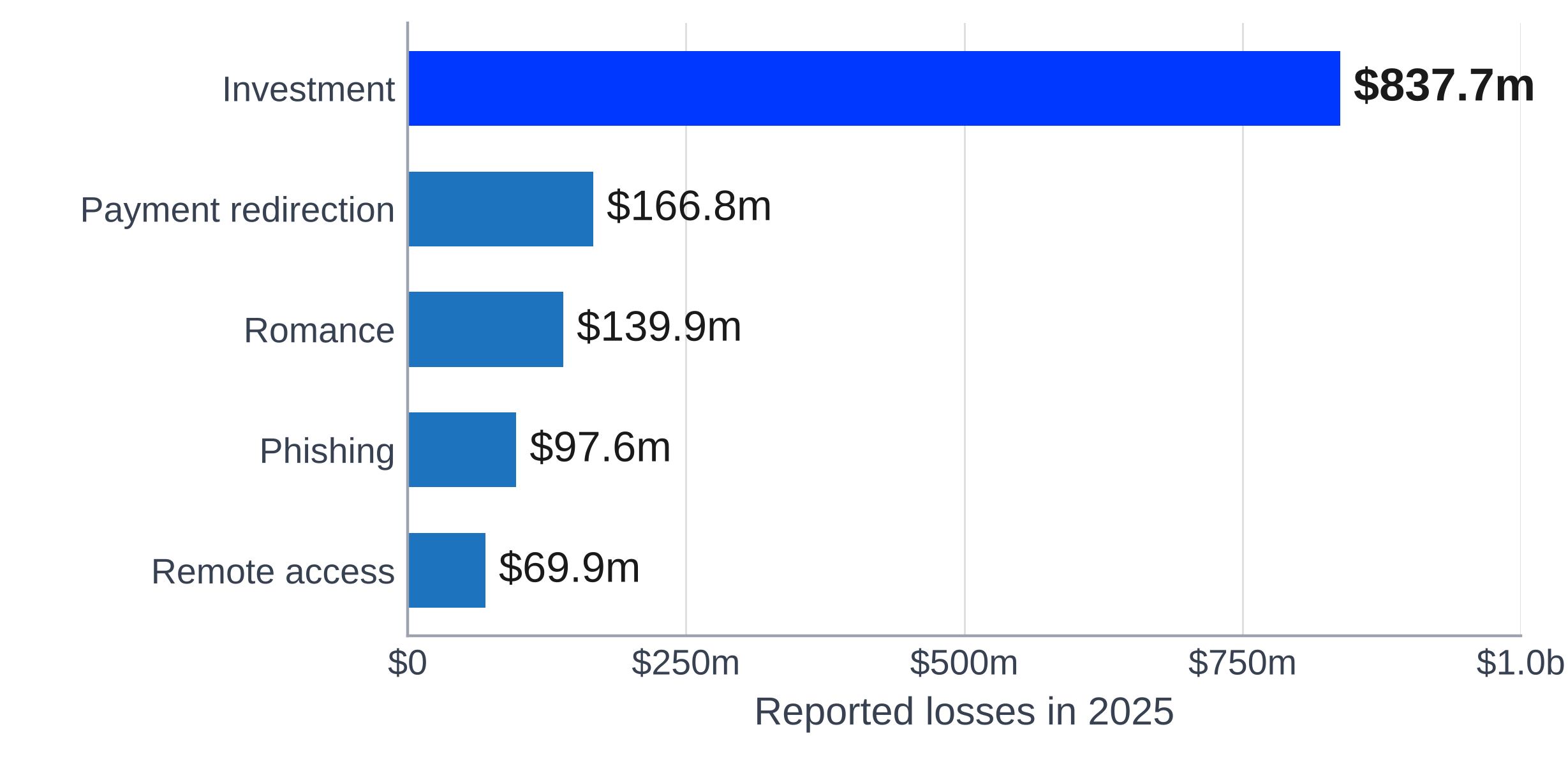
Source: ACCC, Targeting Scams Report 2025, March 2026. Combined data from participating agencies.
Claims that cannot be independently verified
Be wary of any claim you can only check through the promoter, such as land owned, approvals granted or progress made. If it is true, it can usually be confirmed with a public record.
Unclear explanations of where investor funds go
You should know which account holds your money, who can release it and what must happen first. Vague answers are a warning sign in themselves.
Delayed projects and inconsistent progress updates
Delays are common in development. Repeated delays with upbeat updates and no visible progress on site are not.
Pressure to invest before completing independent checks
Consumer Affairs Victoria flags rushed deals and offers that bundle the loan, legal work and tax advice. Its guide to high-risk property investments also warns about risky property pushed through SMSFs.
How to Check a Property Developer Before Investing
Good checks turn trust into evidence. Each step below can be done independently of the developer.
Verify the developer, company structure and relevant credentials
Search the company and its directors on ASIC's registers, including the banned and disqualified list, as Moneysmart recommends. Ask whether the offer needs an Australian financial services licence, and check it on ASIC's Professional Registers.
Review contracts, project approvals and investment documents
Read the offer documents in full and confirm the development approval on the council's application register. A project without approval is an idea, not a development.
Independently verify ownership and project progress
Order your own title search to confirm who owns the land. In this case, that one check would have shown the land had already been sold.
Understand how investor funds are held, released and monitored
Ask whether your money sits in a trust account or with an independent custodian, and who must approve each release. Ask to be told directly by that party, not the developer, whenever funds move.
Seek independent legal and financial advice
Use advisers who are not connected to the developer. Moneysmart warns that linked providers may just refer to each other. This is why the difference between a buyer's agent and a selling agent matters.

How to Check a Property Developer Before Investing
Preserve contracts, payment records and communications
Keep every contract, receipt, bank record, email and message, and do not send more money. These records matter for any claim, report or investigation.
Contact your lawyer and relevant financial professionals
Call your bank straight away to try to stop transactions, then speak to a lawyer and your accountant, as Moneysmart advises. If your SMSF invested, your auditor and adviser need to know too.
Report suspected misconduct to the appropriate authority
Report scams to Scamwatch, fraud to police through ReportCyber or 131 444, and company or financial misconduct to ASIC. Be wary of anyone offering to recover your money for a fee.
A Property Investment Due Diligence Checklist
Use this before committing money to any development, fund or off-the-plan purchase.
Reasons to pause or walk away from an investment
The promoter will not let you verify ownership, approvals or where funds are held.
You are pushed to sign quickly or offered a discount for deciding today.
The same group supplies the property, the loan, the lawyer and the tax advice.
The promised return is well above what similar investments earn.
How to Make More Informed Property Investment Decisions
Balance potential returns against financial and operational risks
A higher promised return usually means more risk, even when nobody is acting dishonestly. Ask what would have to go right for that return to happen.
Understand your borrowing capacity and ability to absorb losses
Investing only what you can afford to lose limits the damage of any single risk. Borrowing to the limit does the opposite, as we explain in maximum borrowing capacity: wealth or risk.
Get professional guidance before committing capital
Independent advice costs far less than a lost deposit. An investment property strategy session can test an opportunity against your goals, cash flow and risk before you commit.
Final Thoughts
The $2.2 million fraud is a reminder that property investment risks are not only about prices, rates and tenants. When one person controls both the money and the updates, the truth can stay hidden for years.
Most of the protection comes from simple checks done early. Think title search, council approval, ASIC's registers and a clear answer on where your money sits. None of them guarantee safety, but together they make deliberate deception much harder to hide.
Treat any investment you cannot verify as one you cannot afford.

Frequently Asked Questions
Recommended Reading
Two pages selected based on what readers of this article are most likely to need next.
Recommended Video
Australia's record migration surge — peaking at over 528,000 people in a single year — created unprecedented housing demand almost overnight. We explain why the government used population growth as a deliberate tool to avoid recession, how that decision flows directly into property prices Australia-wide, and why rents have surged to record highs as a result.