

Why Some Property Hotspots Never Boom (And How to Spot the Winners)
Most property hotspots never deliver a genuine boom, and the ones that do are rarely the suburbs generating the most attention. The property market rewards specific, measurable fundamentals long before that growth becomes visible in headlines, and by the time a suburb is being called a hotspot, much of its upside has often already been priced in.
This creates a real problem for investors relying on public commentary to time an entry. The suburbs that quietly deliver sustained capital growth tend to share a set of underlying drivers, population movement, infrastructure funding, employment growth and genuine supply constraints that show up in the data well before they show up in a headline.
Understanding which of those drivers are genuinely at play, and which are just noise, is what separates an investor buying into real growth from one buying into hype that already peaked.
Understanding Today's Property Market: Why Some Areas Outperform
Australia's property market is not one market. It is a patchwork of state and regional economies moving at different speeds, and treating it as a single national trend is one of the fastest ways to misjudge a location.
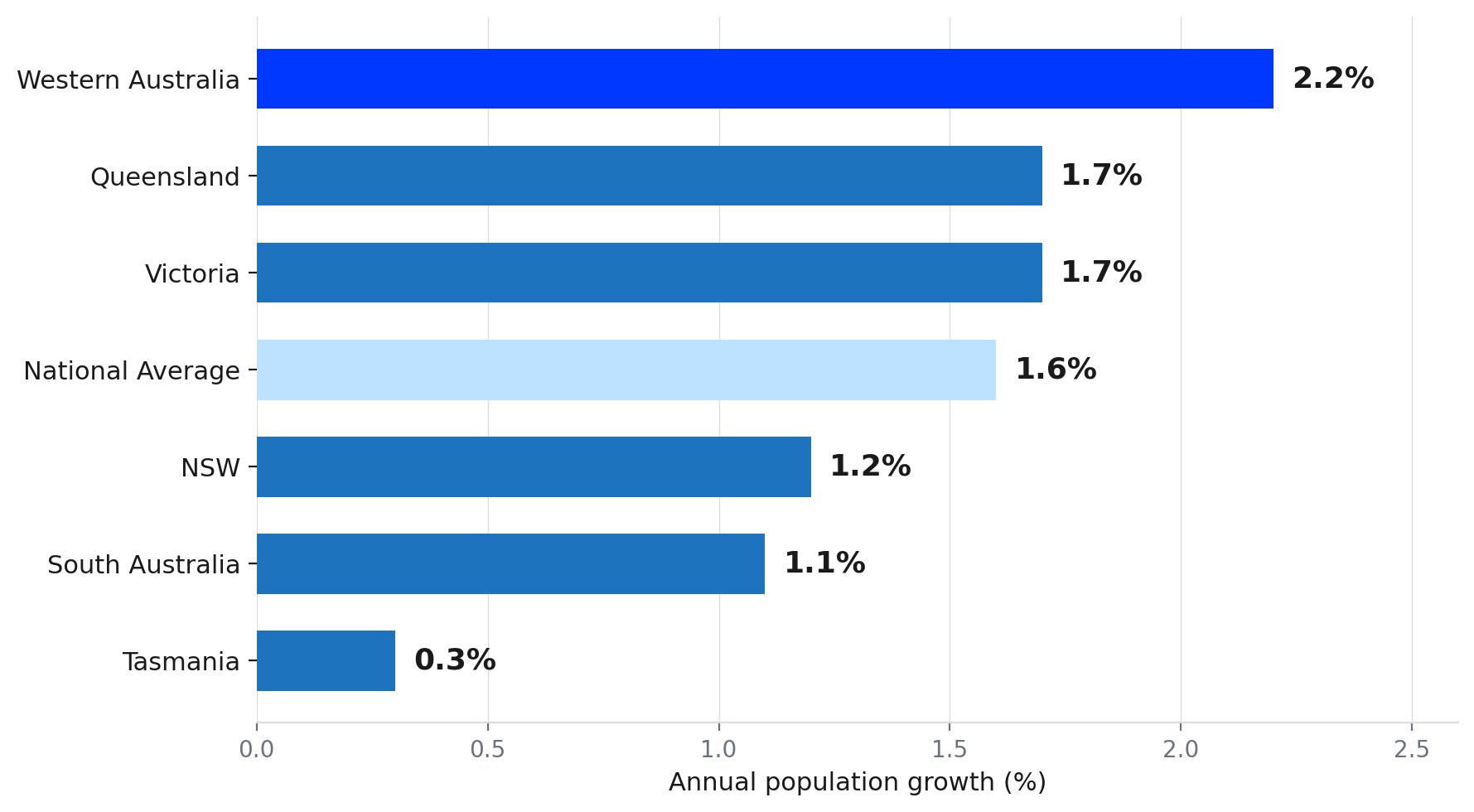
Population growth to September 2025 sat at 1.6 percent nationally, but Western Australia grew at 2.2 percent while New South Wales grew at just 1.2 percent, and that gap alone explains a large share of the divergence in suburb-level demand.
Why property growth is uneven across Australia
State-level economic drivers rarely move together. A resources upswing in Western Australia pushes up housing demand in Perth's outer suburbs, while Sydney's growth corridors respond to different pressures entirely, chiefly overseas migration and a chronic construction shortfall.
A suburb sitting inside a funded transport corridor behaves nothing like a suburb with the same median price sitting outside one. For a state-by-state read on where conditions currently sit, see how investors are comparing Brisbane, Adelaide and Perth in 2026.
The difference between a property hotspot and a genuine growth market
A hotspot is one that has already attracted media attention, investor chatter and a visible run of quarterly price growth.
A genuine growth market is a suburb where the fundamentals, population, jobs, infrastructure and supply, are still building, and where price has not yet caught up to what those fundamentals justify.
The two can look identical for a period, but a hotspot's growth is driven by demand chasing the story, while a genuine growth market's price rise is still catching up to something structural. Once the story fades, only the second kind holds its gains, which sits at the centre of the property investment australia approach FPW uses when assessing new locations.
Population Growth by State, Year to September 2025
Source: Australian Bureau of Statistics, September 2025
Why Some Property Hotspots Never Boom
Not every suburb tipped as the next big thing goes on to deliver it. Three failure patterns show up repeatedly across markets that generated attention but did not sustain growth, and recognising them early is often more valuable than any single growth signal.
Buying into hype instead of fundamentals
Social media commentary and short-form market content can create demand momentum that has nothing to do with a suburb's underlying capacity to keep growing. Prices lift as buyers chase the narrative, then stall once the pool willing to pay a premium for the story runs out.
This pattern is common among people who become accidental investors after buying on a recommendation rather than their own analysis.
Weak employment and population drivers
A suburb without genuine employment growth or a rising resident base cannot sustain demand once initial buyer interest fades. Jobs growth pulls people in, and people moving in for work tend to stay and buy, a structurally different demand base to buyers speculating on capital growth alone.
Infrastructure announcements without matching jobs or population growth tend to produce a short-term bump that does not hold.
Oversupply and changing demand
A construction pipeline that outpaces genuine population growth eventually catches up with price growth, regardless of how strong early momentum looked. Apartment-heavy corridors are particularly exposed to this pattern, since approvals can lag demand signals by several years and then land all at once.
Rental demand and vacancy pressure are the clearest early warning here, and a suburb where vacancy is loosening while construction cranes are still active deserves a second look before committing.
FOR EXAMPLE
An outer-metro suburb generated strong social media attention in 2023 after a well-known commentator flagged it as undervalued. Prices rose almost 20 percent within a year as buyers piled in on the recommendation alone. Growth flattened within eighteen months once population and employment data confirmed the underlying fundamentals had not moved with the price, leaving early sellers well ahead and late buyers holding a stalled asset.
The Key Indicators That Reveal Future Property Winners
Four indicators consistently show up in suburbs that go on to deliver sustained growth, and each one is measurable well before a suburb becomes a talking point.
Population growth and demographic shifts
Sustained population growth is the clearest long-run demand signal available, since more residents translate directly into more buyers and tenants competing for the same limited stock.
Suburbs attracting younger working households and families tend to show more durable demand than suburbs whose growth is driven mainly by short-term rental arbitrage or investor speculation.
Infrastructure investment and future connectivity
Committed government infrastructure funding, not just proposed or discussed funding, is one of the strongest forward indicators available to investors. A rail extension, hospital upgrade or new employment precinct changes the practical desirability of a suburb well before the project is finished, and prices in the surrounding corridor typically begin moving years ahead of completion.
The distinction between committed and merely proposed funding matters enormously here, since proposed projects are cancelled or delayed far more often than investors assume.
Employment growth and economic expansion
A suburb close to expanding employment precincts, whether health, education, logistics or government services, tends to attract residents who need to live within a practical commute. This is a structurally different and more durable demand driver than lifestyle appeal alone, since it is tied to income and necessity rather than preference.
Supply constraints and housing demand
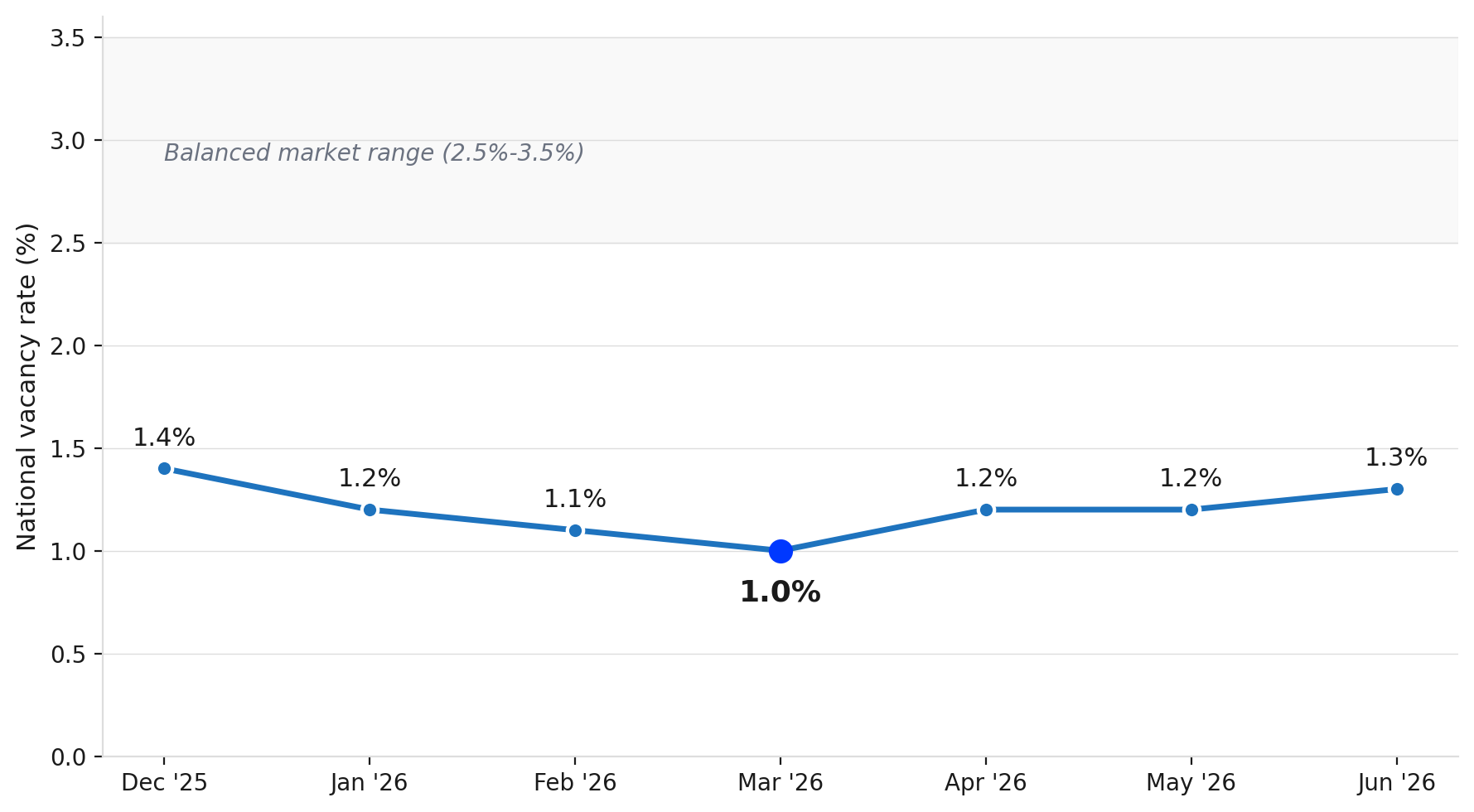
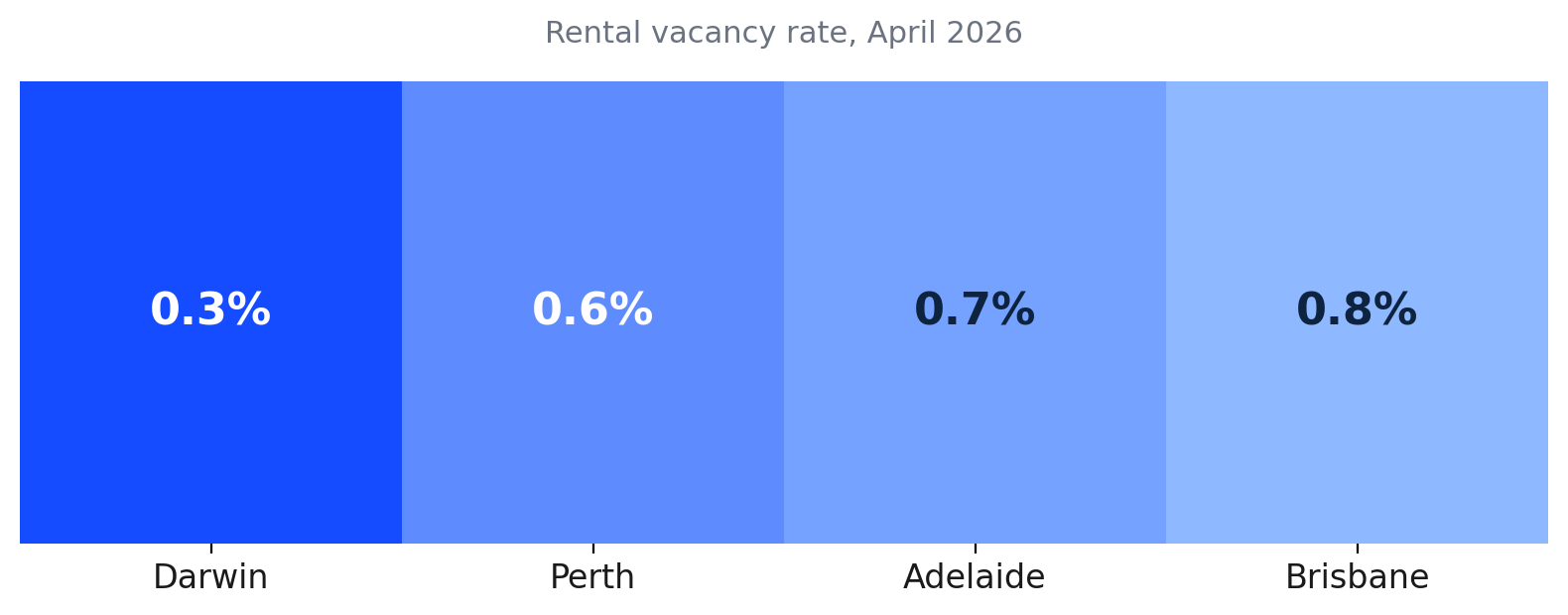
Nationally, only 168,050 dwellings commenced construction in the 2024 calendar year, well short of what population growth requires. The national rental vacancy rate sat at 1.3 percent in June 2026, still well below the 2.5 to 3.5 percent range considered a balanced market, and every capital city continues to record vacancy under 2 percent.
Tight vacancy in a suburb with limited remaining developable land is one of the more reliable signals that supply constraint, not hype, is doing the work. See our analysis of the housing shortage across Australia for a wider look at this national shortfall.
National Rental Vacancy Rate, December 2025 to June 2026
Source: SQM Research, June 2026
How Investors Identify Emerging Property Markets Before Prices Rise
The suburbs that deliver the strongest long-run returns are rarely the ones already dominating headlines. Investors who consistently identify emerging markets early tend to follow a different process to the one most buyers default to.
Look beyond current prices
Affordability relative to a region's median, not affordability in isolation, is what signals genuine upside. A suburb sitting meaningfully below the median for its surrounding corridor, while sharing the same infrastructure and employment access as more expensive neighbours, is often mispriced rather than genuinely lower quality.
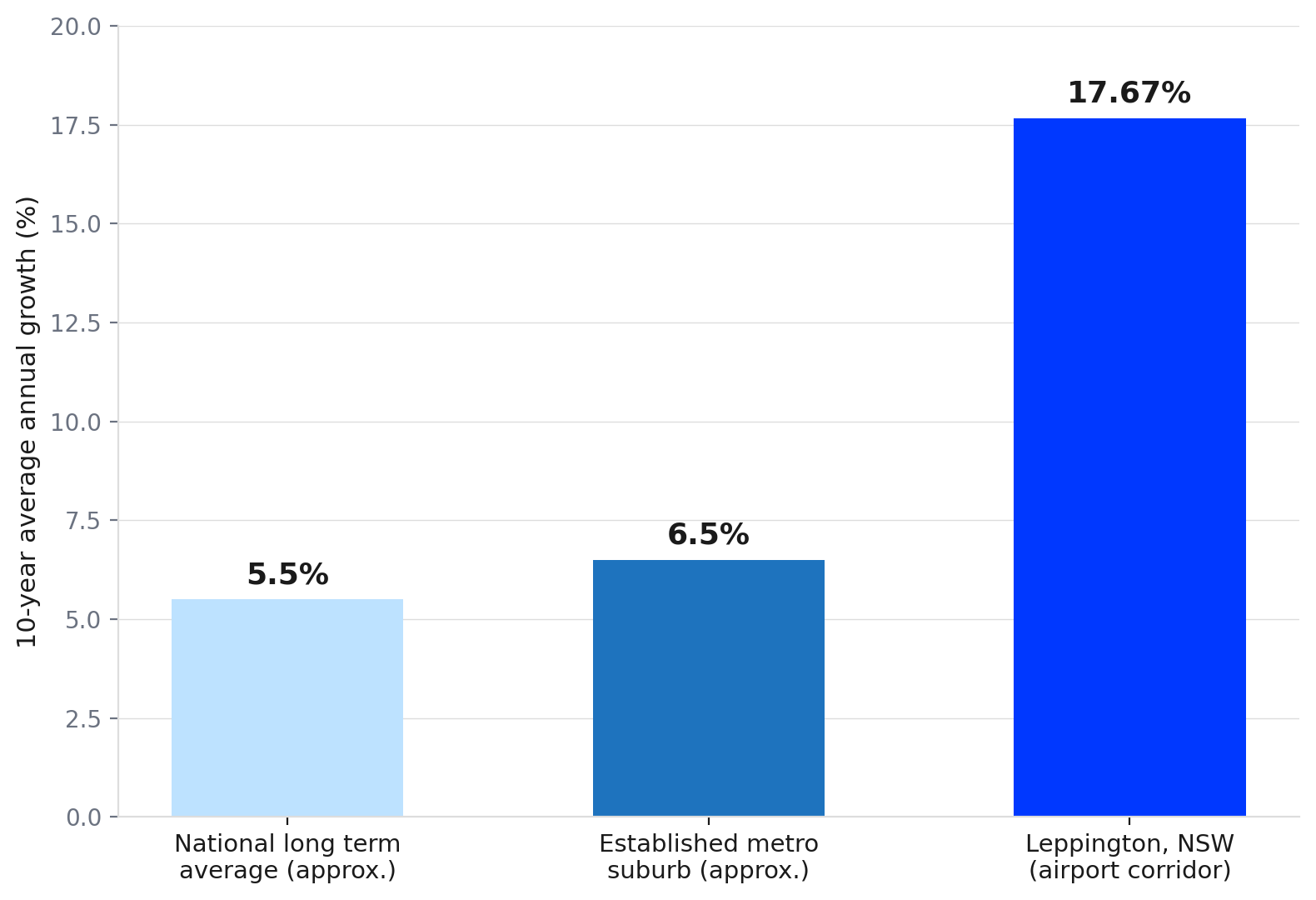
Leppington in Sydney's south-west, positioned near the Western Sydney International Airport development, has delivered a 17.67 percent average annual growth rate over the past decade, well ahead of the typical long-term average for an established metro suburb of roughly 5 to 6 percent a year, a gap that reflects how much upside was available when the corridor was first identified rather than after it became common knowledge.
Analyse data instead of predictions
Vacancy rates, rental growth, sales volumes and days on market together tell a more reliable story than any single forecast. A suburb where vacancy is tightening and days on market are falling is showing genuine demand pressure building in real time, a stronger signal than a commentator's opinion.
Knowing what you can afford to act on matters too, since the borrowing capacity formula lenders apply often rules suburbs in or out before the analysis gets that far. A read on your debt to income ratio position adds further clarity before committing research time to a shortlist.
Separate temporary growth from sustainable growth
A single quarter of strong growth proves very little on its own. Sustainable growth shows up as a consistent trend across multiple data points over twelve to twenty-four months, supported by the population, employment and infrastructure signals already discussed, rather than a single spike that could just as easily be a temporary supply shortage or a short-lived demand surge.
Property Hotspot Checklist: How to Find the Winners
Bringing the indicators above together into a single working checklist makes them far easier to apply consistently across a shortlist of suburbs.
Economic fundamentals
Confirm committed, not proposed, infrastructure funding. Check for genuine employment growth in the surrounding region, not just population growth. Compare population growth against the state and national averages rather than assessing it in isolation.
Rental market strength
A vacancy rate meaningfully below the 2.5 to 3.5 percent balanced range, alongside accelerating rental growth, points to genuine tenant demand rather than a temporary shortage. Investors weighing rental strength against capital growth should also work through how to balance yield and growth within a portfolio, since the strongest rental numbers do not always sit in the strongest growth locations.
Long-term capital growth potential
Scarcity of remaining developable land, strong owner-occupier demand alongside investor demand, and genuine lifestyle drivers such as transport access and amenity all support long-term holding power. A suburb where owner-occupiers are competing directly with investors tends to hold its value more consistently through a downturn than a suburb dominated by investor buyers alone.
10-Year Average Annual Growth: Infrastructure Corridor vs National Benchmark
Source: ABS regional data, compiled February 2026
Rental Vacancy Rate by Capital City, April 2026
Source: SQM Research, April 2026
FOR EXAMPLE
Two investors each had a $650,000 budget in early 2024. One bought in a suburb already being described as a hotspot in property media, where prices had risen 15 percent in the prior year.
The other bought in a suburb one stop further from the CBD with a confirmed infrastructure upgrade still eighteen months from completion and a vacancy rate under 1 percent.
Three years on, the second suburb had outgrown the first, because its fundamentals were still building when the purchase was made rather than already reflected in the price.
Common Mistakes Investors Make When Choosing Property Locations
Even experienced investors repeat a small set of avoidable errors when selecting a location, and each one tends to compound the others.
Following headlines instead of data
Media coverage of a suburb is a lagging indicator, not a leading one, since coverage tends to follow a run of price growth rather than predict it. By the time a suburb receives consistent media attention, a meaningful share of the available upside has often already gone to earlier buyers. This is one of the more common property investment mistakes first time investors make.
Chasing yesterday's growth
Extrapolating a recent growth rate forward assumes the conditions that produced it will continue indefinitely, which is rarely a safe assumption once a supply response or affordability ceiling starts to bite. A suburb that has already delivered several years of above-average growth is statistically more likely to be approaching a plateau than continuing at the same pace.
Ignoring affordability constraints
A suburb can tick every fundamental box and still be a poor fit if the entry price has moved beyond what a buyer can genuinely service. Matching a shortlist against real borrowing capacity, rather than an aspirational budget, keeps the analysis grounded in what is actually achievable rather than what looks good on paper.
Final Thoughts
Most property hotspots never boom because the growth that made them a hotspot was already borrowed from the future. Suburbs that go on to deliver sustained returns tend to look quieter, not louder, at the point investors identify them, since their fundamentals are still building rather than already priced in.
Running population, infrastructure, employment and supply data against every suburb on a shortlist, before the story gets loud, is what separates investors who catch genuine growth from those who buy the headline after the upside has gone. The property market rewards patience and process over timing a trend.
Frequently Asked Questions
Recommended Reading
Two pages selected based on what readers of this article are most likely to need next.
Recommended Video
Most buyers think success comes from timing the market, but the real difference between people who build wealth and people who get stuck comes from buying the right asset with the right strategy, structure and support.