

Top 5 Suburb Myths Investors Should Question

No single suburb is the right investment for every property investment strategy, and five commonly repeated assumptions are why investors keep choosing the wrong one anyway. Past growth, high yield, new infrastructure and population figures all get treated as automatic buy signals, when each one only tells part of the story.
These assumptions are not wrong exactly. They are incomplete, and that gap is where otherwise careful investors end up with a property that does not fit what they were actually trying to achieve. Testing a suburb against your strategy, rather than against a single headline statistic, is what separates a genuine match from one that just sounds plausible.
Why Your Property Investment Strategy Starts With Location
A suburb is not a strategy. It is where a strategy gets tested against real numbers: price, yield, growth trajectory and the buyer competition already active in that market.
The same suburb can suit one investor and work against another, depending on borrowing capacity, cash flow tolerance, timeframe, and whether growth or yield matters more to the plan.
Myth 1: The Highest-Growth Suburb Is Automatically the Best Investment
No. A suburb with high recent capital growth is not automatically the best investment location. Past performance is backward looking, and much of that growth can already be reflected in today's asking price.
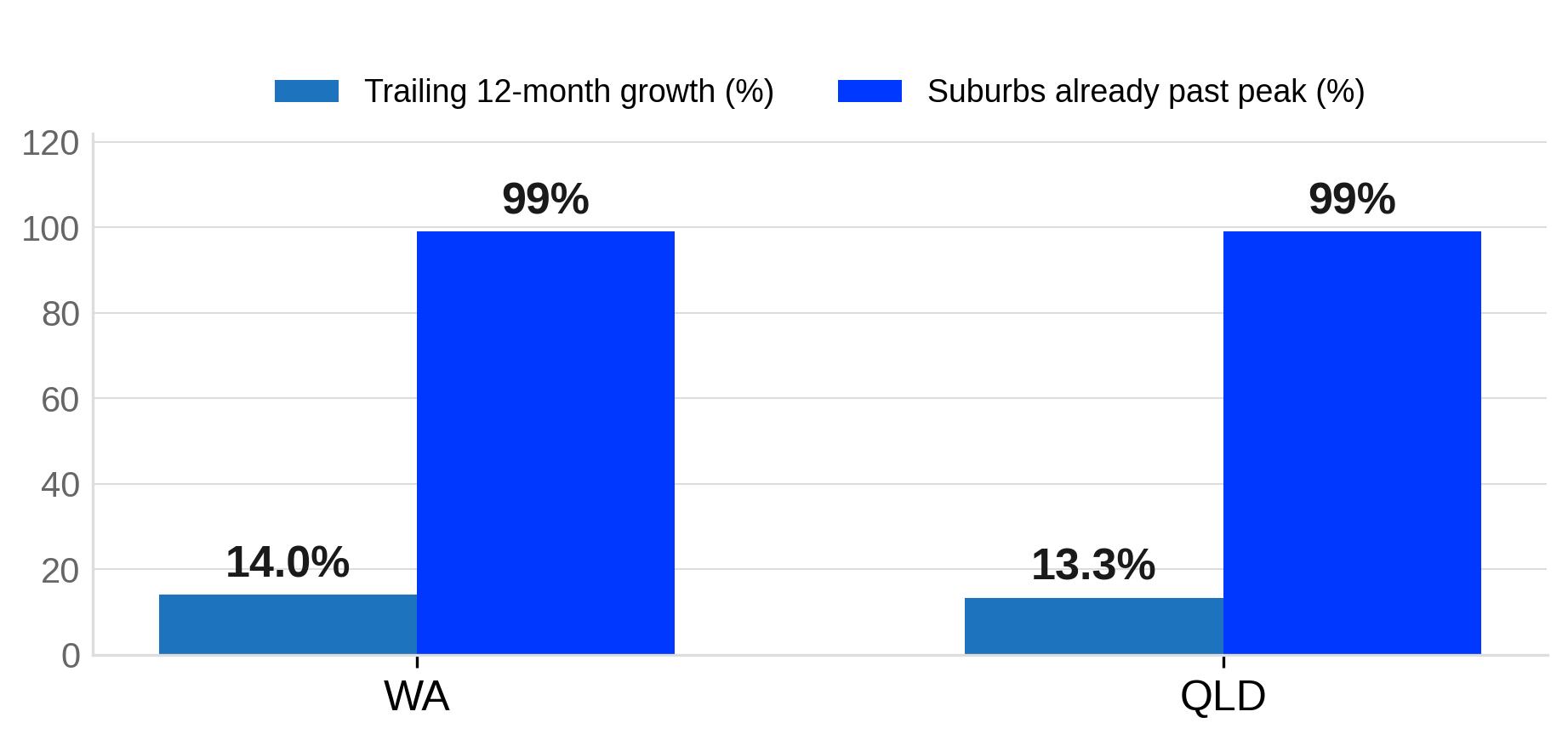
Western Australia and Queensland currently show the strongest trailing twelve month growth nationally, at 14.0 and 13.3 percent. More than 99 percent of suburbs in both states are already past their peak momentum, according to HTAG Analytics’ growth cycle analysis of over 3,700 suburbs.
Trailing Growth vs Suburbs Already Past Peak
Source: HtAG Analytics, July 2026.
What matters more than the headline number is whether the drivers behind that growth, migration, jobs or a temporary supply squeeze, are still intact or already priced in.
Myth 2: A High Rental Yield Means a Better Investment
Not necessarily. A high yield often reflects higher risk, not a better return, particularly in single industry regional markets.
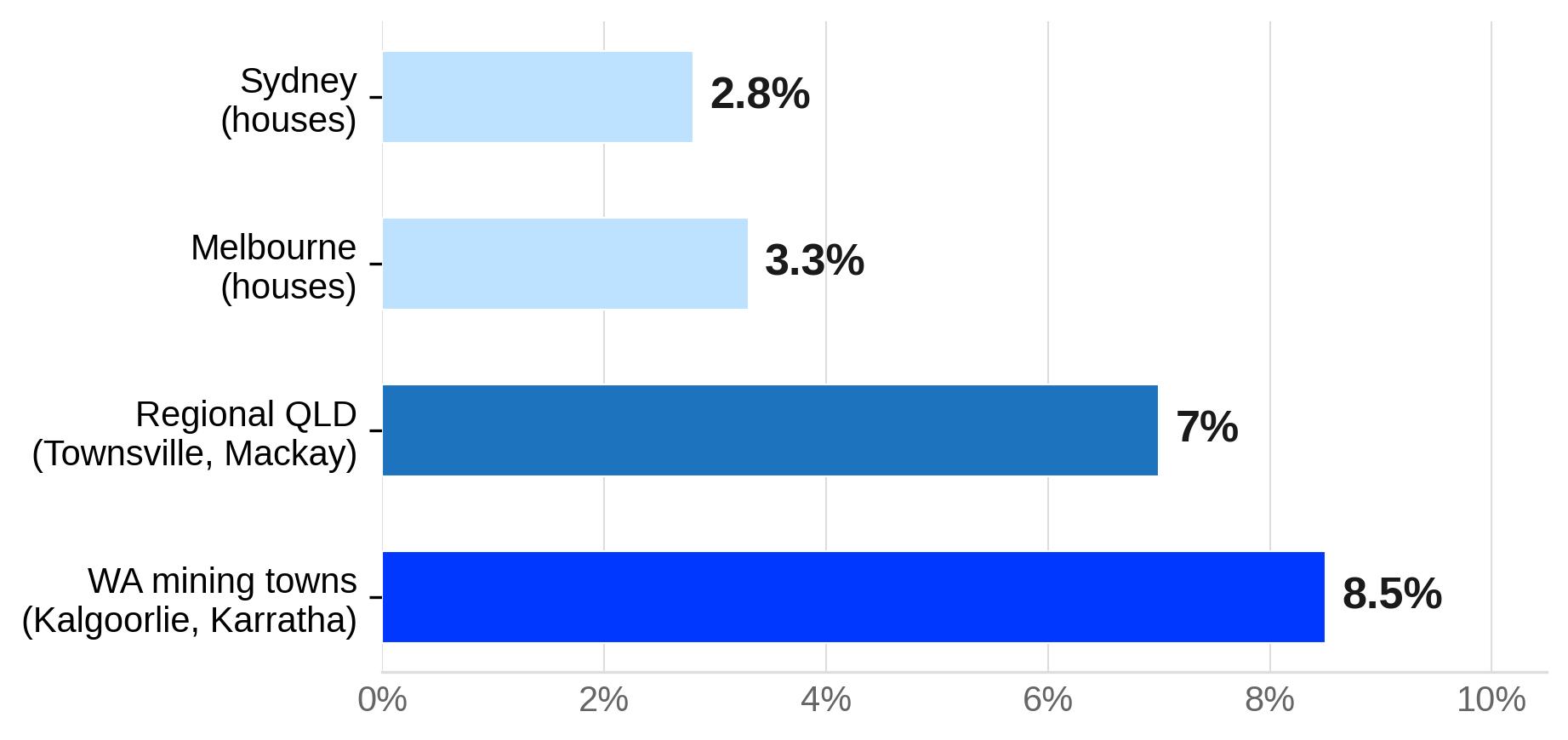
Sydney and Melbourne houses currently return gross yields around 2.8 and 3.3 percent, while regional Queensland centres sit near 7 percent and some WA mining towns exceed 8.5 percent.
Gross Rental Yield: Capital Cities vs Regional and Mining Towns
Source: FPW Group analysis; industry yield data, 2026.
Balancing yield against growth matters here because higher regional yields often come from transient, employment-linked demand. A new mine can lift rents quickly, and a project pause can reverse that just as fast.
Myth 3: Infrastructure Automatically Creates a Growth Opportunity
No. Infrastructure only adds value once it is funded, under construction and actually delivered. A project can be priced into a suburb's values years before, or instead of, being built.
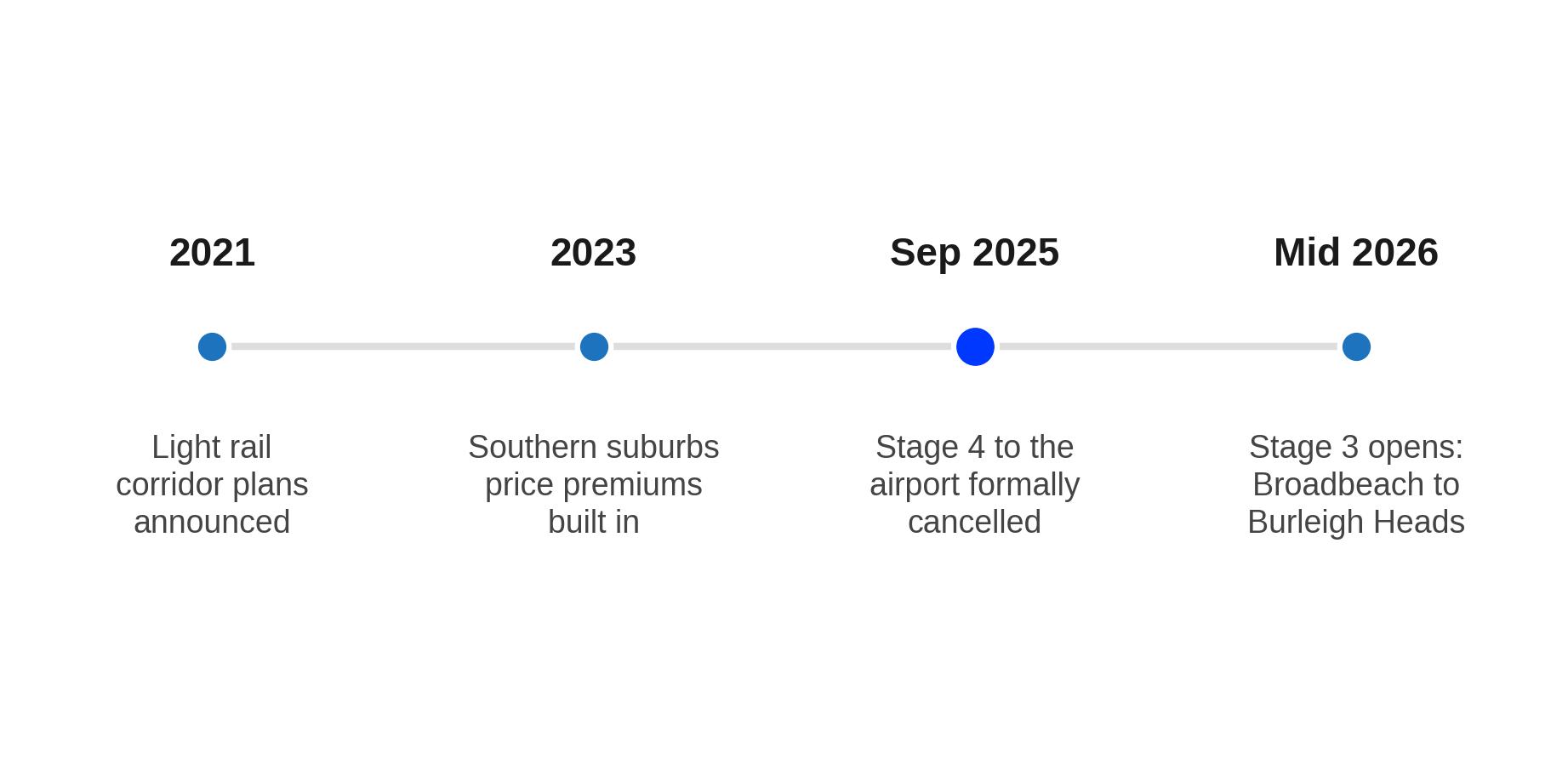
The Gold Coast's light rail corridor illustrates the point well. Plans for the network shaped price expectations along the corridor for years, and Stage 3 opened between Broadbeach and Burleigh Heads on schedule in 2026. Stage 4, which would have extended the line on to the airport, was formally cancelled in September 2025.
Gold Coast Light Rail: What Was Priced In, and What Was Cancelled
Source: FPW Group analysis; public reporting, 2021 to 2026.
Myth 4: Population Growth Guarantees Property Growth
No. Population growth only lifts prices when new housing supply fails to keep pace, and that gap varies significantly between states and suburbs.
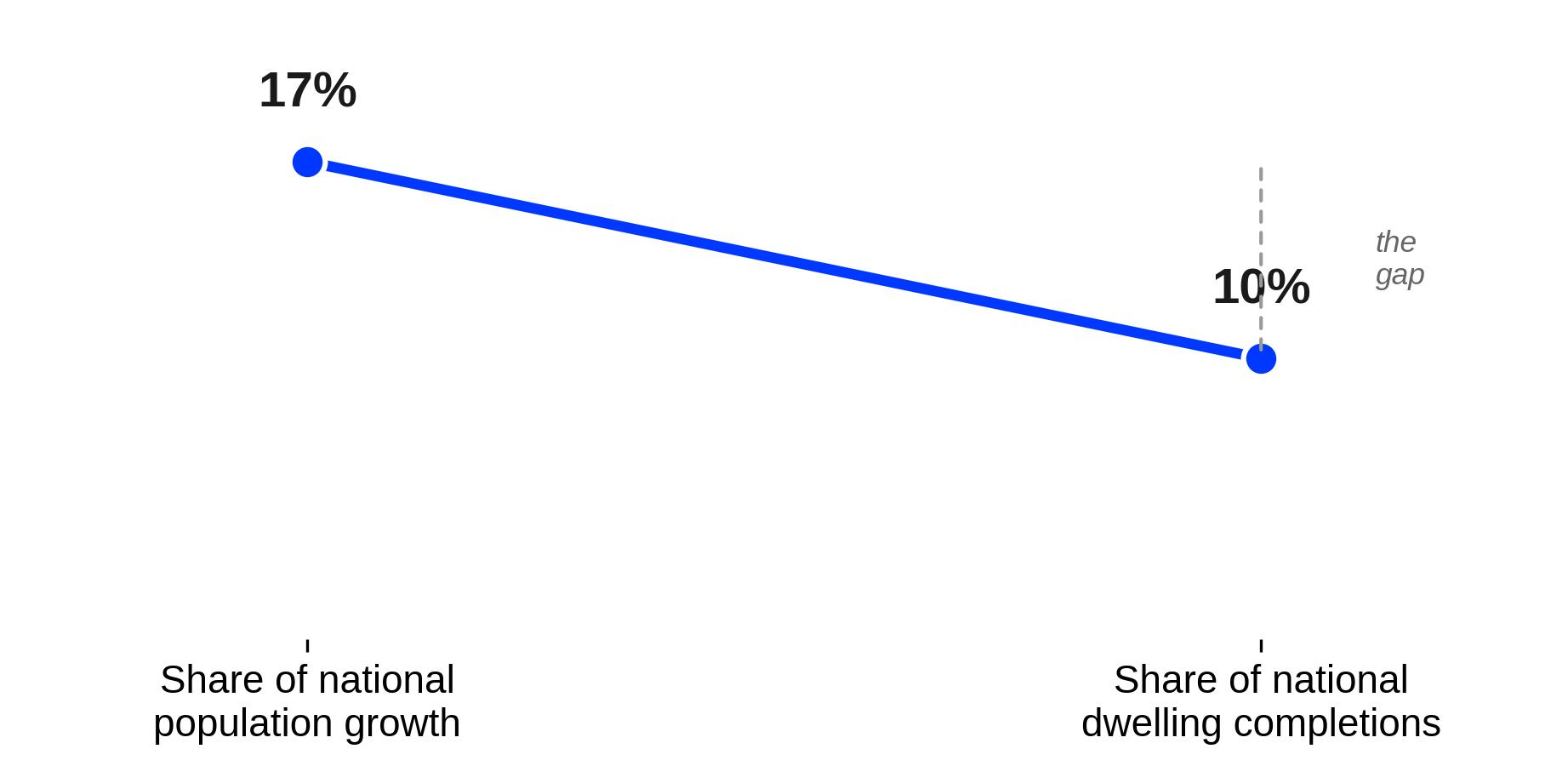
Western Australia captured around 17 percent of the nation's population growth but only about 10 percent of completed dwellings over the same period, according to Cotality data. That mismatch is a major reason Perth has posted the strongest capital city growth in the country.
Population Growth vs New Housing Supply: Western Australia
Source: ABS regional population data; Cotality, 2026.
Housing shortage across Australian cities explains why that supply gap has become a more reliable signal than population growth on its own.
Myth 5: The Best Suburb Is the Same for Every Investor
No single suburb is the best investment for every investor. The right one depends on whether your strategy is built around growth, cash flow, or a balance of both.
An investor prioritising long term growth and an investor who needs positive cash flow within a couple of years can look at the exact same shortlist and reach opposite conclusions. Both can be right, for their own situation.
How to Test a Suburb Before Adding It to Your Strategy
Before adding any suburb to a shortlist, run it through a short set of checks rather than relying on a single statistic.
Check demand through vacancy, rental demand, population and employment trends. Check supply through dwelling approvals, the development pipeline and competing listings. Check affordability by comparing the median price against local incomes and rental affordability, then ask whether those numbers actually solve the problem your strategy needs solved.
How to choose an investment-grade suburb covers this process in more depth, including how to check a local supply pipeline before adding a suburb to your shortlist.

The Bottom Line: Stop Looking for the Best Suburb
The best suburb is not the one with the highest growth, the highest yield, the biggest infrastructure project or the fastest population growth. It is the suburb whose fundamentals and price position actually fit your strategy.
Assuming a single statistic settles the decision is one of the more common property investment mistakes first-time investors make, and it is an easy one to avoid once you know which questions to ask before you shortlist a suburb.
Frequently Asked Questions

Recommended Reading
Two pages selected based on what readers of this article are most likely to need next.
Recommended Video
Australia's record migration surge — peaking at over 528,000 people in a single year — created unprecedented housing demand almost overnight. We explain why the government used population growth as a deliberate tool to avoid recession, how that decision flows directly into property prices Australia-wide, and why rents have surged to record highs as a result.