

Are You Paying Too Much Tax on Your Investment Property Income?

Property investment tax deductions do lower your taxable income, but only for costs the ATO accepts as genuine expenses of earning rental income. Most investors claim the obvious ones and miss several legitimate deductions that quietly reduce their tax bill every year.
The confusion rarely sits with what counts as a deduction. It sits with what a deduction does to your financial position, and how that differs from a tax saving or a refund. Getting that distinction wrong can lead investors to chase tax benefits that leave them worse off, not better.
This matters more in 2026, with negative gearing rules shifting for future property purchases. Understanding how deductions genuinely affect your property investment strategy has never been more relevant.
What Counts as a Property Investment Tax Deduction?
A property investment tax deduction is any cost the ATO accepts as directly connected to earning rental income. The expense has to be real, incurred by you, and tied to the period the property was rented or genuinely available to rent.
Three outcomes get confused constantly. A deduction reduces your taxable rental income. A tax saving is that deduction multiplied by your marginal tax rate. A refund only appears if the tax withheld across the year exceeds what you actually owe.
It just changes how much of your rental income the tax office counts as taxable. That distinction matters more than most investors realise once negative gearing enters the picture.
What Property Investment Tax Deductions Can You Actually Claim?
Most investment property tax deductions fall into six categories. Loan interest is usually the largest, since nearly all of it is deductible if the loan funds the rental property itself.
Property management fees, landlord insurance, and council rates are deductible in the year you pay them. Repairs are deductible immediately too, but only if they restore something already worn or damaged. For a deeper look at how financing costs interact with these numbers, see FPW's guide to property investment interest rates.
Depreciation and capital works cover the building's structure and its fixtures. These are spread over several years rather than claimed as a lump sum, which is exactly where many investors underestimate their entitlement.
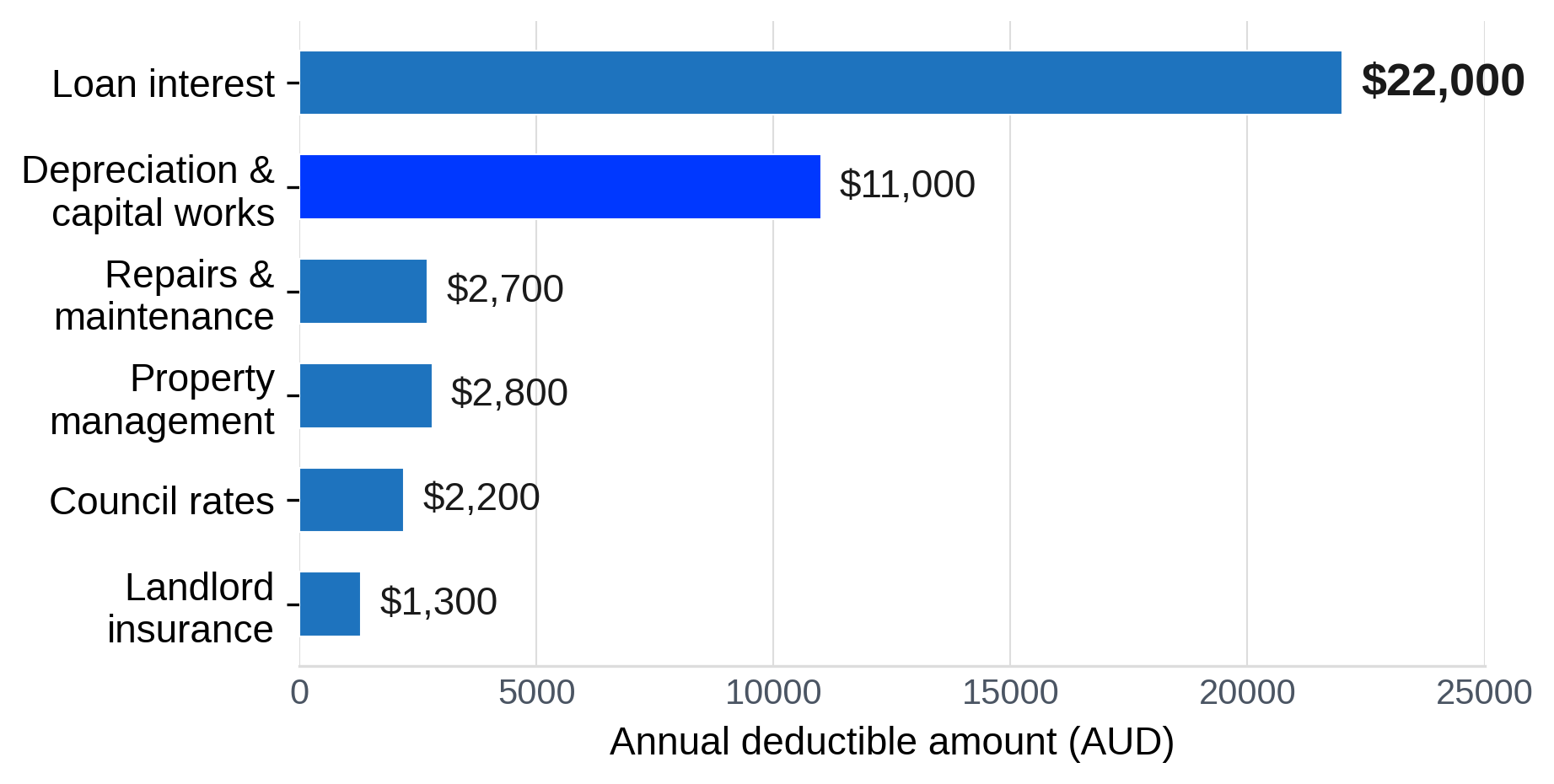
Source: Australian Taxation Office, common rental property expenses, 2026
Land tax is deductible, but the rules and thresholds vary significantly by state. FPW's guide to land tax by state breaks down what applies where before you assume it works the same way it did on a previous property.
Which Deductions Do Investors Commonly Miss?
Smaller recurring costs are the easiest to lose track of. Bank fees on the loan account, pest control, gardening, and even the cost of preparing your tax return are all deductible.
Depreciation is the biggest miss of all. Many investors assume an older property has nothing left to depreciate, when capital works and remaining fixture value can still generate a meaningful deduction every year.
Investors who refinance often forget to review their deductions afterward. Missing a claim like this is one of several common mistakes first time investors make, and it quietly costs more than most people realise.
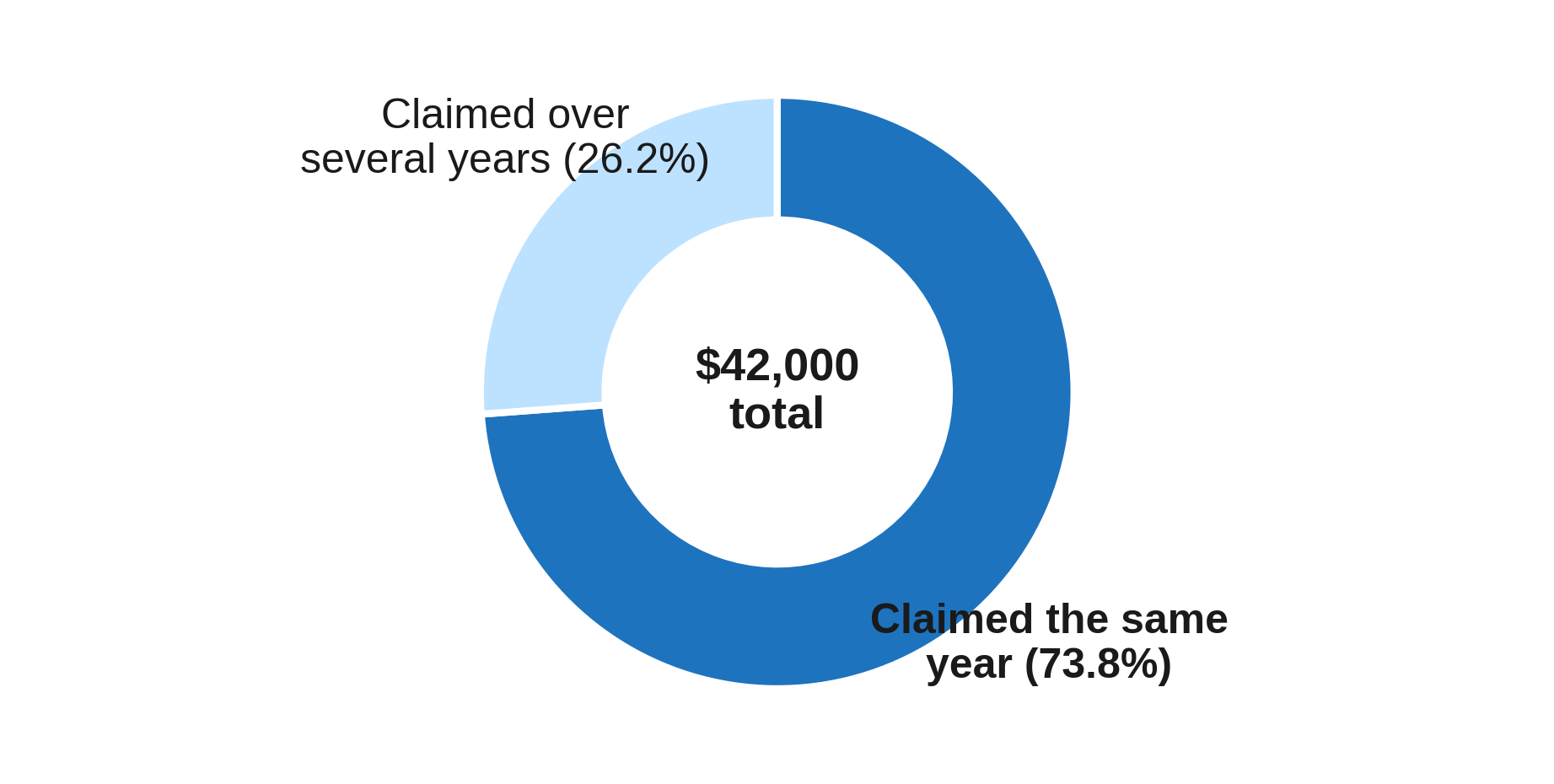
Source: Australian Taxation Office, how to claim rental expenses, 2026
Does Negative Gearing Actually Reduce Your Tax?
Negative gearing happens when your deductible expenses exceed your rental income, creating a loss you can offset against other income like your salary. That offset lowers your taxable income. It does not lower your total expenses.
The 2026 to 27 Federal Budget changed how this works going forward. Established residential properties bought after 7:30pm AEST on 12 May 2026 will no longer be able to use rental losses to offset salary or wages once the new rules start on 1 July 2027. Treasury confirms those losses will instead carry forward to offset future rental income or capital gains on residential property.
Properties owned before that date are grandfathered under the current rules, and new builds remain fully exempt from the change regardless of when they are bought.
Anyone weighing up an established property now needs to factor this timing into their debt to income ratio and borrowing position, since the after-tax cost of holding it is about to shift for buyers who miss the grandfathering cutoff.
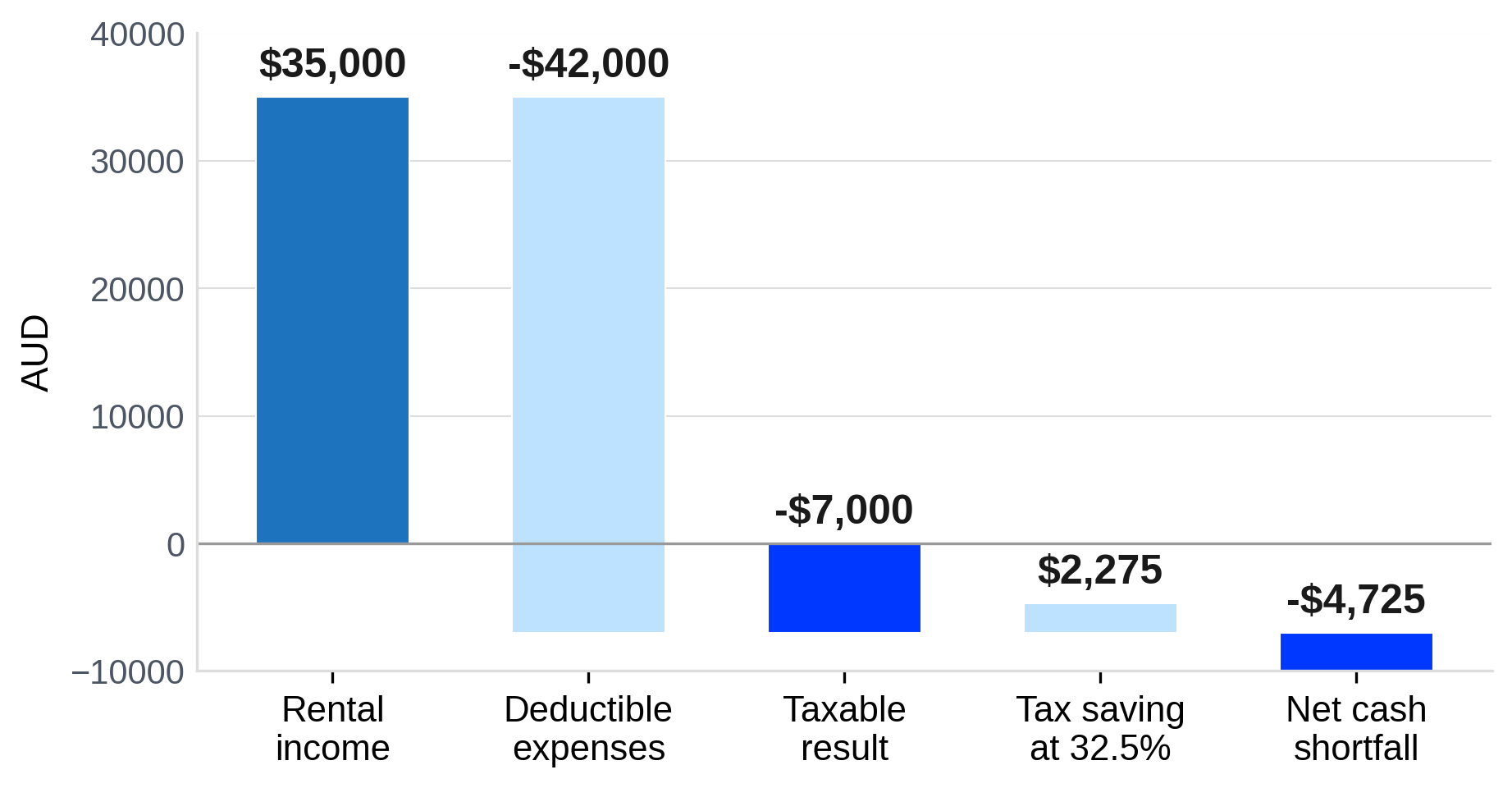
Source: Australian Taxation Office, individual income tax rates, 2025 to 26

Why a Tax Deduction Is Not the Same as a Better Investment
A deduction lowers tax. It does not fix a property with weak rental demand, soft capital growth, or a location that will struggle to attract tenants in five years.
Some investors chase negative gearing because the loss feels productive at tax time. That feeling is exactly where the reasoning breaks down.
The better test is whether the property would still be worth holding if the tax benefit disappeared tomorrow. If the answer is no, the deduction was covering for a weaker decision, not improving it, which ties directly into a property's place within a wider property investment risk assessment.
Final Thoughts
Property investment tax deductions genuinely reduce your taxable income, but they were never designed to make a weak property profitable. Understanding which costs you can claim, when you can claim them, and how the 2026 negative gearing changes apply to your situation puts you in a stronger position at tax time and beyond.
The investors who get the most from their deductions treat tax as one part of a broader property portfolio strategy, not the reason for the purchase itself. Review your expenses every year, keep proper records, and talk to a registered tax professional about your specific circumstances before relying on any deduction to change your investment decision.
Frequently Asked Questions

Recommended Reading
Two pages selected based on what readers of this article are most likely to need next.
Recommended Video
As of April 2026, Treasury is actively modelling potential changes ahead of the May Budget. This isn’t speculation—it’s confirmed. In this video, we unpack exactly what’s being proposed, who stands to benefit, who could be impacted, and what it could mean for investors, renters, and first home buyers across Australia.