
Should You Refinance Before Buying Another Investment Property?
Refinance an investment property before buying another when it unlocks usable equity or improves serviceability without eroding the position you already have. Hold off when it would consume equity you need for the next deposit.
Most investors treat refinancing as a rate decision when it is really a borrowing capacity decision. Refinancing first, before you start searching, is generally smarter than applying for both loans at once, because it tells you what you can borrow before you commit to a purchase.
Why Investors Refinance Before Buying Another Property
Investors rarely refinance for a single reason. Before a second purchase, refinancing is usually pursued for a combination of outcomes.
Lower repayments free up monthly cash flow that a lender counts toward serviceability. Accessing usable equity can unlock a deposit without new savings. Improving borrowing capacity often means consolidating debt or switching lenders. Securing a better rate reduces the baseline a new lender stress tests against, and the extra room in the budget increases capacity to absorb a second property's holding costs.
Should You Refinance Before Buying Another Investment Property?
There is no single answer, only signals that point one way or the other. The right call depends on how much usable equity you have, how a lender will assess your file, and how close you are to buying.
Situations Where Refinancing Makes Sense
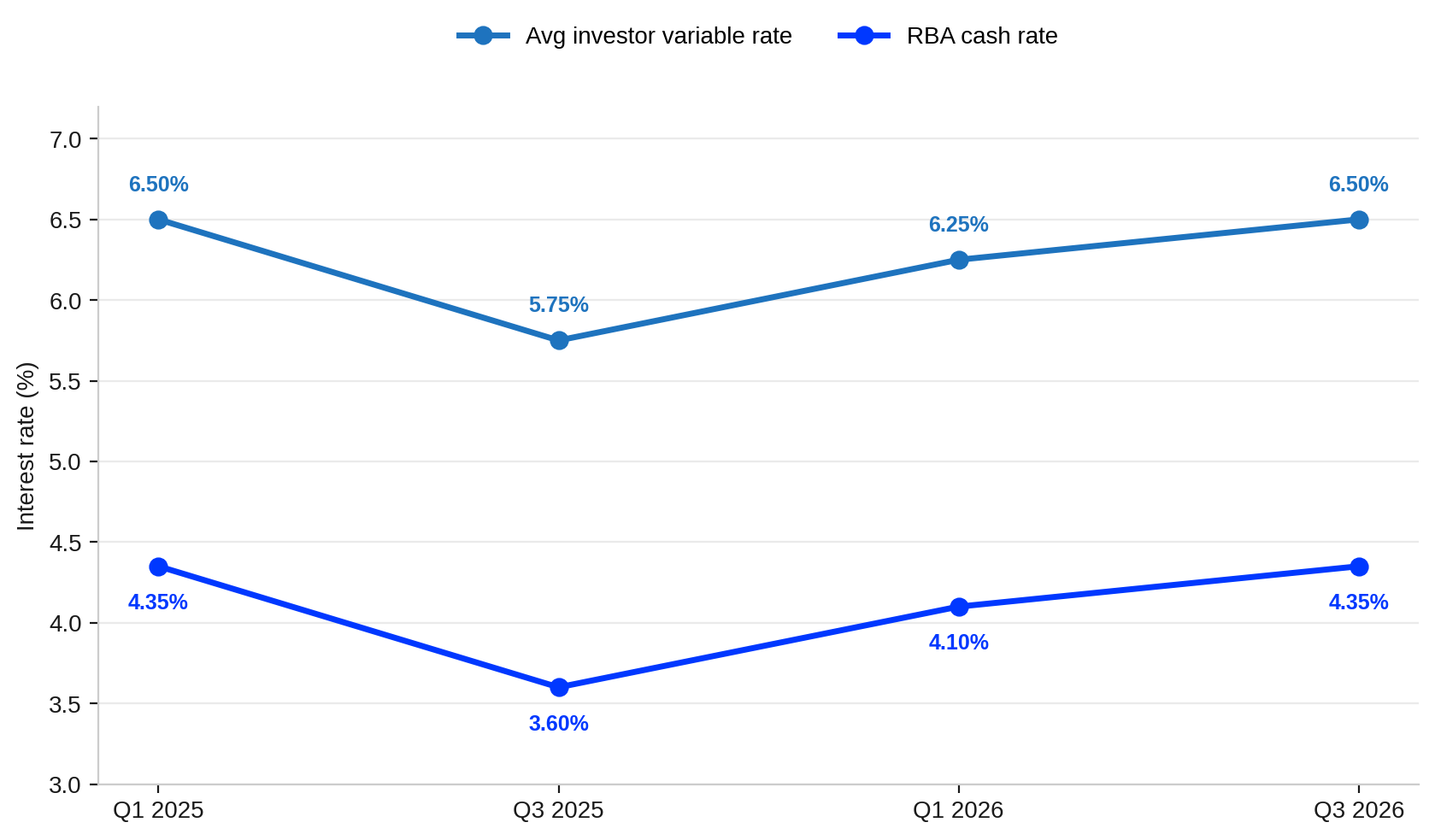
Refinancing before buying again tends to make sense when your existing loan sits above the market rate, your property has grown in value since settlement, or your current lender caps how much equity you can access.
When Refinancing May Not Be the Best Option
Refinancing is usually the wrong move when break costs outweigh the benefit, when usable equity is too thin to justify the fees, or when serviceability is already stretched enough that a second application would fail regardless.
Questions to Ask Before Refinancing
How much usable equity would a refinance release? Would a new lender's serviceability test increase or reduce what you can borrow? Do the break, discharge, and application costs outweigh the benefit? Does this fit your broader portfolio timeline, or just solve today's problem?
How Refinancing Can Help You Buy Another Investment Property
Refinancing to access equity in an investment property is one of the most common ways Australian investors fund a second purchase, because it avoids saving a fresh deposit from scratch. Usable equity is generally capped at 80% of your property's value, minus what you still owe, based on the borrowing capacity formula lenders use to assess it.
FOR EXAMPLE
An investor with a $750,000 property and a $400,000 loan has an 80% LVR limit of $600,000, giving $200,000 in usable equity, enough for a 20% deposit plus costs on a $900,000 second property in many lending scenarios.
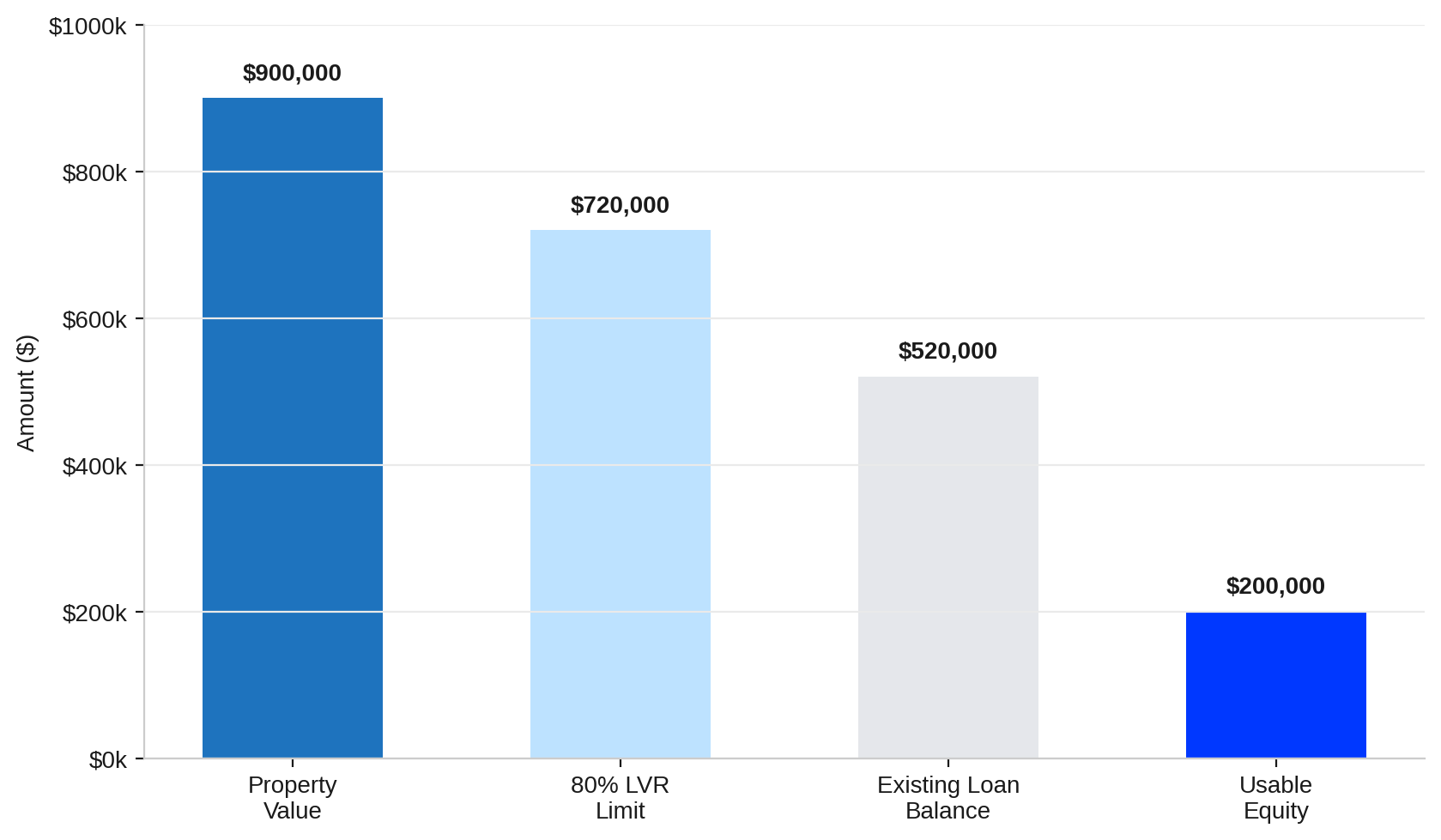
That redrawn equity typically funds the deposit and costs on the next property, while the new purchase is financed with its own separate loan. A lower repayment, or consolidating higher interest debt through the refinance, can also free up serviceability that a lender will count toward a second application.
Used deliberately, refinancing becomes a repeatable step in a wider property investment strategy rather than a one-off transaction, particularly for investors planning several purchases over time.
Does Refinancing Increase Borrowing Capacity?
Refinancing does not directly increase your borrowing capacity, but it can improve the inputs that determine it. Consolidating debt or reducing repayments can lower your overall debt-to-income ratio, one of the key figures lenders use to cap how much you can borrow.
Lenders test every application at your loan rate plus the APRA serviceability buffer, an extra 3 percentage points added on top of your actual rate. On a 6.4% loan, that means the bank checks whether you could still service the debt at close to 9.4%.
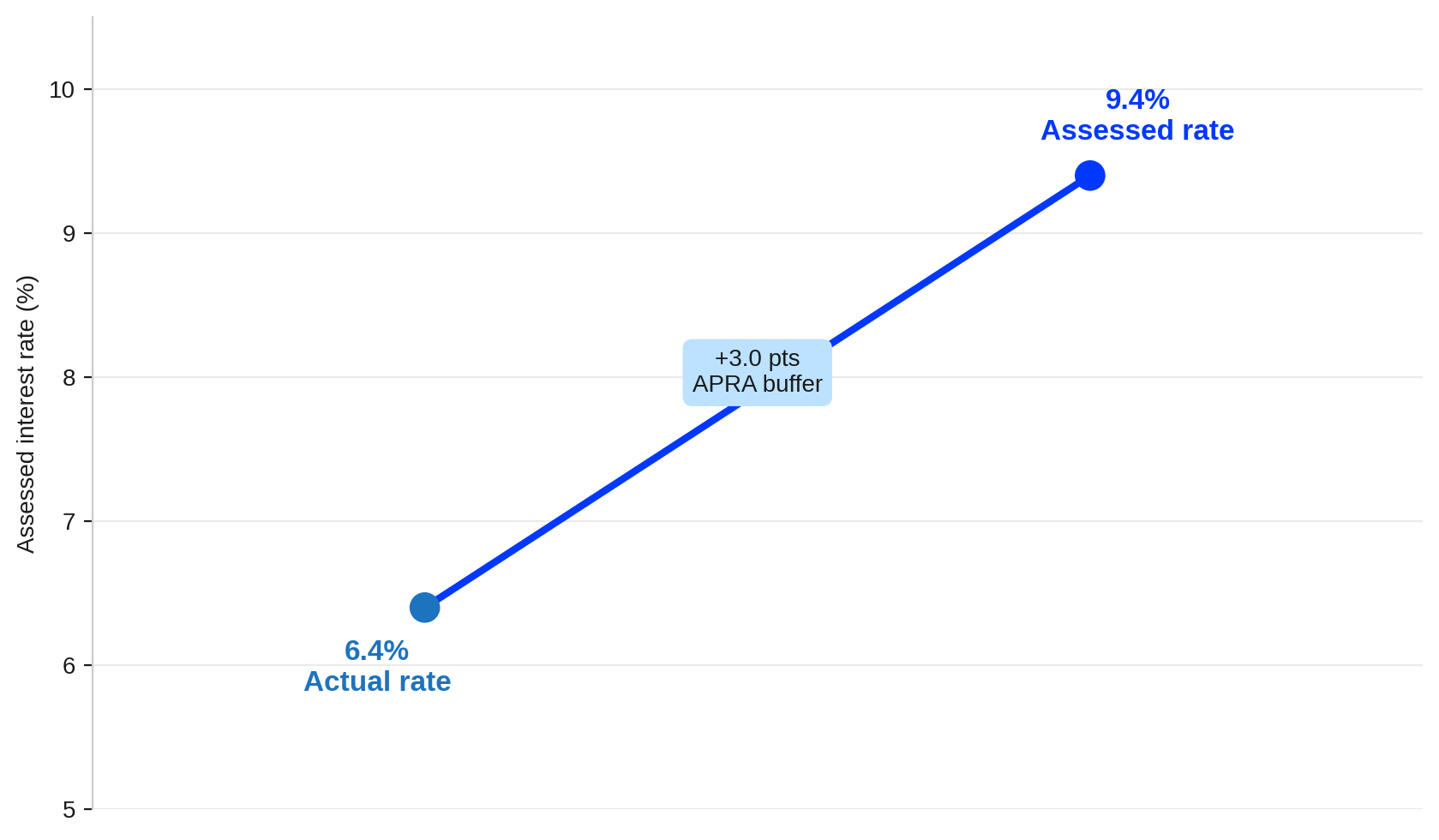
Every new application, including a refinance, is tested against this buffer as part of standard mortgage stress testing, regardless of how long you have held the existing loan. Lenders also apply the buffer and assess existing debts slightly differently, so a refinance to a lender with a more favourable method can sometimes unlock capacity a current lender will not.
How to Refinance an Investment Property
The refinance process follows a consistent sequence, regardless of which lender you move to.
Review your existing loan: check the rate, remaining term, and any break costs before comparing alternatives.
Compare lenders: look beyond the headline rate to fees and offset features, or work through a mortgage broker who can compare several at once.
Calculate refinancing costs: weigh discharge and application fees against the rate saving or equity you would unlock.
Apply for refinancing: submit updated income, expense, and property documentation, like applying the first time.
Settlement: the new lender pays out the old loan, and any released equity becomes available to redraw.
Costs and Risks of Refinancing
Refinancing is rarely free, and the costs matter most on smaller loan balances or short holding periods.
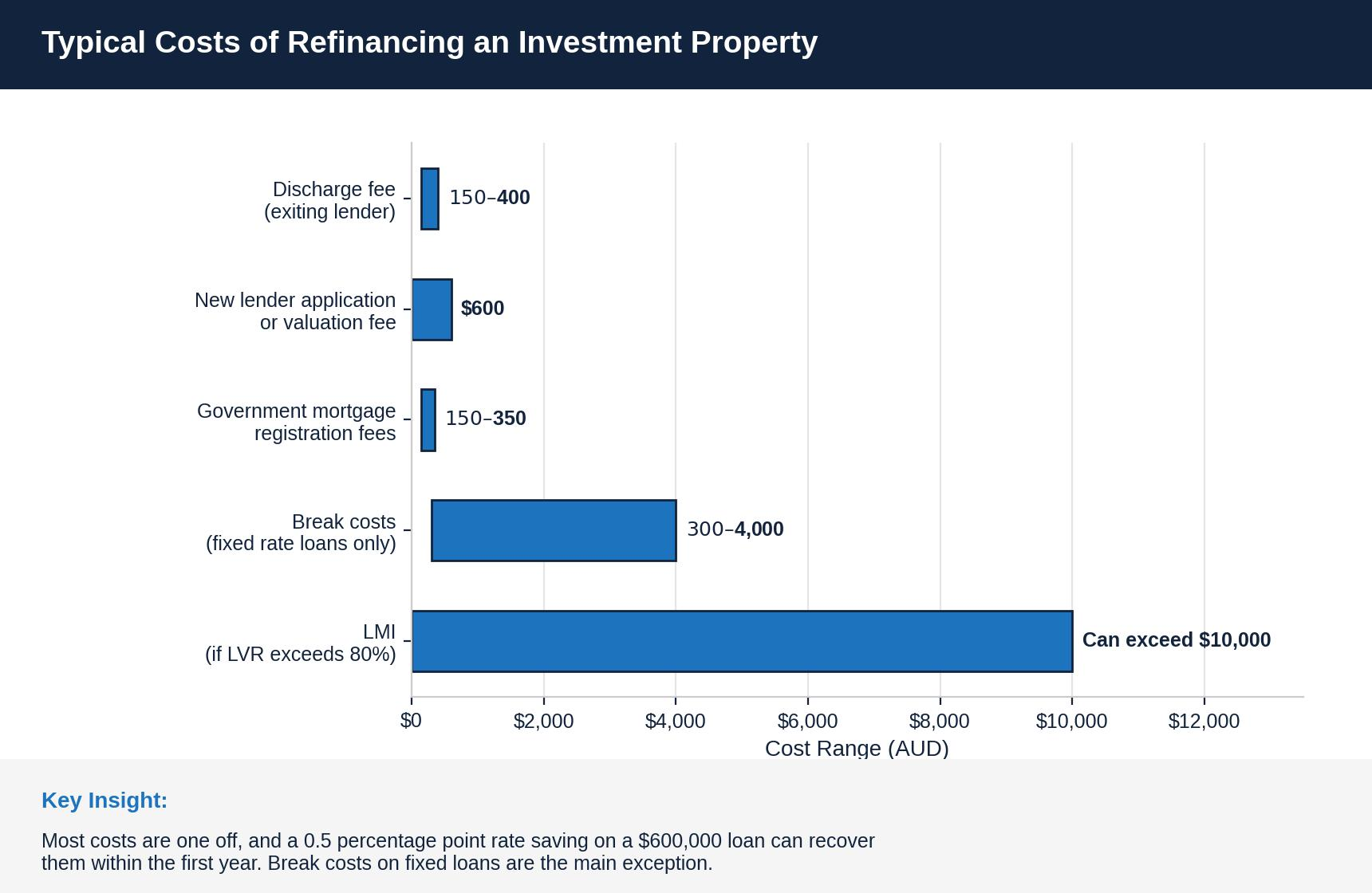
Typical Costs of Refinancing an Investment Property
Most of these costs are one off, and a rate saving of even 0.5 percentage points on a $600,000 loan can recover them within the first year. Break costs on fixed rate loans are the main exception and should be quoted by your current lender before you commit.
Common Mistakes Investors Make When Refinancing
Most refinancing mistakes are not dramatic. They are quiet decisions that look reasonable at the time and cost money later.
Chasing the lowest rate only can hide weaker features or higher fees once fully compared. Accessing too much equity can leave less room for the next purchase's own borrowing test. Ignoring borrowing capacity before a purchase, without checking how to increase borrowing capacity first, can quietly limit the next acquisition. Refinancing too frequently resets fees and can trigger break costs that erode any rate saving, and refinancing without a strategy treats each move as a standalone event rather than part of a plan.
Real Example: Using Refinancing to Buy Another Investment Property
Consider an investor who bought their first property for $650,000 three years ago with a $520,000 loan, now valued at $820,000 with the balance paid down to $500,000. At the original lender, assessed serviceability left little room for a second loan despite the growth in value.
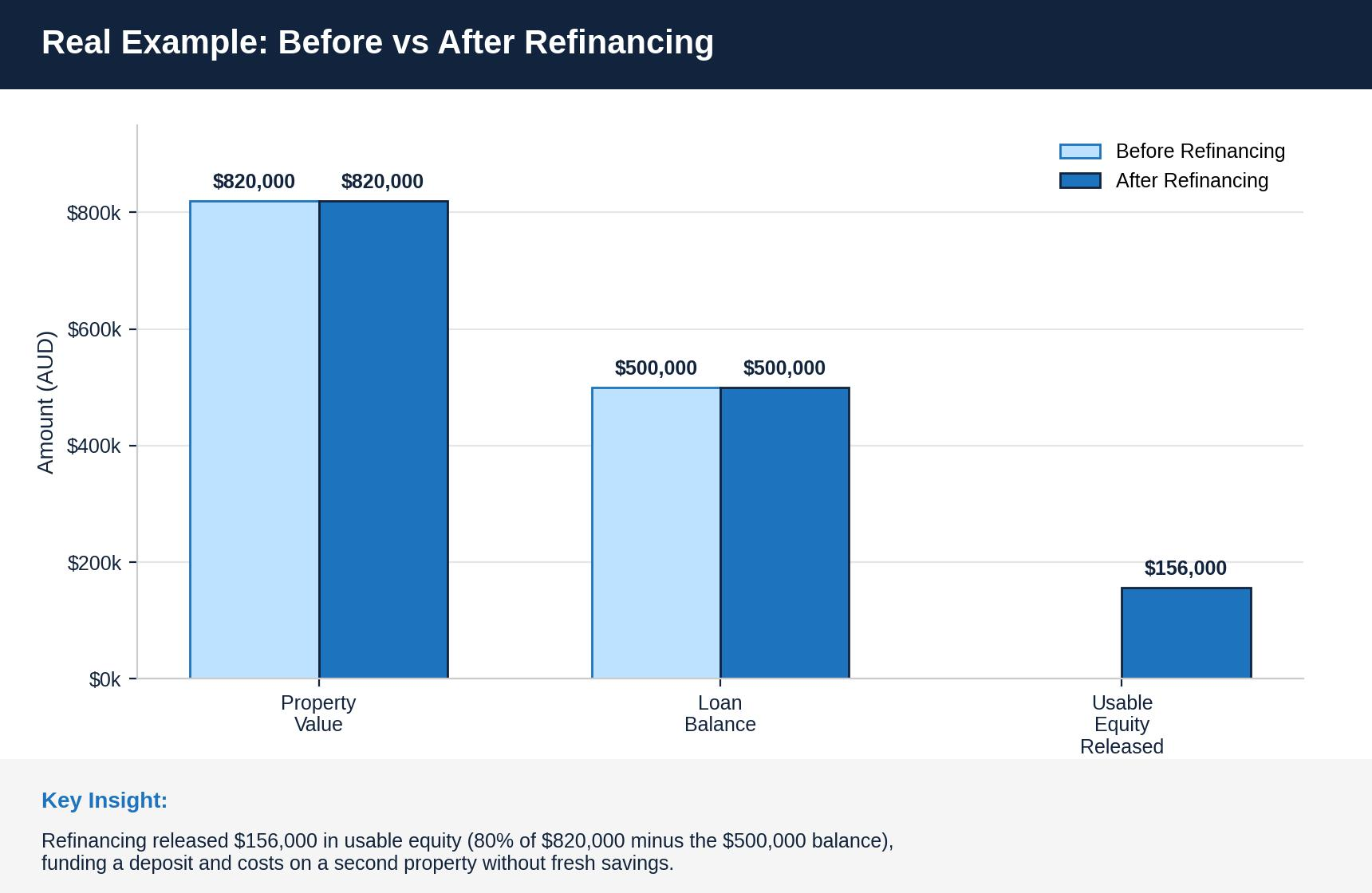
Real Example: Before vs After Refinancing
Refinancing to a lower rate reduced repayments and released $156,000 in usable equity, enough to fund a deposit and costs on a second property. With the equity redrawn as a deposit, the investor bought a second property without fresh savings, while improved serviceability helped the new application clear the lender's assessment.
Final Thoughts
Refinancing before buying another investment property comes down to a short sequence of checks: whether your rate has moved, whether your equity has grown, and whether a new lender's assessment genuinely improves your position. Get those checks right and the refinance funds the next purchase quietly in the background rather than becoming the story itself. Where the numbers do not support it, waiting protects the position you have already built.
Frequently Asked Questions
Recommended Reading
Two pages selected based on what readers of this article are most likely to need next.
Recommended Video
Using realistic Australian numbers, we break down exactly how a home worth $1.1M with a $550K loan can unlock around $330K of usable equity, and how that can fully fund the deposit and costs on an $800K investment property—while still leaving a buffer in place.