

Refinancing Home Loan: You Refinanced at the Wrong Time. Here's How to Recover
Yes, you can recover from refinancing at the wrong time, and in most cases the position is fixable rather than permanent. The real damage comes from doing nothing once you realise the timing was off, not from the refinance itself.
Interest rates have moved sharply since 2022, and plenty of borrowers locked in a rate or broke a fixed loan just before the market turned against them. Some fixed too early and missed a wave of cuts. Others broke a fixed rate expecting relief that never fully arrived.
What matters now is understanding exactly where the damage sits, and which of several recovery paths applies to your situation.
How Do You Know You Refinanced at the Wrong Time?
Signs your refinance is costing you money
The clearest sign is a repayment that has not moved the way you expected. If your new loan's advertised savings disappeared once fees, a higher rate cycle, or a shorter term were factored in, the timing worked against you.
Common refinancing mistakes borrowers make
Most borrowers who refinance poorly make one of three errors. They act on a headline rate without checking the comparison rate, they break a fixed loan without a written cost quote, or they refinance right before a rate cycle turns.
Why timing matters more than most people realise
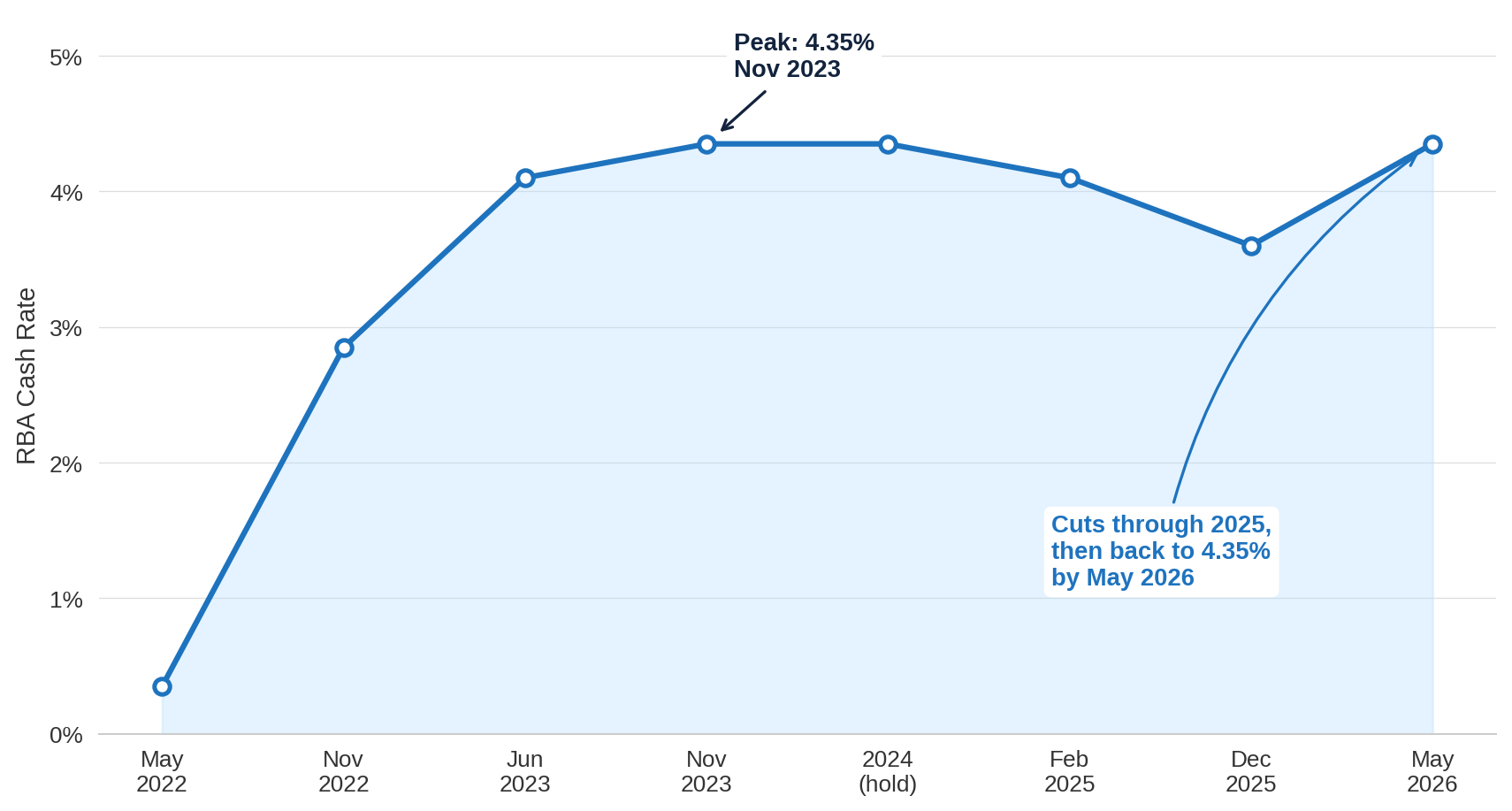
Australia's cash rate has moved further and faster between 2022 and 2026 than in any period since the 1990s, according to RBA data. That volatility means a loan that made sense six months ago can look very different today, through no fault of the underlying decision.
What Happens If You Refinance at the Wrong Time?
Higher interest rates than expected
Borrowers who fixed a rate in 2024 hoping for stability, then watched variable rates fall through 2025, ended up paying more than if they had waited. The reverse happened to borrowers who broke a fixed loan in 2025 expecting further cuts, only for rates to rise again in 2026.
RBA Cash Rate: 2022 to 2026
Source: Reserve Bank of Australia, Cash Rate Target, 2026
Break costs and refinancing fees
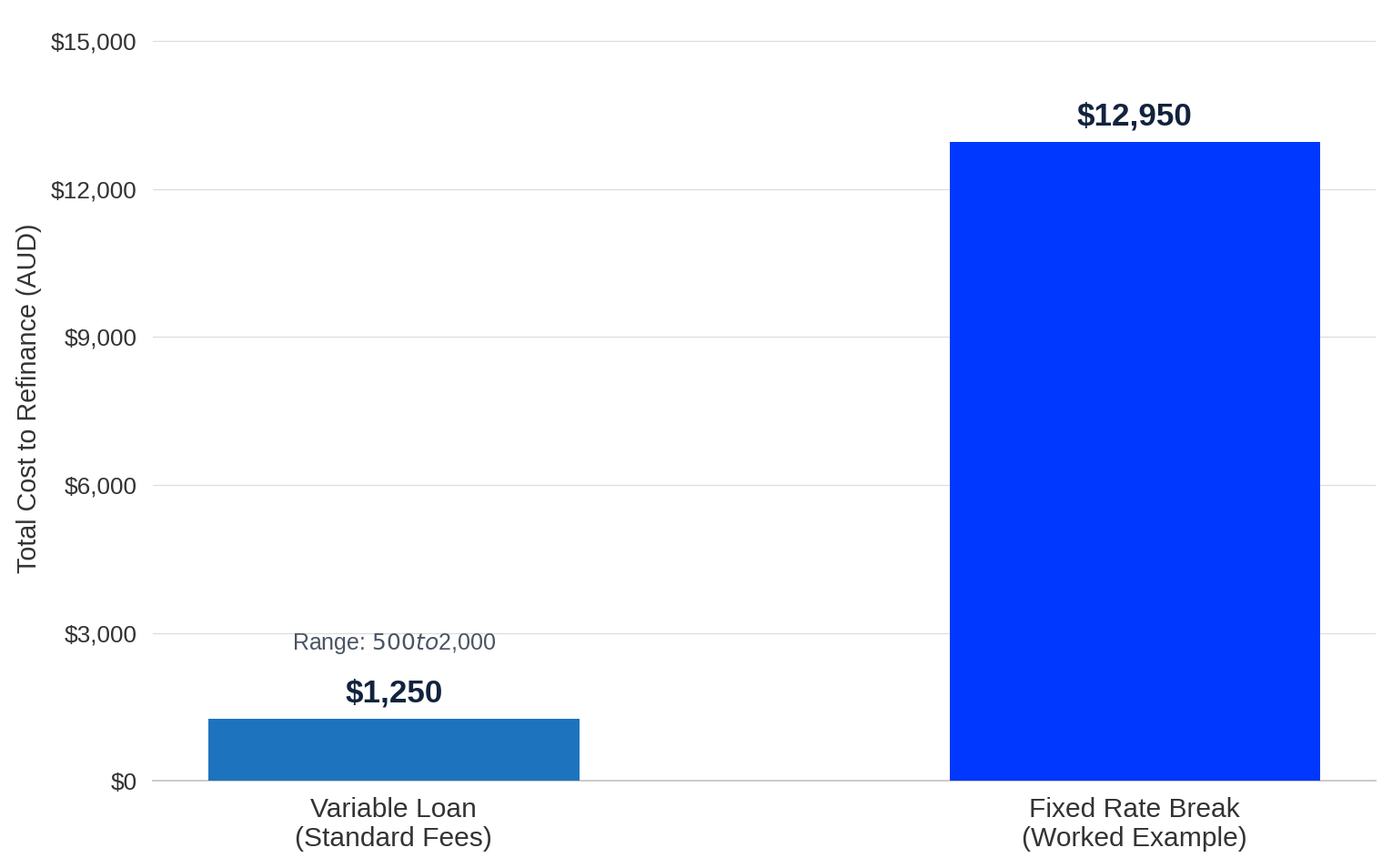
Standard refinancing fees for a variable loan typically sit between $500 and $2,000, covering discharge, registration, and application costs. Breaking a fixed loan early is a different scale entirely, with break costs sometimes reaching five figures depending on how far rates have moved.
Reduced borrowing capacity
Refinancing can quietly reduce how much you are able to borrow next time, particularly if your new loan increased your minimum repayments or extended your term. Lenders reassess your full financial position at every application, using the same borrowing capacity formula every time, so a poorly timed refinance can leave less room than you expect.
Longer loan terms and higher lifetime interest
Resetting to a fresh thirty-year term after several years into your original loan increases the total interest paid over the life of the loan, even if the monthly repayment feels lower. That gap is easy to miss because it only shows up in the total cost over time, not the monthly figure.
Typical Cost to Refinance: Variable vs Breaking a Fixed Rate
Source: MoneySmart, refinancing your home loan, 2026
Can You Recover from a Poor Refinancing Decision?
Review your current loan
Start with a full review of your current rate, fees, and remaining term against what is actually available in the market today. This is also the point to check how interest rate buffers reduce your borrowing power, since that buffer shapes what any second refinance will approve you for.
Negotiate with your lender
Existing lenders will often match or beat a competitor's rate to avoid losing your business, particularly if you have a strong repayment history. A five-minute phone call asking for a rate review costs nothing and frequently succeeds.
Consider switching lenders again
If your current lender will not move, refinancing again can still make sense, provided the savings clearly exceed the combined cost of exiting. Speaking with a mortgage broker before acting again is the fastest way to avoid repeating the same timing mistake.
Improve your financial position before refinancing again
Lenders assess your full debt to income ratio and existing debts every time you apply, so reducing other debt or building savings before your next application improves both your approval odds and the rate you are offered.
Should You Refinance Again?
When refinancing again makes sense
Refinancing again is worth pursuing when the new rate saves more over the remaining loan term than the exit costs on your current loan, typically inside two to three years. It also makes sense if your original loan no longer suits your situation, such as needing an offset account you do not currently have.
When waiting is the smarter option
If you are still within a fixed term with a significant break cost, or your circumstances are about to change, waiting until the fixed period ends is often cheaper than acting now. Timing a second refinance around your full financial picture matters as much as the rate itself.
Costs versus long term savings
FOR EXAMPLE
A borrower with a $600,000 loan and eighteen months left on a fixed term, facing a $9,000 break cost, would need to save at least $500 a month to break even within that window. If the new rate only saves $250 a month, waiting out the fixed term is the cheaper path.
How Interest Rates Affect Refinancing Decisions
Every refinancing decision sits on top of your broader borrowing capacity position, not just the rate on offer. Understanding where you sit in the current rate cycle is the first step before comparing any numbers.
Refinancing during rising rates
Refinancing while rates are climbing usually means locking in urgency over analysis. Borrowers in this position benefit most from comparing total loan cost rather than just the headline rate, since lenders price rising rate risk differently.
Refinancing during falling rates
Refinancing while rates are falling carries the opposite risk: fixing too early and missing further cuts. The safest approach is comparing a fixed rate against the market's own rate forecast, not just today's number.
Fixed versus variable loans
Fixed loans offer certainty but remove flexibility, while variable loans move with the market in both directions. Borrowers recovering from a poorly timed refinance often choose a split loan, part fixed and part variable, to reduce the cost of getting the timing wrong again.
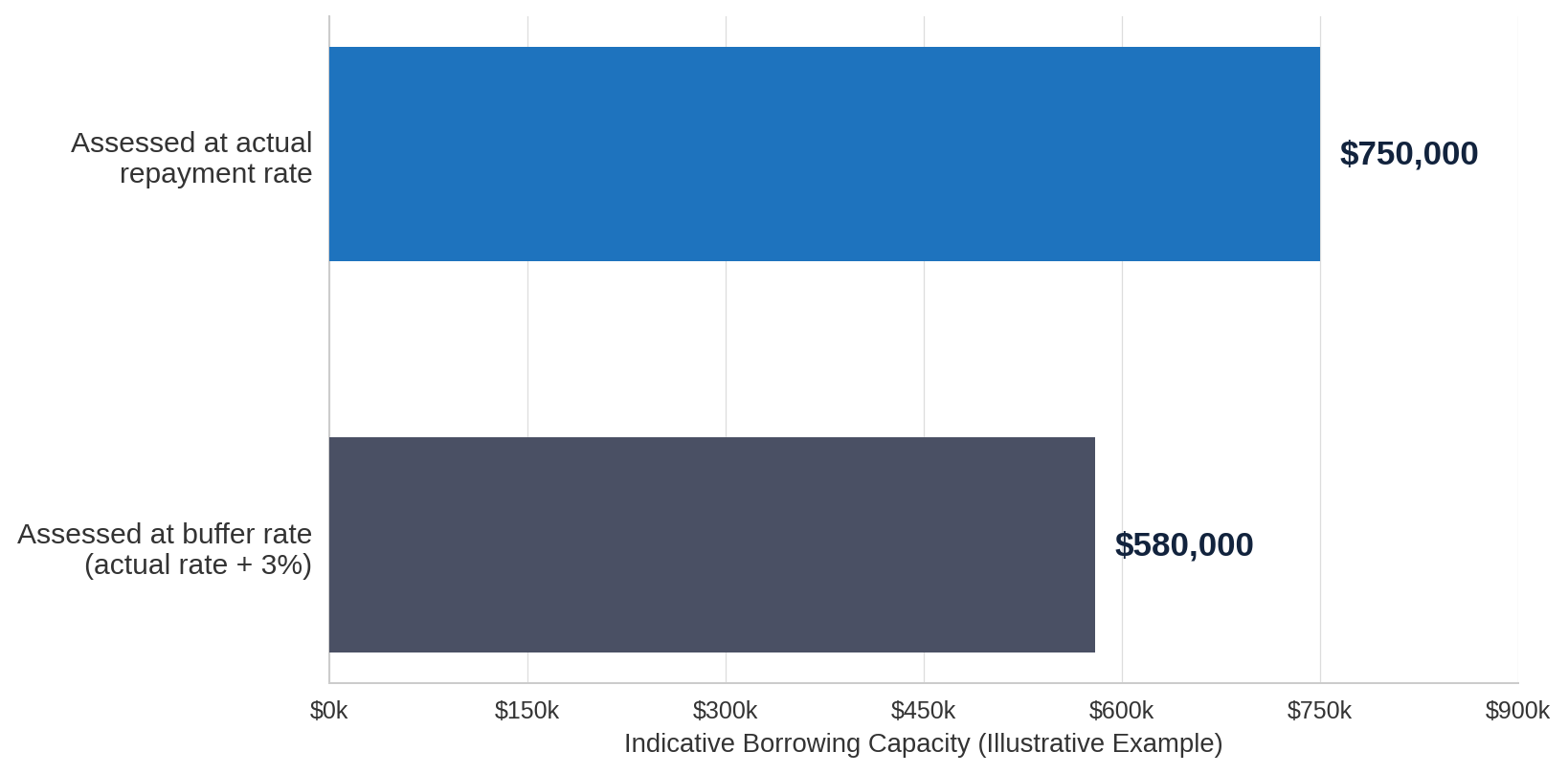
How the Serviceability Buffer Affects Borrowing Capacity
Every application is tested against a stress rate, not the rate you will actually pay, a process explained in more detail in how lenders assess borrowing capacity and mortgage stress testing.
Source: APRA, serviceability buffer policy, 2026 (illustrative example, not a specific lender quote)
Reducing the Financial Impact and Avoiding It Again
Use an offset account and extra repayments
An offset account reduces the interest charged without locking in a new loan, making it one of the fastest ways to offset a poorly timed refinance. Extra repayments, even small and irregular ones, compound the same way and reduce total interest over the life of the loan.
Compare total loan cost, not just the rate
The comparison rate exists specifically to capture fees and charges the headline rate hides, and it is the number that should drive any refinancing decision. Two lenders can look at the same file and land on different figures, which is why why banks calculate borrowing capacity differently is worth understanding before you apply again.
Review your loan regularly instead of reacting to headlines
Reviewing your loan every twelve months against the current market catches rate drift before it becomes a problem, rather than reacting to a headline change after the fact. This single habit prevents most of the timing mistakes covered in this article.
Final Thoughts
Refinancing at the wrong time is a timing problem, not a permanent one. The RBA cash rate has moved by more than four percentage points in both directions since 2022, and no borrower can consistently predict every turn in that cycle.
What separates a costly mistake from a manageable one is what happens next. Reviewing your current loan, negotiating before switching, and running the full cost of any second refinance against the savings it delivers puts the decision back in your control.
The borrowers who recover fastest treat their current position as a starting point for a better decision, not a mistake to dwell on.
Frequently Asked Questions
Recommended Reading
Two pages selected based on what readers of this article are most likely to need next.
Recommended Video
As rates rise, many people immediately assume it is no longer a good time to invest. But in reality, the opportunity has not disappeared—it has simply shifted. This episode explains why higher interest rates do not automatically remove your ability to invest, but they do change your borrowing power, your cash flow, and the price point that makes sense for you.