
Sydney vs Brisbane Property Market: Which Is Better for Property Investment?
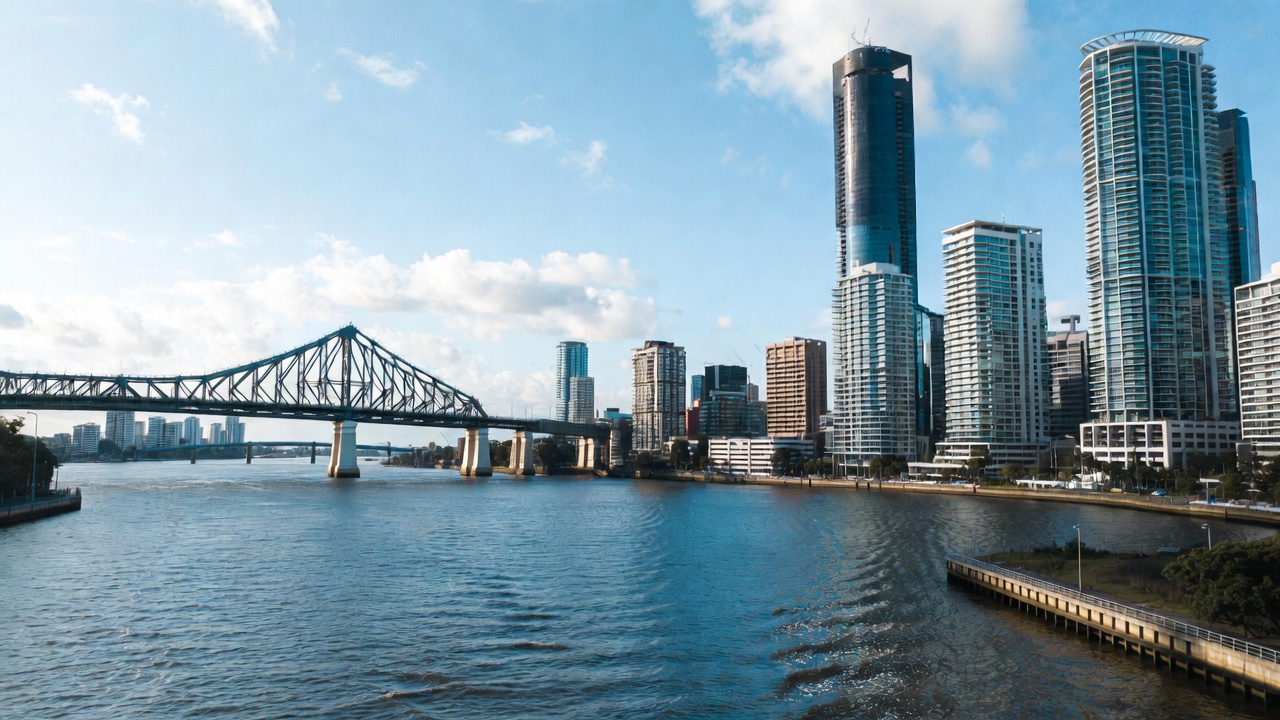
Brisbane is not simply the cheaper alternative to Sydney, and Sydney is not simply the safer one. The Brisbane property market grew 19.1% over the year to May 2026, compared with 2.3% in Sydney, yet the gap in rental yield between the two cities remains narrow. Each market rewards a different kind of investor.
This guide sets the Brisbane property market against Sydney on price, growth, yield, vacancy and population, then works through which city fits which strategy. Brisbane currently offers stronger momentum and a lower entry price. Sydney offers scale, liquidity and a market that has already absorbed much of its recent slowdown. Neither is automatically the better investment until you know what you are optimising for.
Brisbane Property Market vs Sydney: Why the Comparison Matters
Investors comparing capital cities are rarely choosing between two versions of the same asset. Sydney is Australia's largest, most expensive and most tightly held property market. Brisbane is a faster growing, comparatively affordable market that has re-rated sharply since 2020 and is still catching up to the established east coast cities on price.
Choosing between Australia's investment locations is one of the first decisions an investor makes, ahead of suburb, property type or loan structure. Getting Brisbane versus Sydney right matters more than most single suburb decisions, because it sets the ceiling on price, yield and growth for everything that follows.
Sydney vs Brisbane Property Prices
As at 31 May 2026, Sydney's median dwelling value sat at $1,282,020, the most expensive of any Australian capital. Brisbane's median dwelling value sat at $1,126,149, still a discount to Sydney but no longer the affordability play it was in 2020, when its median house price was closer to $550,000.
The price gap between the two cities has narrowed considerably over the past two years. Investors weighing entry price against long term capital available should treat that gap as a moving target, not a fixed advantage for Brisbane.
Sydney vs Brisbane Capital Growth
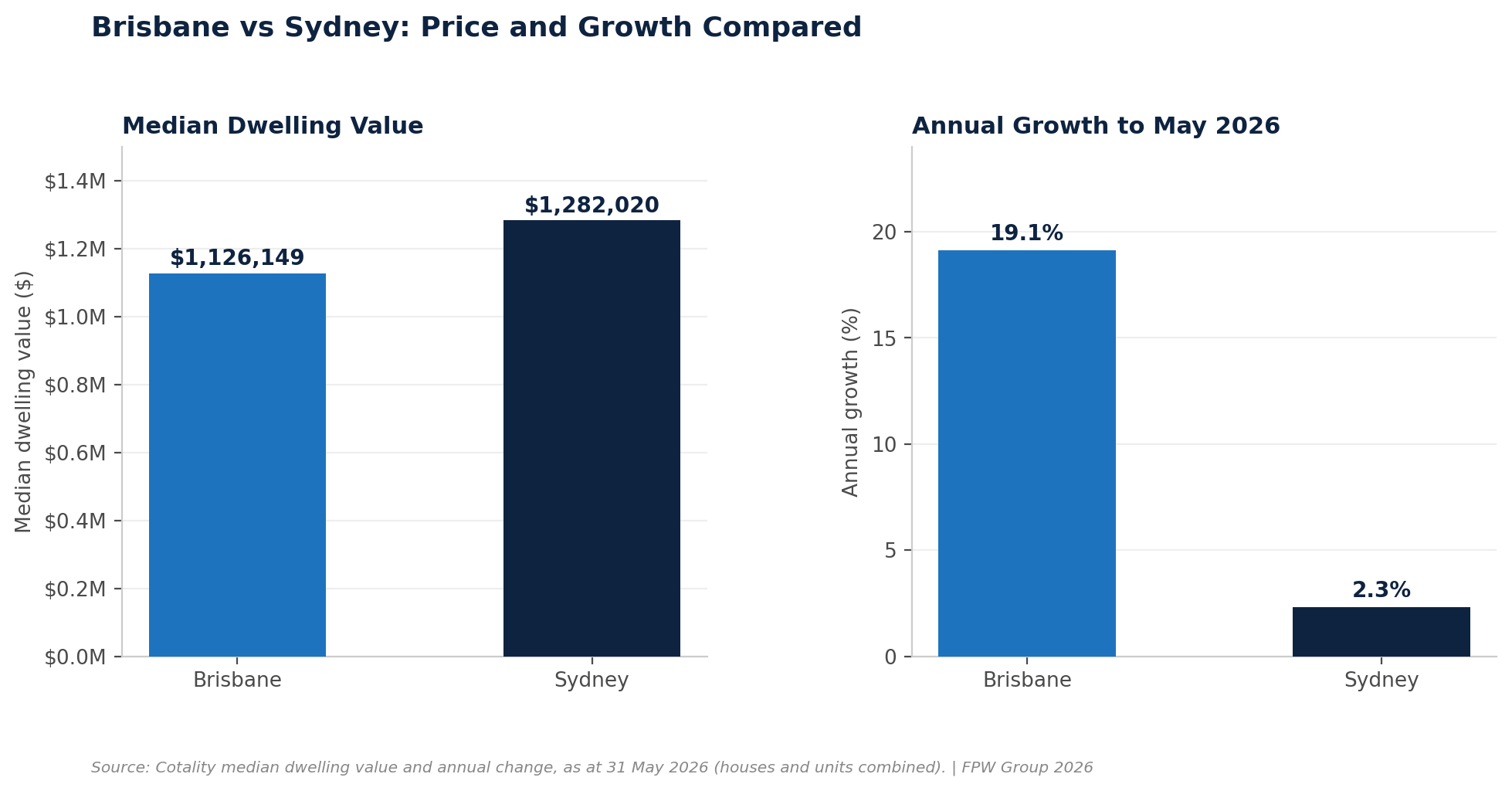
Brisbane's growth has been driven by population inflows, comparatively tight supply, and pricing that still sits below Sydney and Melbourne for a broadly similar lifestyle offering. Sydney's growth has been close to flat, with some pockets recording small monthly declines through early 2026 as affordability constraints bite at the top of the market.
Past performance is not a forecast, and Brisbane's current growth phase follows a period where it was one of the more affordable capitals. Comparing it against the suburbs with the strongest capital growth nationally shows that kind of catch-up growth tends to moderate once the pricing gap closes.
Sydney vs Brisbane Rental Yields and Vacancy Rates
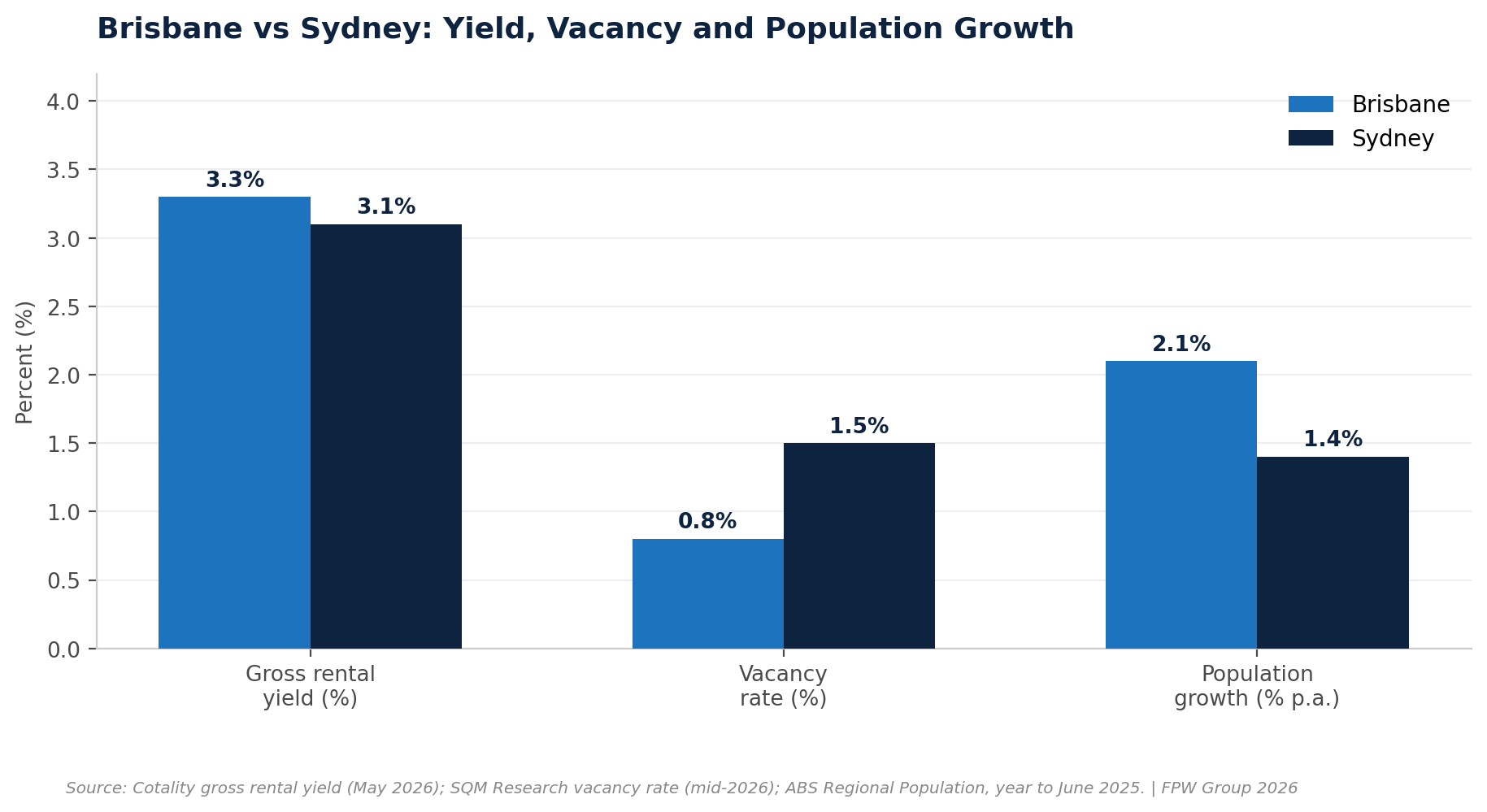
Brisbane's gross rental yield sits slightly above Sydney's, and its vacancy rate remains tighter as conditions in Sydney continue to ease. Whichever city an investor chooses, rental income needs to be assessed against the cost of the loan behind it, since the Reserve Bank has moved the cash rate more than once already in 2026.
A tighter vacancy rate does not automatically mean a better investment. It means less room for a tenant to negotiate, which usually supports rent growth. Brisbane's tighter market has been feeding through to stronger rents, but a large, approved supply pipeline in some corridors could ease that over the next few years.
What Is Driving the Two Markets?
Population growth is the clearest structural difference. Greater Brisbane added roughly 58,200 residents in 2024-25, a 2.1% growth rate, against Sydney's 1.4% over a similar period. Brisbane's growth is also being supported by infrastructure investment ahead of the 2032 Olympics, while Sydney's growth is constrained more by affordability than by demand.
Supply tells a similar story. Brisbane's outer corridors, including Ipswich and Logan, have posted some of the strongest annual growth in the country, while Sydney's new supply is concentrated in apartments rather than the established house stock that has driven most of its long term growth. Learning how to choose investment grade suburbs matters more than the city-level number once you have settled on a market.
Which Market Suits Which Investor?
Brisbane tends to suit investors prioritising affordability, stronger yield, and exposure to a market still in a growth phase. It also suits investors with a more limited borrowing capacity, since the entry price is meaningfully lower for a broadly comparable property.
Sydney tends to suit investors prioritising a large, liquid, established market with strong long term scarcity value, generally those with higher borrowing capacity or an existing portfolio who are less reliant on yield to support the purchase. How to buy an investment property is a useful next step once you have a city in mind.
Final Verdict: Sydney vs Brisbane, Which Should You Choose?
Neither city is the universal answer. Brisbane currently offers the stronger combination of growth, yield and affordability, but a large part of that has already played out over the past two years, and outer corridor supply is a genuine risk to monitor. Sydney offers scale and a market that has already absorbed much of its recent slowdown, at the cost of a lower yield and a much higher entry price.
The right choice depends on your borrowing capacity, your strategy, and how much of your return needs to come from yield versus growth. How to read a suburb profile is the next step either way, since the suburb level decision matters as much as the city level one.
Frequently Asked Questions
Recommended Reading
Two pages selected based on what readers of this article are most likely to need next.
Recommended Video
Most investors are still positioned in capital cities — but in 2026, that allocation gap is creating real opportunity cost. In a market where timing, positioning, and yield profiles compound into long-term outcomes, that disconnect matters more than most people realize.