

Geraldton Property Market: What Investors Could Be Missing
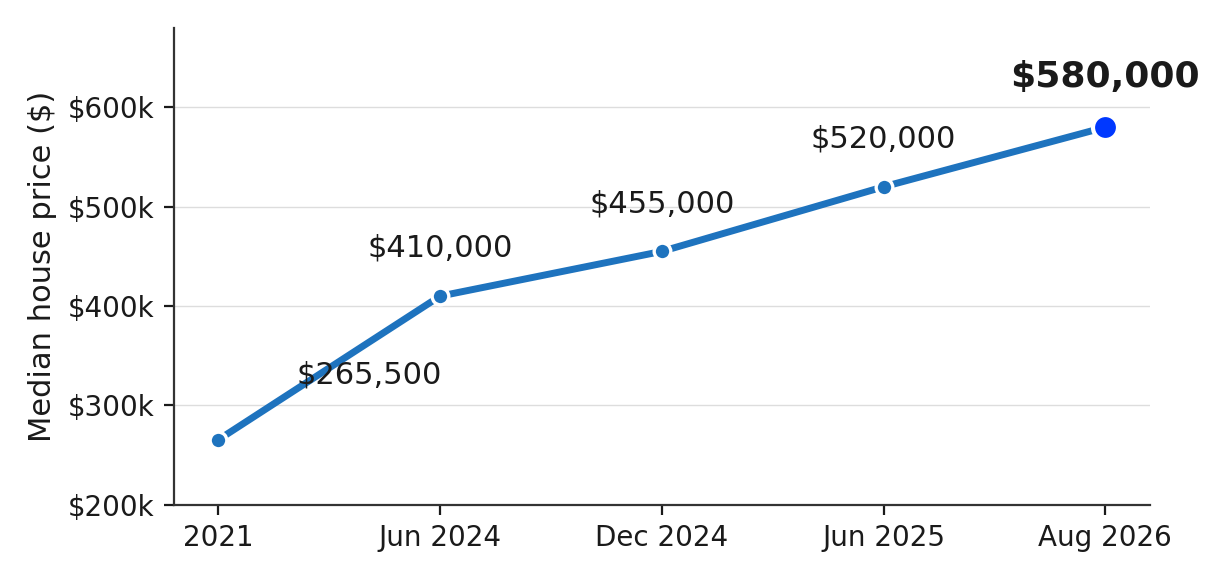
Geraldton real estate has posted the strongest price growth of any regional centre in Western Australia, with the median house price up 18.1 percent to $580,000 in the year to August 2026. That headline number looks like an easy buy signal, but it hides a gap between how fast prices have climbed and how far rents have followed.
Houses and units in Geraldton are performing quite differently right now, and the suburb average blends both into one figure that flatters neither. Working out whether Geraldton fits a wider property investment strategy means separating that growth rate from the numbers that actually drive returns: yield, vacancy, and how much of the recent gain has already been paid for at the point of purchase.
Geraldton Real Estate at a Glance
Geraldton median property prices
Geraldton's median house price sits at $580,000, based on REIWA data for the twelve months to August 2026. That is up 18.1 percent over the year, and the upper quartile of sales now sits at $665,000 against a lower quartile of $485,000.
Geraldton rental market snapshot
Median house rent has followed a similar path, rising 17.0 percent to $550 a week. Units rent for less at $400 a week, but their $360,000 median price means the return on that rent looks very different once yield is worked out.
What the headline numbers do not tell investors
A single suburb average hides the fact that houses and units are moving at different speeds and returning different yields. Property portals show the price, the rent, and the growth rate separately, but rarely connect them into what an investor needs: a view of cash flow against capital growth.
Geraldton Median House Price, 2021 to 2026
Source: REIWA, 2026
What Is Happening to Geraldton Property Prices?
Geraldton house prices and capital growth
Geraldton has posted the strongest or near-strongest quarterly house price growth of any WA regional centre across several REIWA reporting periods since 2024. Investors from the eastern states have been active buyers in the $400,000 to $600,000 bracket, adding competition that local owner-occupiers have often struggled to match.
That price bracket also changes the financing conversation. A $580,000 purchase pushes many investors past the point where borrowing capacity rather than deposit size becomes the binding constraint.
Are units moving differently to houses?
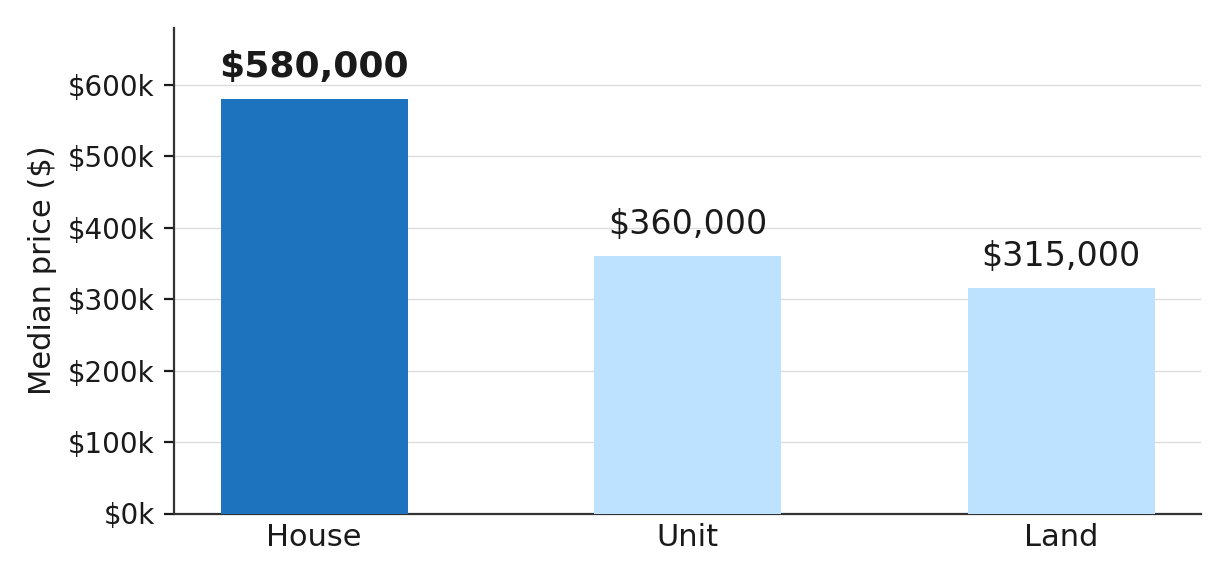
Units tell a quieter story. At a $360,000 median, they sit well below the house price point, and the entry cost gap between the two property types has widened as house prices have run further ahead.
What the sales data suggests about demand
Houses are still selling in a median of 28 days, and units in 29 days, both fast by regional standards. That pace, combined with continued price growth, points to demand that has not eased even as prices have moved well past pre-2024 levels.
Geraldton Median Price by Property Type
Source: REIWA, 2026

Geraldton Rental Market: The Other Side of the Investment Equation
Geraldton rents and rental growth
Median house rent in Geraldton has grown 17.0 percent over the past year to reach $550 a week. That is a strong number on its own, but it sits just under the 18.1 percent rise in house prices over the same period.
Geraldton rental yields, house versus unit
At current prices and rents, houses return a gross yield of roughly 4.9 percent, while units return closer to 5.8 percent. That near one percentage point gap is one of the clearer signals property portals rarely spell out.
Geraldton Gross Rental Yield, House vs Unit
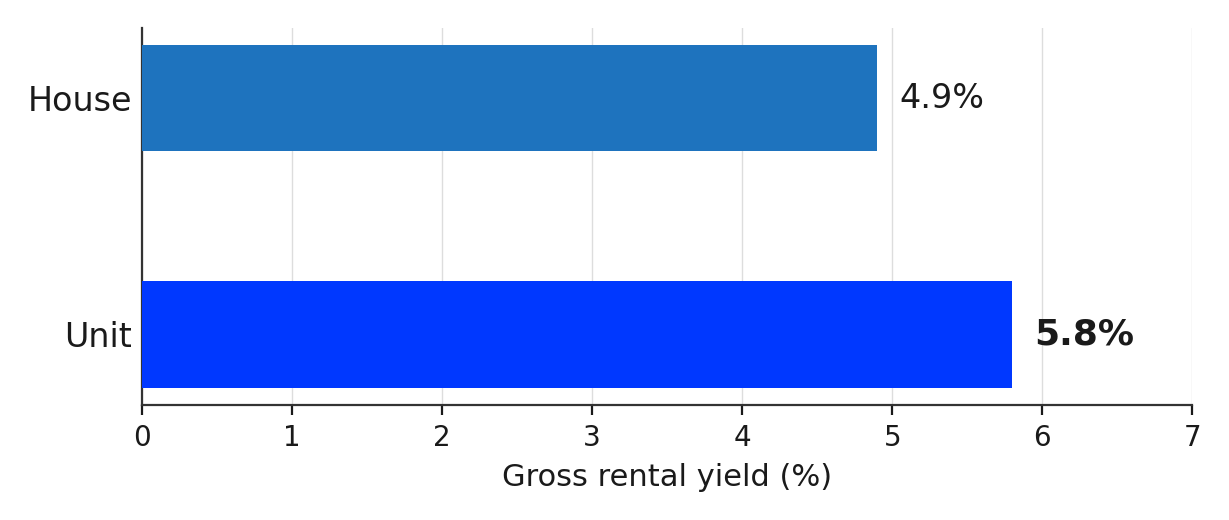
Source: REIWA, 2026 (calculated from median price and rent data)
Is rental growth keeping pace with prices?
Rental growth at 17.0 percent has nearly matched price growth at 18.1 percent over the past year, which is unusual. In most growth markets, rents lag well behind prices, so Geraldton's yields have held up better than the price run alone would suggest.
The Geraldton Numbers Investors Could Be Missing
Supply and demand signals
Vacancy in Geraldton has been sitting near 0.85 percent, well below the 1 percent mark that tends to signal genuine rental pressure. A market this tight usually means renters are absorbing new listings faster than they are being added, which is what has kept rents rising even as prices climbed.
Houses versus units for investors
Houses have delivered the stronger headline growth, but units offer a lower entry price and a higher running yield. Working out which one fits also means applying the same criteria used to choose investment grade suburbs elsewhere in Australia, rather than assuming Geraldton's average tells the whole story.
Headline growth versus investable performance
An 18.1 percent annual growth figure is a backward looking average, not a forecast. What matters going forward is whether the same drivers, tight vacancy, investor demand, and limited new supply, are still in place.
Is Geraldton Real Estate Still Worth Investigating?
What the data supports
The data supports a case for genuine investor interest. Tight vacancy, rental growth that has kept pace with prices, and a meaningful yield gap between houses and units place Geraldton among the suburbs with the strongest vacancy conditions in the country, rather than relying on sentiment alone.
What investors should be cautious about
Regional markets that run hard for several years can also cool quickly once outside buyer interest fades. Geraldton's population growth has been soft, and a market driven partly by interstate investor demand can lose momentum faster than one built on local population growth.
That pattern is worth understanding before buying into any regional centre, since not every property hotspot keeps booming once the initial wave of buyer interest passes. It applies just as much to an underrated regional market like Geraldton as it does to a well known one.
Questions to answer before buying
Before buying in Geraldton, work out how much of the current yield depends on today's tight vacancy holding, what happens to serviceability if borrowing capacity tightens further, and whether the property type you are considering matches your actual strategy. These are the same questions worth asking of any regional market, not just Geraldton.
Final Thoughts
Geraldton real estate has genuinely strong numbers behind it: 18.1 percent price growth, rental growth that has nearly kept pace, tight vacancy, and a real yield gap between houses and units that most suburb summaries never mention. Those are not reasons to avoid the market. They are reasons to look at it properly rather than reacting to a single median price.
Whether Geraldton fits a specific portfolio comes down to strategy, not the suburb average. An investor chasing yield may find more in a Geraldton unit than the headline house growth suggests, while one chasing capital growth needs to ask how much of that growth has already happened. The data supports further investigation. It does not answer the question on its own.
Frequently Asked Questions

Recommended Reading
Two pages selected based on what readers of this article are most likely to need next.
Recommended Video
Most buyers think success comes from timing the market, but the real difference between people who build wealth and people who get stuck comes from buying the right asset with the right strategy, structure and support.