

How Negative Gearing Changes Could Affect Retirement Strategy

Negative gearing in Australia changed under law from the May 2026 Federal Budget, and the new rules only apply to established properties bought after 7:30pm on 12 May 2026. If you already own a negatively geared property, or you are weighing one against your retirement plan, the practical impact depends more on timing and structure than the tax rate itself.
For investors already close to retirement, the bigger question was never really the tax deduction. It is whether the portfolio can produce enough income once the pay cheque stops. That question matters more than any single policy change.
Interest rate movements already shape how much cash flow a portfolio produces before tax comes into it. Understanding where these negative gearing changes now fit inside that picture is what actually protects a retirement plan.
What Is Negative Gearing in Australia?
Negative gearing happens when the costs of owning a rental property, mainly loan interest, exceed the rental income it earns. Investors can deduct that net loss against their other income, which lowers taxable income in the years the property runs at a loss.
It is a tax treatment, not a strategy on its own. The deduction only offsets a loss that already happened. It does not turn a loss into a gain.
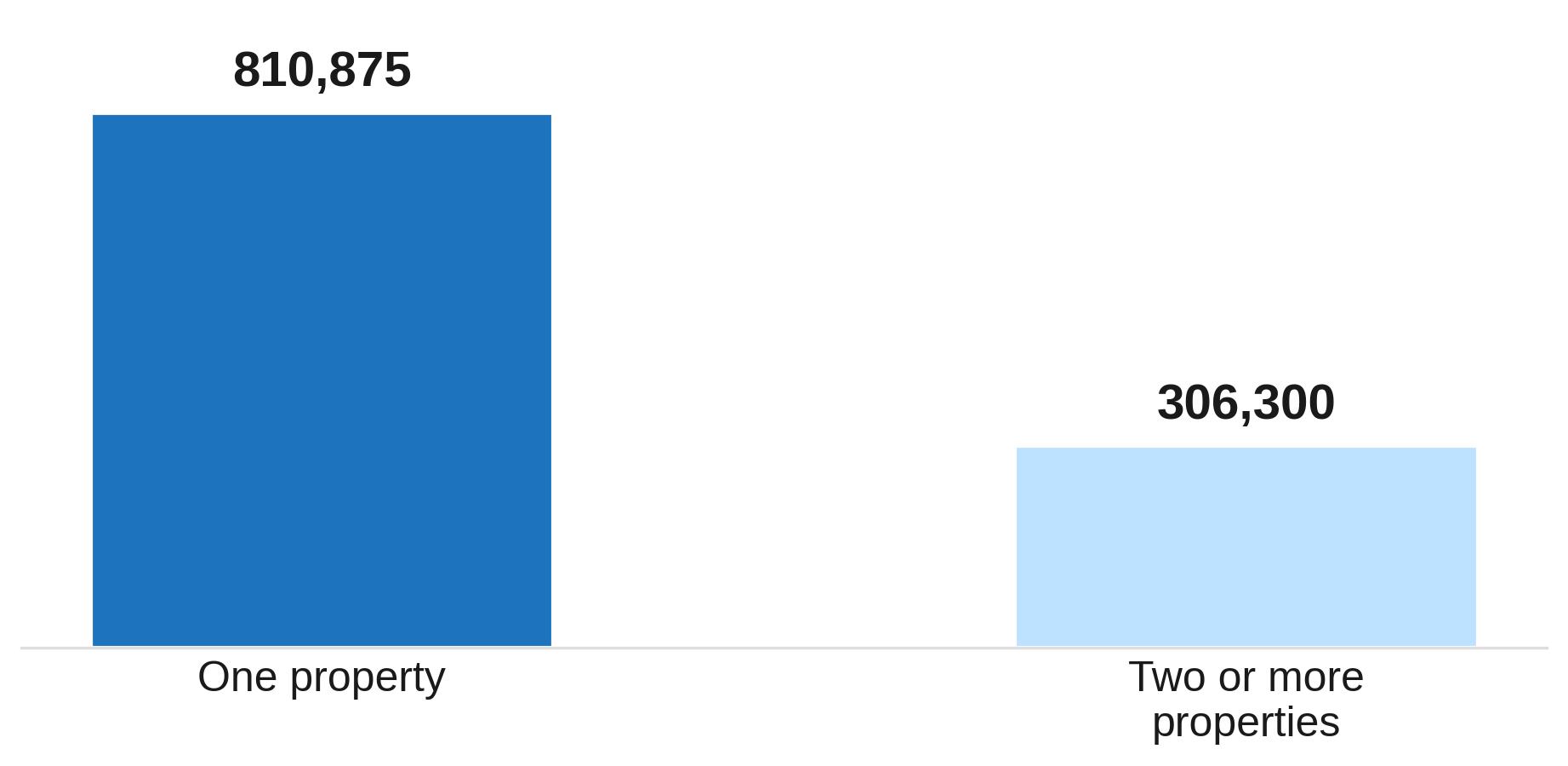
According to Australian Taxation Office data analysed by RMIT researcher Liam Davies, around 1.12 million of Australia's 2.26 million property investors were negatively geared in 2022 to 2023. Most, around 810,875, held just one investment property.
How Could the 2026 Changes Affect Property Investors?
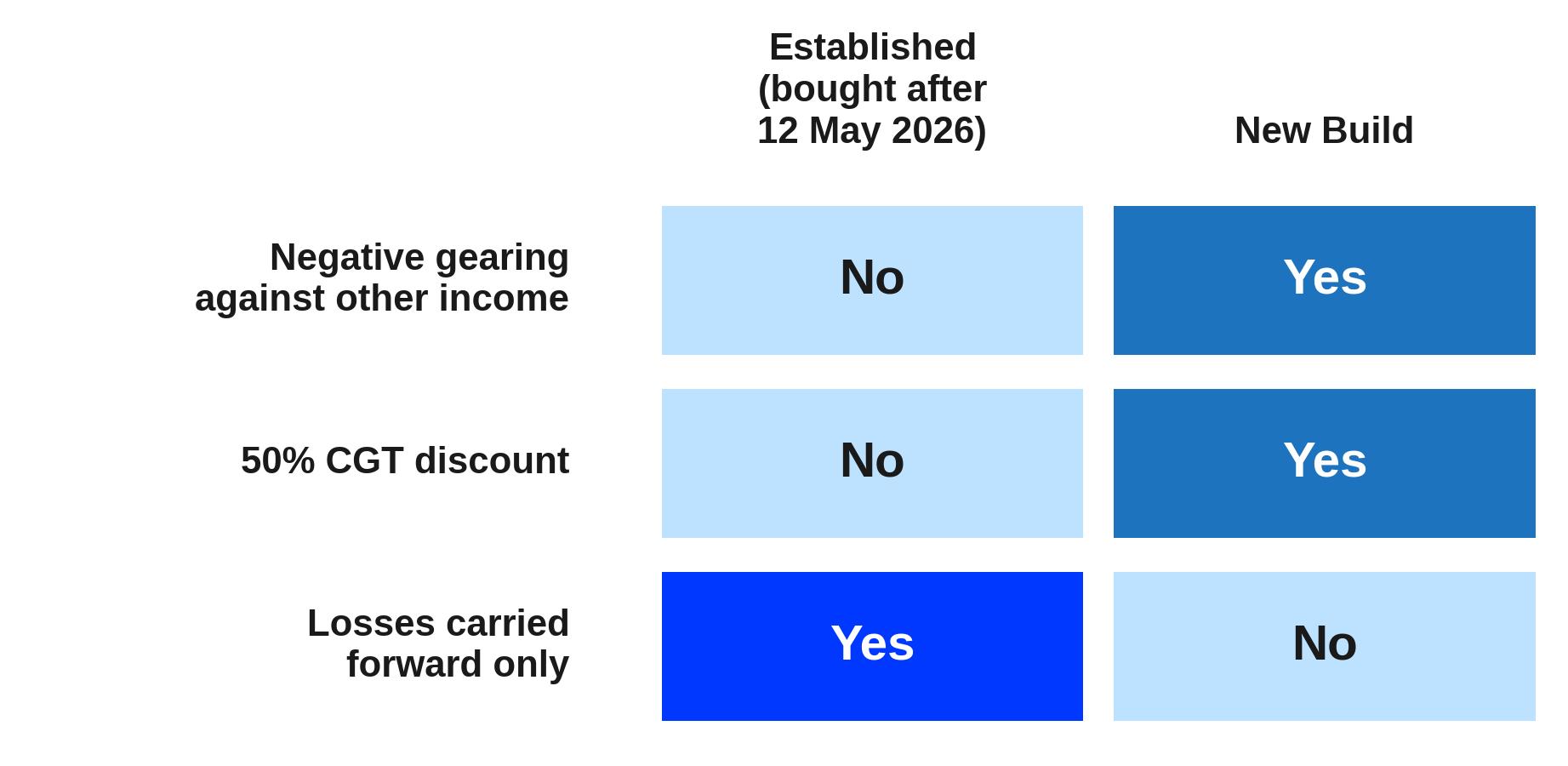
The 2026 Federal Budget changed negative gearing law for established residential properties. From 1 July 2027, losses on an established property bought after 7:30pm on 12 May 2026 can only be offset against rental income or capital gains from residential property, not salary or other income, a shift covered in FPW's wider 2026 Budget update.
Properties already owned, including those under contract before the announcement, are grandfathered under the existing rules. New builds are exempt entirely and keep both negative gearing and the 50 percent CGT discount.
The capital gains tax discount is changing too. From 1 July 2027, the 50 percent CGT discount is being replaced with cost base indexation and a 30 percent minimum tax rate on gains for assets acquired after that date, according to the Australian Taxation Office.
Tax Treatment After 1 July 2027: Established vs New Build
Source: Australian Taxation Office, Tax reform: Boosting home ownership, 2026
CommBank's economics team estimates the combined changes could subtract around 0.6 percentage points from established dwelling price growth, while modestly increasing rental pressure over time. Reduced after-tax cash flow can also affect how lenders assess serviceability and stress testing on any new borrowing.

What Does Negative Gearing Mean for Your Retirement Strategy?
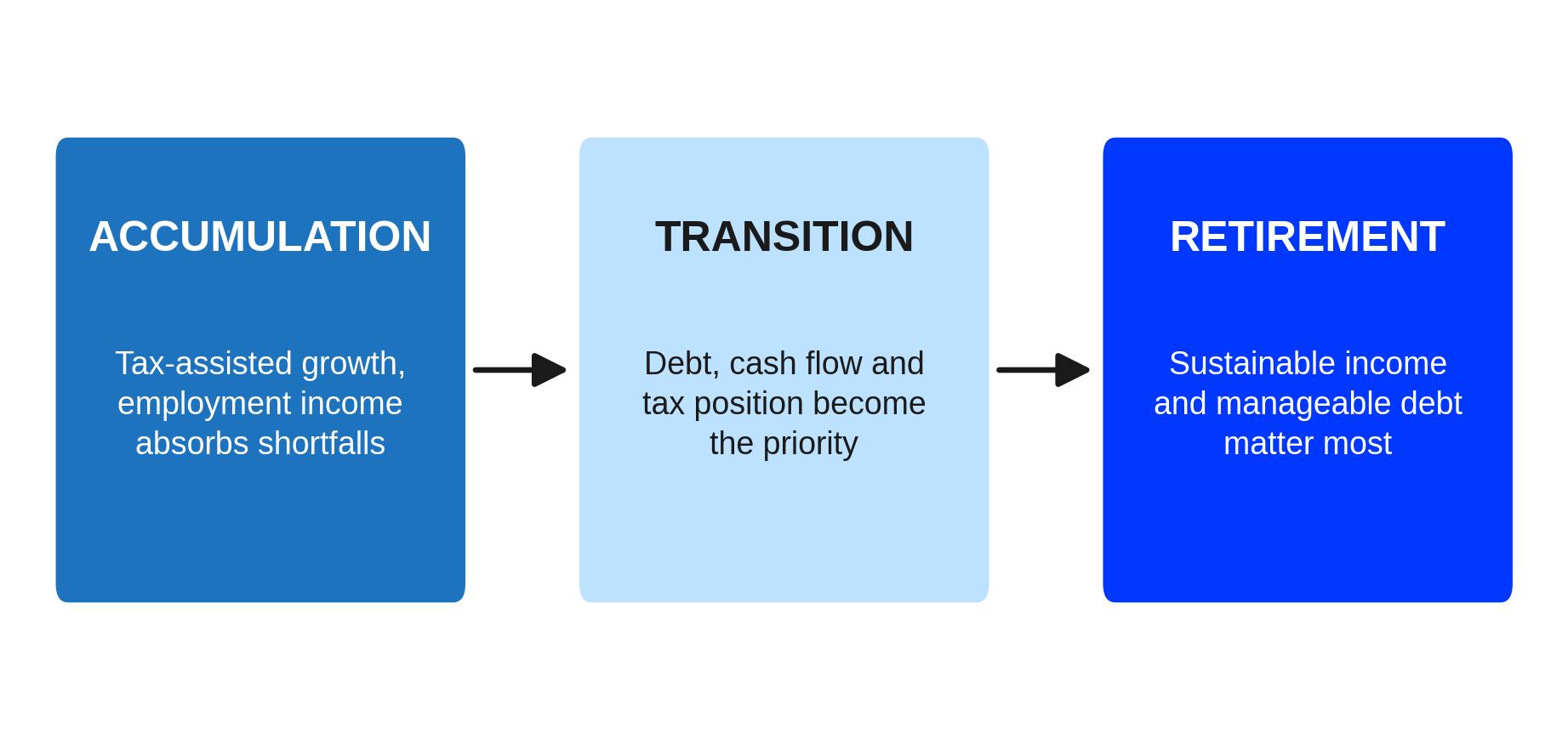
Most negative gearing discussion stops at accumulation: buy, hold, deduct, repeat. That misses the more important question inside property investment in Australia: what happens when the strategy needs to produce income instead of absorbing losses.
During the accumulation phase, negative cash flow can be tolerable. Employment income covers the shortfall, and the investor is backing capital growth over time to build wealth.
That assumption gets tested as retirement approaches. Without salary income to absorb a shortfall, a negatively geared property can quietly become a liability rather than an asset.
Who Negatively Gears in Australia
Source: RMIT analysis of ATO Taxation Statistics 2022-23, via The Conversation
Negative Gearing vs Positive Gearing for Retirement
Positive gearing is the opposite arrangement: rental income exceeds the costs of holding the property. It produces taxable income rather than a deduction, which sounds worse until the investor needs income rather than a tax break.
The trade-off is really about balancing yield and growth across a portfolio's life, not picking one structure forever. A property bought for growth in your thirties can serve a completely different purpose in your sixties.
Tax treatment should never be the only reason to hold or sell a property. A positively geared asset that pays income every month is doing a different job to a negatively geared one still building equity.
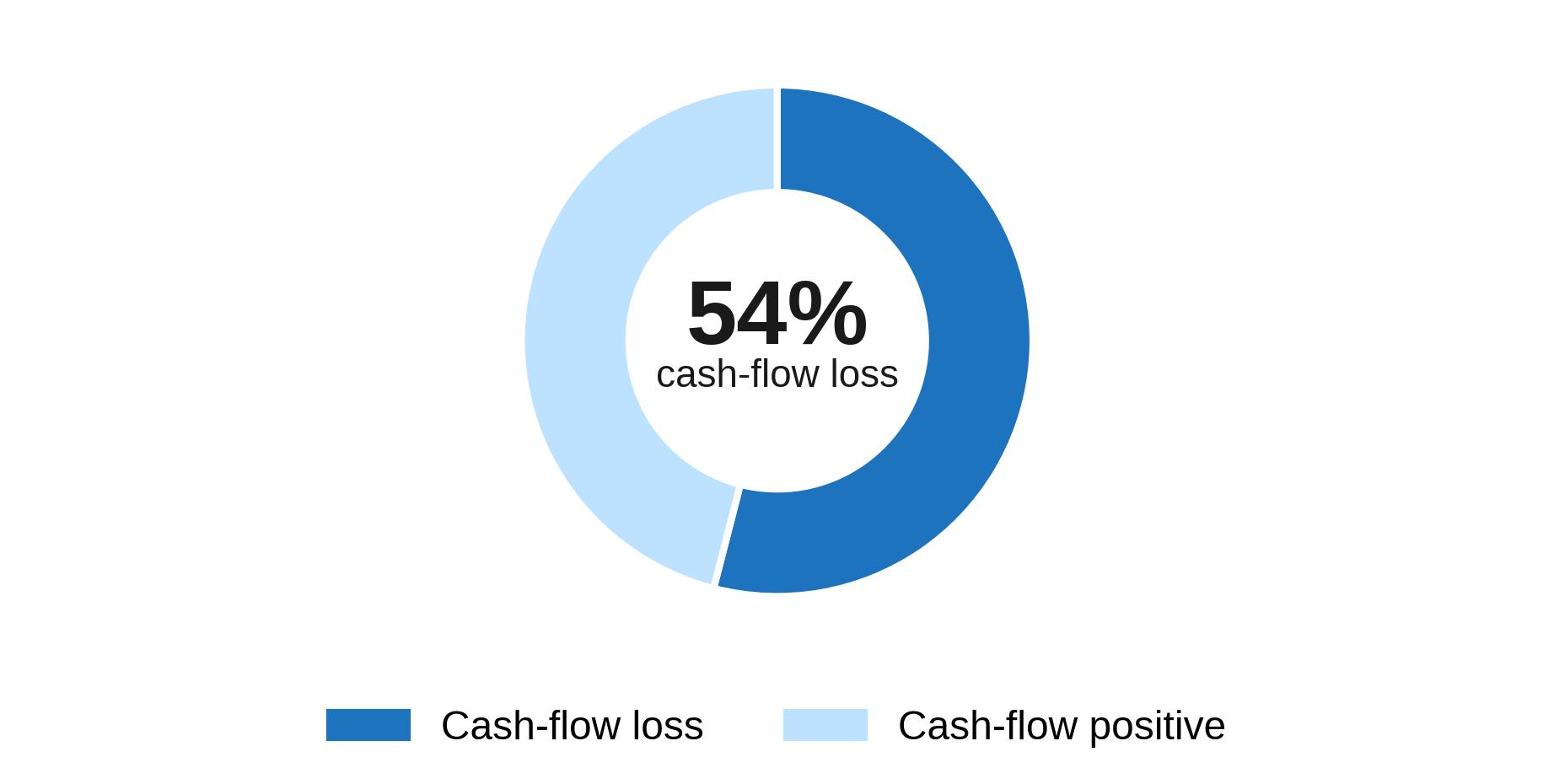
Share of Investment Properties Posting a Cash-Flow Loss, 2023 to 2024
Source: Australian Taxation Office data, via Grafa, 2026
Should You Keep a Negatively Geared Property Before Retirement?
There is no universal answer, but a few factors consistently matter: how many working years remain to absorb further losses, how much debt is left on the property, and how reliant the retirement plan is on that specific asset.
Paying debt before retirement changes this calculation more than most investors expect, since it directly reduces the interest cost driving the loss in the first place. Reviewing your debt to income position is a reasonable starting point.
Selling, refinancing, or simply holding until the loan is paid down are all legitimate paths. The right one depends on the rest of the portfolio and the retirement income required, which is why this decision resists a generic rule.
The Retirement Transition Framework
Source: FPW Group analysis, 2026
How to Prepare Your Portfolio for the New Rules
Preparing for these changes does not require guessing what happens next. A handful of concrete steps apply regardless of how you are currently structured.
Confirm exactly when your existing properties were purchased relative to 7:30pm on 12 May 2026, since that single detail determines whether the new rules apply at all. Recalculate your after-tax cash flow assuming no further negative gearing benefit on any future purchase.
Review your borrowing capacity and debt position before making any acquisition or restructuring decision, since reduced deductions change what a lender will assess. A mortgage broker who models both scenarios can pressure test the numbers before you commit to either path.
It is also worth checking whether increasing your borrowing capacity is even the right goal at this stage, versus consolidating what you already hold.
Final Thoughts
Negative gearing has not disappeared, but it now depends heavily on when a property was bought and whether it is an established home or a new build. The 2026 changes reward new supply and grandfather what investors already hold.
The more important shift is not the tax rule itself. It is recognising that the strategy suited to building a portfolio is rarely the one that should fund it in retirement.
Reviewing timing, debt, and the true purpose of each property in the portfolio, well before retirement, is what determines whether negative gearing served the plan or just delayed a decision that still needed to be made.
Frequently Asked Questions

Recommended Reading
Two pages selected based on what readers of this article are most likely to need next.
Recommended Video
As of April 2026, Treasury is actively modelling potential changes ahead of the May Budget. This isn’t speculation—it’s confirmed. In this video, we unpack exactly what’s being proposed, who stands to benefit, who could be impacted, and what it could mean for investors, renters, and first home buyers across Australia.