

Defence Housing Investment Property: Where the Boom Is Heading
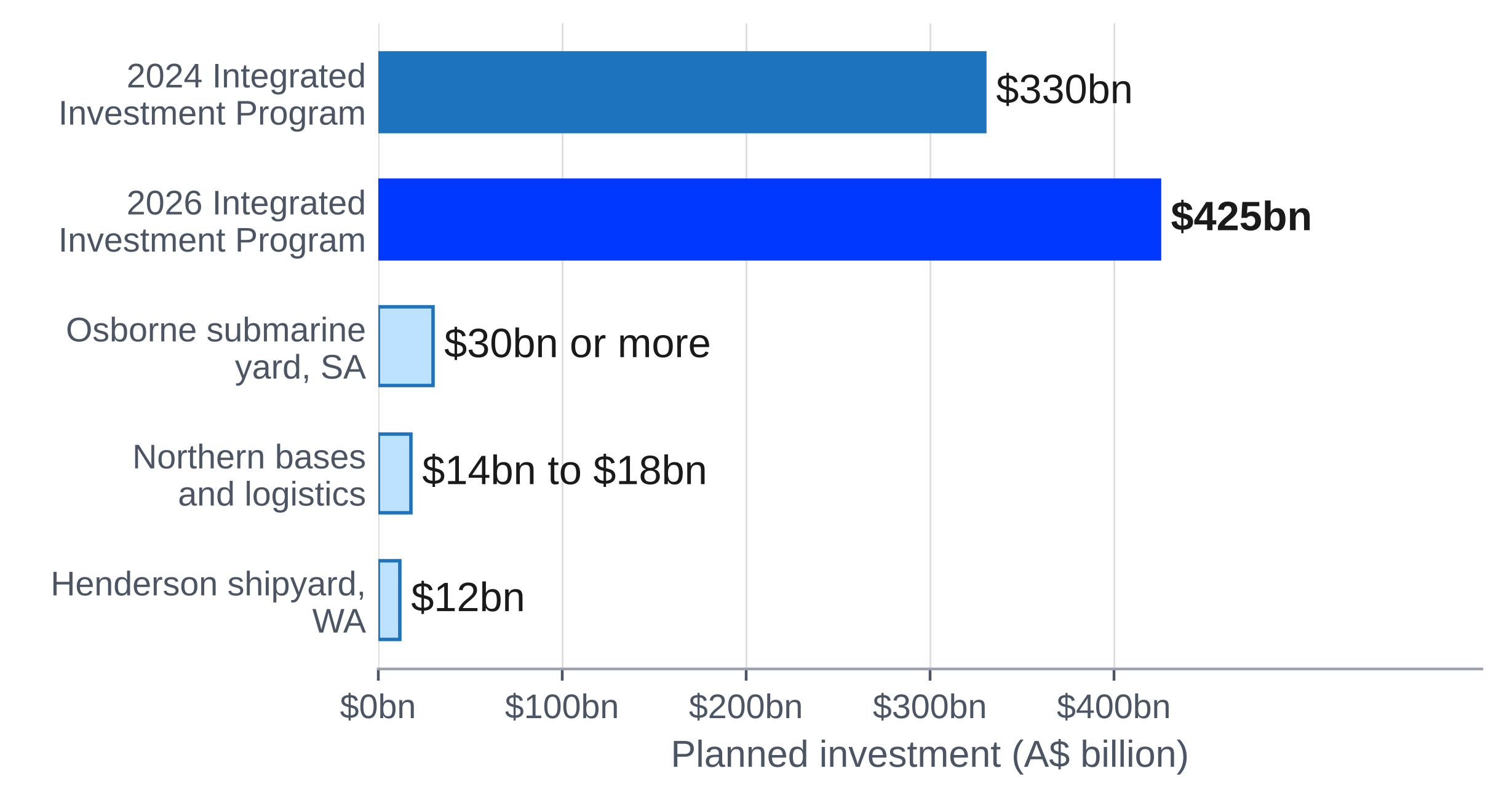
The best defence housing investment property sits where defence jobs grow faster than new homes can be built. Being close to a base is not enough. In April 2026, Australia lifted its planned defence investment to $425 billion over ten years, up from $330 billion in 2024. That money is landing in just a few places.
Most investors read those numbers as a political headline. The ones paying attention ask three questions. Where do the projects go? How many workers arrive? Is there enough housing for them? Some markets have already priced that in.
This guide follows the money from spending to rents. It compares seven defence-linked suburbs and shows where a Defence Housing Australia (DHA) lease fits. It also helps if you are deciding whether to buy local or go interstate.
Where Is Australia's Defence Money Going?
The 2026 National Defence Strategy sets aside $425 billion over ten years. It adds $53 billion in new money and lifts defence spending to 3% of GDP by 2033. The 2024 plan had $330 billion, so the total has grown.
For property, the total matters less than where it lands. The money goes to shipyards, bases, repair hubs and supply routes. Each one sits in a real local market.
Defence Investment: The National Plan and the Big Local Projects
Source: Defence Minister, 2026; Department of Defence, 2024; InDaily, 2026; ABC News, 2025
In South Australia, the Osborne submarine yard will cost at least $30 billion. It will need about 4,000 workers to build, says InDaily. In Western Australia, Canberra has promised $12 billion for the Henderson shipyard. The ABC reports it should create about 10,000 jobs over 20 years.
The 2024 plan also set aside $14 billion to $18 billion for northern bases. That covers defence sites in the Top End and north Queensland.
How Does Defence Spending Turn into Housing Demand?
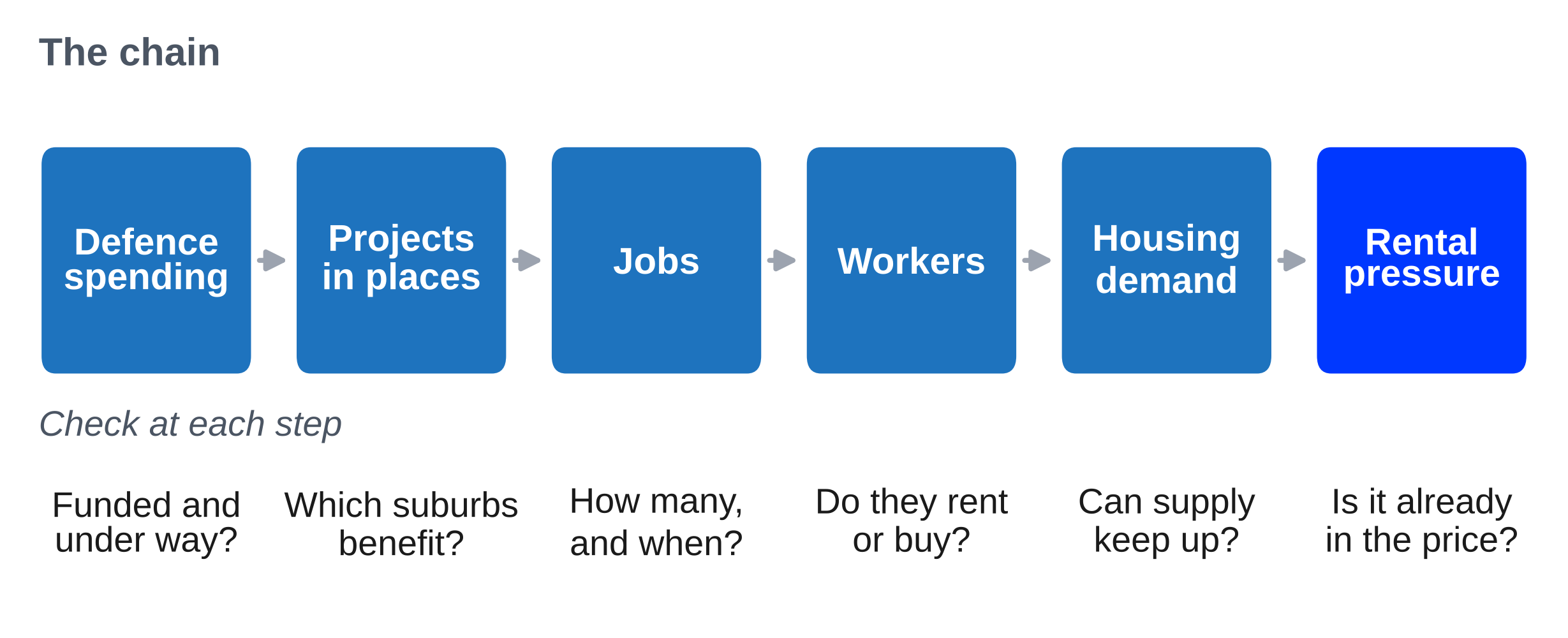
The chain is simple. Spending creates projects. Projects create jobs. Jobs bring workers and families, and they all need homes.
The Chain From Defence Spending to Rental Pressure
Source: FPW Group analysis
Defence Spending Doesn't Create Growth. Jobs Do.
Jobs only push up rents when housing cannot keep up. It is the same pattern seen when infrastructure projects affect property prices. Rockingham sits near HMAS Stirling and Henderson, and its population grows about 3.5% a year. DHA plans to lift its homes there from 670 to about 1,200 to 1,300, says the Property Council.
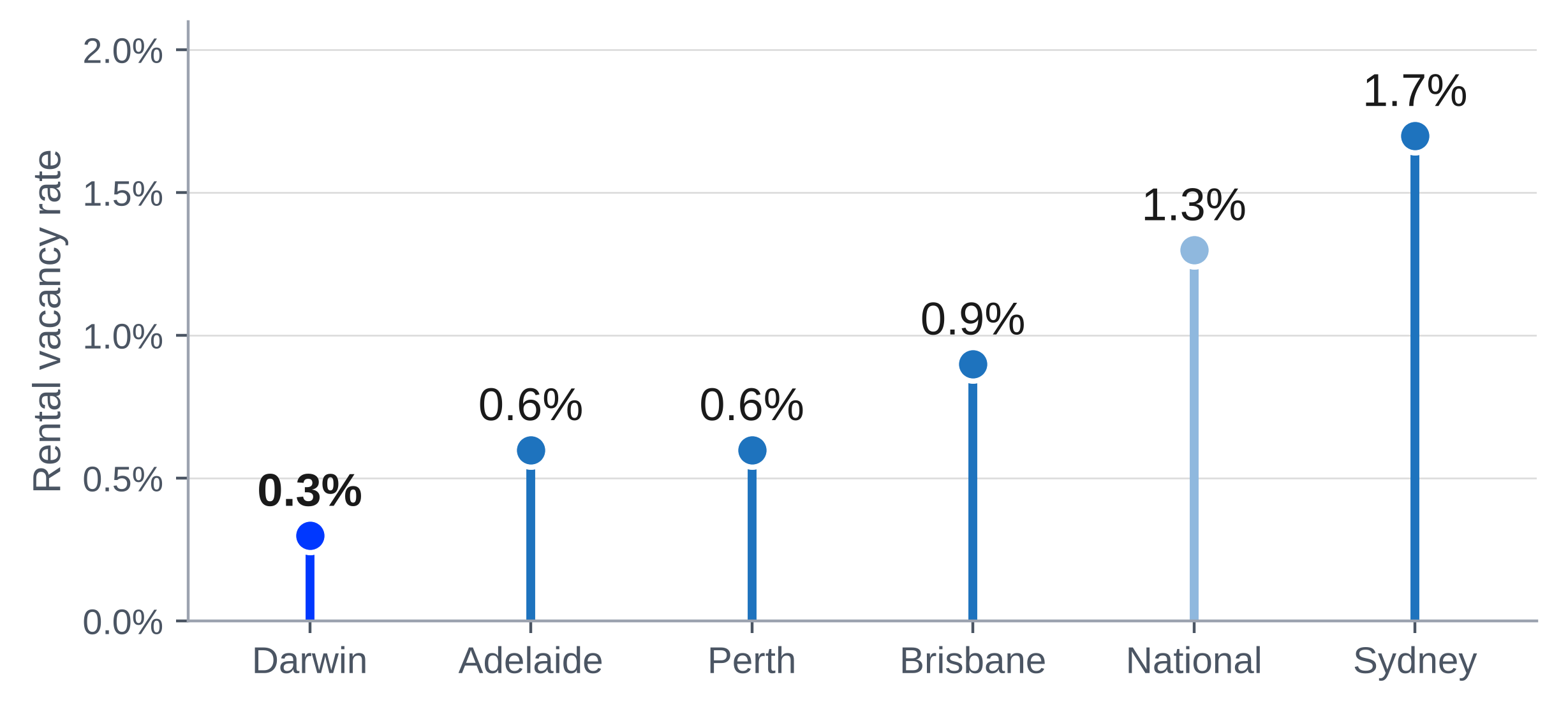
Rentals are already scarce in the cities getting the most defence work. In July 2026, SQM Research put vacancy at 0.3% in Darwin. Perth and Adelaide were at 0.6%, and the national rate was 1.3%.
Rental Vacancy in Defence Growth Cities
Source: SQM Research, July 2026
We explain markets this tight in our guide to vacancy rates below 1%. New supply matters too. Rockingham plans about 16,000 extra homes, mostly in its city centre.
Which Defence-Linked Locations Have Already Priced In the Growth?
Not every defence-linked market is still early. The table compares seven suburbs near big bases and shipyards. It uses CoreLogic house data for the year to mid-2026.
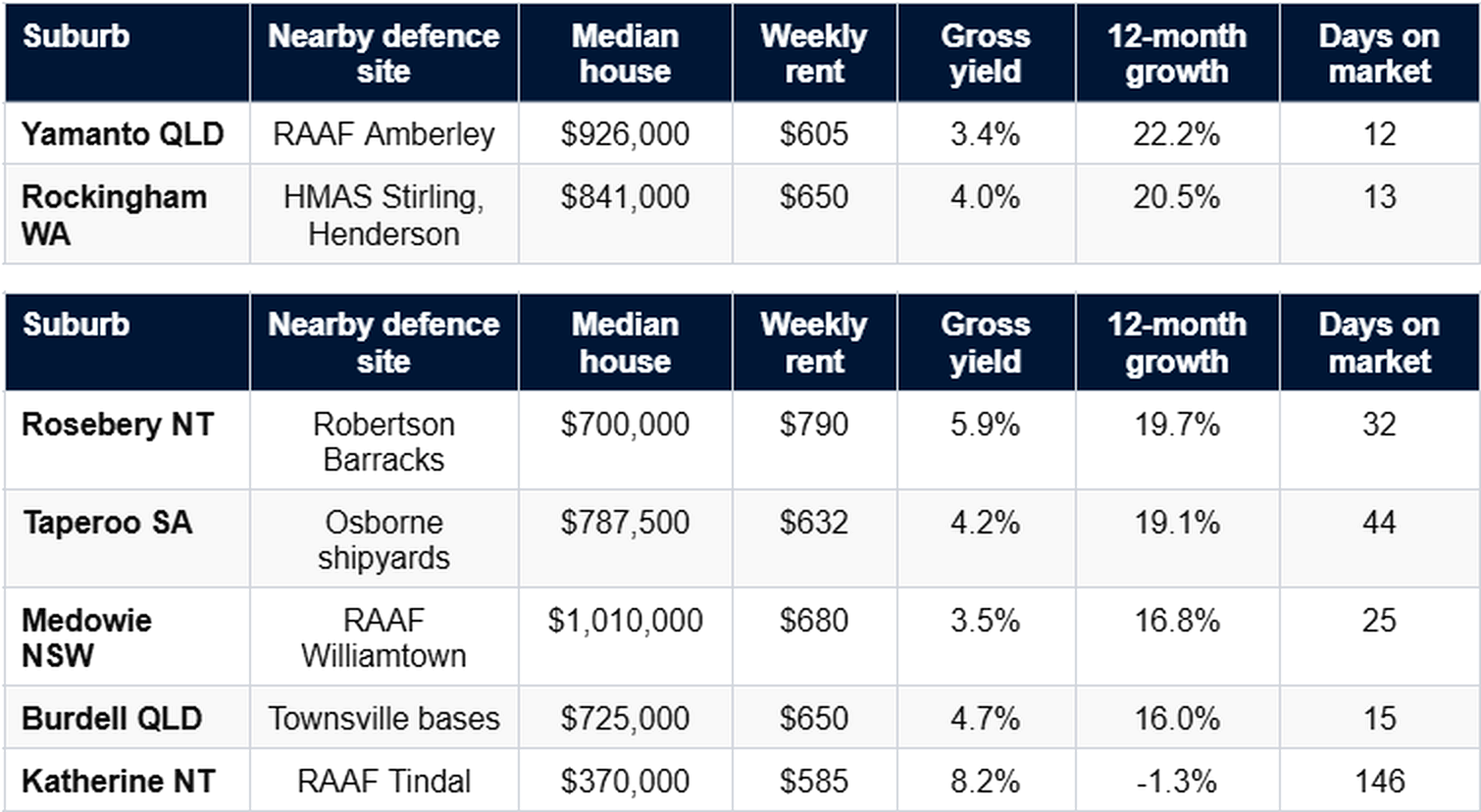
Source: CoreLogic via Your Investment Property, houses, 12 months to June or July 2026. Gross yield is weekly rent x 52 / median price, FPW calculation.
Price Growth vs Rental Yield in Defence-Linked Suburbs
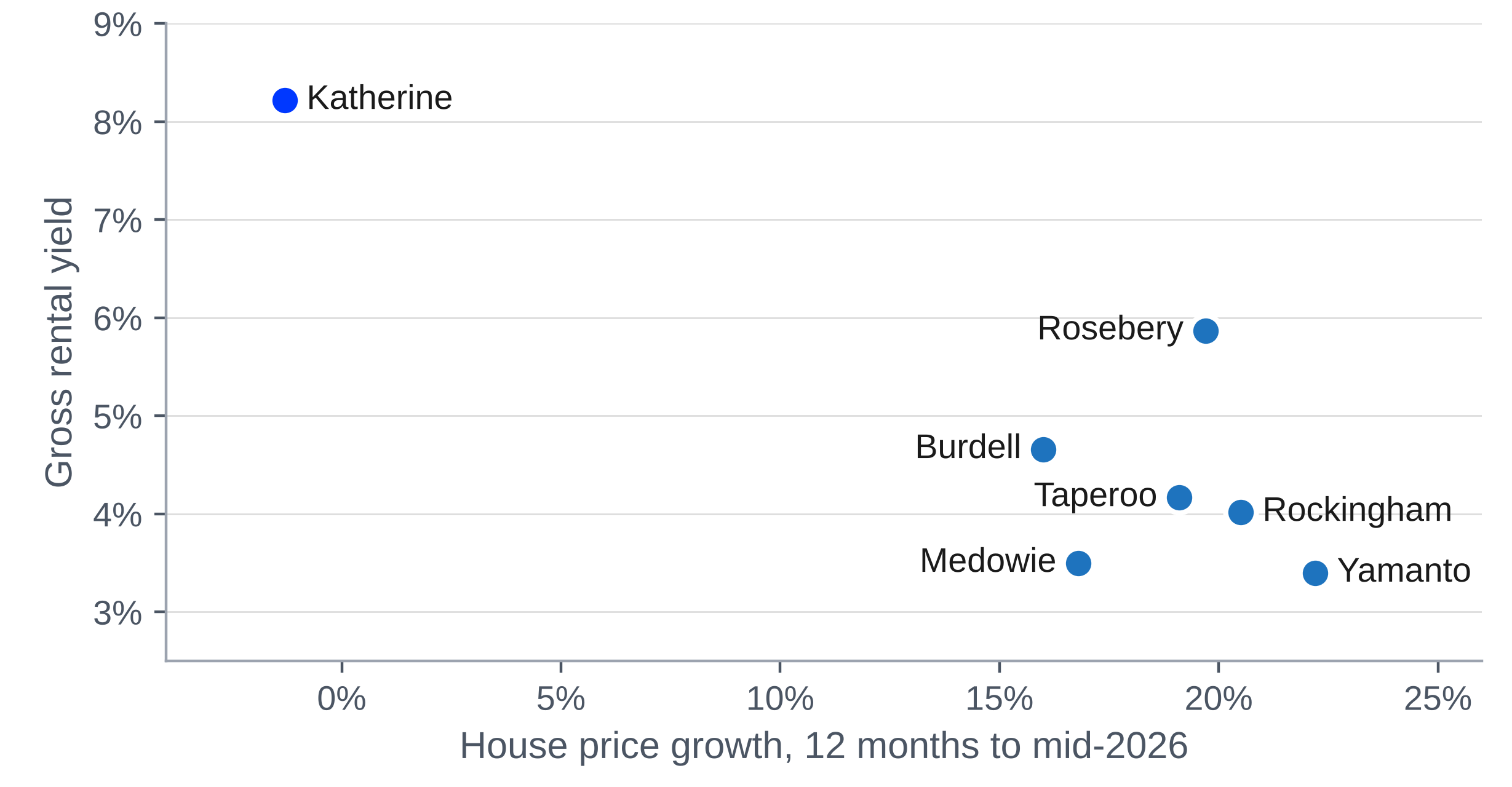
Source: CoreLogic via Your Investment Property, 12 months to June or July 2026; FPW calculation
A low yield after a big price rise means buyers may already be paying for future demand. That does not rule a suburb out. But it raises the bar on what makes a property hotspot worth buying now.
Katherine shows the opposite risk. The yield is high, but prices fell 1.3%. Houses took 146 days to sell, and only 27 sold in a year. Cheap does not always mean early.
A nearby base does not promise growth. It is one of the suburb myths investors should question. For more detail, read our guides to Darwin rental suburbs, Adelaide property investment and Perth property market growth.
Most investors are watching the $425 billion headline. The opportunity sits in what happens underneath it.

Where Does a Defence Housing Investment Property with a DHA Lease Fit?
DHA rents homes from private owners to house Australian Defence Force (ADF) members and their families. More than 12,000 owners lease to DHA. It wants good homes within 30 km of a base. Leases usually run for 3, 6, 9 or 12 years, and only DHA can choose to extend.
There are trade-offs. Rent is only paid while the home is fit to live in. The service fee is 16.5% of rent for most houses, while agents usually charge about 6% to 10%. Anyone who buys the home must also take over the lease.
The Australian National Audit Office noted a 2018 study that found DHA's fees were above the industry norm. DHA says the fee covers empty weeks and most routine repairs that owners usually pay.
Annual Running Costs: DHA Lease vs Traditional Rental
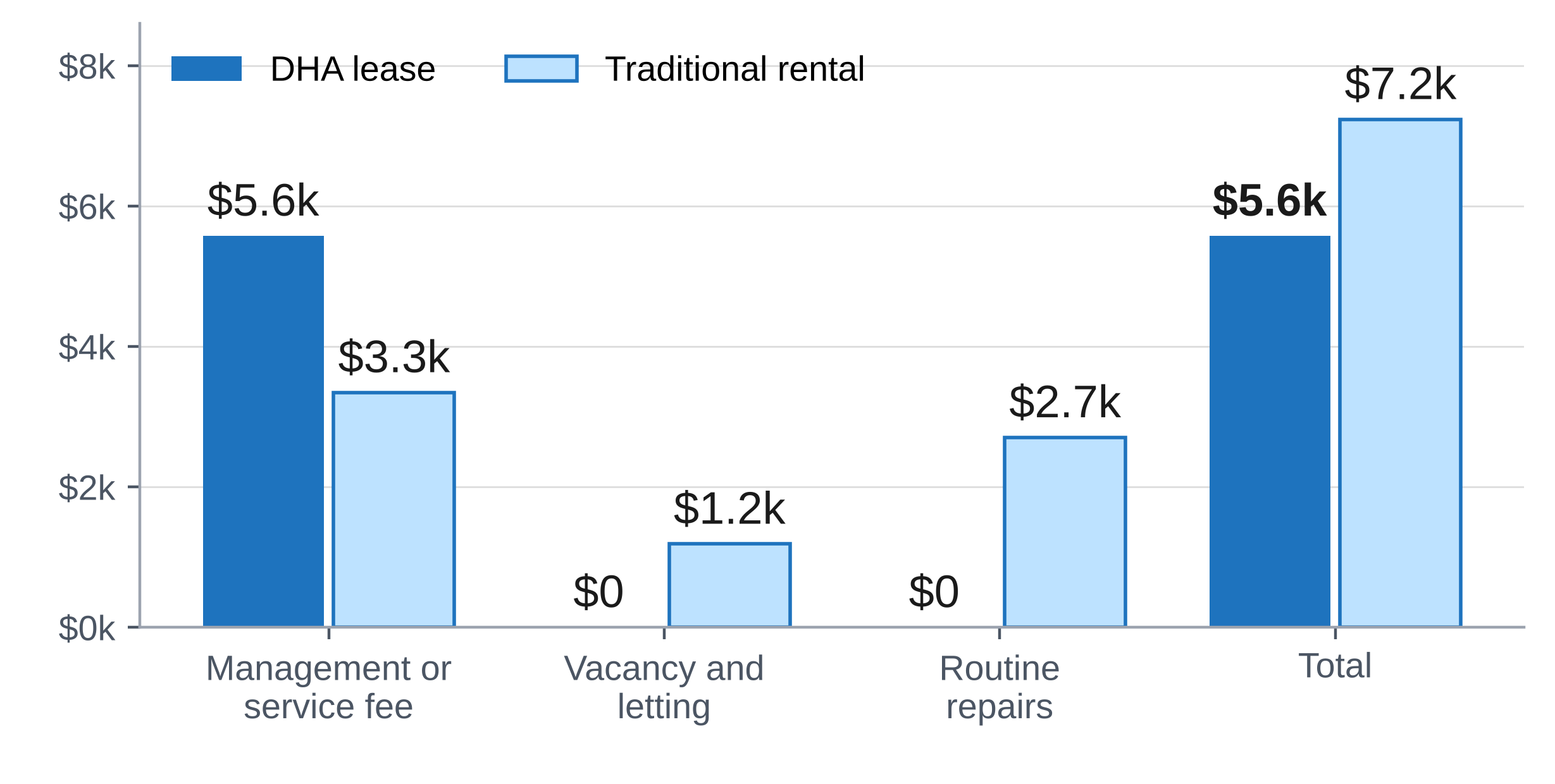
Source: FPW illustrative calculation using DHA's 16.5% fee, a 9.9% Townsville agent fee and BIS ranges cited by DHA; rent from CoreLogic
In Burdell, the median house costs $725,000 and rents for $650 a week. That is a gross yield of about 4.7%. After rates and insurance, the DHA option returns about 3.1% before interest. A normal rental returns about 2.9%
Lenders will count that gap when they check your borrowing capacity. Our guide to the negative gearing changes for 2027 shows which suburbs are less affected.
What to Check Before Buying in a Defence-Linked Market
Project status: confirm the project is funded and under way. The Osborne yard build runs into the early 2040s.
Workforce scale: compare expected jobs with the size of the local rental market.
Supply pipeline: look for land releases and infill plans, such as Rockingham's 16,000-home target.
Pricing: test the price against recent comparable sales, and check whether yields have fallen.
Demand beyond defence: make sure the suburb suits private tenants and buyers if defence needs change.
Lease terms: if buying with a DHA lease, read the extension rights and Property Care exclusions.
A defence rental still needs the right yield vs growth balance for your wider portfolio. The same rules apply when you decide where to invest in property in Australia.

These checks are the core of how to evaluate property investment locations that rely on one big employer. That covers mining towns as well as defence hubs.
Final Thoughts
Australia's defence build-up is real, but it is not a boom for every suburb. The chance sits where funded projects bring workers faster than homes can be built. It also needs prices that have not raced ahead of rents.
Some defence suburbs now on lists of the best places to invest in property Australia wide have already had their run. Others, with healthy yields and tight vacancy, may still be early.
Compare the best investment locations by state on jobs, supply and yield, not the headline number. Our investment property team can test a defence-linked market against your next move.

Frequently Asked Questions
Recommended Reading
Two pages selected based on what readers of this article are most likely to need next.
Recommended Video
This is not just another policy update. It is a structural shift in how the entire market is being shaped. The 2026 Federal Budget introduces changes across negative gearing, updates to capital gains tax CGT, and a growing tax advantages.