
Property Inspection Checklist: What the Listing Doesn't Tell You
A good property inspection checklist covers three things: the building, the street and the area around it. The listing shows you the first one at its best, but the street and the surrounding area often decide how easy the property will be to rent and resell.
Traffic at 8am, noise after dark, water pooling after a storm and a development application next door rarely appear in the photos. Each one can be checked before you offer, using council tools, well-timed visits and the right reports.
For anyone serious about property investment in Australia, this is where the real research starts. This guide covers what to check, when to check it, and the three signals that tell you whether to proceed, investigate further or walk away.
What Should a Property Inspection Checklist Cover?
Most buyers walk through a property looking at the kitchen, bathrooms and bedrooms. A useful property inspection checklist goes further and works in three layers.
The Property's Visible Condition and Maintenance
Start with what you can see: cracks above doors and windows, water stains on ceilings, sagging gutters and soft floorboards. Fresh paint on one small patch of wall can hide a leak.
Our list of investment property red flags covers more warning signs to note on the day.
The Street, Access and Immediate Surroundings
Next, look outward. Check how close the property is to a main road, rail line, flight path, pub, service station or school, since each can help or hurt depending on your likely tenant.
Questions to Answer Before Making an Offer
Finally, turn what you saw into questions. Is the issue permanent, can it be fixed, and who can confirm it? Location is one of the five drivers of property investment success, so a street problem deserves the same weight as a roof problem.
Inspect the Street Before You Judge the Property
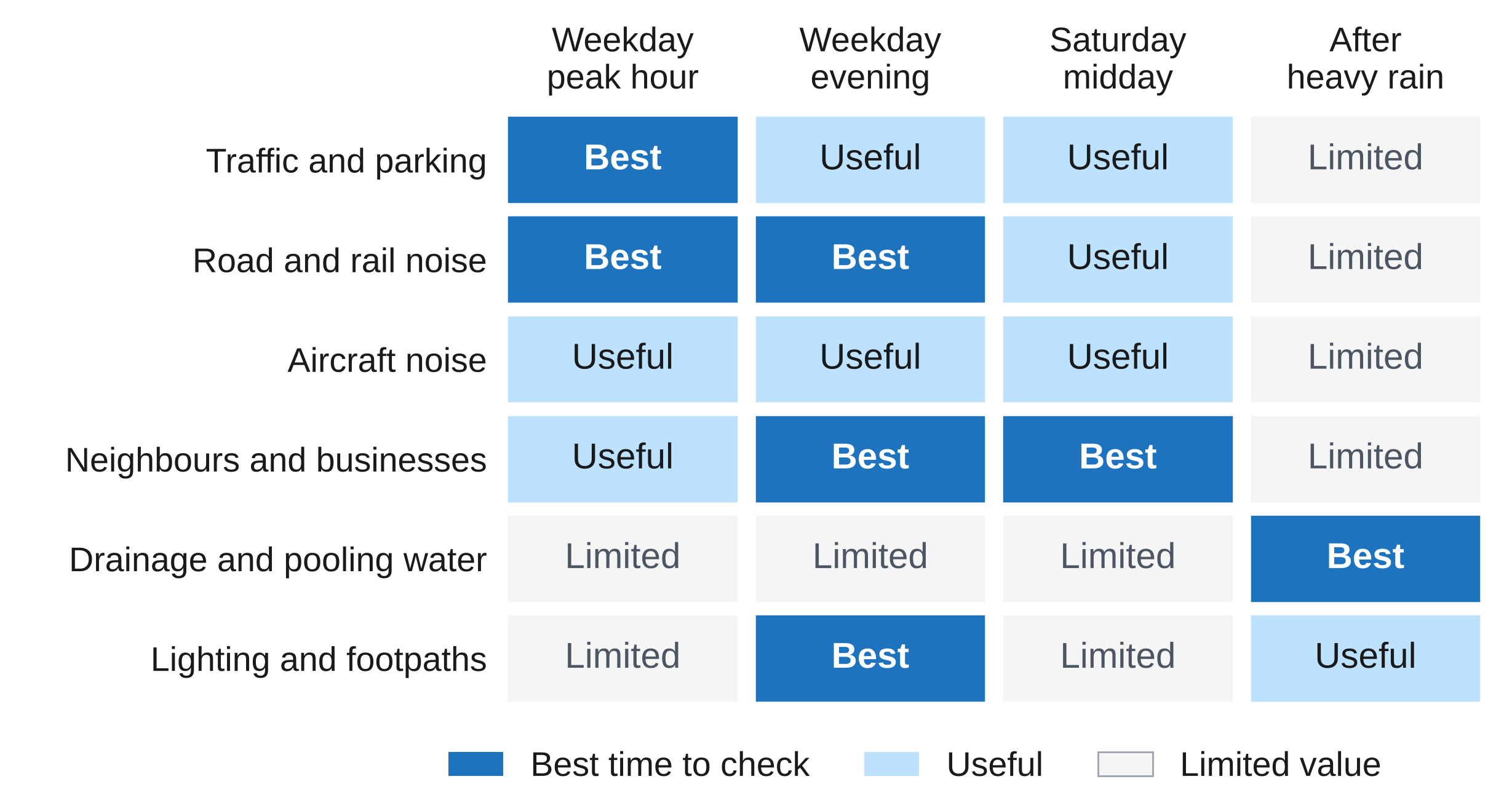
A property's street tells you things the listing never will. Most open homes run on Saturday mornings, when streets are often at their quietest, so plan your own visits at other times.
Traffic, Parking and Access at Different Times
Drive past during weekday peak hour, between about 7.30am and 9am. Note how hard it is to leave the driveway, whether cars use the street as a shortcut and whether there is room to park.
When to Visit: What Each Inspection Time Reveals
Source: FPW Group analysis using Airservices Australia guidance, 2026
Road, Rail, Aircraft and Neighbourhood Noise
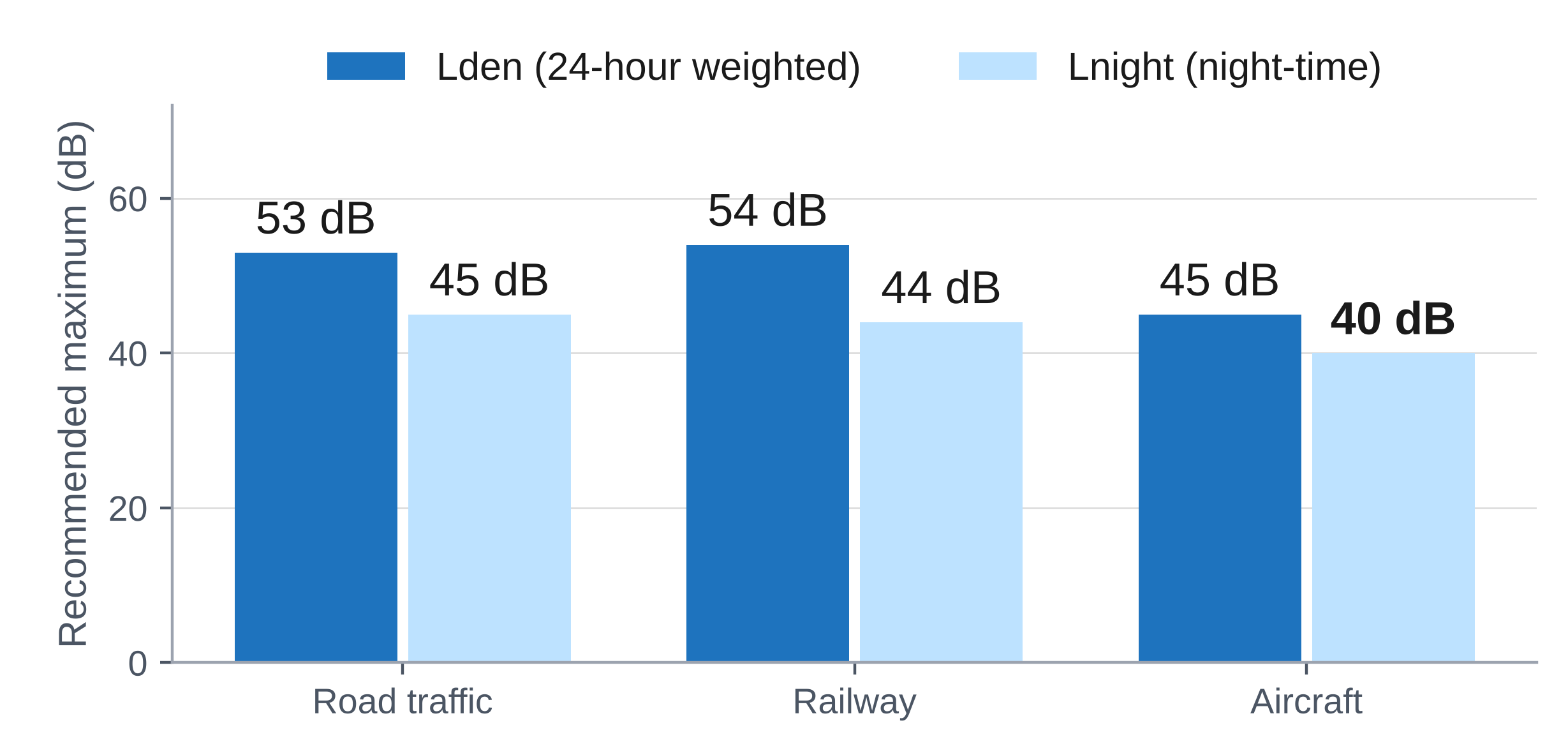
Noise is hard to judge at an open home. The World Health Organization's 2018 guidelines recommend night-time road traffic noise stay below 45 decibels, and aircraft noise below 40, because higher levels are linked to poorer sleep.
Stand in the main bedroom after 8pm with the window open and listen for five minutes. For aircraft, Airservices Australia suggests checking its WebTrak flight tracker and visiting on different days, since wind direction changes which flight paths are used.
WHO Recommended Noise Limits by Source
Source: World Health Organization, Environmental Noise Guidelines, 2018
Neighbouring Properties and Nearby Commercial Uses
Look at the homes on either side and across the road. Overgrown yards, cars on lawns or a run-down unit block can change how the street feels, and so can businesses that open late or take early deliveries.
Knowing how to read a suburb profile helps you compare the street against the wider area.
Street Lighting, Footpaths and Pedestrian Access
Walk to the nearest bus stop or station after dark. Check that the footpaths connect, the street lights work and the walk feels safe, because many tenants do not own a car.

Look for Changes That Could Affect the Property Later
A street can change after you buy. A new road, a unit block next door or a rezoning can shift how the property feels, so property due diligence has to cover the future as well as the present.
Proposed Developments, Rezoning and Infrastructure Projects
Search the council's development application register for the street and nearby blocks. In Brisbane, the council's Development. i tool lets you search applications by address and view site plans, and most councils offer something similar.
Not every change is bad, since new transport can lift demand, so learn how infrastructure projects affect property prices before treating a building site as a red flag. If your goal is building long-term wealth through property, the next ten years of the street matter more than today.
Flood, Bushfire and Other Location-Specific Risks
Flood risk is one of the costliest things a listing can leave out. The February and March 2022 floods in South East Queensland and New South Wales led to 244,398 insurance claims worth about $6.3 billion, according to Insurance Council of Australia figures given to a federal parliamentary inquiry.
Brisbane City Council's Flood Awareness Map shows the flood types likely to affect an address. From the same search you can download a FloodWise Property Report showing estimated flood levels and past flood heights from 2011 and 2022.
Flood and bushfire risk also affect insurance costs, so get a landlord insurance quote before you commit.
How to Verify Planning Information Rather Than Rely on Assumptions
Do not rely on what a neighbour or the selling agent says about future plans. Check the planning scheme map, the zoning of nearby lots and any overlays on the property, and ask the council in writing if anything is unclear.
Assess the Property From an Investor's Perspective
Owner-occupiers ask whether they would like to live there. Investors must ask whether enough tenants and future buyers will want to.
Could the Surroundings Affect Tenant Appeal?
Think about who is most likely to rent the property. A family will care about schools, yards and traffic, while a young professional may care more about transport and cafes.
Local rental vacancy rates show demand across the suburb, but not how this particular street compares.
Are There Access, Parking or Privacy Limitations?
Check that a car can get in and out of the driveway safely and that there is room for two cars. Windows facing straight into a neighbour's living room are hard to fix and easy for tenants to notice.
What Should Investors Investigate Before Estimating Rental Demand?
Do not estimate rent from the listing alone. Compare recent leases on similar nearby homes and ask a local property manager how quickly they let.
Lenders usually count only part of your rent when they assess a loan, so understand the borrowing capacity formula before you rely on rental income.
Which Factors Could Influence Future Resale Appeal?
Your future buyer will do the same inspection you are doing now. A home on a quiet street with good transport is usually easier to sell than one on a busy road, even if the houses are identical.
This is one of the most overlooked rules of investing in property in Australia: you buy the street as much as the house.
What a Visual Inspection Cannot Tell You
Your own eyes are a first filter, not a final answer. Many serious defects sit behind walls, under floors or in the roof space.
When to Arrange a Building and Pest Inspection
Before your contract becomes unconditional, book a pre-purchase property inspection with a licensed building inspector. Add a pest inspection, since termites are active in many parts of Australia.
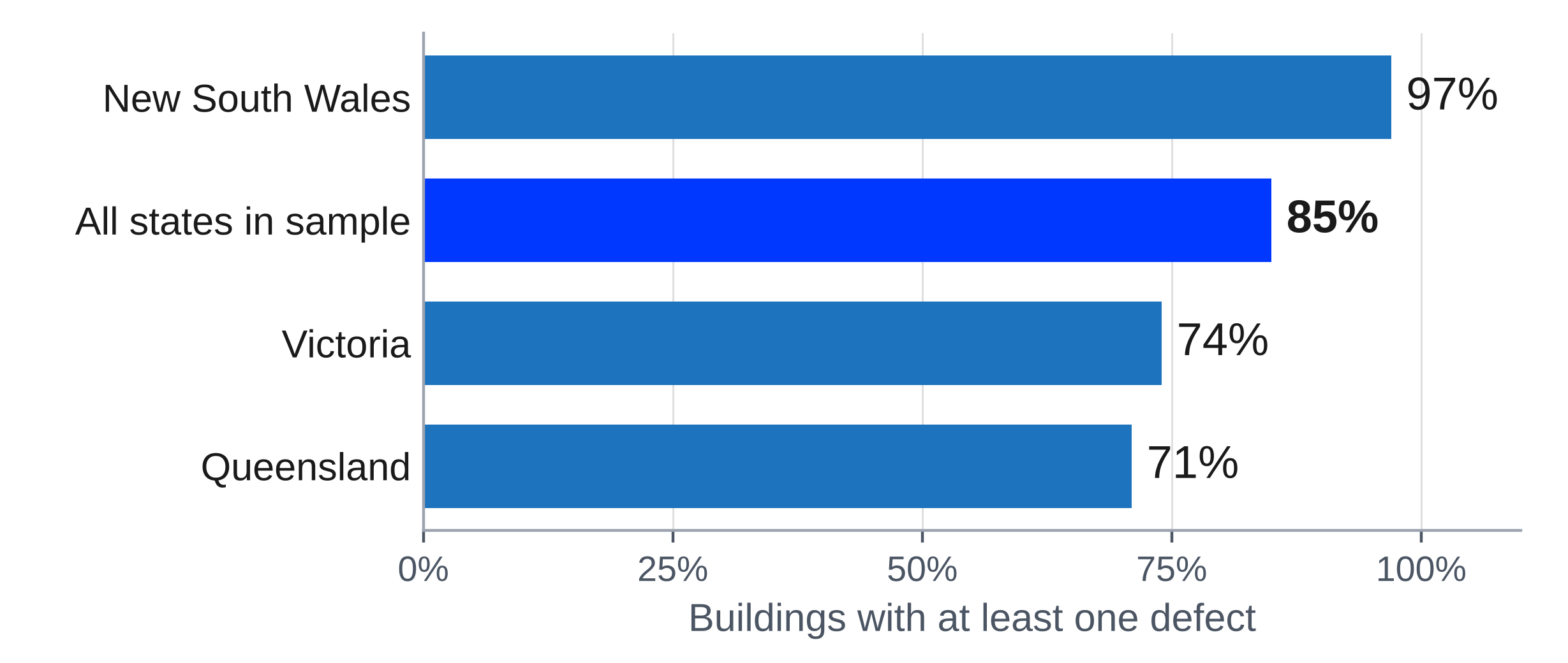
Apartments need extra care. A 2019 Deakin University and Griffith University study of 212 building audit reports found defects in 85% of the multi-owned buildings studied.
Share of Strata Buildings With Defects by State
Source: Johnston and Reid, Griffith University and Deakin University, 2019
Common problems included water getting in, wall cracking, roof and gutter faults and fire safety issues. Ask for the strata records, meeting minutes and any defect reports before you buy.
What to Verify Through Council Records and Planning Maps
Check that any extensions, decks or granny flats were approved, since unapproved work can lead to costly fixes. Your conveyancer can also search for easements and outstanding council notices.
A surveyor can confirm boundaries, an engineer can assess cracking and a lawyer can explain the contract. Remember that the selling agent works for the vendor, one key difference between a buyer's agent and a real estate agent.
Property Inspection Checklist: What to Verify Before You Make an Offer
Print this list and take it to every property you shortlist.
Street and Surrounding-Area Checks
Traffic and parking at weekday peak hour
Road, rail and aircraft noise after 8pm
Neighbouring homes and nearby businesses
Lighting and footpaths on the walk to transport
Development applications within a few blocks
Flood, bushfire and other hazard overlays
Visible Property-Condition Checks
Cracks, water stains, mould and soft floors
Roof, gutters, downpipes and drainage around the home
Windows, doors and locks that open and close properly
Patch painting or covered-up repairs
Records, Reports and Unanswered Questions
Building and pest inspection report
Strata report, minutes and defect history for units
Council approvals for extensions and outbuildings
Rental appraisal and recent nearby leases
Contract review by a solicitor or conveyancer
A Practical Decision Framework: Proceed, Investigate or Reconsider
Every issue you find falls into one of three groups. Minor issues you can price in are fine, issues you can verify should be checked first, and permanent issues that shrink tenant demand are a reason to rethink.
Inspection Decision Framework: Proceed, Investigate or Reconsider
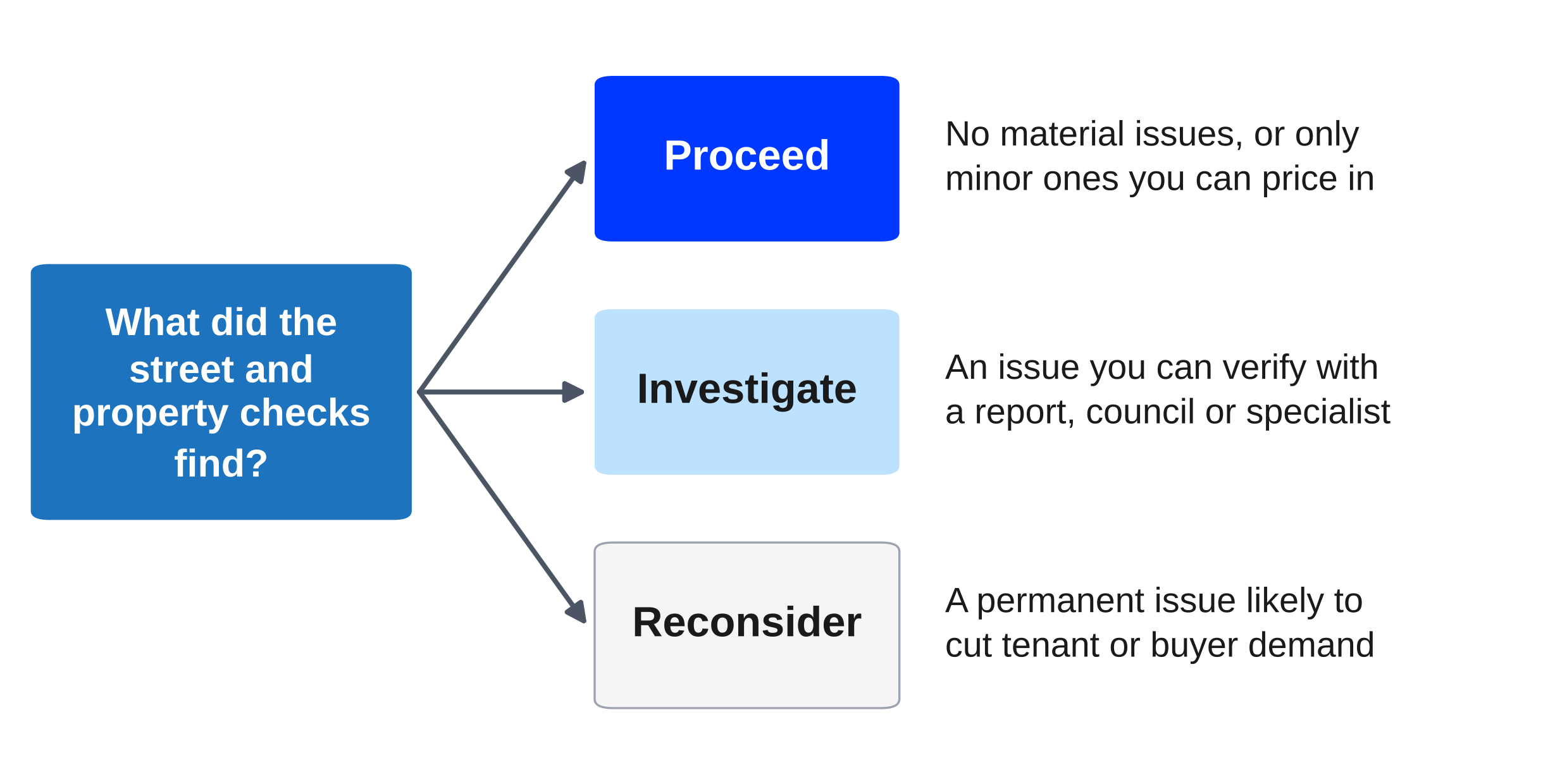
Source: FPW Group analysis, 2026
Falling for the house and ignoring the street is one of several property investment mistakes first-time investors make.
For a second set of eyes on the checklist and the numbers, you can get help choosing an investment property from FPW Group.
Final Thoughts
A property inspection checklist is only as good as the places it looks. The building matters, but the street, the neighbours, the flood map and the council register often decide how the property performs over ten years or more.
Most of these checks cost little and take a few hours. Visit at different times, use council tools and book the right reports before your contract goes unconditional.
Good property investment Australia wide starts at the footpath, not the front door. If the street works for your future tenants and buyers, the house has a much better chance of working for you.

Frequently Asked Questions
Recommended Reading
Two pages selected based on what readers of this article are most likely to need next.
Recommended Video
Australia's record migration surge — peaking at over 528,000 people in a single year — created unprecedented housing demand almost overnight. We explain why the government used population growth as a deliberate tool to avoid recession, how that decision flows directly into property prices Australia-wide, and why rents have surged to record highs as a result.