

Section 32 Explained: What Buyers Should Check Before Signing
A Section 32 is the vendor statement a Victorian seller must give you before you sign a contract to buy their property. It discloses legal facts such as the title, mortgages, easements, covenants, zoning and outgoings, but it does not tell you whether the building is sound or whether the property is a good investment.
That gap matters. A Section 32 property disclosure can quietly limit what you can build, add thousands to your yearly holding costs or contradict what the listing promised, and those details sit in pages most buyers skim.
Whether you plan to invest in Melbourne property or a regional Victorian town, the method is the same. This guide shows what the document reveals, what it leaves out and how to turn each disclosure into an investment decision.
What Is a Section 32?
What the Section 32 Statement Is Designed to Disclose
The name comes from section 32 of the Sale of Land Act 1962, which sets out what a seller must disclose. Its purpose is simple: you should know the legal facts about the land before you commit to buying it.
When Buyers Receive the Section 32
The seller must give you the Section 32 before you sign the contract of sale. Agents usually make it available with the contract, so ask for it early, especially before an auction, where the usual three business day cooling-off period does not apply.
Why the Section 32 Matters to Property Investors
For an owner-occupier, reading the Section 32 before buying property confirms what they are getting. For an investor, it is also the first hard evidence for the numbers, because costs, restrictions and planning controls all feed into rent, value and future options, a point our Australian property investment guide returns to often.
What Information Does a Section 32 Include?
Most Section 32 vendor statements follow the same broad structure. The table below translates each part into what it means for an investor.
Title, Mortgages and Registered Interests
The title search shows who owns the land and any mortgages or other interests registered on it. A seller's mortgage is normal and is usually paid out at settlement.
Easements, Covenants and Restrictions
An easement gives someone else a right over part of the land, often for sewer pipes, drainage or access. A covenant is a private rule, such as allowing only one dwelling, and it can outlast any zoning change.
Zoning and Planning Information
The planning certificate shows the zone and any overlays, such as heritage or flood controls. Zoning tells you what may be allowed, not what council will approve.
Rates, Outgoings and Other Costs
Council rates, water charges and land tax are listed as outgoings. Victorian councils work under a rate cap, but it limits the average rise across a council, so your own bill can still rise faster after a revaluation.
Victorian Council Rate Cap by Financial Year
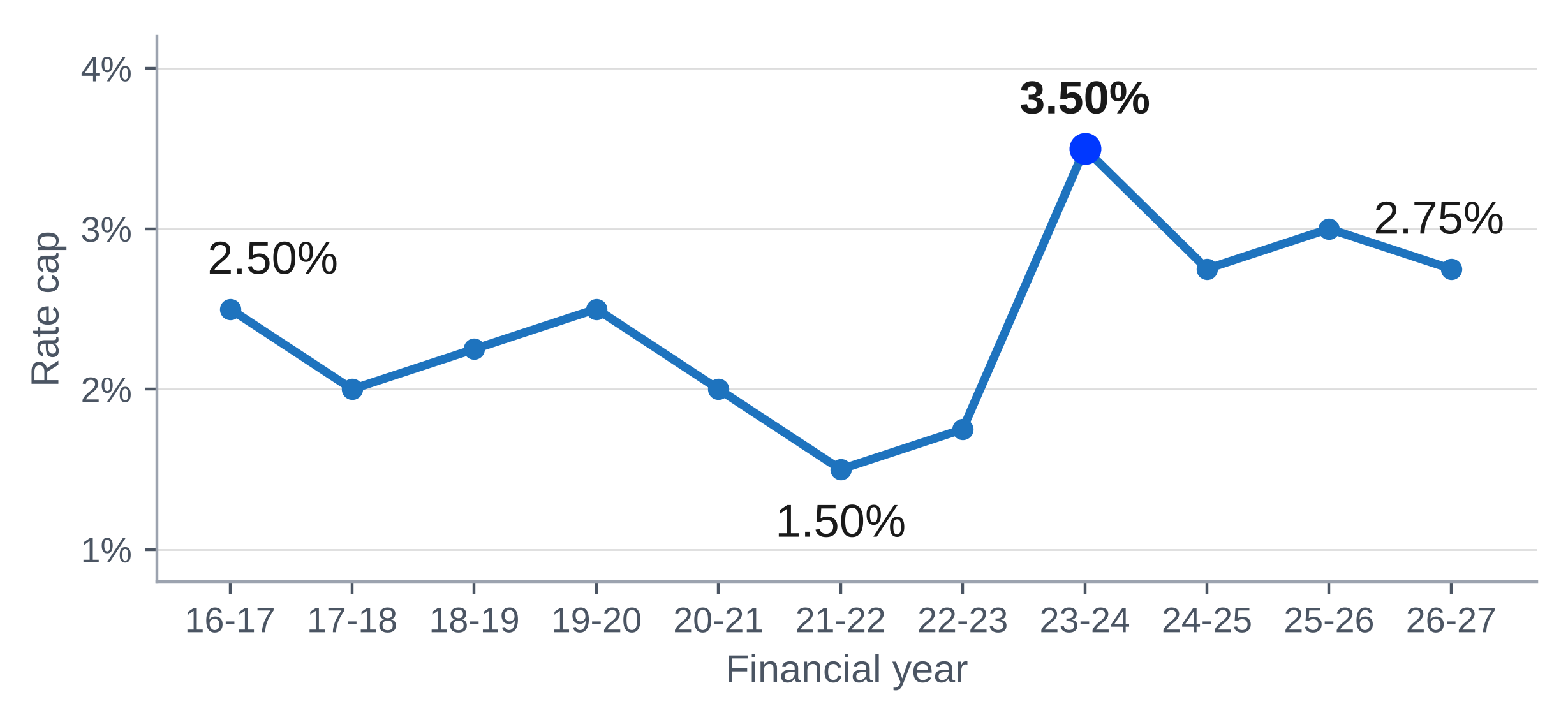
Source: Essential Services Commission, annual council rate caps, 2026
Land tax rules differ across the country, so compare land tax by state if you own property elsewhere.
Owners Corporation Information
For units and townhouses, the statement includes owner’s corporation details such as fees, rules and recent decisions. This matters to a lot of buyers, since one in four Victorians live in developments run by an owners corporation, according to the Victorian Government in June 2025.
If your goal is building long-term wealth through property, read the owners corporation pages as closely as the price.
What Should Buyers Check in a Section 32?
Check the Title Against What Is Being Advertised
Compare the title plan with the listing. If the ad says double garage or large block, the land description should support it.
Look for Easements and Restrictions That Could Affect the Property
Find where each easement sits on the plan. One along the rear fence may not matter for a rental, but it can stop an extension or a second dwelling.
Investigate Zoning Before Assuming Future Potential
Zoning is one of the five drivers of property investment success that buyers often assume rather than check. Treat any development upside as unproven until a town planner or council confirms it.
Check the Costs That Could Affect Your Investment Returns
Add every outgoing to your cash flow model before you set your price. Many lenders also count costs like owners corporation fees when they assess your loan, so they flow through the borrowing capacity formula as well as your returns.
Illustrative Example: How Section 32 Outgoings Reduce Rental Income
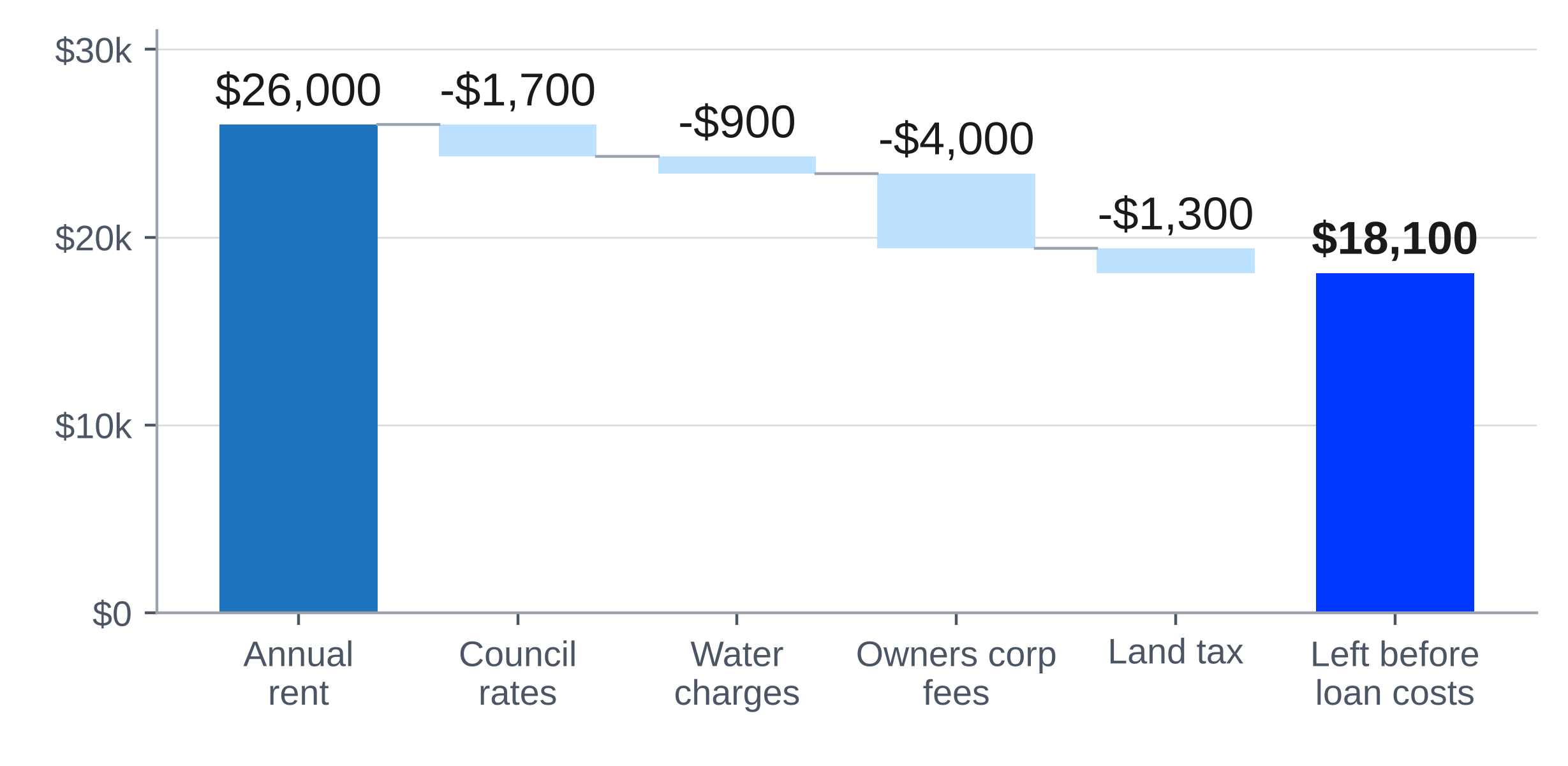
Source: FPW Group illustrative example, 2026. Figures are for illustration only.

Section 32 Red Flags That Deserve Further Investigation
A red flag is a reason to ask questions, not an automatic reason to walk away. Like the wider investment property red flags buyers look for, it depends on your plans.
Missing or Incomplete Information
Look for missing certificates, blank sections or details that do not match each other. Ask your conveyancer what is missing and why.
Easements or Covenants Affecting Future Use
A restriction that does not matter today can block a renovation or subdivision later.
Unexpected Outgoings or Owners Corporation Obligations
Special levies, large repairs or disputes in the owners corporation records can cut your yield for years.
Planning Information That Conflicts With Your Strategy
A heritage overlay or restrictive zone can limit changes you planned to make. Recent building work without a listed permit also needs answers
Information That Appears Inconsistent With the Listing
Compare marketing claims with the documents. Verify rather than assume.
How Common Section 32 Disclosures Rate by Investment Strategy
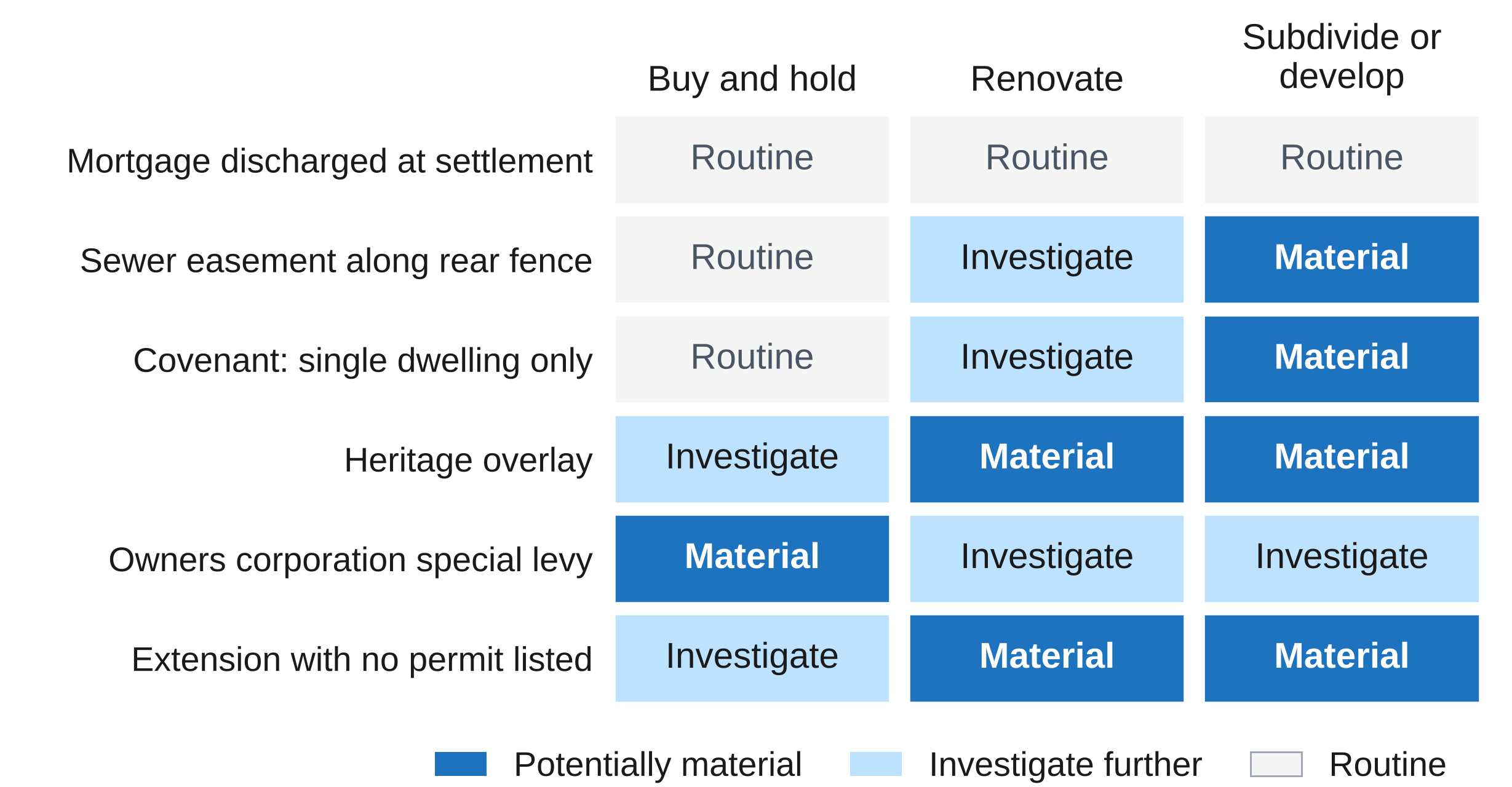
Source: FPW Group analysis, 2026
What a Section 32 Does Not Tell You
A Section 32 can reveal a lot, but it cannot tell you everything. It does not confirm building condition, building compliance or exact measurements.
It Does Not Replace a Building Inspection
Cracking, leaks, termites and poor workmanship will not appear in the document. You need a building and pest inspection for that.
It Does Not Confirm Every Measurement or Physical Feature
The title shows legal boundaries, which may differ from fences on the ground. A surveyor can confirm them.
It Does Not Replace Independent Due Diligence
Council enquiries, planning research and owners corporation records all add to the picture. The Victorian Building Authority suggests apartment buyers request a fresh owners corporation certificate before settlement. Whether you choose a new build or established property, the same checks apply.
Section 32 vs Contract of Sale: What Is the Difference?
The Section 32 tells you about the property. The contract of sale sets the terms of the deal, such as price, deposit, settlement date and any special conditions.
Read both together, ideally with your own conveyancer. Remember that the agent works for the seller, one key difference between a buyer's agent and a real estate agent.
Can You Walk Away If Something Is Wrong With the Section 32?
Why Accuracy and Completeness Matter
The vendor statement is a legal document, and the seller must make it accurate and complete.
When an Issue May Become Legally Significant
If information is incorrect or missing, you may be able to withdraw before settlement. That right is not automatic, and a court may refuse it where the seller acted honestly and you are substantially no worse off.
Why Buyers Should Obtain Professional Advice
Only a conveyancer or property lawyer can tell you whether an error affects your rights. Consumer Affairs Victoria's guide for buyers and sellers also explains cooling-off rules and auction exceptions.
How to Use a Section 32 in Your Property Investment Decision
Understanding how property investment works means treating each disclosure as evidence. Follow the chain below for each item that matters to your plan.
From Section 32 Disclosure to Investment Decision
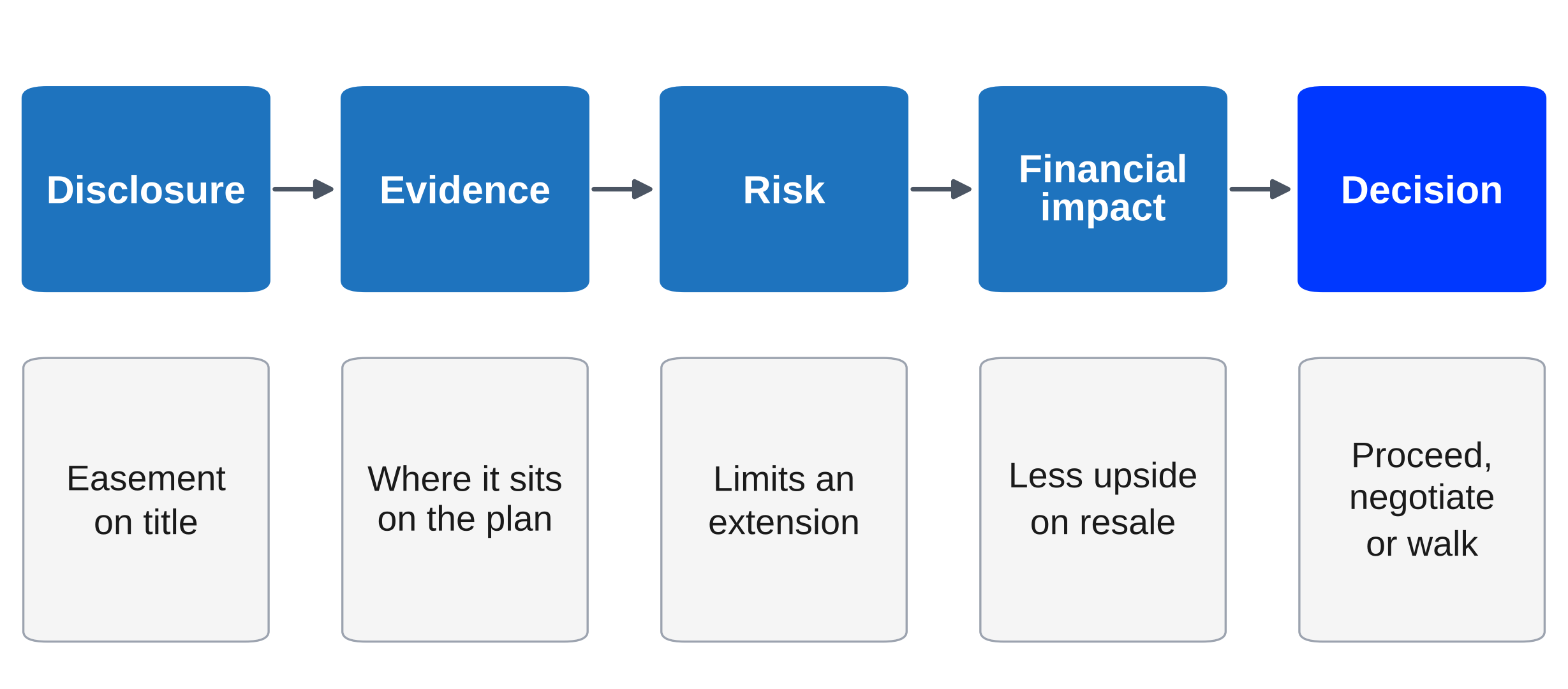
Source: FPW Group analysis, 2026
Start With the Legal and Title Position
Confirm exactly what you are buying, including the land, any shared areas and any rights others hold over it.
Test the Property's Investment Assumptions
Check whether the costs, restrictions and planning controls still support your plan for balancing yield and capital growth.
Identify What Requires Independent Verification
List what the Section 32 cannot confirm, such as physical condition, planning approvals and owners corporation issues, and assign each to a professional.
Decide Whether the Property Still Stacks Up
Re-run your numbers with the real costs and risks included. If the price no longer works, negotiate or walk away, or get help choosing an investment property that fits.
Section 32 Checklist Before You Sign
Title details and land description checked
Mortgages and registered interests reviewed
Easements located on the title plan
Covenants and restrictions read in full
Zoning and overlays checked with council
Outgoings added to your cash flow
Owners corporation fees, minutes and levies reviewed
Building permits checked for recent works
Section 32 compared with the listing
Building and pest inspection booked
Section 32 reviewed by a conveyancer or lawyer
Final Thoughts
A Section 32 does not tell you whether a property is a good investment. It gives you evidence about what you are buying, what risks need more work and whether your assumptions still hold.
Read it early, match every disclosure to your plans and fill the gaps with inspections and professional advice. The same rule applies to property investment Australia wide: decisions built on evidence hold up better than decisions built on a listing.

Frequently Asked Questions
Recommended Reading
Two pages selected based on what readers of this article are most likely to need next.
Recommended Video
Australia's record migration surge — peaking at over 528,000 people in a single year — created unprecedented housing demand almost overnight. We explain why the government used population growth as a deliberate tool to avoid recession, how that decision flows directly into property prices Australia-wide, and why rents have surged to record highs as a result.