

Is Toowoomba a Good Investment? Property Market Trends Investors Should Know
Toowoomba is currently one of the strongest performing regional property markets in Queensland, and for many investors, it still represents genuine value. Median house prices sit around $720,000, up 11.6% over the past year, with some measures putting annual growth as high as 15.8%.
Rental yields of roughly 4.1% comfortably beat Brisbane's metro average, and vacancy has been sitting well under 1%. Major infrastructure spending, from Inland Rail to the Waraba growth corridor, is keeping demand ahead of supply.
That does not make every Toowoomba property a good buy. Several suburbs have already run hard, and entry prices in the tightest pockets are edging toward $1 million. This article breaks down current Toowoomba property market trends, the suburbs worth watching, the risks to weigh up, and whether now is the time to buy or better to wait.
Toowoomba is currently one of the strongest performing regional property markets in Queensland, and for many investors, it still represents genuine value. Median house prices sit around $720,000, up 11.6% over the past year, with some measures putting annual growth as high as 15.8%.
Rental yields of roughly 4.1% comfortably beat Brisbane's metro average, and vacancy has been sitting well under 1%. Major infrastructure spending, from Inland Rail to the Waraba growth corridor, is keeping demand ahead of supply.
That does not make every Toowoomba property a good buy. Several suburbs have already run hard, and entry prices in the tightest pockets are edging toward $1 million. This article breaks down current Toowoomba property market trends, the suburbs worth watching, the risks to weigh up, and whether now is the time to buy or better to wait.
Toowoomba Property Market Overview: Current Conditions and Trends
Recent Toowoomba House Price Growth
In the June quarter of 2025, PRD recorded a Toowoomba median house price of $720,000 and a median unit price of $525,000. That represented annual growth of 11.6% for houses and 14.8% for units, among the strongest results in regional Queensland.
Cotality data tells a similar story, with Toowoomba's median property price rising 15.8% in the year to October 2025, the highest of any regional Queensland market. Days on market fell to a historical low of 19, a sign that stock is being absorbed faster than it is being replaced.
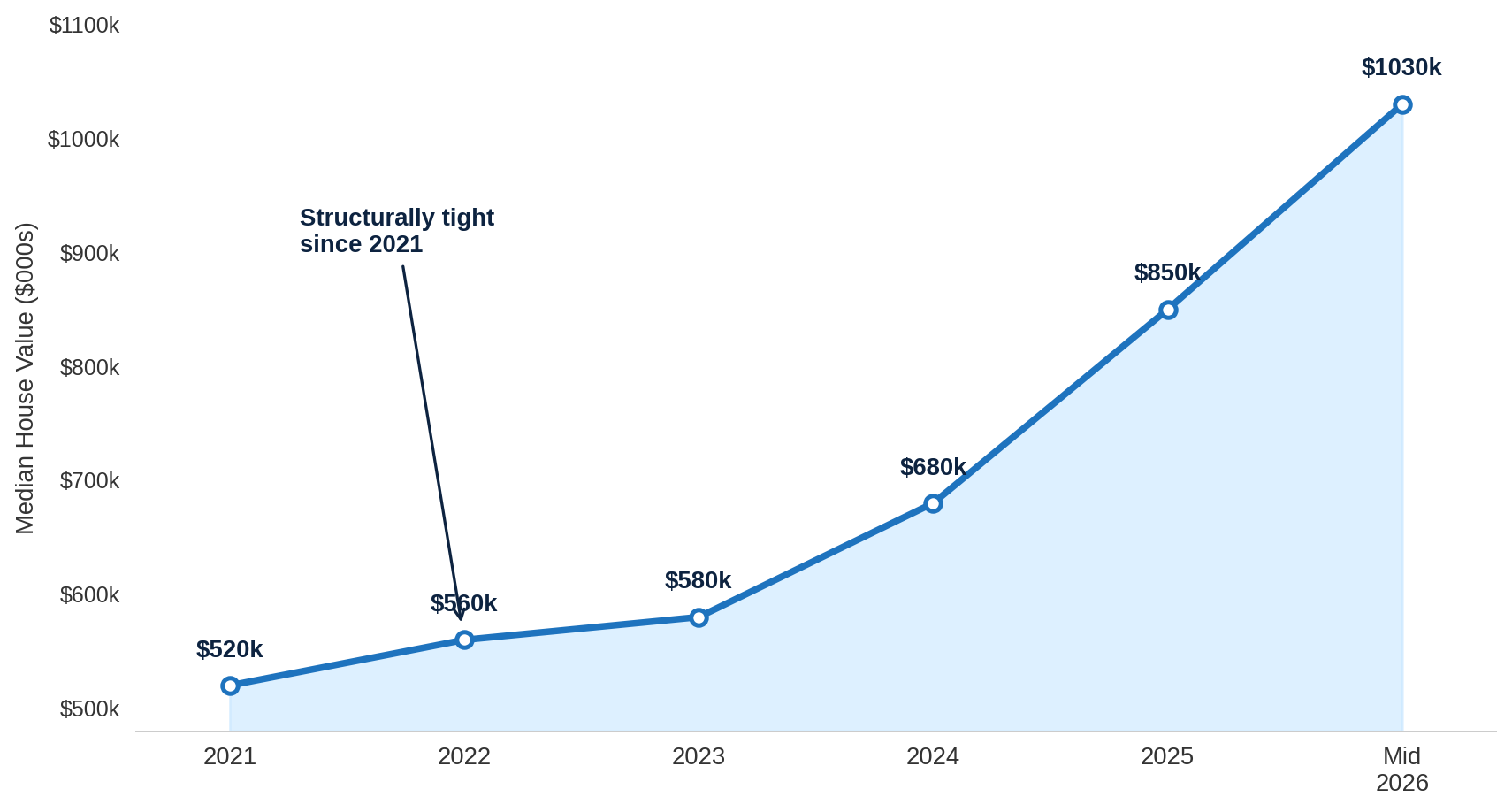
Source: PRD Toowoomba Market Update 2H 2025; InvestorKit Toowoomba Property Market. Figures are indicative.
Toowoomba Rental Market and Investor Demand
House rental yields in Toowoomba were around 4.1% as of June 2025, well ahead of Brisbane Metro's 3.2%. Median house rent climbed 5.8% over the year to $550 a week, even as the number of houses rented fell slightly.
Vacancy is the clearest sign of pressure. Some data providers place the Toowoomba rental market vacancy rate as low as 0.65%, deep into landlord's market territory and well below the 3 to 3.5% considered a balanced market.

Source: PRD Toowoomba Market Update 2H 2025; InvestorKit Toowoomba Property Market, 2025 to 2026. Figures are indicative.
Why Investors Are Watching Toowoomba Property
Population Growth and Economic Expansion
Toowoomba's unemployment rate has fallen steadily, from 7.7% in mid-2020 to 4.1% in December 2024, supported by agriculture, education and healthcare employment. A tighter labour market tends to support both household formation and rental demand.
Population growth is steady rather than explosive, which is part of Toowoomba's appeal. It gives the market a demand base that does not rely purely on speculative buyer interest, like the dynamic seen in other emerging Australian property investment trends.
Infrastructure and Development Driving Future Growth
Inland Rail is the standout project, a multi-billion-dollar freight corridor connecting Melbourne and Brisbane that positions Toowoomba as a key logistics node. The Toowoomba Second Range Crossing, opened in 2019, has already created around 5,000 jobs and is expected to deliver a $2.4 billion economic benefit over 30 years.
Longer term, the Waraba Priority Development Area is planned to house around 65,000 people across 25,000 homes and 17,000 jobs. PRD also reports around $1.8 billion in new projects were set to begin construction in 2025, mostly commercial, which supports local employment even as residential supply stays tight.
Best Toowoomba Suburbs for Property Investment
Established Suburbs with Strong Fundamentals
Toowoomba City and East Toowoomba anchor the established end of the market, with strong access to employment, schools and the CBD. Both have posted double-digit annual growth, though entry prices are now firmly in six figures.

Source: Your Investment Property Magazine suburb data, 2026. Figures are indicative.
Emerging Toowoomba Growth Areas
Highfields and Mount Lofty represent the growth end of the market. Highfields was named on the realestate.com.au Hot 100 list for 2026, with house prices up more than 15% in the past year and around 93% over the past decade.
Mount Lofty has moved even faster, up roughly 24.4% in the past year as buyers compete for its character homes. PropTrack modelling suggests some Toowoomba suburbs, including Highfields, could reach median prices of $1 million or more by 2028.

Source: Your Investment Property Magazine; Precision Property Buyers, 2025 to 2026. Figures are indicative and suburb-level, not LGA averages.
Suburb selection matters more here than the headline LGA numbers suggest. Reading a suburb profile properly and understanding which suburbs show the strongest capital growth signals both help separate genuine opportunity from a suburb that has already run its course.
Toowoomba Property Investment Risks to Consider
Has Toowoomba Already Experienced Its Biggest Growth?
Toowoomba house prices have grown around 66% since 2021, and some suburbs are already within reach of the $1 million mark. That raises a fair question for anyone entering now: how much of the easy growth has already happened, and how much genuinely remains?
The honest answer is that it varies by suburb. Established, well-covered pockets like East Toowoomba likely have less room to re-rate than growth suburbs where the infrastructure case has not yet been fully priced in.
Regional Property Risks Investors Should Understand
Toowoomba's economy leans on agriculture, education and healthcare, a narrower base than a capital city offers. A downturn in any one sector carries more weight here than it would in Brisbane or Sydney.
Regional markets can also be less liquid, with fewer active buyers if conditions turn, and property cycles that move in sharper swings. These are the same mistakes first-time investors tend to overlook in any regional market, not just Toowoomba.
Should You Invest in Toowoomba Now or Wait?
Reasons Investors May Buy Now
Tight vacancy, strong rental yield relative to Brisbane, and a genuine infrastructure pipeline all support the case for buying now, particularly in suburbs that have not yet fully re-rated.
Investors comfortable holding for the medium to long term are generally better placed to ride out any short-term cooling once the current growth phase matures.
Reasons Some Investors May Hold Off
The RBA cash rate sat at 3.85% in February 2026, and borrowing costs remain a real constraint for many buyers. Understanding your own borrowing capacity and debt-to-income position matters as much as picking the right suburb.
Buyers who have not yet stress-tested their position against a higher rate, or who are chasing a suburb purely because it is trending, are usually better served waiting until both the numbers and the location genuinely line up.
Toowoomba's fundamentals are real: tight supply, rising rents and a substantial infrastructure pipeline. Whether it is the right investment for you still comes down to the suburb, the entry price and your own borrowing position, not the headline growth number alone.
Frequently Asked Questions About the Toowoomba Property Market
Recommended Reading
Two pages selected based on what readers of this article are most likely to need next.
Recommended Video
Most investors are still positioned in capital cities — but in 2026, that allocation gap is creating real opportunity cost. In a market where timing, positioning, and yield profiles compound into long-term outcomes, that disconnect matters more than most people realize.