

Best Places to Buy Investment Property in Australia: Regional or Capital City?
Choosing between a regional town and a capital city is now one of the biggest decisions facing anyone looking for the best places to buy investment property in Australia. The two markets are no longer moving in the same direction.
Over the first four months of 2026, combined regional values rose faster than the combined capitals, while Perth pulled away from Sydney and Melbourne by more than twenty percentage points. That gap changes where the smart money is looking.
This guide breaks down where growth, yield and rental demand are strongest right now, and how to match a location to your own investment goals.
What Makes a Location Investment Grade in 2026
Every strong performing suburb in this data shares the same underlying drivers. Population growth outpacing new housing supply, low vacancy, and diverse employment rather than a single industry.
Infrastructure spending that is already funded, not just proposed, matters too. Investors who skip this step and simply chase last year's growth numbers tend to buy at the top of a cycle, not the start of one.
A housing shortage that shows no sign of easing is the backdrop for almost every location covered in this guide, which is why supply constraint deserves more weight than a headline growth figure.
What you can actually spend matters just as much as where you spend it. Your borrowing capacity formula sets the ceiling before location even enters the conversation, and getting that number right first is the foundation of any credible property investment Australia strategy, regardless of which state or region you land on.
Regional vs Capital City: What the 2026 Data Shows
The regional versus capital city debate used to be settled mostly on lifestyle. In 2026 it is increasingly settled on affordability.
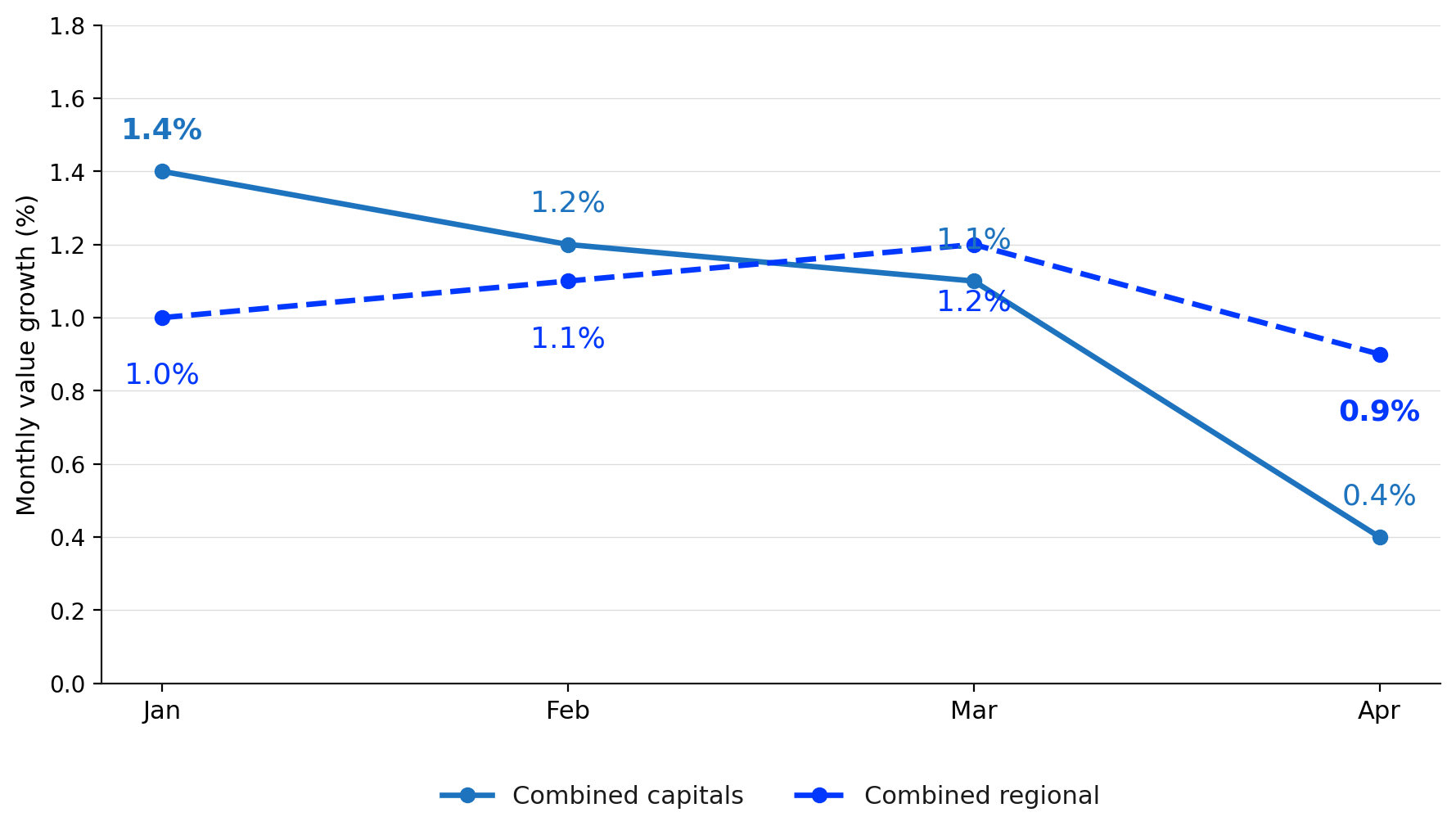
Combined regional dwelling values rose 4.2 percent over the first four months of the year, compared with 1.8 percent across the combined capitals. That gap has been closing since March, as regional momentum eases from its peak and a handful of capital cities regain ground.
Regional vs Capital City Monthly Value Growth, 2026
Source: Cotality, Housing Chart Pack, May 2026
The reason is straightforward. Capital city affordability pressures pushed buyers further out, and that demand lifted regional prices faster than wages or rents could follow.
That dynamic will not run indefinitely. Once a regional market's price gap to the nearest capital narrows too far, the affordability advantage that drew buyers in the first place disappears with it.
Best Capital Cities to Buy Investment Property Right Now
Not every capital city is moving the same way, and the gap between the strongest and weakest is now the widest it has been in years.
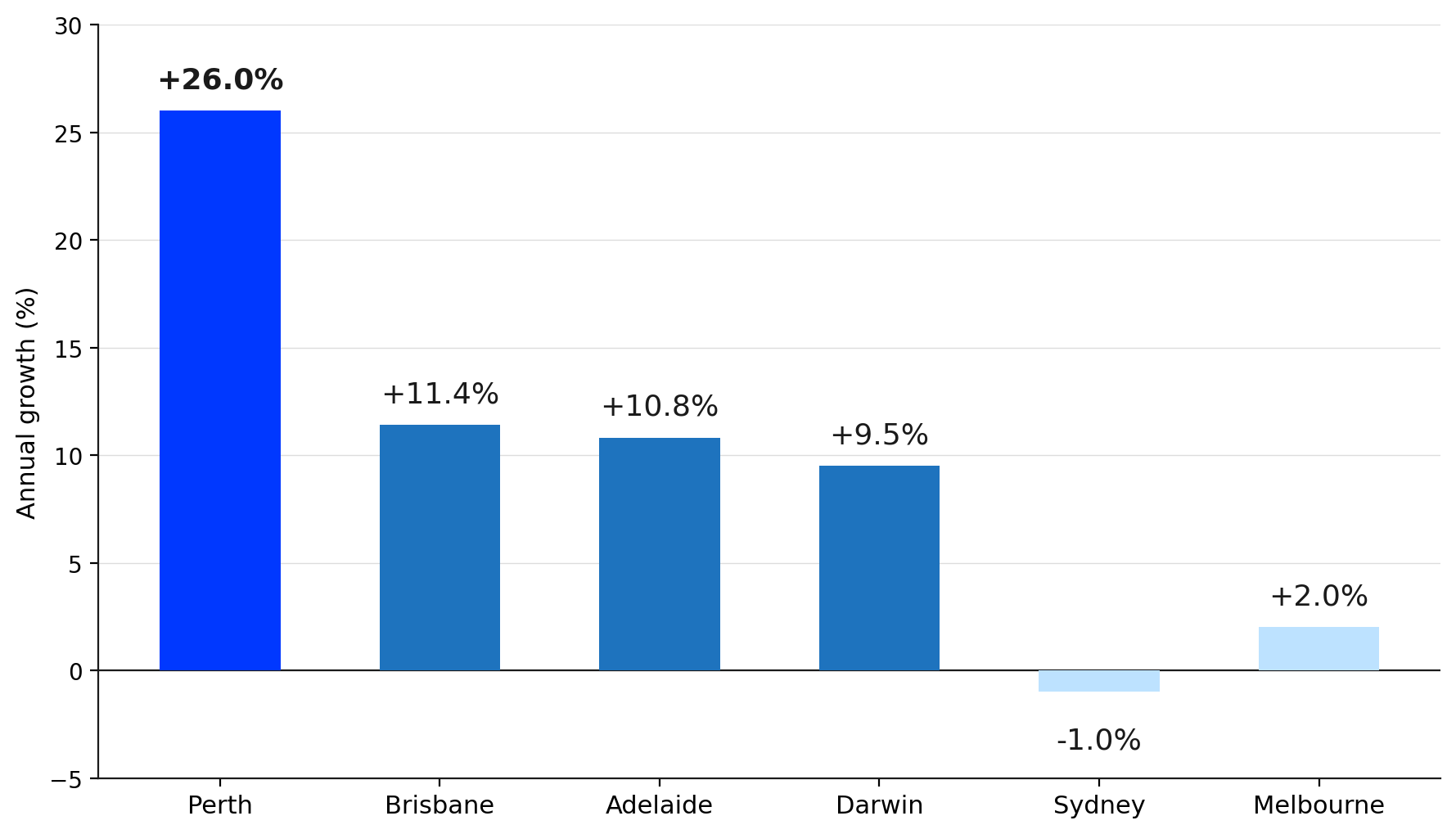
Annual Dwelling Value Growth by Capital City
Source: Cotality, Housing Chart Pack, May 2026
Perth continues to lead on the back of tight vacancy, strong interstate migration and a resources driven jobs market. Brisbane and Adelaide are still posting solid, if more moderate, annual gains, supported by tight rental markets and comparatively lower entry prices than Sydney or Melbourne.
This pattern is covered in more depth in our comparison of property investors in Brisbane, Adelaide and Perth. Sydney and Melbourne, by contrast, are absorbing the impact of higher borrowing costs and rising listings, with Sydney recording a small annual decline and Melbourne barely positive.
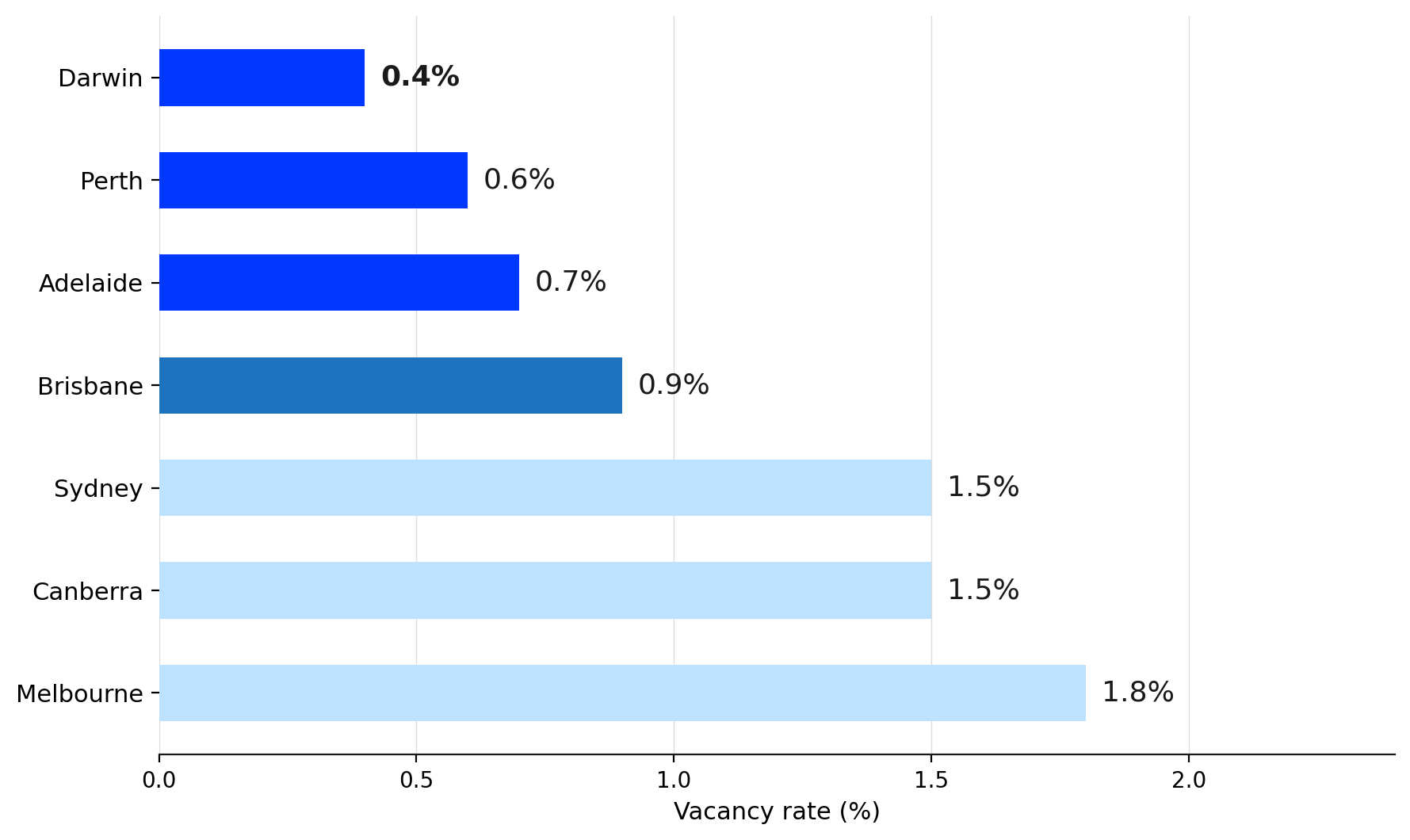
Rental Vacancy Rate by Capital City
Source: SQM Research, National Vacancy Rates, May 2026
That tightness feeds directly into the wider rental crisis Australia is experiencing, which continues to support rents even in cities where price growth has slowed.
FOR EXAMPLE
An investor with a $650,000 deposit and borrowing capacity today can buy a well-located unit in Brisbane's middle ring or a house in an outer Perth growth corridor. The same budget in Sydney or Melbourne typically buys a smaller, less central property with a materially lower rental yield.
Where Regional Markets Are Outperforming Capital Cities
Some of the strongest annual growth in the country right now is not in a capital city at all. It is in the outer ring corridors surrounding Brisbane and inland Queensland.
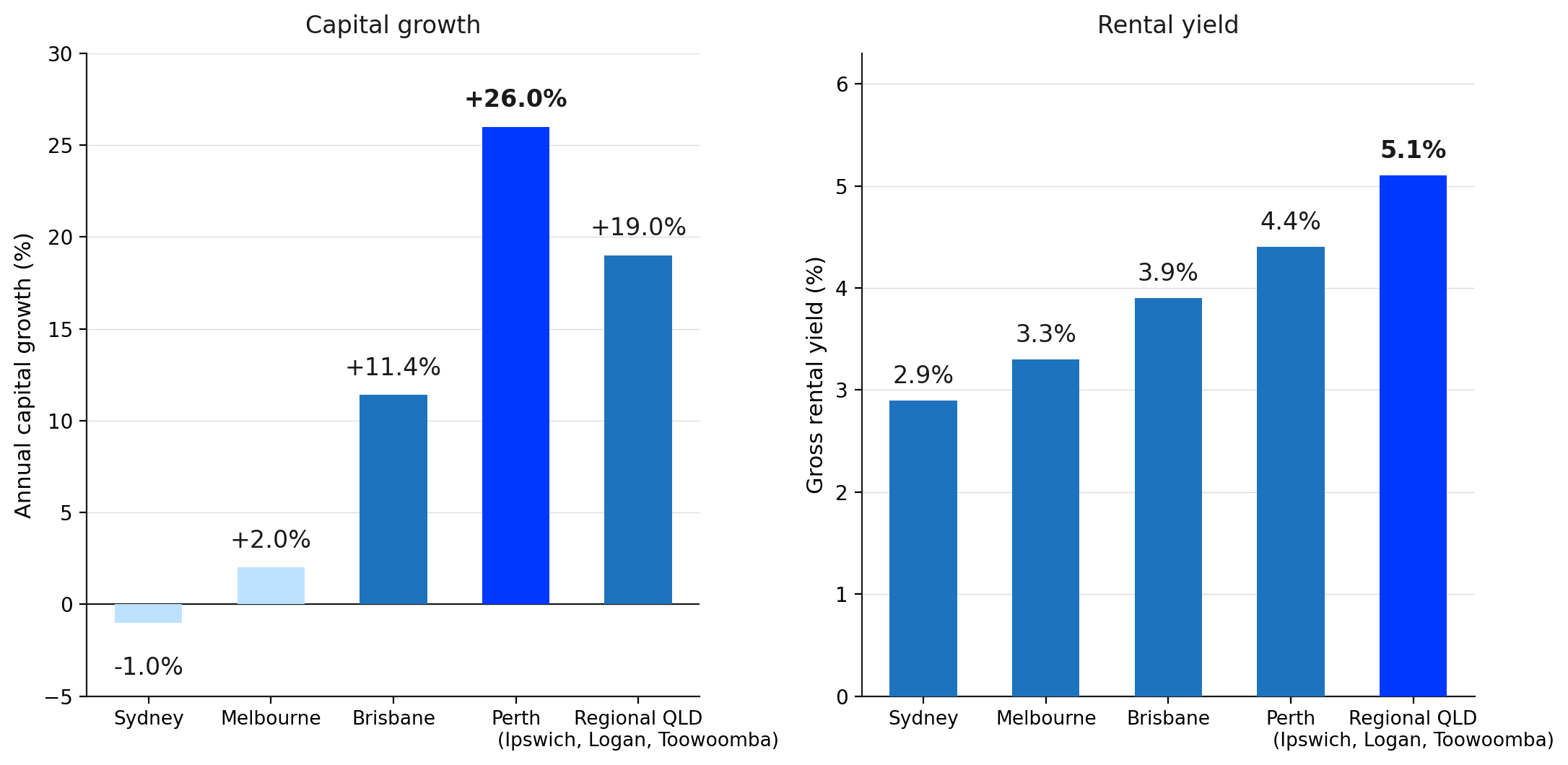
Capital Growth vs Rental Yield: Regional QLD vs the Capitals
Source: Cotality, Regional Market Update, February 2026
Ipswich, Logan and Toowoomba are each recording annual growth above eighteen percent, driven by buyers priced out of Brisbane's own median and looking further afield for value. These are not small, thin markets either.
Each has a genuine employment base, established infrastructure and direct access to Brisbane's economy. The trade-off is liquidity and volatility.
Regional markets can move faster in both directions, and a location built around a single industry carries more risk than a diversified capital city. Working through how to choose investment grade suburbs across Australia is the difference between catching a genuine growth corridor and buying into one that has already run its course.
Matching the Location to Your Investment Strategy
The right answer depends on what you are optimising for. Growth focused investors with strong serviceability can lean into Perth or a well selected Brisbane suburb, accepting a lower yield in exchange for stronger capital appreciation.
Yield focused investors, often those closer to their borrowing ceiling, tend to do better in regional corridors or Adelaide, where rental income covers a larger share of holding costs.
Weighing yield versus growth in a balanced property portfolio across Australia tends to hold up better through a full market cycle than betting everything on one location type.
First time investors should weigh yield and vacancy more heavily than headline growth, a lesson many of the growing number of accidental investors across Australia learn only after settlement.
A property that is easy to keep tenanted is easier to hold through a rate cycle than one that simply looked good on a growth chart twelve months ago. From here, an investment property purchase should be assessed against your own borrowing position, not just the market's.
Final Thoughts
There is no single best place to buy investment property in Australia right now. There is only the best place for your strategy, budget and borrowing position.
Perth and the Brisbane corridor are rewarding growth focused investors prepared to accept lower yields. Adelaide and regional Queensland are rewarding investors who want rental income to do more of the work.
Sydney and Melbourne remain viable for long term holders with strong serviceability, but the short term numbers favour patience there. Avoiding the common property investment mistakes first time investors make starts with matching the location to the strategy, not the other way around.
Whatever you choose, the fundamentals matter more than the headline growth figure: vacancy, population growth and genuine employment diversity. Get those right and the location decision becomes far less risky than it looks from the outside.
Frequently Asked Questions
Recommended Reading
Two pages selected based on what readers of this article are most likely to need next.
Recommended Video
Most investors are still positioned in capital cities — but in 2026, that allocation gap is creating real opportunity cost. In a market where timing, positioning, and yield profiles compound into long-term outcomes, that disconnect matters more than most people realize.