

Perth Property Market Predictions 2026: Are Prices Still Rising or Slowing Down?
Perth's growth run is not over, but it is entering a slower, more selective phase heading into the rest of 2026. Prices are still rising across most of the city, yet the pace behind that headline number now depends heavily on which suburb, which property type, and which buyer you are.
The market has been structurally tight since 2021, and that has not fully reversed. What has changed is how evenly that tightness is spread, and that unevenness is exactly what separates this year's winners from the properties about to stall.
This guide sets out where prices are actually heading under three different scenarios, which suburbs are positioned to outperform, and what the risks are that could slow things down faster than most forecasts admit.
Perth Property Market at a Glance
Perth's median house value has almost doubled since 2021, climbing from roughly $520,000 to approximately $1,030,000 by mid-2026. Unit values have followed a similar trajectory but from a lower base, and both segments have been driven by the same underlying force: a rental market that never returned to balance after the pandemic.
House price growth has consistently outpaced unit growth in dollar terms, though units have posted stronger percentage gains from their lower starting point. Rental market trends have mirrored the sales market closely, with vacancy tightening steadily through 2022 and 2023 before settling near current levels through 2024, 2025, and into 2026.
Vacancy has sat near or below 1% for most of the past three years, and that scarcity has flowed directly into price growth. For a longer view of how this compares with other capitals, see FPW's coverage of Perth property investment and current Perth real estate conditions.
Perth Median House Price Growth 2021 to 2026
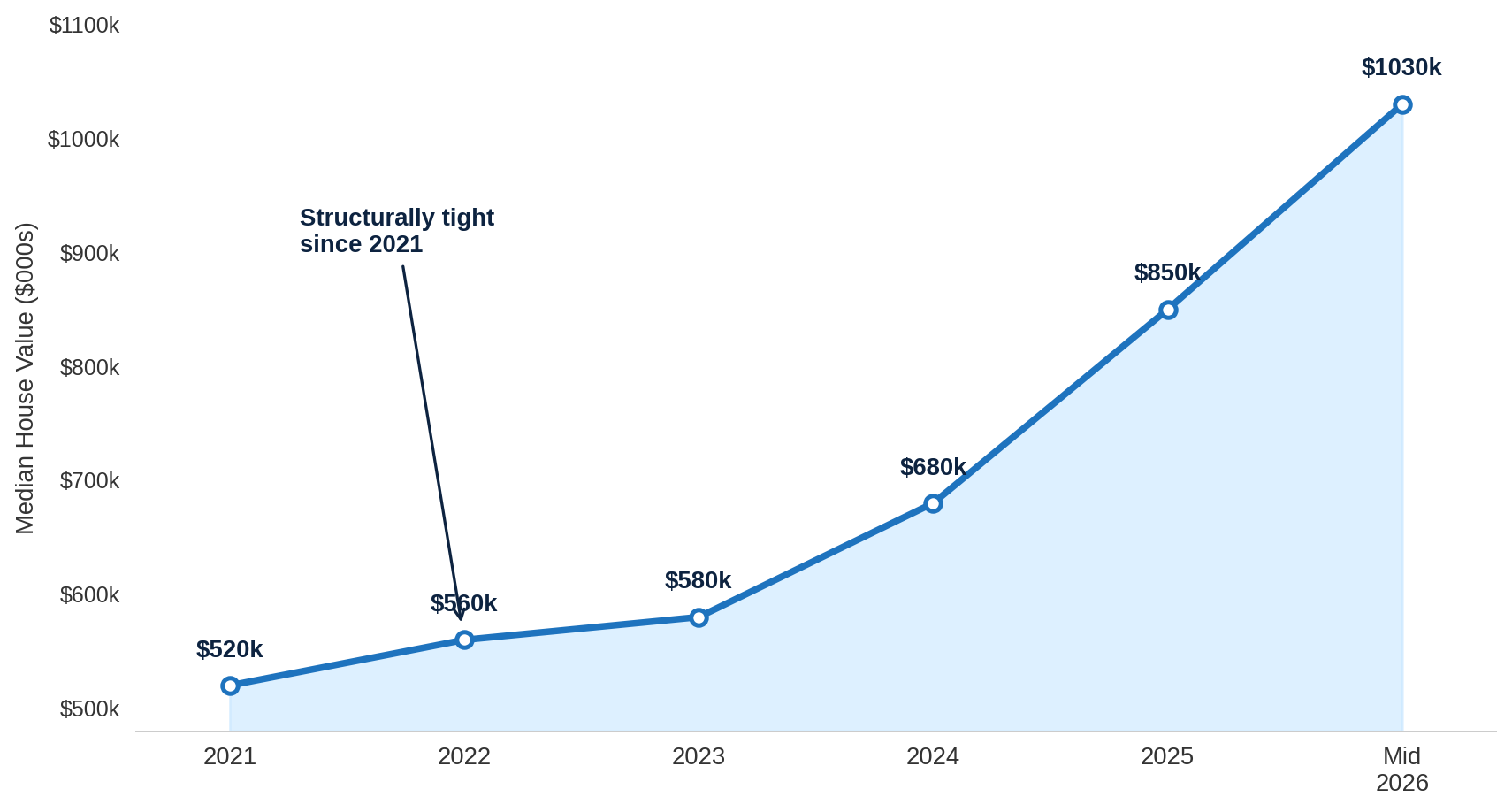
Source: CoreLogic Home Value Index, REIWA market data, 2026. Figures are indicative.
What's Driving the Perth Property Market in 2026
Population growth remains the single biggest driver. Western Australia's interstate and overseas migration intake has stayed elevated well after the rest of the country's population growth began to ease, and that gap alone explains much of Perth's outperformance since 2022.
Housing supply has not kept pace, and this housing shortage is structural rather than cyclical. Approvals and completions across Perth have lagged population growth for several consecutive years, and the construction sector has struggled with the same labour and material cost pressures affecting the eastern states.
Interest rates cut both ways this year. Any further easing would likely reignite buyer competition, while a hold or hike would test affordability in a market where prices have already climbed sharply. Understanding your own borrowing capacity matters more in a market moving this fast than in a slower one, since pre-approval can expire before the right property appears.
Employment growth tied to resources and infrastructure spending continues to underpin demand, and several major infrastructure projects due for completion in 2026 and 2027 are already shaping buyer interest in specific corridors. Migration into Western Australia from other states has also picked up as buyers priced out of Sydney and Melbourne look west for value.
Perth House Price Predictions for 2026
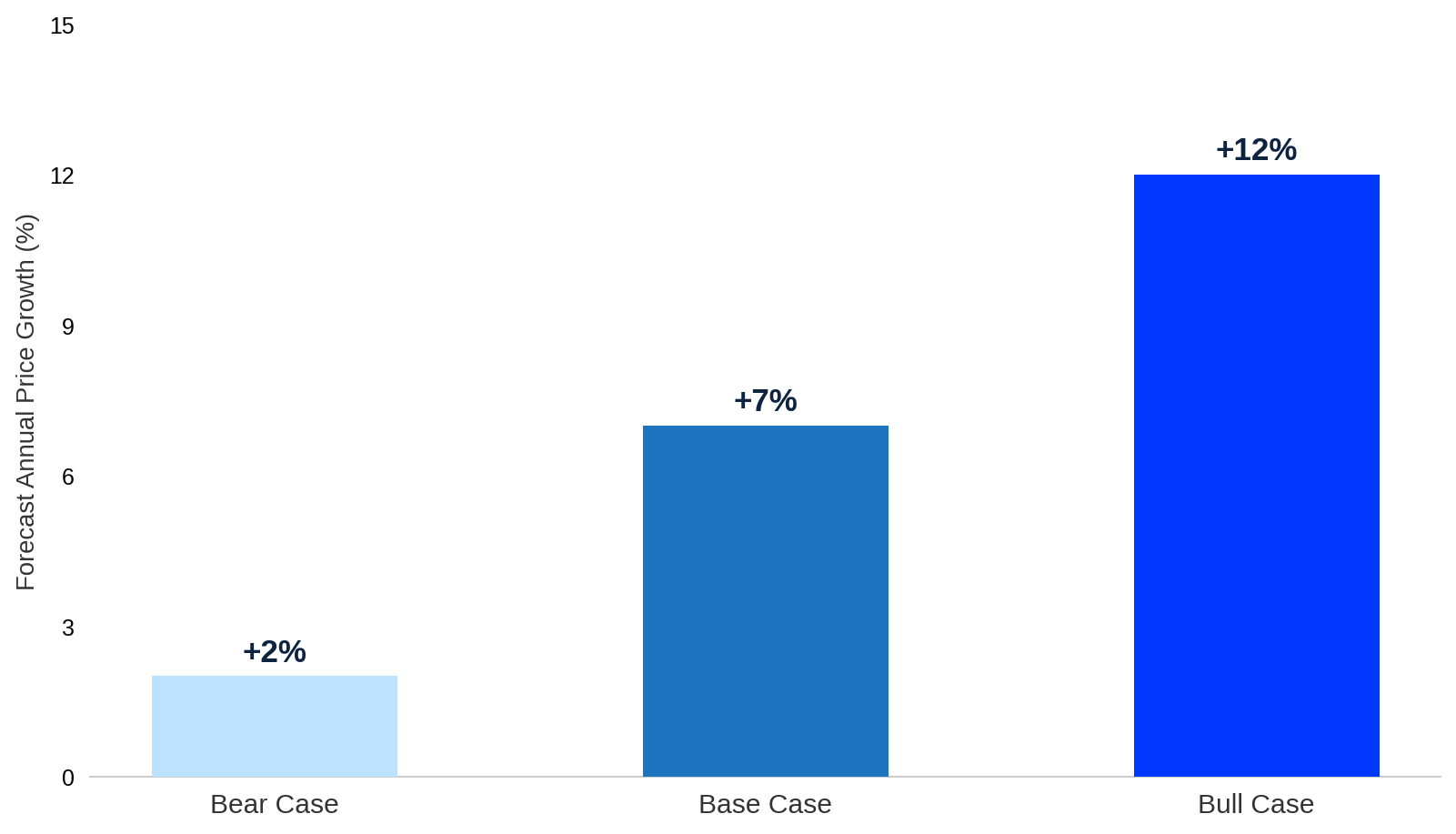
Three scenarios are worth modelling rather than a single number. The base case assumes population growth and vacancy stay close to current levels, producing around 7% annual growth for the remainder of 2026.
The bull case assumes a rate cut plus continued supply lag, pushing growth toward 12%. The bear case assumes a supply response combined with affordability pressure, slowing growth to around 2%.
Source: FPW Group modelled assessment, informed by PropTrack and CoreLogic forecasting data, 2026. Figures are indicative.
Perth House Price Predictions 2026: Bull, Base and Bear Case
The gap between the bear and bull case is wide, six times the growth rate, which tells you Perth's forecast is genuinely sensitive to just one or two variables rather than locked in either direction.
Most independent forecasters converge closer to the base case than either extreme, which is consistent with a market that is tight but not accelerating the way it was in 2023 and 2024.
Perth Rental Market Forecast 2026
Rental demand remains strong across almost every price point. Vacancy sits near 0.7%, well below the 3 to 3.5% level that defines a balanced rental market, and it has held there for an extended period rather than spiking briefly.
Rental demand has been reinforced by the same population growth driving the sales market, and by tenants who would prefer to buy but cannot yet compete at current price levels. That combination keeps upward pressure on rents even when sales activity slows.
Perth Rental Vacancy Rate vs Gross Rental Yield 2026
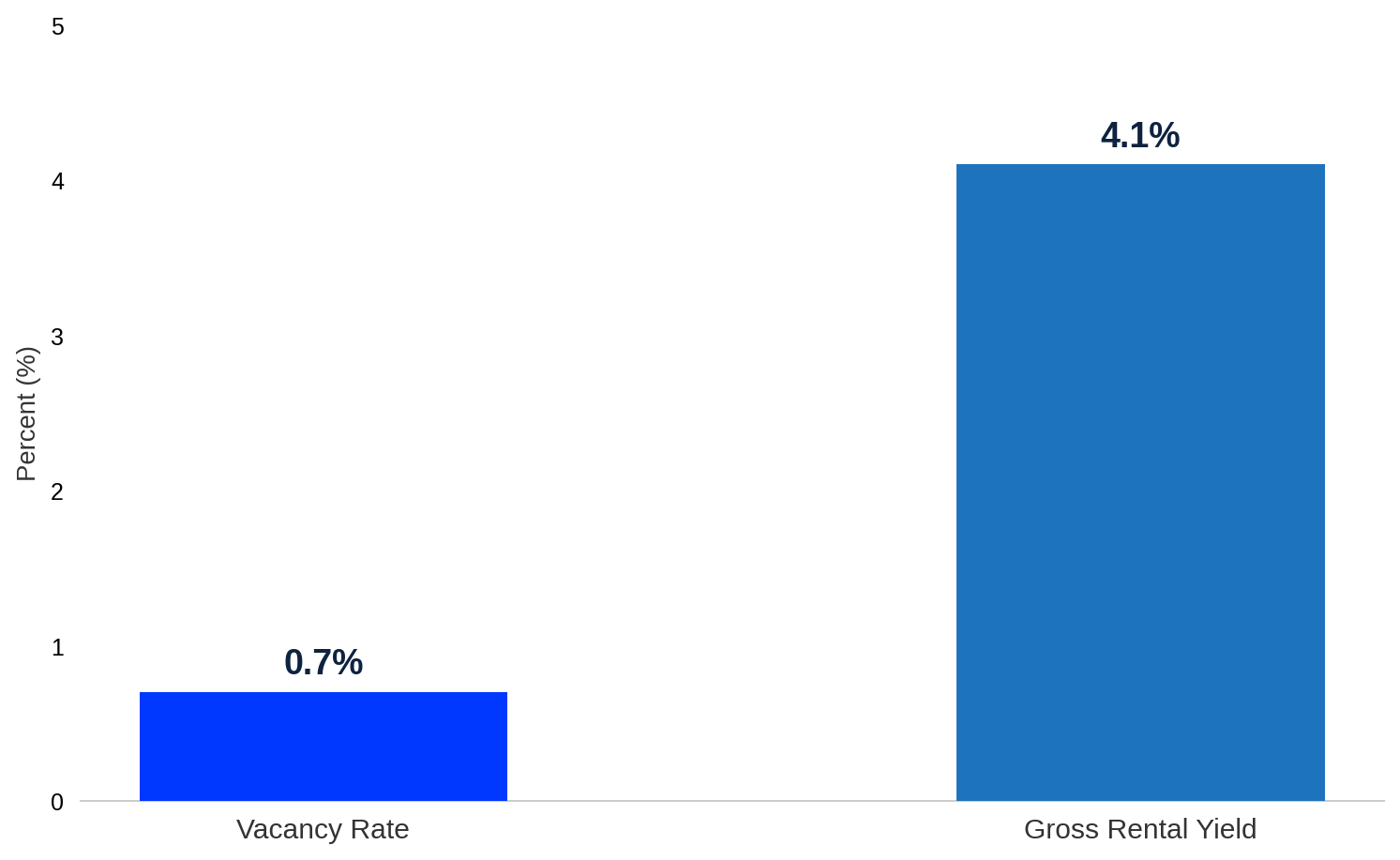
Source: REIWA rental data, SQM Research vacancy figures, 2026. Figures are indicative.
Investor returns benefit from this balance directly. Few other capital cities currently combine strong capital growth with a yield this workable for holding costs, and that combination is a large part of why interstate investor interest in Perth has stayed elevated through 2026.
Best Perth Suburbs to Watch in 2026
Suburb selection matters more in 2026 than in the earlier stages of this cycle, because the easy, broad-based gains have largely already happened.
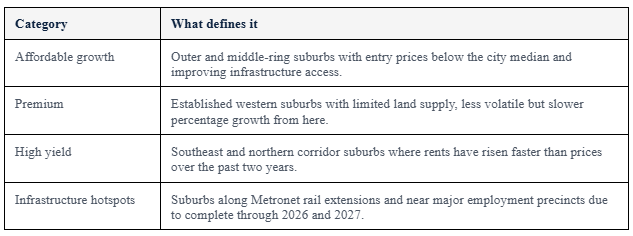
For a structured approach to narrowing this down, see how to choose investment grade suburbs rather than relying on suburb name recognition alone.
FOR EXAMPLE
Two suburbs 12 kilometres apart can post the same 8% annual growth figure for very different reasons. One is catching up after years of underperformance, the other is riding a genuine infrastructure catalyst. Only one of those is likely to keep outperforming past 2026.
Risks That Could Slow the Perth Property Market
Interest rate increases remain the most immediate risk. Perth's affordability buffer has narrowed considerably since 2021, and further rate rises would test borrowing capacity for buyers who stretched to enter the market this year, particularly those who bought at the top of their approved limit.
A genuine supply recovery is the second risk, and the least predictable. Approvals have started to lift in some corridors, and if completions follow through over the next 18 months, the scarcity that has driven growth would ease and rental pressure would soften with it.
Mining sector volatility remains a structural feature of the WA economy, and a downturn in resources employment would flow directly into housing demand across the outer and northern suburbs most tied to that sector. Government policy changes, including any shift to negative gearing or land tax settings, round out the list of risks worth watching.
Should You Buy Property in Perth in 2026?
First-home buyers face a market that has already run hard, but entry-level suburbs still offer more accessible price points than Sydney or Melbourne equivalents, and government incentives for first buyers remain more workable at Perth's price levels.
Investors are generally better positioned than buyers chasing a home to live in, since Perth's yield profile allows for a more comfortable holding cost than most other capitals right now, reducing the pressure to sell early if personal circumstances change.
Interstate buyers should weigh entry price against unfamiliarity with local suburb dynamics, since a suburb that looks cheap on paper may carry risks a local buyer would recognise immediately. Long-term wealth builders should focus on the supply-constrained corridors rather than the suburbs that already had their run, since the next phase of growth is likely to be far more selective than the last.
Whatever your position, it is worth checking your numbers properly before committing capital to a market moving this quickly. A buyer's agent can also help separate genuine opportunity from a suburb that simply looks good on paper.
Perth vs Other Australian Property Markets
Perth currently leads the base case growth forecast among the five mainland capitals, ahead of Brisbane, Adelaide, Sydney, and Melbourne. That ranking reflects tighter vacancy and stronger population growth relative to existing housing stock than any other capital city is currently recording.
Perth vs Other Capital Cities: Forecast 2026 Growth
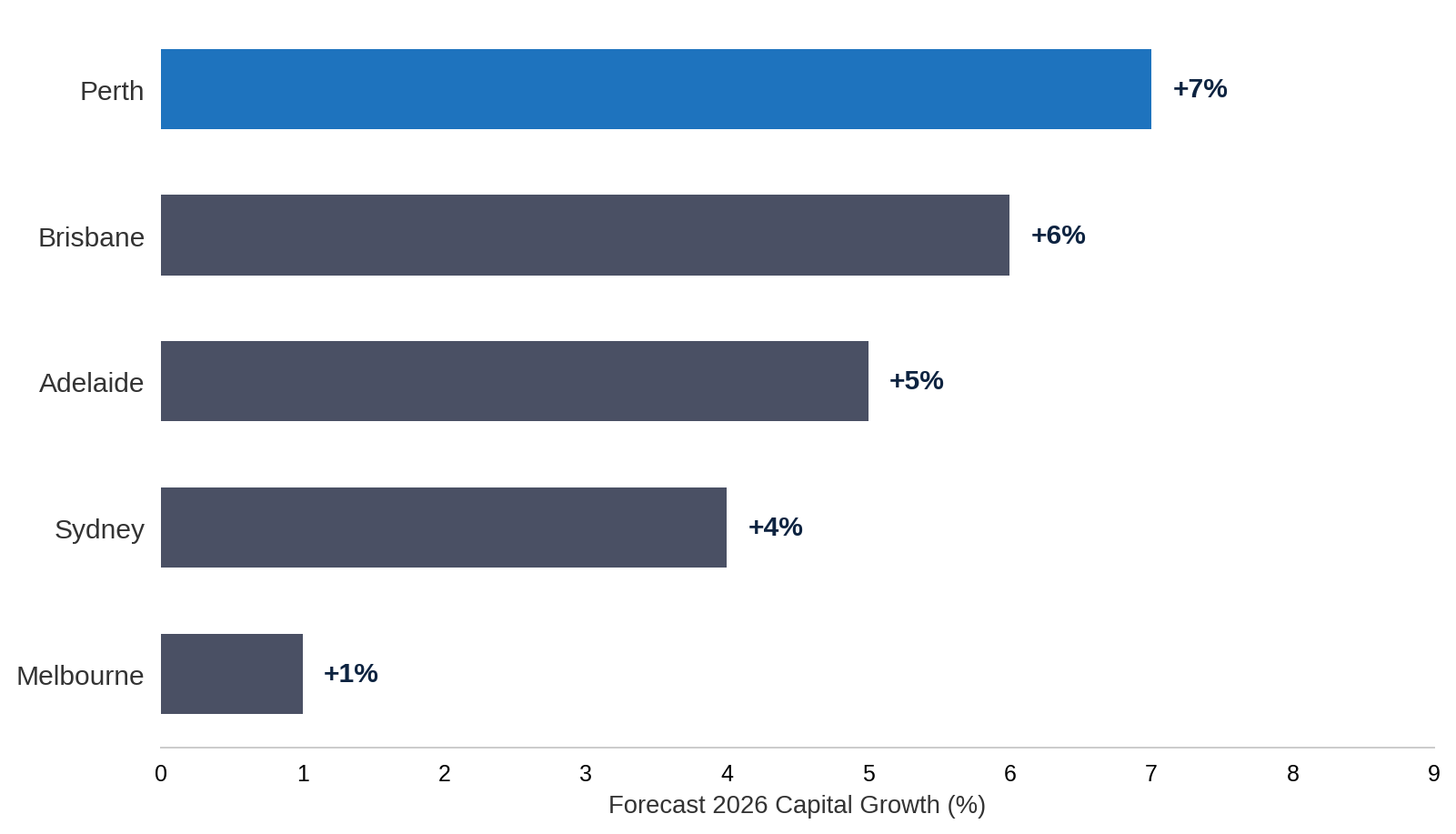
Source: FPW Group modelled assessment, based on CoreLogic and PropTrack data, 2026. Figures are indicative.
Melbourne's forecast sits well below the other capitals, a direct consequence of higher vacancy and softer rent growth easing price pressure. Perth and Brisbane remain the two strongest structural cases nationally, though they are being driven by different combinations of population growth, infrastructure spending, and supply constraints.
A closer city by city Brisbane versus Perth rental yield comparison, and broader coverage of Brisbane, Adelaide and Perth investing, is useful if you are weighing Perth against another growth market rather than deciding in isolation.
Final Thoughts
Perth's growth story has not ended, but it has matured. The base case still points to solid, above-average growth for the rest of 2026, while the spread between the bull and bear scenarios shows how much depends on interest rates and supply.
Suburb selection now matters more than market timing. The suburbs still offering genuine upside are not always the ones already making headlines, and getting that selection right is worth more than trying to time the cycle perfectly, especially this late into a run that has already reshaped the city's price base.
Frequently Asked Questions
Recommended Reading
Two pages selected based on what readers of this article are most likely to need next.
Recommended Video
Most investors are still positioned in capital cities — but in 2026, that allocation gap is creating real opportunity cost. In a market where timing, positioning, and yield profiles compound into long-term outcomes, that disconnect matters more than most people realize.