

What Salary Do You Need to Buy an Investment Property?

There is no fixed salary that qualifies you for an investment property loan in Australia. Lenders test your income against their own serviceability rules, and a $100,000 salary can produce very different results depending on your debts, expenses and rental income.
Two applicants on the same salary can end up with borrowing capacities tens of thousands of dollars apart, and the gap rarely comes down to income on its own. Understanding the borrowing capacity formula banks actually use matters more than chasing a single salary number, because that formula is what turns your income into an actual loan limit.
This article walks through how salary interacts with debt, rental income and everyday living costs to set your real borrowing position, using worked examples rather than guesswork.
How Much Salary Do You Need for an Investment Property Loan?
No official minimum salary exists for an investment property loan in Australia. Lenders do not publish a salary floor because approval depends on the full picture: income, debt, expenses, credit history, deposit and the property itself.
Why Two People Earning the Same Salary Get Different Results
Two people earning $100,000 can receive very different loan offers from the same lender. One might have no other debt and modest living expenses. The other might be repaying a car loan, carrying a $20,000 credit card limit, or supporting dependants, and each of those chips away at what a lender will approve.
How Your Salary Affects Investment Property Borrowing Capacity
Gross Income Versus Assessed Income
Lenders rarely use your full gross salary. Bonuses, overtime and irregular income are often only partly counted, sometimes at 80% or less, unless you can show a consistent history of receiving them.
Why the APRA Serviceability Buffer Changes the Equation
Every APRA-regulated lender must test your ability to repay at your actual interest rate plus a buffer of three percentage points, a standard set by the Australian Prudential Regulation Authority and unchanged since October 2021. That means a loan advertised at 6.3% is tested as though you were paying close to 9.3%.
Existing Debts and Living Expenses
Living expenses are assessed against a standard benchmark, not just what you say you spend. Existing commitments matter just as much: personal loans and credit card limits reduce your assessed capacity even if you rarely use them, because lenders count the full limit as a potential liability, not your current balance.
This sits at the centre of what FPW calls borrowing capacity, the ceiling every investment purchase eventually runs into, regardless of how strong the property itself looks.
What Reduces Investment Property Borrowing Capacity
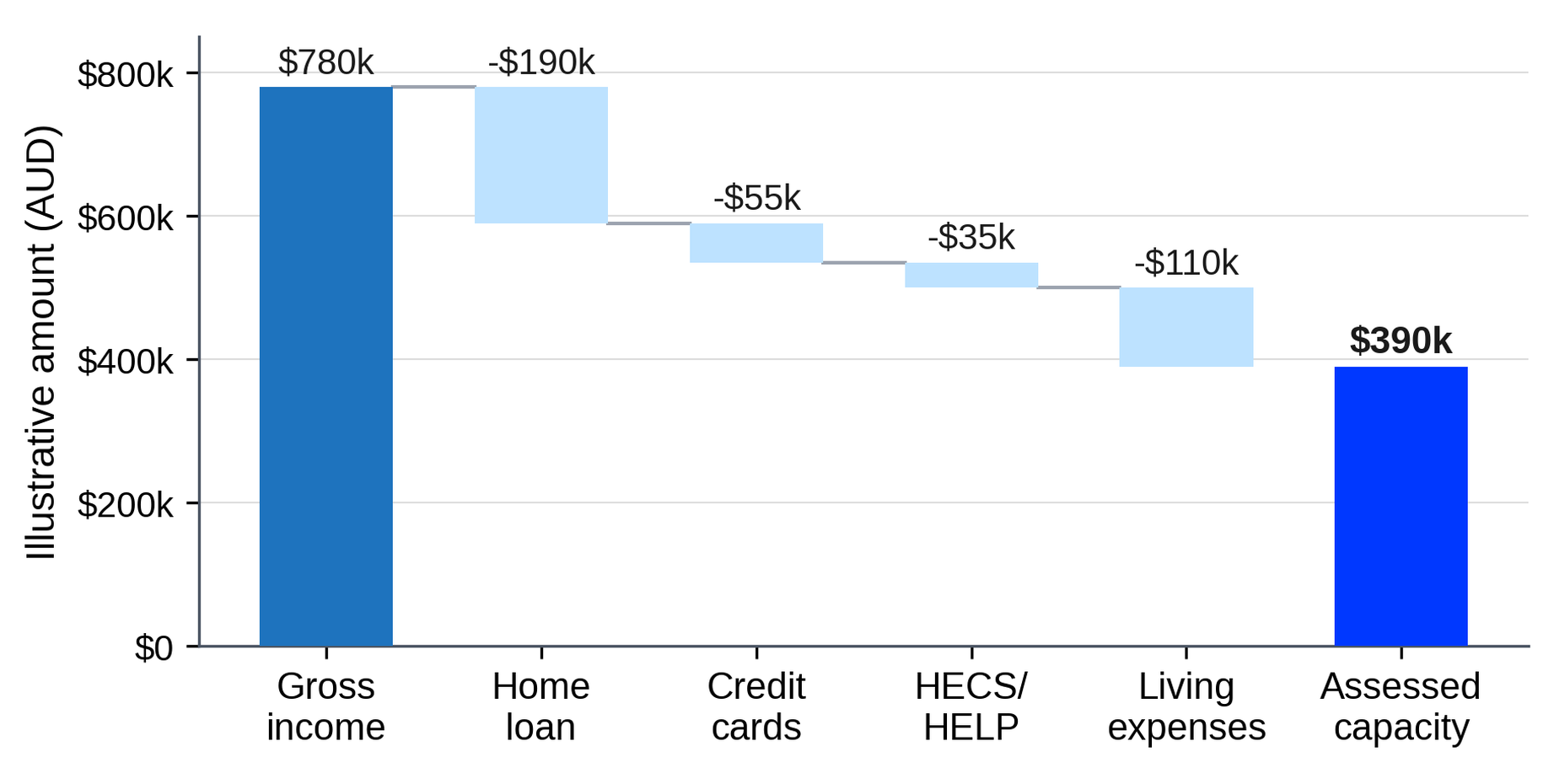
Source: FPW Group illustrative modelling, based on APRA serviceability standards, 2026
Can You Buy an Investment Property on a $100,000 Salary?
Yes, a $100,000 salary can support an investment property loan, but the amount you are approved for depends heavily on what else is happening in your finances at the time you apply.

Illustrative Borrowing Capacity by Salary and Existing Debt
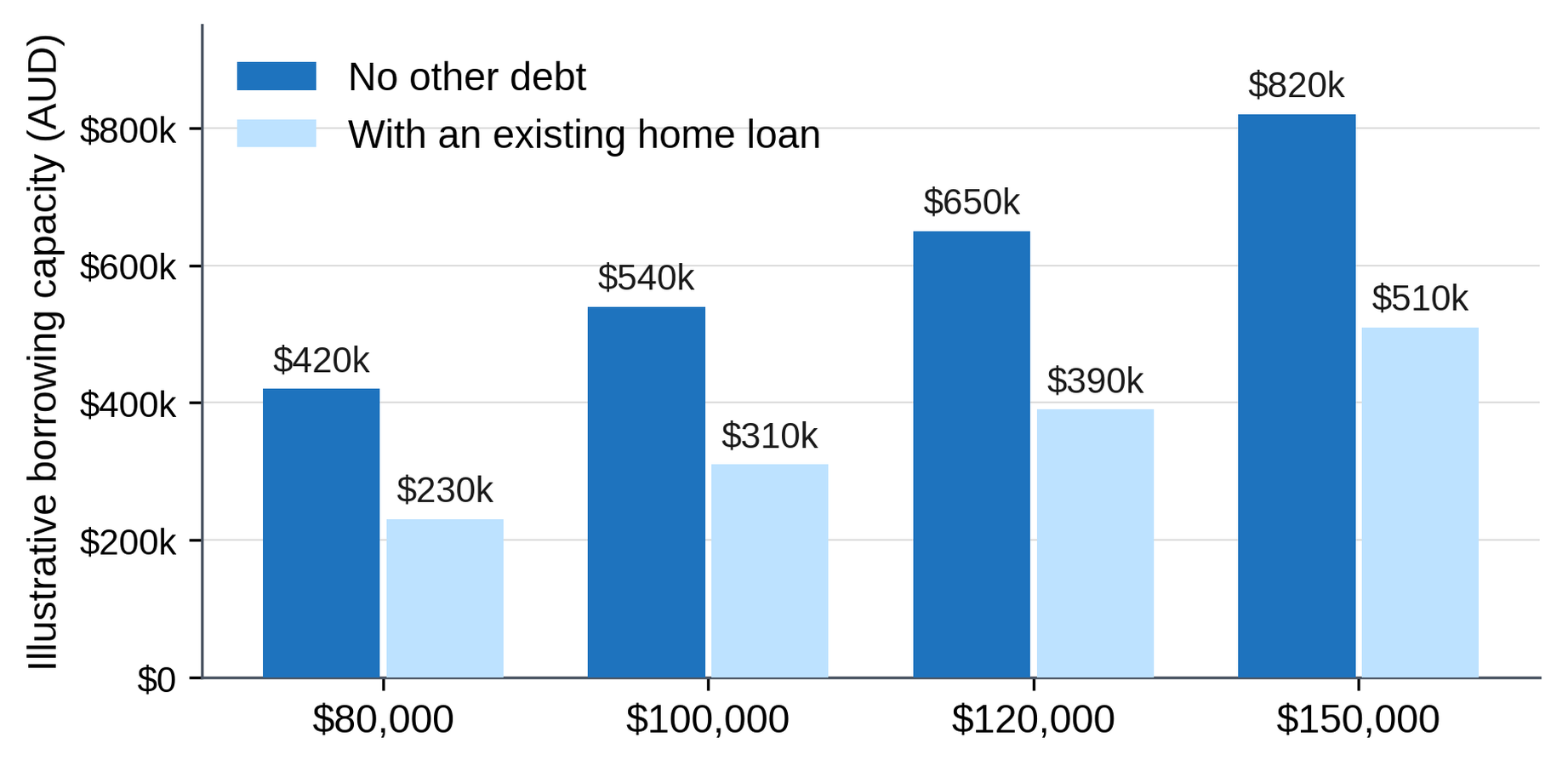
Source: FPW Group illustrative modelling, based on APRA serviceability standards, 2026
Employment type matters too. If your income is not a standard salaried wage, for example if you are self-employed or work as a casual employee, lenders assess your serviceability differently and often need a longer income history before they will rely on it in full.
A deeper look at how lenders assess borrowing capacity and run mortgage stress testing shows why the same salary can pass comfortably with one lender and fall short with another.

Does Rental Income Increase Your Investment Property Borrowing Capacity?
Yes, rental income can increase your borrowing capacity, but never by the full amount sitting in a listing or a rental appraisal. Most lenders apply shading and only count 70% to 90% of the expected rent, to leave a margin for vacancies and maintenance.
How Rental Income Shading Affects Your Assessed Income
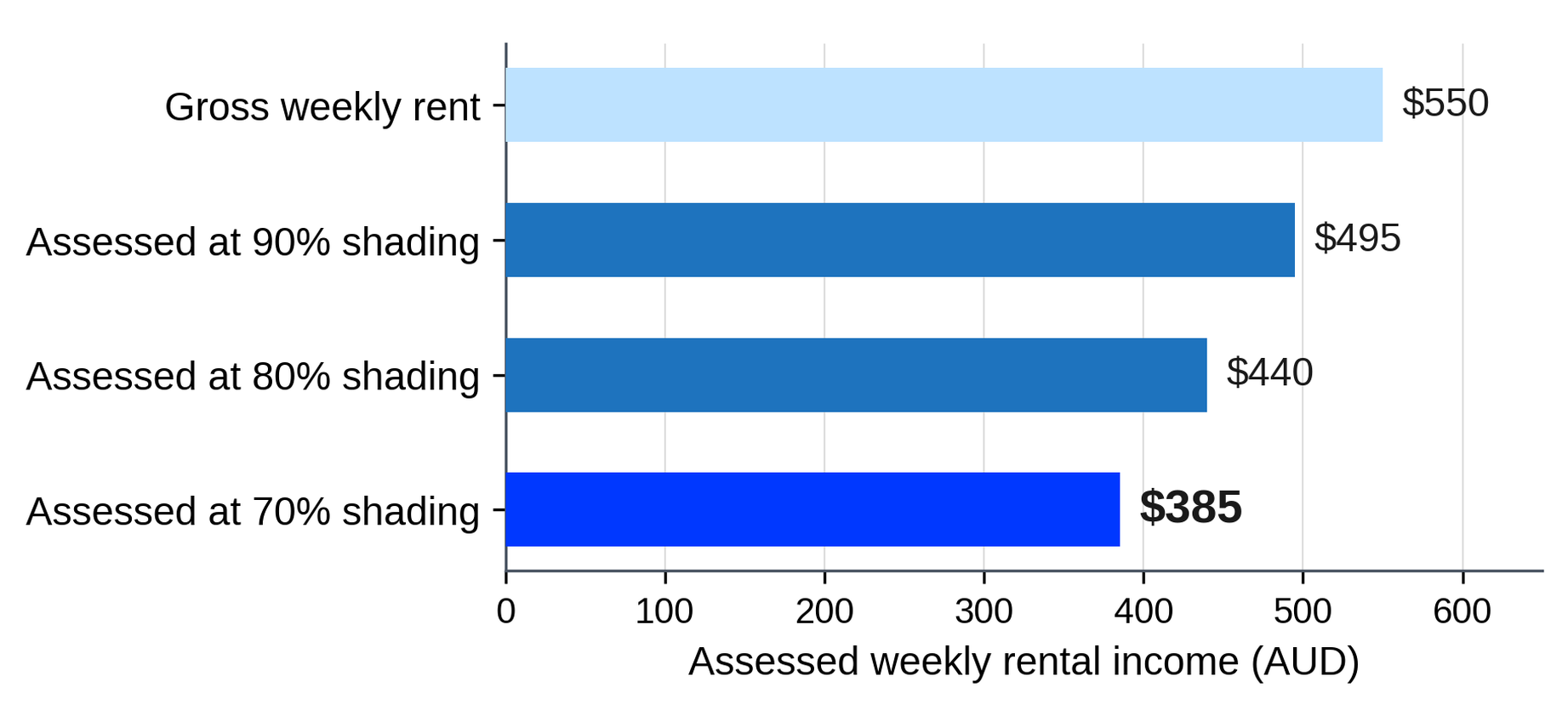
Source: MoneySmart, rental income and borrowing, 2026
What Else Lenders Assess Beyond Your Salary
Salary and rental income only answer part of the question. Lenders also weigh your deposit, your existing equity, your credit history and how stable your employment looks on paper.

Deposit, Equity and the DTI Lending Limit
Most investment loans still expect a deposit of around 20% to avoid lenders mortgage insurance, though using existing home equity is a common alternative to saving cash from scratch. Some buyers use a guarantor to bridge a deposit shortfall instead.
Since February 2026, APRA has also capped how much of each lender's new lending can go to borrowers with total debt at six times their income or more, limiting it to 20% of new loans. A debt-to-income ratio above six does not automatically mean decline, but it does mean a lender has less room to approve borrowers in that band.
Pushing every dollar of approved credit into a purchase is not automatically the right move either. Our guide on maximum borrowing capacity, wealth or risk looks at why the top of your approval and the right amount to actually borrow are often two different numbers.
Final Thoughts: Get Your Real Number Before You Shop
There is no single salary that unlocks an investment property loan. Your income is only one input in a formula that also weighs your debts, expenses, deposit and the rental income a property could generate.
The most reliable next step is not calculating a rough number yourself. It is having a mortgage broker model your actual position against current lender policy, so you know your real ceiling before you start inspecting properties you may not be able to finance.
Frequently Asked Questions

Recommended Reading
Two pages selected based on what readers of this article are most likely to need next.
Recommended Video
While many investors spend time researching growth areas and property types, this discussion highlights a different reality—your ability to continue investing is often determined not by what you buy, but by how your loans are structured and how your borrowing power is managed over time.