

Property Investing in Your 20s: How to Start with Less

Yes, buying an investment property in your 20s is possible with a smaller deposit, but the deposit is rarely what stops you. The real limits are your total upfront cash, how much a bank will lend after its stress test, and whether you can cover the weekly gap when rent falls short of the loan.
That gap matters more now than it did a year ago. Rates have risen four times in 2026, values are falling in most capitals, and a federal tax change now treats new and established homes very differently for new investors.
Below, we work through the real numbers on a typical first purchase and show the cost most young buyers miss. For the wider picture, start with our guide to property investment in Australia.
Can You Afford to Buy an Investment Property in Your 20s?

Start With Your Financial Position, Not the Property
Most people in their 20s start by scrolling listings. Lenders start somewhere else: your income, your living costs, your existing debts and the savings you will have left after settlement.
Small debts carry weight. A HECS balance lowers the income a lender counts, and an unused credit card limit is treated as fully spent. See whether HECS debt affects borrowing capacity and why to cut credit card limits before a home loan.
Banks also test your loan above the rate you will pay. APRA requires lenders to check you could afford repayments 3 percentage points higher, and since February 2026 it has capped loans to people owing six times their income or more.
On one income, that six times mark arrives fast: a $95,000 salary hits it at $570,000 of total debt. Our guide to borrowing capacity explains how lenders weigh it all.
How Much Deposit Do You Really Need for an Investment Property?
Many lenders approve an investment loan with a 10% deposit. The catch is lenders mortgage insurance (LMI), a one-off fee that protects the lender, not you, once you borrow more than 80% of the value. Adding it to the loan gets you in sooner, but you start with more debt.
Why Your Deposit Is Not Your Total Buying Budget
This is where most budgets break. On top of the deposit, you pay transfer duty (stamp duty), legal fees, inspections and loan costs, with no first home buyer discounts.
In Queensland, duty on a $600,000 investment purchase is $20,025 under the state's general rates. That one cost equals a third of the deposit
Upfront Cash Needed on a $600,000 Investment Property
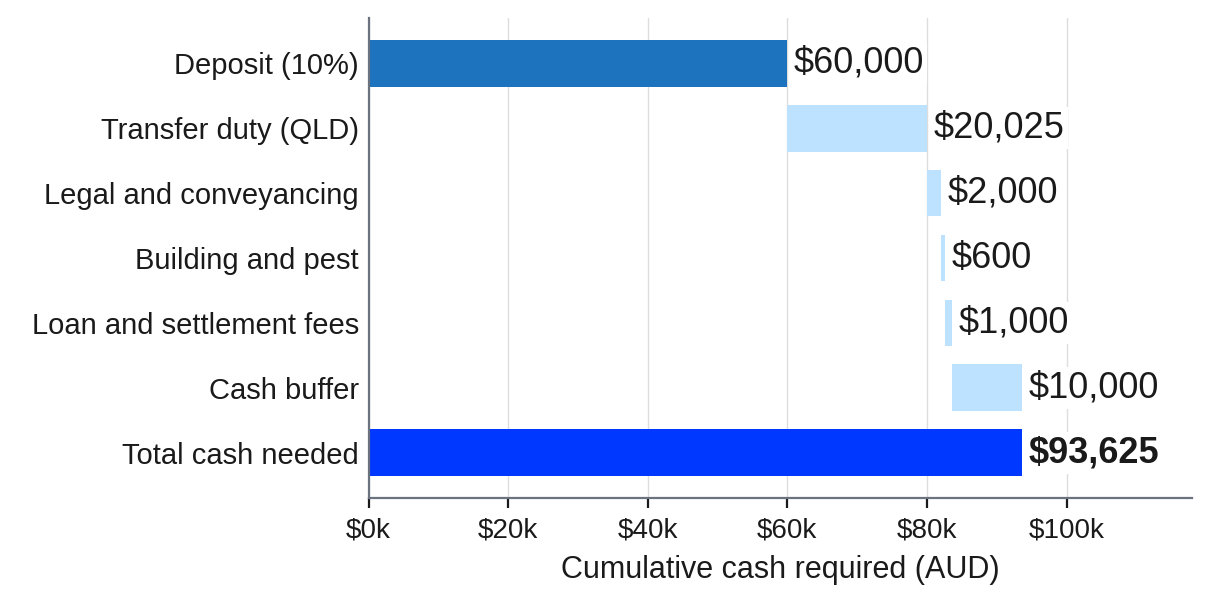
Source: Queensland Revenue Office, transfer duty rates, 2026. Other costs are FPW illustrative estimates.
What's Driving Demand Across the Gold Coast?
Build the Deposit Without Draining Your Buffer
Lenders look at your savings history, not just your balance. Twelve months of steady saving shows you can handle repayments.
Clearing a personal loan that is cutting your borrowing capacity often helps more than extra savings. Keep three to six months of living costs aside and treat it as untouchable.
Could Rentvesting Help You Enter the Market Earlier?
Rentvesting means renting where you want to live and buying where the numbers work. For many young Australians, it is the most realistic way in.
You pay rent and a mortgage at once, and buying an investment first can affect some first home buyer grants and concessions. Read our guide to buying an investment property as a first home buyer first.
What About Using Equity?
Equity only helps if you already own property. It is not free money: it is extra debt secured against that home, so a fall in values or a rise in rates hits both properties at once.
What Should You Look for in Your First Investment Property?
A smaller budget pushes many first investors toward the cheapest stock they can find. That is often the wrong filter.
Don't Buy a Property Just Because It's Cheap
A low price can hide weak demand. Look for steady local jobs, good transport, limited supply of similar homes and a low rental vacancy rate, which shows how quickly homes find tenants.
Prices are also on the move. Cotality's Home Value Index fell 1.1% nationally in September 2026, the sixth monthly fall in a row, leaving values 5.2% below their March peak. Brisbane had the sharpest drop of the capitals, down 1.5%.
A falling market helps a patient buyer negotiate, but only if renters still want the property. Our guide to the best places to invest in property in Australia compares markets.

Rental Yield vs Capital Growth: Which Matters More in Your 20s?
Gross rental yield is yearly rent divided by price, and it drives your weekly cost. Capital growth builds equity for your next purchase.
In your 20s you need both: enough yield to hold on, and enough growth to make holding worth it. Our breakdown of yield vs growth shows how to balance them.
As rents rise and values ease, yields are improving. National rents rose 5.7% in the year to August 2026, lifting yields to their highest level since 2019.
National Gross Rental Yield, December 2024 to August 2026
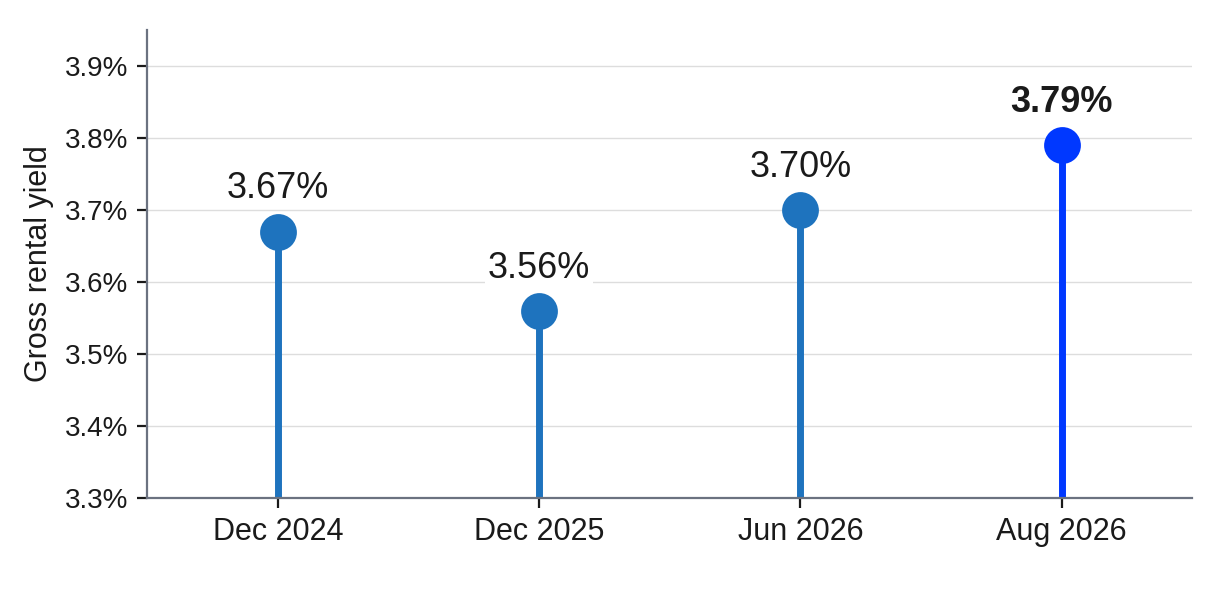
Source: Cotality, Home Value Index and Rental Review, 2024 to 2026.
New Build vs Established Property After the 2026 Budget
This choice changed in 2026. Under the ATO's summary of the new rules, negative gearing will be limited to new builds from 1 July 2027, and properties held before 7:30pm on 12 May 2026 are exempt.
For a young investor on a salary, a loss on an established home bought now cannot cut the tax on your wages, so the shortfall comes straight out of your pay. See how the negative gearing rules now apply.
New builds keep the tax benefit but carry their own risks, such as oversupply in new estates. Compare both in our guide to new build vs established property.

How to Run the Numbers Before Buying an Investment Property
Calculate More Than the Mortgage Repayment
The loan is not the only cost. ASIC's Moneysmart warns rent may not cover repayments and expenses, and you pay everything when the property is empty.
Before you make an offer, add up these yearly costs:
Council rates, water charges and loan fees.
Landlord insurance and building insurance.
Property management fees, usually a share of the rent.
Repairs, plus strata fees for units and land tax above your state's threshold.
Vacancy weeks between tenants, when no rent comes in
Stress-Test the Property Before You Make an Offer
Rates are the first test. The RBA lifted the cash rate to 4.60% on 29 September 2026, its fourth rise this year and its highest level since November 2011.
RBA Cash Rate Through 2026
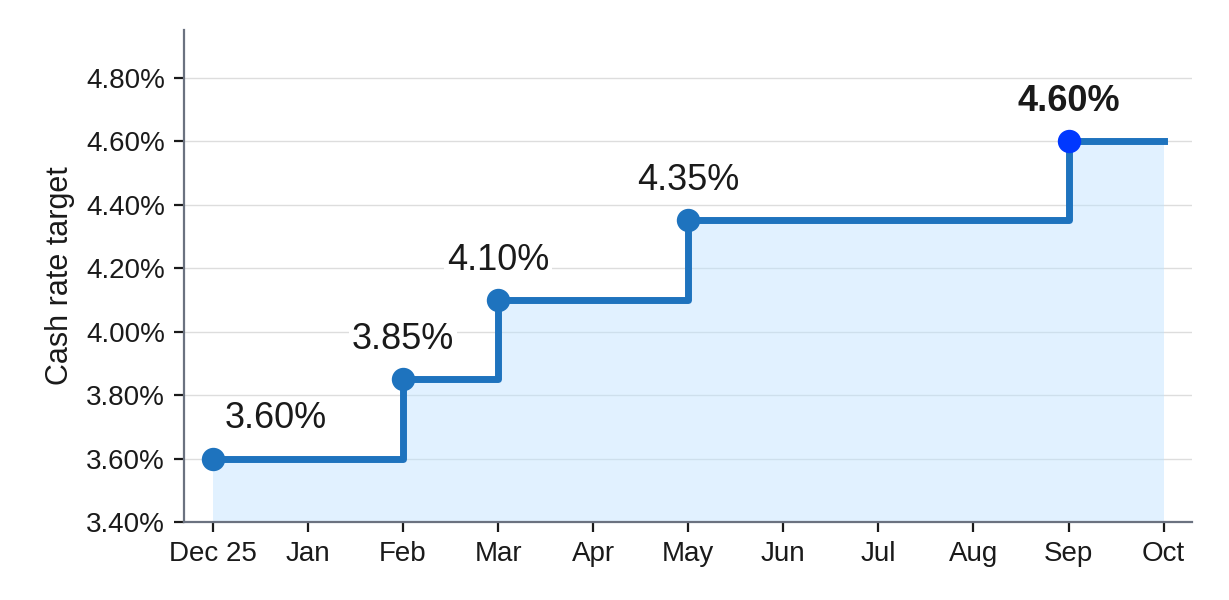
Source: Reserve Bank of Australia, cash rate target, 2026.
Next, test the bad weeks. The example below uses a $600,000 property, a $540,000 loan at an illustrative 6.9% rate and rent of $520 a week
Weekly Cash Flow Under Four Stress Tests
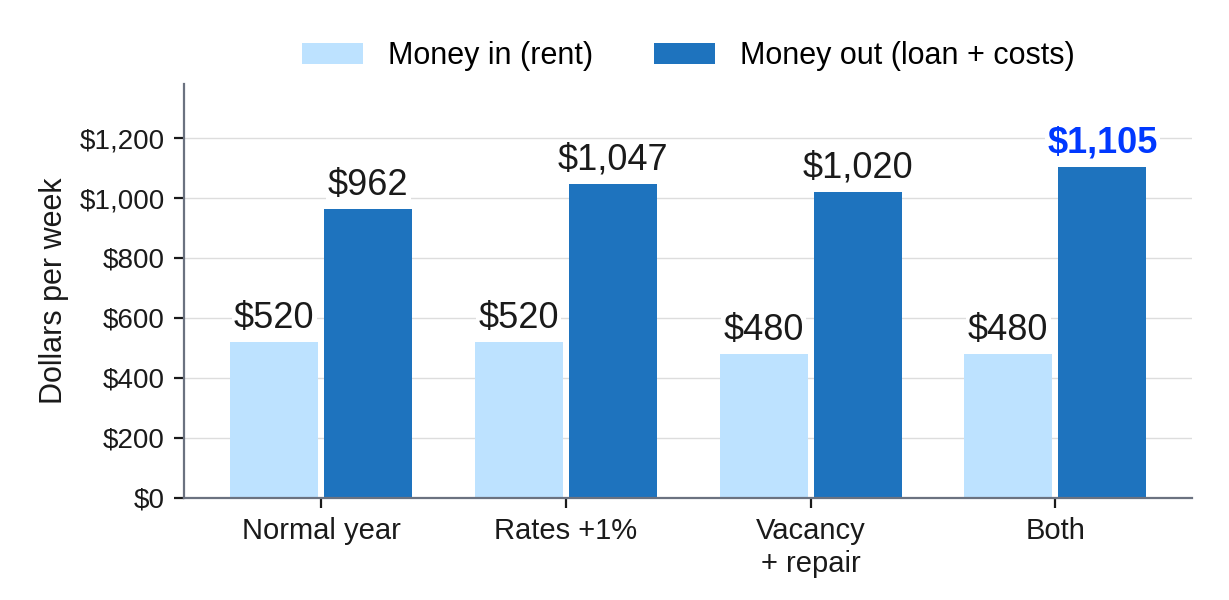
Source: FPW worked example, October 2026. Cost categories based on ASIC Moneysmart guidance on investment property costs.

Common Mistakes Young Investors Make
Most first-purchase mistakes happen before the contract is signed:
Buying on emotion. Renters will not pay extra for the features you would love.
Stretching borrowing capacity too far. The most a bank will lend is a ceiling, not a target.
Focusing only on price. A cheap unit with high strata fees can cost more to hold than a dearer house.
Assuming rent will cover everything At current rates and a 90% loan, it usually does not.
Treating tax benefits as the strategy. For established homes bought after May 2026, they are now much smaller.
Our list of red flags when buying an investment property covers what to check at inspection.
Common Mistakes Young Investors Make
Use this list in order. If any step fails, stop and fix it before you move to the next one.
Define your goal: cash flow, growth or a future home.
Get a borrowing estimate that includes HECS and cards.
Confirm your usable deposit.
Add duty and buying costs to find total cash needed.
Keep three to six months of living costs aside.
Shortlist locations with jobs, transport and low vacancy.
Compare rents for similar homes.
Run the numbers at today's rate and 1% higher.
Order building, pest and strata reports.
Check if it is a new build or established for tax.
Get finance and tax advice.
Offer only when the numbers work in a bad year.
For the finance side, our investment property loan approval checklist lists the documents lenders ask for.
Common Mistakes Young Investors Make
The Advantage of Starting Earlier
Time is the main advantage. A property bought at 26 has decades to grow, and the equity it builds can help fund a second purchase in your 30s.
When Waiting May Make More Sense
Waiting is often smarter if your income is unstable, you carry consumer debt or you have no emergency savings. It is also wise if the deal only works when rents rise and rates fall.
The Goal Isn't to Buy as Young as Possible
The aim is to buy when the numbers, the strategy and your finances line up. FPW's investment property team helps young buyers test all three before they commit.
Final Thoughts
Buying an investment property in your 20s is less about finding the perfect suburb and more about getting the order right. Start with your total upfront cash, not just the deposit. Check how a bank will test your loan, then stress-test the property against higher rates, empty weeks and repairs.
The 2026 market adds two extra filters. Rates are at their highest level since 2011, and the tax treatment of established homes bought after May 2026 has changed.
If the numbers still work in a bad year, starting early is a real advantage. If they only work in a good year, a few more months of saving may be the better investment.

Frequently Asked Questions
Recommended Reading
Two pages selected based on what readers of this article are most likely to need next.
Recommended Video
Most investors are still positioned in capital cities — but in 2026, that allocation gap is creating real opportunity cost. In a market where timing, positioning, and yield profiles compound into long-term outcomes, that disconnect matters more than most people realize.