Gladstone Property Market: Is It Still a Good Place to Invest?
Cairns is still worth a serious look for investors, but it is no longer a market where buying almost anything will work. The Cairns property market has held up while most of Australia has turned lower, yet the latest data shows house price growth fading and rental yields getting thinner.
That split is the real story. One part of the market is still running hot, another is cooling, and rents are no longer keeping up with prices.
Interest rates have also moved again, which changes the math for anyone buying with a loan. This article tests the Cairns case with current data, looks at what could break the trend, and sets out the checks worth doing before you buy.
It also helps to compare Cairns with other investment locations across Australia before you decide.
What Is Happening in the Gladstone Property Market?
Gladstone Property Prices in 2026
Prices have risen strongly. The independent valuer Opteon's Gladstone Half Time Review 2026 reports dwelling prices in the 4680 postcode grew 13.2% over the year, with the median sitting at $650,000 before the May Budget.
Units and townhouses have moved even faster. The median strata value of $415,000 rose 18.6% over the year, as buyers looked for lower entry prices.
Across the wider council area, HtAG Analytics puts the median house at $784,000, up 13.6% in a year and 58.9% over three years. That higher figure includes coastal areas such as Agnes Water, so the 4680 figures are a better guide to Gladstone itself.
Has Gladstone's Momentum Changed Since the Budget?
Yes, and quickly. Opteon found the median fell 3.1% to $630,000 for sales between 13 May and 30 June 2026, while the daily rate of sales dropped by about 45%.
That matters because investors made up about 58% to 60% of Gladstone buyers. From 1 July 2027, negative gearing is limited to new builds for residential property bought after Budget night, which hits an investor-heavy market harder than most, as our 2026 Budget guide for investors explains.
Why "Still" Matters: Gladstone's Last Boom and Bust
Gladstone's last boom peaked at the end of 2011, while three LNG plants were built on Curtis Island. When construction finished, workers left and new housing stood empty.
Opteon estimates houses fell around 50% from their peak and some units fell up to 75%. By the December quarter of 2017, the ABC reported that more than 80% of Gladstone homes were selling at a loss.
Today's market has less speculative building, but it shows how fast a resource town can turn, as we explore in why some property hotspots never boom.
Are Gladstone Rental Returns Strong Enough for Investors?
Gladstone Rents and Rental Yield
Gladstone rents are the lowest of the main Central Queensland markets. Opteon puts the median rent for a three-bedroom house at $510 a week, compared with $550 in Rockhampton and $650 in Mackay.
Gladstone Has the Lowest House Rents in Central Queensland
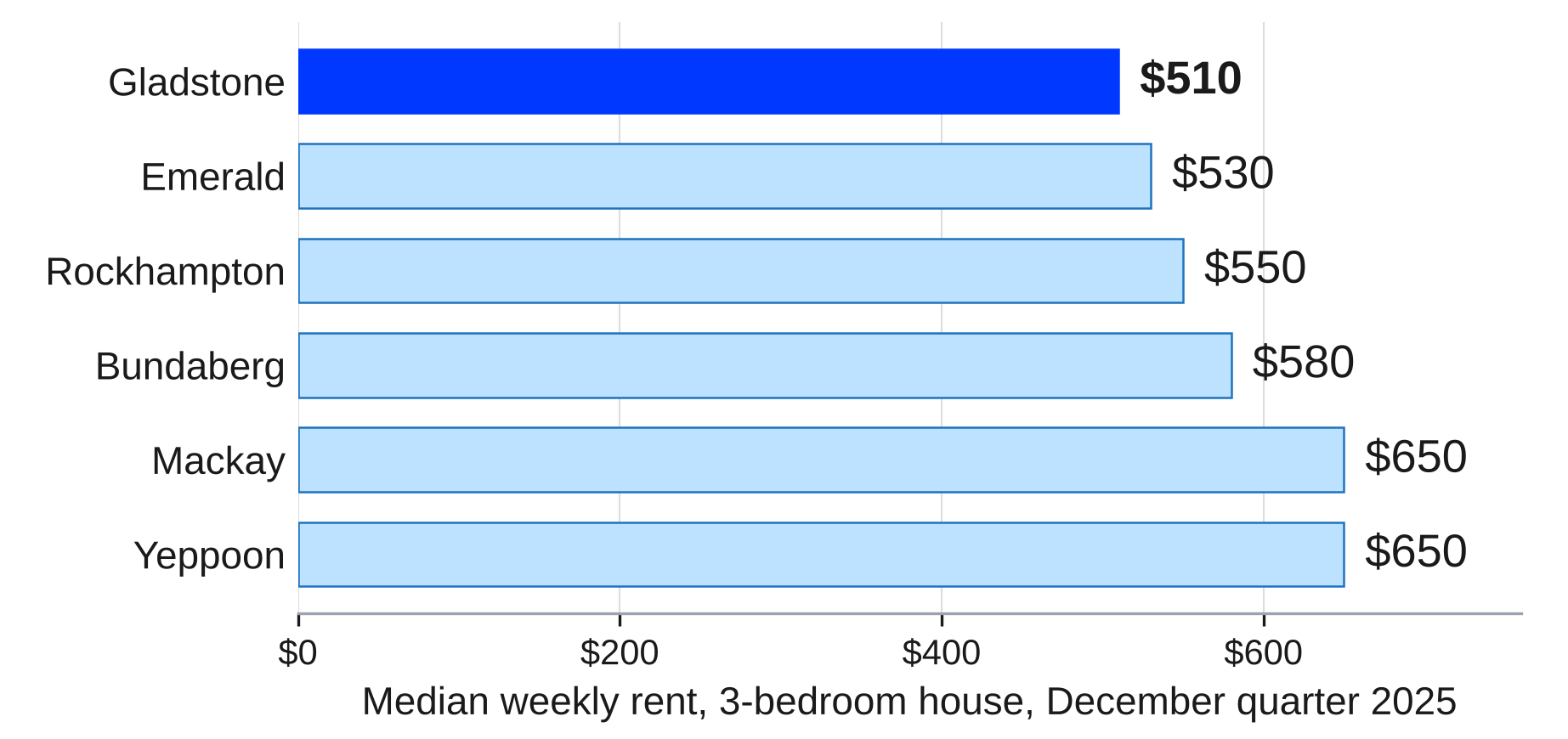
Source: Opteon, Gladstone Half Time Review 2026, December quarter 2025 median rents
GUsing Opteon's medians, FPW estimates a typical house returns a gross yield of about 4.1%. Two-bedroom units return closer to 5.8%, and three-bedroom units about 5.3%.
Our guides to Rockhampton property investment and the Mackay real estate market show how nearby markets compare.
Gladstone Prices Rose More Than Six Times Faster Than Rents
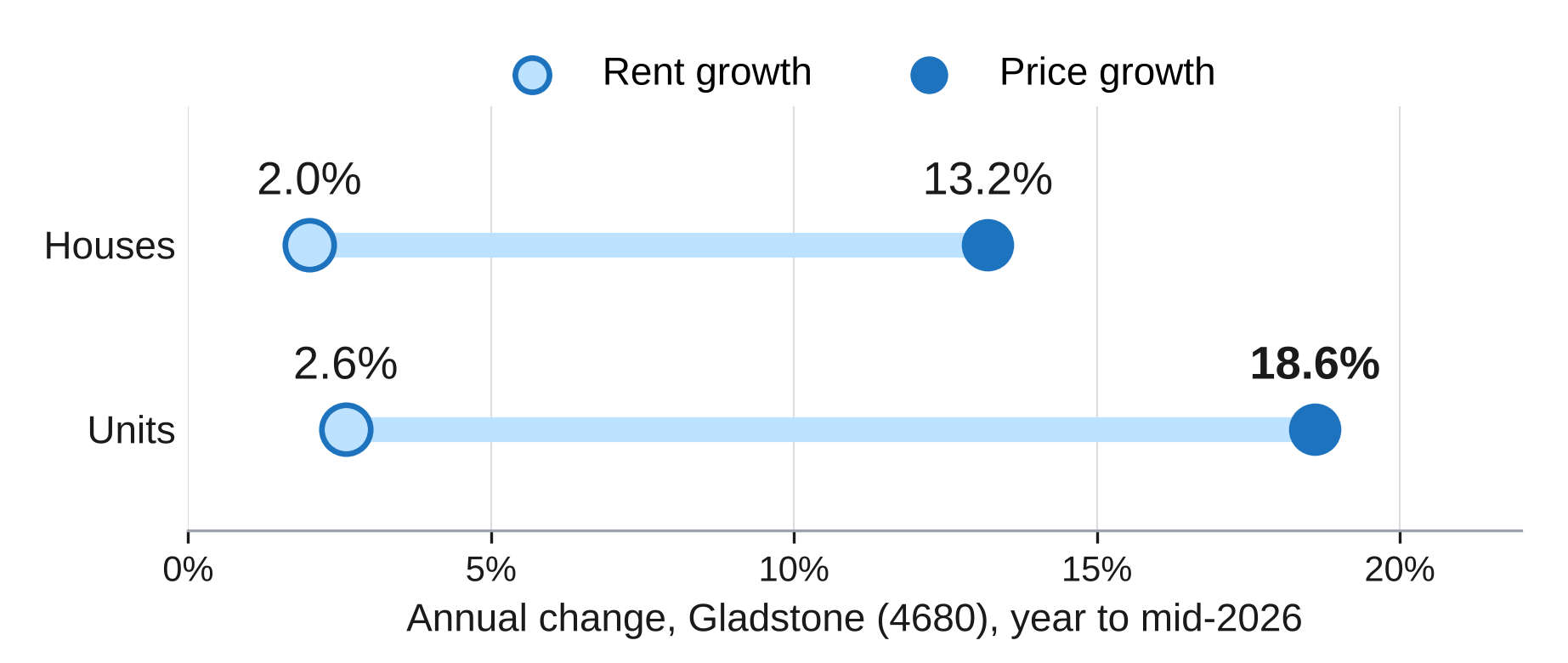
Source: Opteon, Gladstone Half Time Review 2026, year to June 2026
When prices outrun rents, each new buyer pays more for the same income, the yield versus growth trade-off working against new buyers.
Gladstone Vacancy Rate and Rental Demand
The rental market is still tight, but it is easing. REIQ data shows vacancy at 2.1% in the June 2026 quarter, up from 1.8% in the second half of 2025 and 1.2% in March 2024.
Gladstone Vacancy Is Tight, but Easing from Its Low
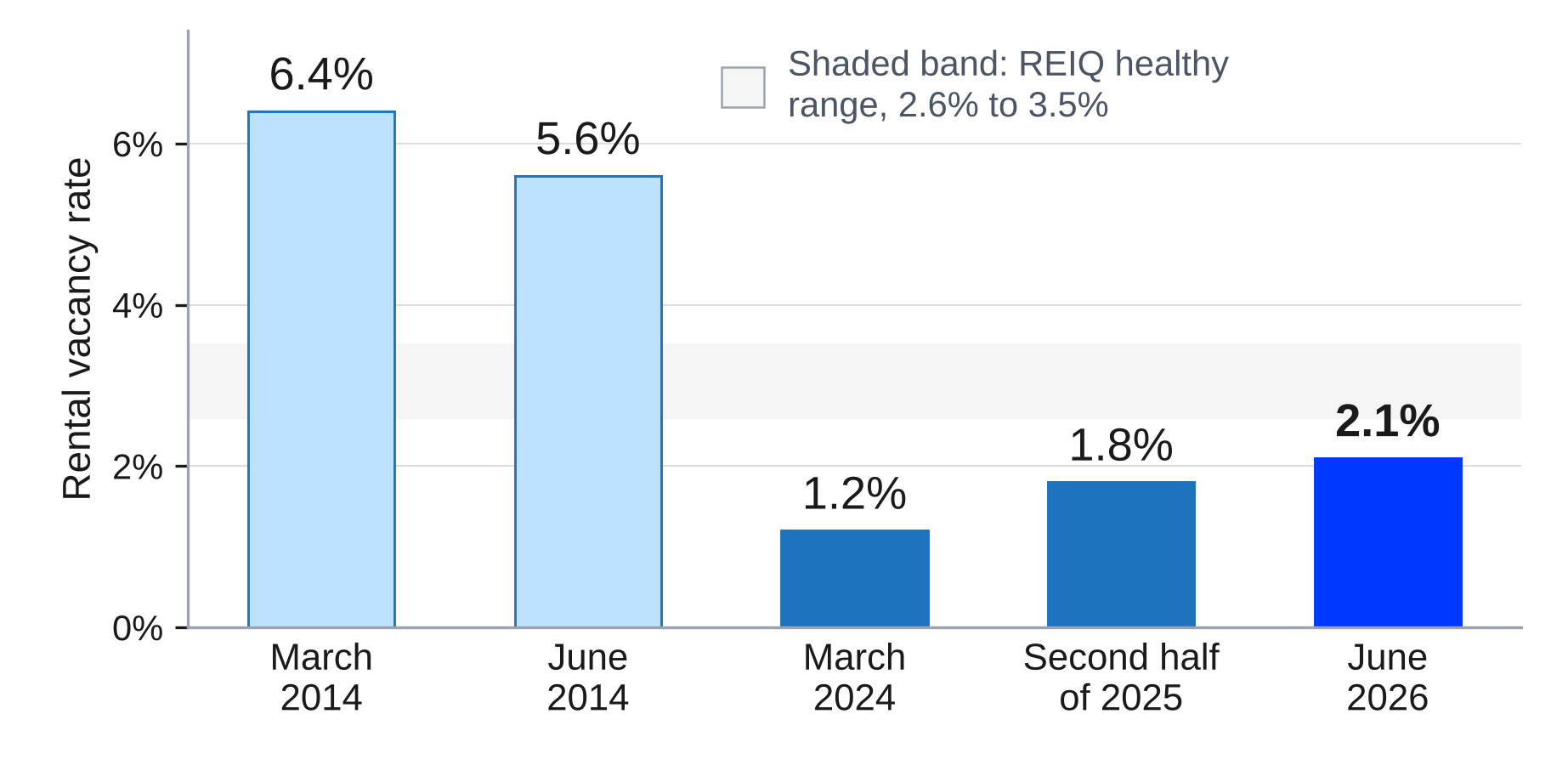
Source: REIQ via Real Estate Business (2014), REIQ (March 2024) and Opteon (2025 and 2026)
Opteon also notes bonds lodged fell 35% over the year and that investors are adding former owner-occupier homes to the rental pool. A tight market that is loosening is different from one that is tightening, as we cover in when low vacancy is a good sign.

What Is Driving Demand for Property in Gladstone?
Heavy Industry Still Anchors the Local Economy
Gladstone runs on its port, LNG plants and heavy industry, and Rio Tinto alone employs more than 3,000 people there.
In March 2026, Rio Tinto and the Queensland and federal governments secured the Boyne aluminium smelter to at least 2040, backed by $2 billion in government support. The smelter employs about 1,000 people, so that deal removes a major risk to local jobs.
Major Projects Have Cut Both Ways
Not every project has gone Gladstone's way. Rio Tinto is cutting output at the Yarwun alumina refinery by 40% from October 2026, affecting about 180 roles.
Hydrogen plans have also faded. The Central Queensland Hydrogen Project was dropped in June 2025, removing a source of future construction jobs and housing demand, a reminder of how infrastructure projects affect property prices in both directions.
Population Growth Has Been Modest
ABS Census counts show the Gladstone region grew from 61,640 people in 2016 to 63,515 in 2021. That is about 0.6% a year, steady rather than fast.
So Gladstone relies more on jobs than on people moving in, unlike some regional markets drawing new residents.
Which Gladstone Areas Are Investors Watching?
We compared five suburbs using Domain sales data for the last 12 months. Domain does not publish suburb rents, so the yields below use Opteon's region-wide median rents and are indicative only.
Source: Domain suburb profiles for West Gladstone, Calliope, Boyne Island, Kirkwood and Tannum Sands, read October 2026. Yields are FPW estimates using Opteon's $580 median rent for a four-bedroom house.
How the Cairns Property Market Compares With the Rest of Australia
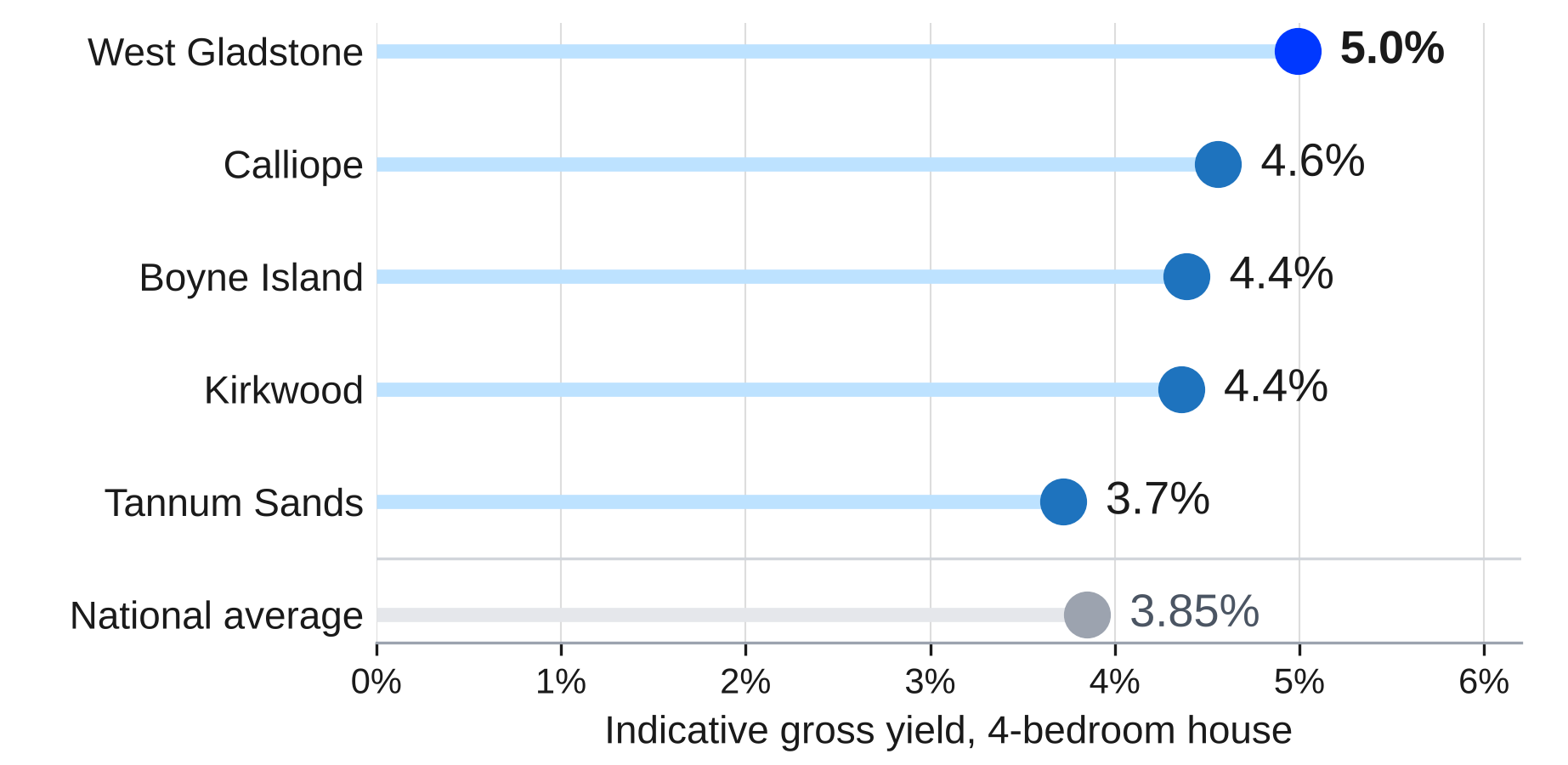
Source: FPW Group estimates using Domain medians and the Opteon median rent, October 2026. National gross yield from Cotality, September 2026.
Where Affordability May Hide Higher Risk
Cheaper suburbs such as West Gladstone offer more income per dollar, but often with older homes and higher maintenance costs. Coastal Tannum Sands and Boyne Island cost more and yield less, but tend to draw owner-occupiers and families.
Opteon notes strong demand for entry-level homes around $450,000 that need little work. Our guides to choosing investment-grade suburbs and reading a suburb profile show how to look past the median.
What Are the Risks of Investing in Gladstone?
Reliance on a few industries. Gas, alumina and aluminium drive much of the local economy, so a single plant decision can shift housing demand.
A history of sharp swings. Prices roughly halved after the last boom, and recovery took years.
An investor-heavy buyer base. With investors making up around 60% of buyers, tax changes such as the new negative gearing rules could weigh on future demand.
Higher borrowing costs. The Reserve Bank lifted the cash rate to 4.60% in September 2026, which reduces borrowing capacity and lifts holding costs, as our guide to property investment interest rates explains.
Slower rent growth. Opteon says rents have stabilised after five years of growth, while building costs rose about 9% in a year.
So, Is Gladstone Still a Good Place to Invest?
The Gladstone Investment Reality Check
Source: FPW Group analysis of the sources cited above, October 2026.
Who Could Gladstone Suit?
Investors seeking income who can buy below the median and hold for the long term.
Buyers with a cash buffer who can cover a vacancy or a flat market for a few years.
Investors adding a regional, higher-yield property to a city-heavy portfolio.
It is less suited to investors relying on fast growth, or those already stretched on borrowing. Whichever group you are in, Gladstone should fit a clear property investment strategy, and our list of investment property red flags is worth checking first.
Gladstone Property Market Outlook: What to Watch Over the Next 12 Months
Instead of a forecast, here are the measures that will show which way the market is heading.
Vacancy. A move above 2.6% would put Gladstone in the REIQ's healthy range and slow rent growth further.
Sales volumes. Watch whether the post-Budget slowdown in sales recovers or deepens.
Investor share. A falling share of investor buyers would test prices in the $450,000 to $650,000 range.
Major employers. Any news on Yarwun, Queensland Alumina or the LNG plants will move local demand.
Interest rates. Further rate rises would weigh on a market where most buyers borrow to invest.
Broader conditions matter too, as our housing market slowdown analysis shows. For help reading these signals on a specific property, start with an investment property strategy session.
Final Thoughts: Buying Well Matters More Than Buying Cheap
The Gladstone property market still has real strengths: lower prices, steady rental demand and a major employer secured to 2040. Those are reasons to look closely, not to buy blindly.
The weaker points are just as clear. Prices have outrun rents, vacancy is easing, investor demand has cooled since the Budget, and the town's history shows how fast conditions can change.
Gladstone can still be a good place to invest for the right buyer and the right property. Test the purchase price, rent, holding costs and a no-growth scenario before you commit, and make sure the numbers work without another strong year.

Frequently Asked Questions
Recommended Reading
Two pages selected based on what readers of this article are most likely to need next.
Recommended Video
Australia's record migration surge — peaking at over 528,000 people in a single year — created unprecedented housing demand almost overnight. We explain why the government used population growth as a deliberate tool to avoid recession, how that decision flows directly into property prices Australia-wide, and why rents have surged to record highs as a result.