
Property Investing in Your 50s: Is It Too Late to Start?

No, investing in your 50s is not too late, but the plan has to look different from one made at 30. You have less time for growth to do the heavy lifting, so any property you buy needs to fit your retirement date, your debt and your cash flow.
That is where most of the risk sits. Australians tend to stop work earlier than they plan to, and that gap shrinks your timeframe more than most people expect. A loan that feels fine on a salary can feel very different once the salary stops.
This guide covers how long your real timeframe is, what lenders look at after 50, and a 2026 tax change that affects established properties bought now. If you are still working out how much you need to retire, start there, then come back to the property question.
Is It Too Late to Start Investing in Your 50s?
It is not too late, but it is a different game. At 32, a weak first purchase can be fixed over 30 years. At 52, you may have 10 to 13 working years left, and that changes how much risk you can carry.
Your Runway Is Shorter Than the Retirement Age Suggests
The Australian Bureau of Statistics found that workers aged 45 and over plan to retire at 65.6 on average. People who retired in 2024-25 stopped at 63.8, almost two years earlier than planned.
Not all early exits are by choice. The survey found 13% of recent retirees left work because of sickness, injury or disability, at an average age of 56.9.
How Many Working Years Do You Have Left?
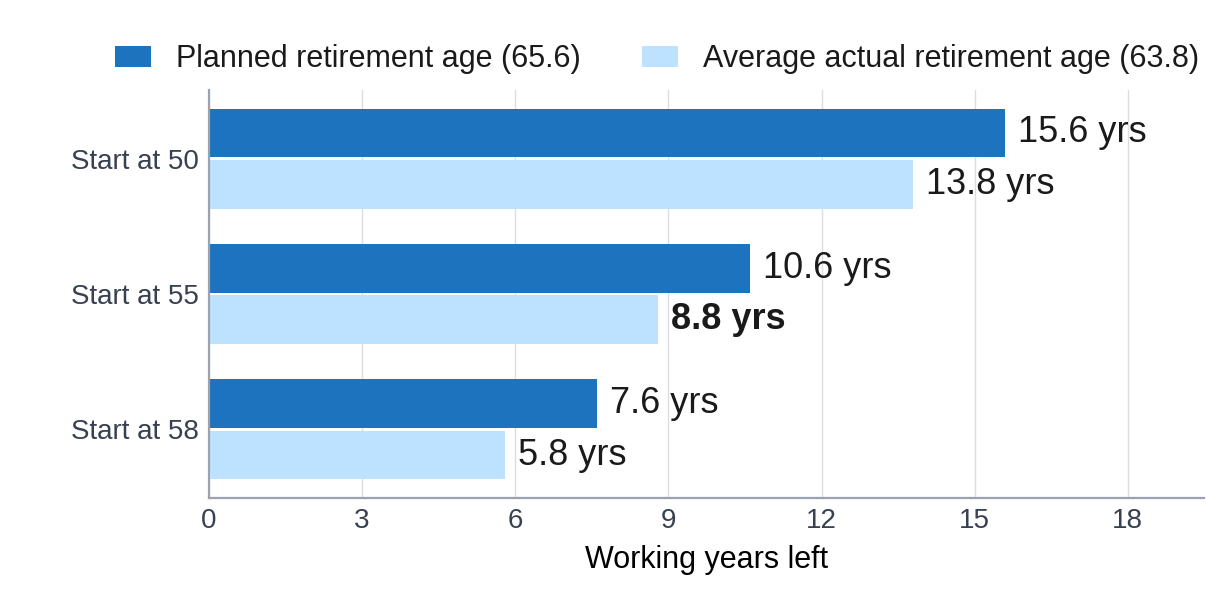
Source: Australian Bureau of Statistics, Retirement and Retirement Intentions, Australia, 2024-25
You May Have Advantages You Did Not Have Earlier
Many people in their 50s also earn more than ever, with home equity and a bigger super balance. The goal shifts from building as much as possible to building enough, while protecting what you have.
Can Property Still Help Build Wealth in Your 50s?
Yes, if you are clear about which job the property is doing. Over a 10 to 15 year hold, it can grow in value, produce income, or do some of both.
For a wider look at how property fits into a long-term plan, our guide to property investment in Australia covers the core building blocks.
Growth and Cash Flow Do Different Jobs
Growth builds wealth you can access when you sell or refinance. Cash flow is the money left over each year after the rent comes in and the costs go out.
Rents are rising strongly right now. Cotality reported national rents 5.5% higher over the year to September 2026, with gross yields at 3.85%, the highest since 2019.
Values tell a different story. National values sat 5.2% below their March 2026 peak after six straight monthly falls, a reminder that growth is never guaranteed over a short window.
Your Timeframe Changes the Math
A property held for 25 years can ride out two or three weak markets. One held for 10 years might only get one good run, so buying well matters more than buying soon.
What Should You Consider Before Buying an Investment Property in Your 50s?
Your Borrowing Capacity
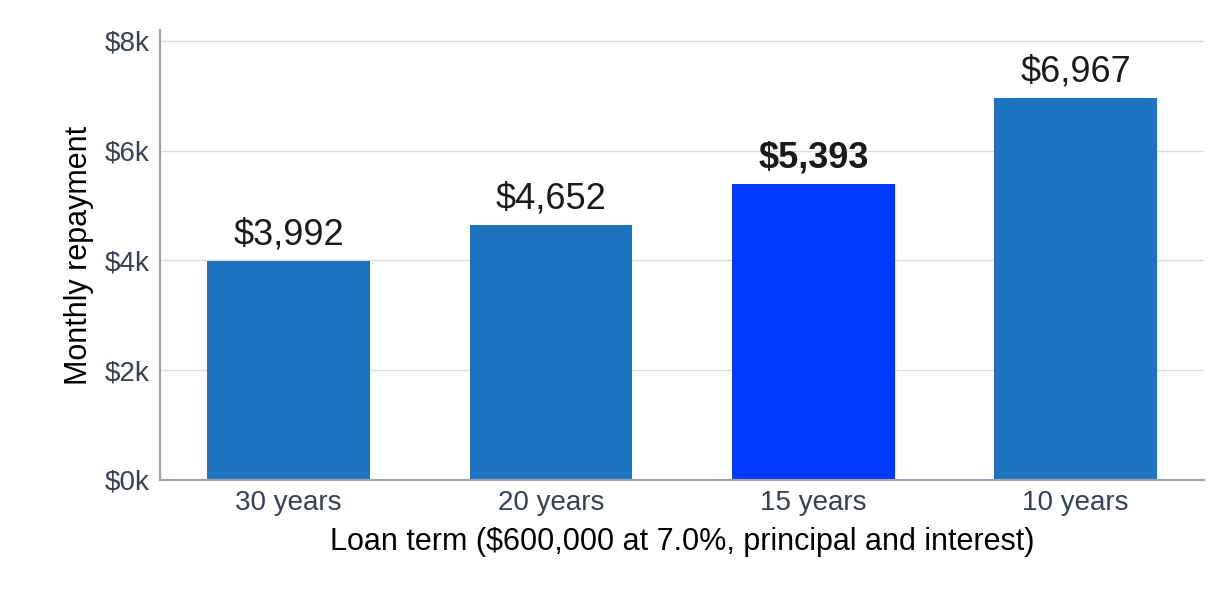
Lenders look at the same things at any age: income, debts, living costs and whether you can repay at a higher test rate. After 50, they also ask how the loan will be repaid if you retire before it ends.
That can mean a shorter loan term or a request for an exit plan, such as downsizing or selling. Our guide to borrowing capacity in Australia explains how lenders reach their number.
Rates matter too. The Reserve Bank of Australia lifted the cash rate to 4.60% on 29 September 2026, its fourth rise this year.
How Loan Term Changes Your Monthly Repayment
Your Cash Flow Position
Rent rarely covers every cost. Interest, rates, insurance, management, repairs and the odd empty week all come out first.
Where the Rent Goes: One Year of Holding Costs
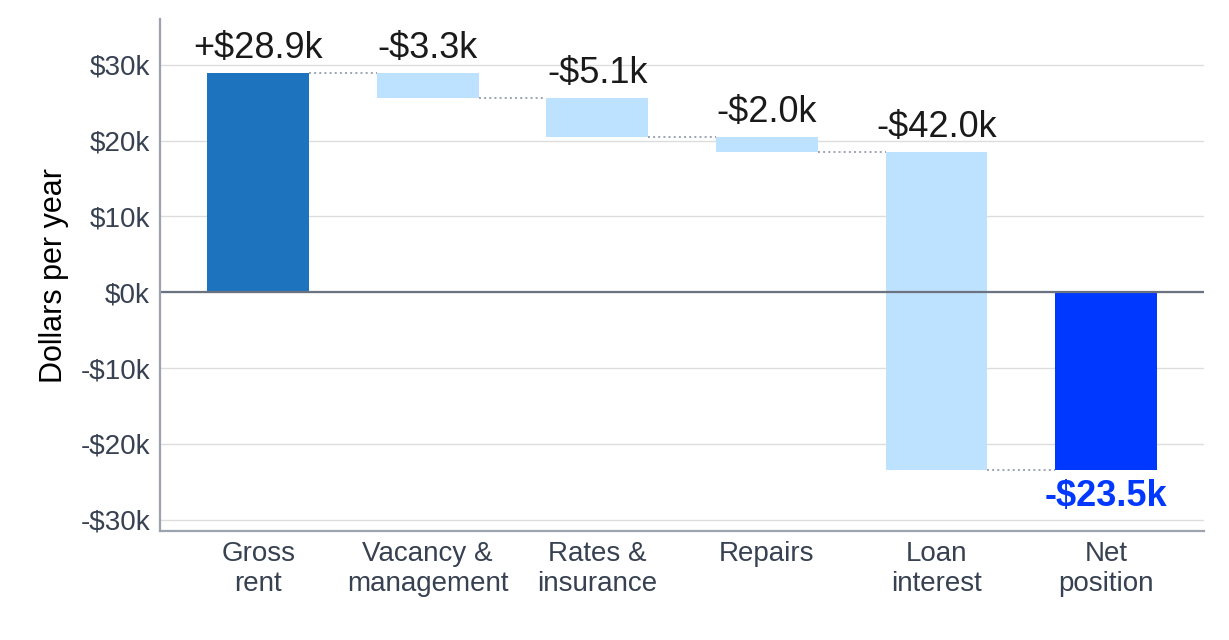
Source: FPW Group illustration based on Cotality national gross rental yield, September 2026
Could you cover that shortfall for 10 years, including through a stretch of reduced work?
A tax change adds pressure. Under reforms now law, rental losses on established homes bought after 7:30pm on 12 May 2026 can no longer reduce wage income from 1 July 2027, according to the ATO. New builds keep the old rules, as covered in negative gearing as a retirement strategy.
How Should Your Property Strategy Change in Your 50s?
Focus on Quality, Not Quantity
In your 50s, one well-chosen asset with manageable debt usually does more for retirement than three stretched ones.
Balance Cash Flow with Growth
The closer you get to retirement, the more cash flow matters. Our article on balancing yield and growth shows how investors weigh rental income against long term gains.
Plan Your Exit Before You Buy
Every purchase in your 50s needs a likely ending. You might hold it debt free for income, sell it to clear your home loan, or sell and add the money to super if the rules allow.
Knowing when to sell an investment property is part of the plan from day one, because tax and selling costs affect what you keep.
How Much Debt Is Left When You Retire?
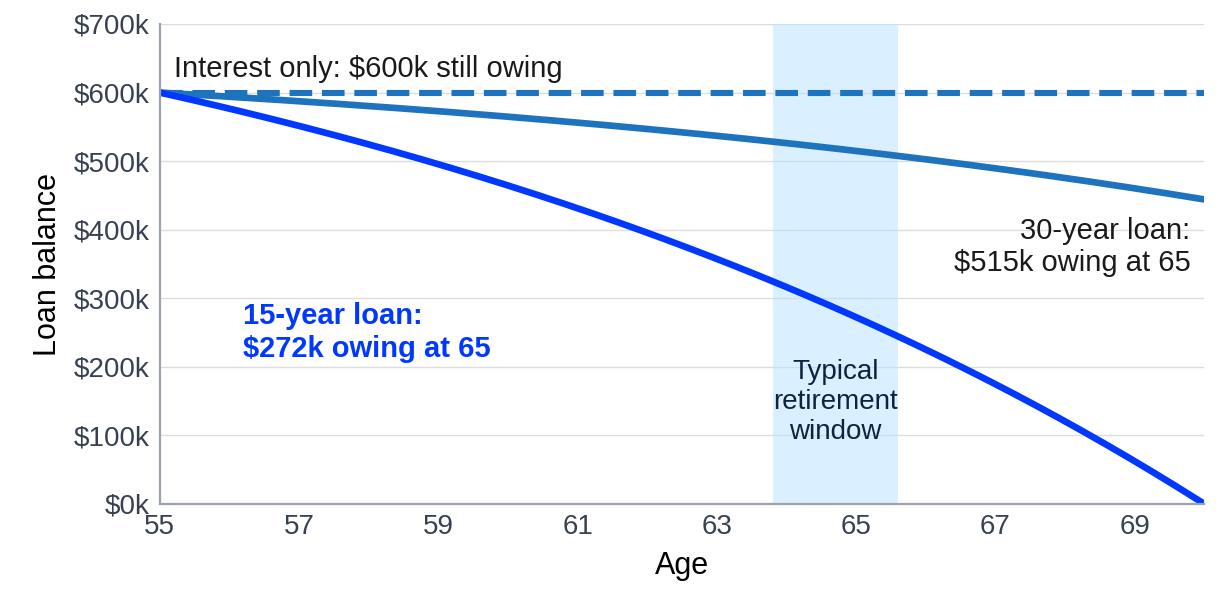
Source: FPW Group calculation at 7.0%; retirement window from ABS, 2024-25.
Should You Use Home Equity to Invest in Property?
How Equity Changes Your Options
Equity is the gap between your home's value and what you owe. Lenders will often lend against it up to 80% of the value, which can fund a deposit and costs without selling.
The Risks of Borrowing Against Your Home
Using equity means taking on new debt secured against the place you live. If the investment struggles or your income drops, the risk sits on your home, not just the rental.
When More Debt May Not Be Right
Extra borrowing is harder to justify if you have little in savings, a large home loan still owing, or plan to stop work within seven or eight years.
The approval limit is not a target. Our article on whether maximum borrowing capacity builds wealth or risk explains why.
What Kind of Investment Property Makes Sense in Your 50s?
Location and Demand Fundamentals
A growth property can build more equity but costs more to hold. A higher yield property is easier to carry but may grow slower, as our guide to yield vs growth explains
Location and Demand Fundamentals
The basics do not change with age. Look for steady local jobs, population growth, new infrastructure, strong rental demand and limited new supply.
Our guide to what makes a good investment property covers these checks, and our list of the best places to invest in property in Australia shows where they line up.
Holding Costs and Resale
Older buildings, high strata fees and niche properties can eat into income and be hard to sell. Favour property that is easy to rent, manage and sell if plans change.

Common Mistakes When Investing in Your 50s
Most mistakes at this age come from trying to make up for lost time.
Taking on too much debt to catch up. A bigger loan does not help if it cannot be cleared before you stop work.
Assuming prices always rise. Six straight months of national falls to September 2026 show the risk.
Ignoring cash flow. A $450 a week shortfall can delay retirement instead of funding it.
Buying without an exit plan. Not knowing how the loan ends is a common gap.
Putting too much into one asset. If your home and investment are both property, one slump hits both.
Confusing ownership with security. A property with a large loan is not retirement income.
Many of these show up as warning signs before you sign. Our list of red flags when buying an investment property covers what to look for.
How to Decide Whether Property Is Right for You in Your 50s
Location fundamentals matter more than age alone
Work backwards from the income you want. The ASFA Retirement Standard puts a comfortable retirement at $55,923 a year for a single person and $78,566 for a couple, needing about $630,000 and $730,000 in super for homeowners retiring at 67.
Then compare how property and super stack up for retirement wealth. Sometimes extra super or paying down the home loan does the same job with less risk.
Stress Test the Plan
Run the numbers under tougher conditions. Using the cash flow example above:
Decide If It Works Without Perfect Conditions
If the plan only works with strong growth, low rates and no empty weeks, it is too fragile.
Getting investment property advice before you commit lets you test these numbers against your full position, including super and tax.

How to Decide Whether Property Is Right for You in Your 50s
Investing in your 50s is not too late, but it asks for more discipline than investing at 30. You have a clearer end date, so every decision needs to point toward it.
Start with your likely retirement age, not your hoped for one. Choose property that suits a 10 to 15 year hold, keep debt at a level you can clear, and make sure the yearly shortfall is something your income can carry on its own.
Most of all, make retirement the goal, not property ownership. A well planned property can add income and security to your later years, while a rushed one can delay them.

Frequently Asked Questions
Recommended Reading
Two pages selected based on what readers of this article are most likely to need next.
Recommended Video
Australia's record migration surge — peaking at over 528,000 people in a single year — created unprecedented housing demand almost overnight. We explain why the government used population growth as a deliberate tool to avoid recession, how that decision flows directly into property prices Australia-wide, and why rents have surged to record highs as a result.