

Refinance Investment Property: When, Why and How to Refinance for Better Returns
The right time to refinance an investment property is when one of five signals shows up: your interest rate has moved, your equity has grown enough to fund a deposit, cash flow is tight, you are preparing to buy another property, or your strategy no longer matches your current loan structure. Lenders reassess your whole file at refinance, not just the new rate, so approval is never guaranteed even when the numbers look good on paper.
In practice, the decision usually comes down to one question: will a new loan put you in a stronger position than the one you are in now.
This guide breaks down each of those signals in more detail, how the refinance process works, what it costs, and how refinancing affects borrowing capacity, so you can decide whether now is the right time rather than guessing off a headline rate.
What Does It Mean to Refinance an Investment Property?
Refinancing an investment property means replacing your current loan with a new one, either with your existing lender or a different one. The new loan pays out the old one, and you start again under new terms.
Investment property refinance works differently to an owner occupier refinance. Lenders apply stricter serviceability tests to rental income, and investment loans usually carry a small rate premium over owner occupier loans. Investors typically refinance for one of three reasons: a better interest rate, access to equity, or a loan structure that fits their strategy more effectively, such as switching from principal and interest to interest only, or consolidating multiple loans under one lender.
When Should You Refinance an Investment Property?
There is no fixed schedule for refinancing an investment property. The best time to refinance an investment property usually shows up as one of five signals, each worth weighing on its own.
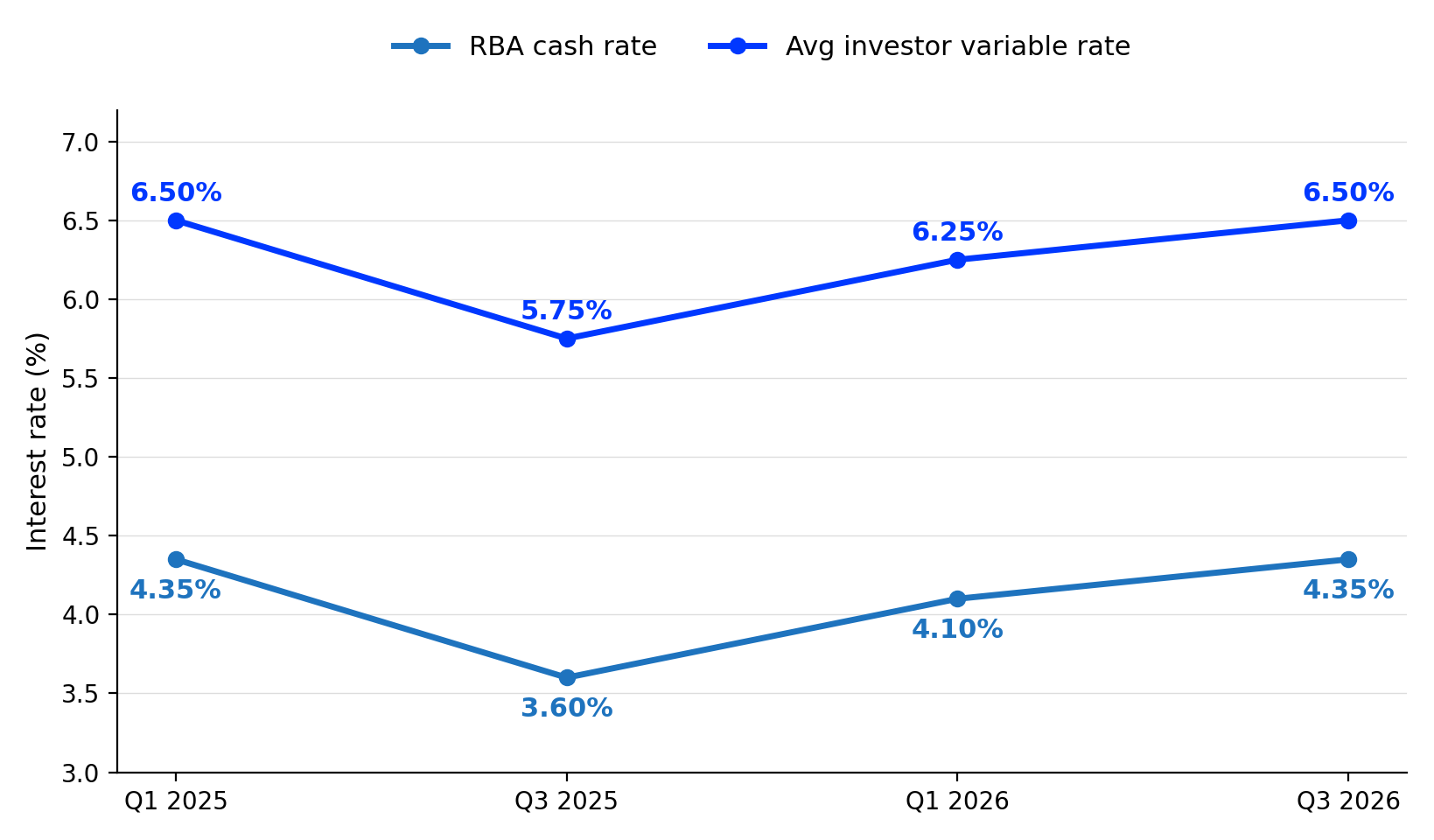
Your interest rate has moved. If your fixed term is ending or your variable rate has drifted above the market, refinancing is usually the fastest way to close that gap rather than waiting for your existing lender to act. The chart below shows how closely investor rates have tracked the cash rate cycle, and why a review after each move matters.
Your equity has grown. Rising property values or a shrinking loan balance can build enough usable equity to fund a deposit on another property once you cross the lender's assessed loan to value threshold. The next section walks through how that usable equity is calculated.
Cash flow is tight. A lower rate, a longer loan term, or switching from principal and interest to interest only can all ease pressure on a stretched budget. Each of those options trades short term relief for either more total interest or a longer repayment period, so it works best as a deliberate decision rather than a reflex fix when repayments feel heavy.
You are preparing to buy again. Refinancing before you start searching confirms how much usable equity and borrowing capacity you have, rather than discovering the constraint mid-negotiation on a new property. This signal is covered in more depth in the next section.
Your strategy has changed. An investor shifting from cash flow to growth, consolidating multiple loans under one lender, or adding an offset account for flexibility may find their original loan no longer fits. A refinance realigns the loan with where the portfolio is heading next, not where it started.
RBA Cash Rate vs Average Investor Variable Rate (2025 to 2026)
Source: RBA and lender rate tracking, 2026
Can Refinancing Help You Buy Another Investment Property?
Refinancing to access equity in investment property is one of the most common ways Australian investors fund a second purchase, because it avoids saving a fresh deposit from scratch.
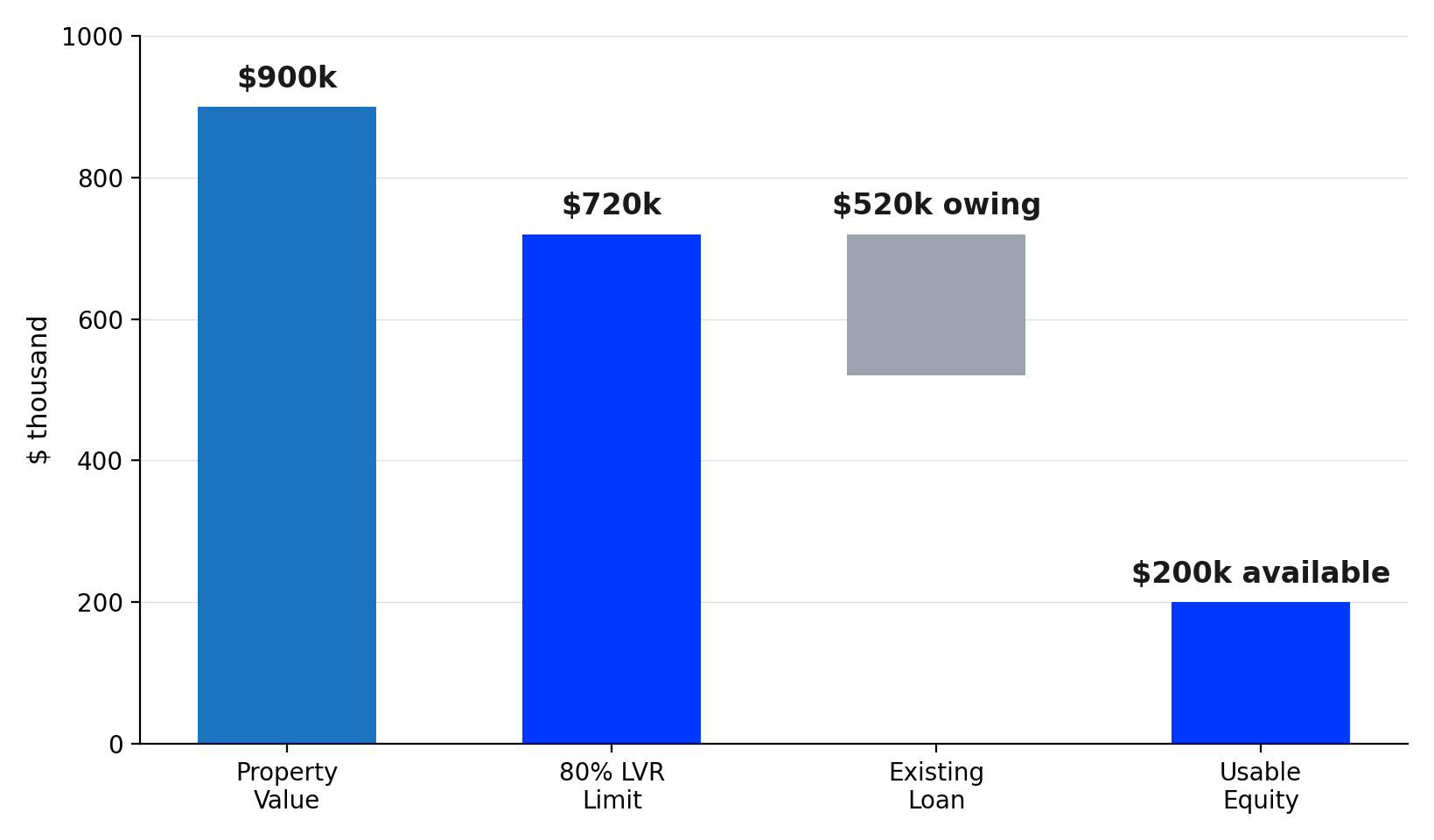
Usable equity is generally capped at 80% of your property's value, minus what you still owe. A property worth $900,000 with a $520,000 loan balance has an 80% LVR limit of $720,000, leaving roughly $200,000 in usable equity to redraw as a deposit on another property.
Whether that equity translates into approval depends on your borrowing capacity at the time, not just the equity itself. See our guide to the borrowing capacity formula lenders use to work out how much you can actually service on top of any new debt.
Usable Equity Example: From Property Value to Redraw
Source: Indicative lender lending policy, 2026
FOR EXAMPLE
An investor with a $750,000 property and a $400,000 loan has an 80% LVR limit of $600,000, giving $200,000 in usable equity, enough for a 20% deposit plus costs on a $900,000 second property in many lending scenarios.
Does Refinancing Increase Borrowing Capacity?
Refinancing does not directly increase your borrowing capacity, but it can improve the inputs that determine it. A lower repayment on your existing loan frees up serviceability for a new one, and consolidating high interest debt through a refinance can lower your overall debt to income ratio.
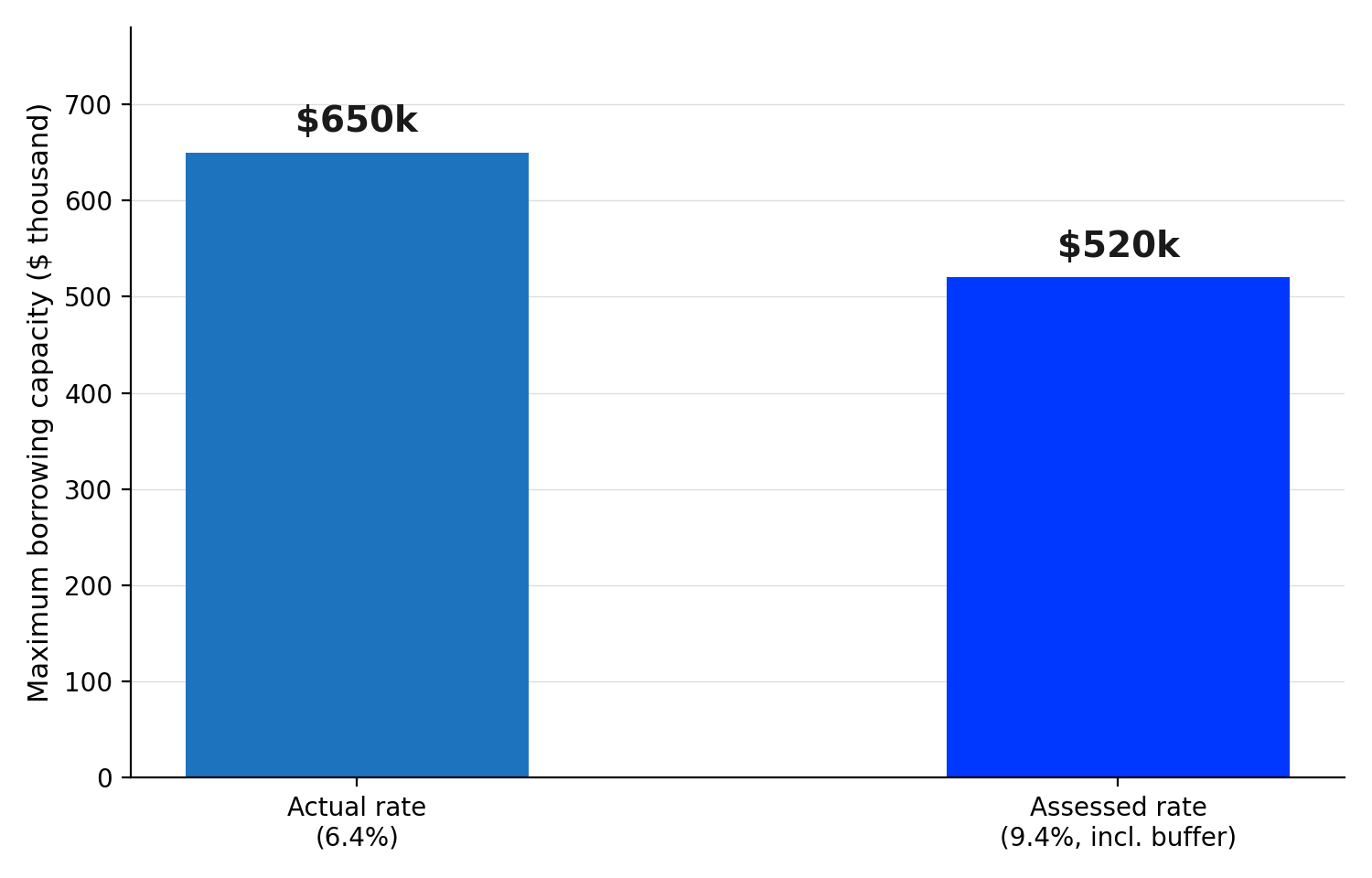
Lenders test every application at your loan rate plus the APRA serviceability buffer, an extra 3 percentage points added on top of your actual rate, as part of standard mortgage stress testing. On a 6.4% loan, that means the bank checks whether you could still service the debt at close to 9.4%, which is why borrowing capacity drops when interest rates rise for so many investors.
Different lenders apply this test differently, so a refinance to a lender with a more favourable assessment method can sometimes unlock capacity a current lender will not. See why banks calculate borrowing capacity differently for how much this can vary.
Borrowing Capacity: Actual Rate vs Assessed Rate
Source: APRA, 2026
Refinancing Costs You Should Consider
Refinancing is rarely free, and refinancing costs in Australia matter most on smaller loan balances or short holding periods.
Most of these costs are one off, and a rate saving of even 0.5 percentage points on a $600,000 loan can recover them within the first year. Break costs on fixed rate loans are the main exception, and should be quoted by your current lender, or checked against MoneySmart's refinancing guidance, before you commit to refinancing early.
Common Refinancing Mistakes Investors Make
Refinancing too often resets loan terms and can trigger fresh fees each time, which erodes any rate saving. Chasing the lowest advertised rate without checking the full offer, including fees and offset features, is the second most common error investors make.
Ignoring the long-term investment strategy is the costliest mistake. Accessing too much equity without a clear plan for it or refinancing purely to reduce repayments while giving up useful loan features, can leave an investor worse positioned for the next purchase. These same patterns show up in our guide to property investment mistakes first time investors make, regardless of experience level.
Final Thoughts
Refinancing an investment property is rarely just about chasing a lower number on a rate comparison site. It is a tool for adjusting cash flow, releasing equity, or repositioning a loan to match where your portfolio is heading next.
The right time to refinance is when the numbers support it after costs, not simply when a new offer lands in your inbox. Run the comparison properly, including the debt to income ratio and serviceability impact, before deciding, and weigh the refinance against your wider borrowing capacity rather than the headline rate alone.
Frequently Asked Questions
Recommended Reading
Two pages selected based on what readers of this article are most likely to need next.
Recommended Video
While many investors spend time researching growth areas and property types, this discussion highlights a different reality—your ability to continue investing is often determined not by what you buy, but by how your loans are structured and how your borrowing power is managed over time.