

Property Investing in Your 60s: Protecting What You Have Built

Wealth preservation in your 60s means shifting your goal from growing your net worth to protecting the income, cash and choices it gives you. For most property investors, that comes down to three checks: whether each property pays its way, whether you can reach cash when you need it, and how tax and the Age Pension will treat your next move.
This decade is when most Australians hold the most wealth they will ever have. It is also when a poor decision is hardest to undo, because there are fewer working years left to rebuild. Your 60s are the final stage of a longer property investment journey, and the costliest risks here are often invisible on a valuation.
Further down, we break down how much of a typical year of rent you really keep, and the asset test limits that can change the math on keeping or selling.
Why Wealth Preservation Matters More in Your 60s
The shift from building wealth to protecting it
Through your 30s, 40s and 50s, time does a lot of the heavy lifting. A bad year can be absorbed by rising wages and another decade of growth.
In your 60s, that safety net gets thinner. Every dollar lost has to come from savings rather than a pay packet, so the focus moves from how much you can build to how much you can keep.
Average Household Net Worth by Age in Australia
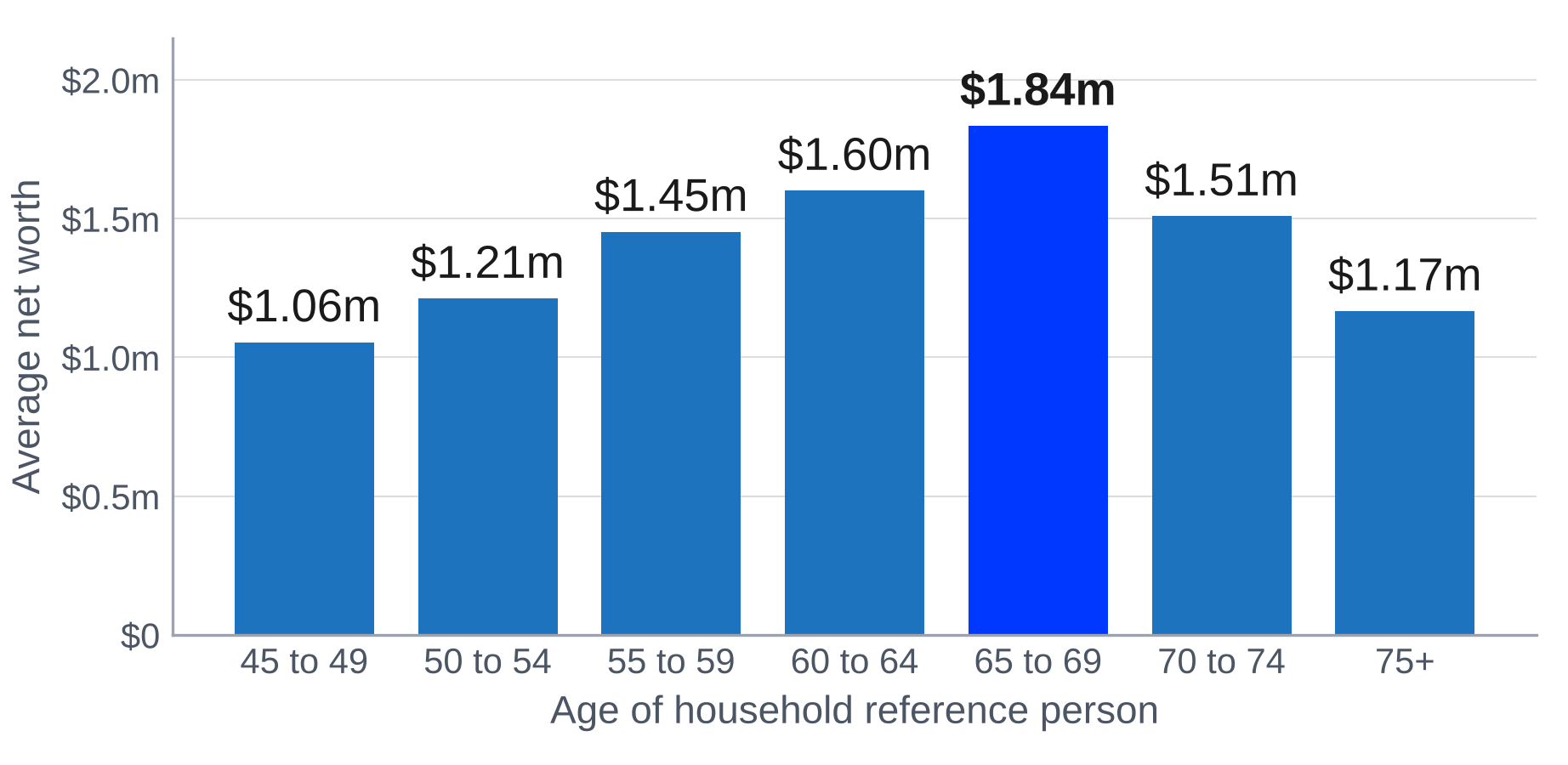
Source: Australian Bureau of Statistics, Household Income and Wealth, 2019 to 2020
Common risks that can erode accumulated wealth
Once people start living off their wealth, ordinary risks can speed up its decline.
Too much wealth tied up in property
Loan repayments that rise with interest rates
Large repair bills on older properties
Tax or pension changes triggered by a badly timed sale
Health and care costs that arrive with little warning
How to Check Your Financial Position Before You Change Anything
Before you sell, refinance or buy, get a clear picture of where your wealth sits. Many investors know their property values well but could not say how much cash they could reach within 30 days.
List your assets, debts, spending and accessible cash
Sort every asset by how quickly you could turn it into cash, then list every loan. Super, shares and savings sit at one end, while property sits at the other because selling takes months and real money.
Check your debt against your income using our guide to the debt to income ratio in Australia, then compare your yearly spending with how much you need to retire in Australia.
Check whether too much of your wealth is tied up in property
Two retirees can have exactly the same net worth and very different levels of flexibility.
Same Net Worth, Very Different Flexibility
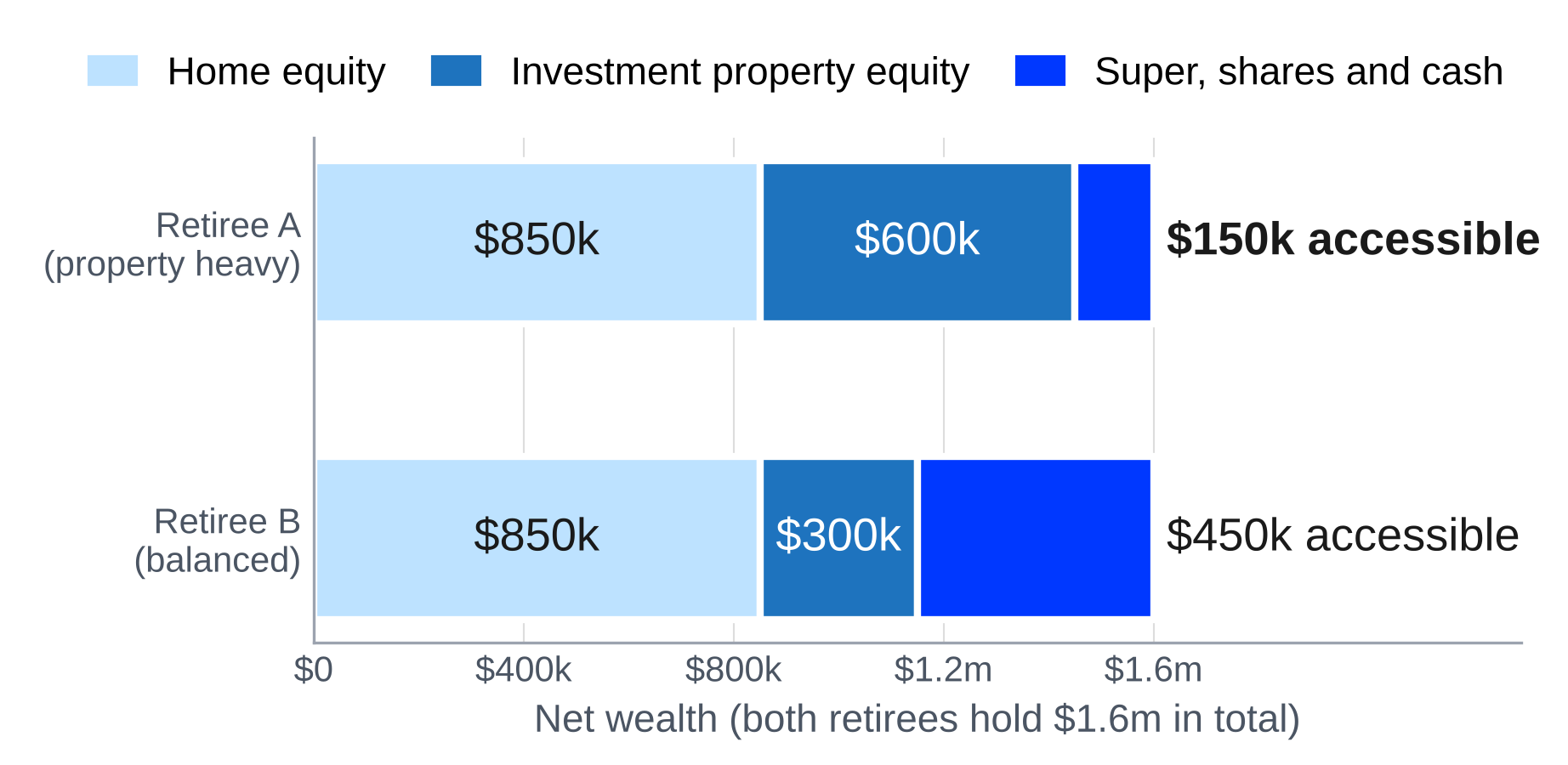
Source: FPW Group illustrative example, October 2026.
Retiree A is asset rich but cash light. A leaking roof or a new car could mean borrowing, drawing super down faster or selling under pressure, a balance our property vs super for retirement wealth comparison explores.
Should You Keep or Sell an Investment Property in Your 60s?
There is no single right answer. The better question is whether each property still does a clear job for your retirement.
When keeping a property can support your retirement
Holding can make sense when the property is debt free or close to it, the rent covers its costs with room to spare, and demand in the area is strong. Getting the balance between yield and growth right matters more now than chasing the next price rise.
When selling may improve cash flow or flexibility
Selling deserves a hard look when a property needs major work, still carries a large loan, or earns little after costs. Our guide on when to sell an investment property covers the tax, cost and market signals to watch.

How to compare rental income with the full cost of ownership
Gross rent is the number on the lease. Net rent is what is left after the property takes its share, and the gap is usually bigger than investors expect.
Where a Year of Rent Really Goes
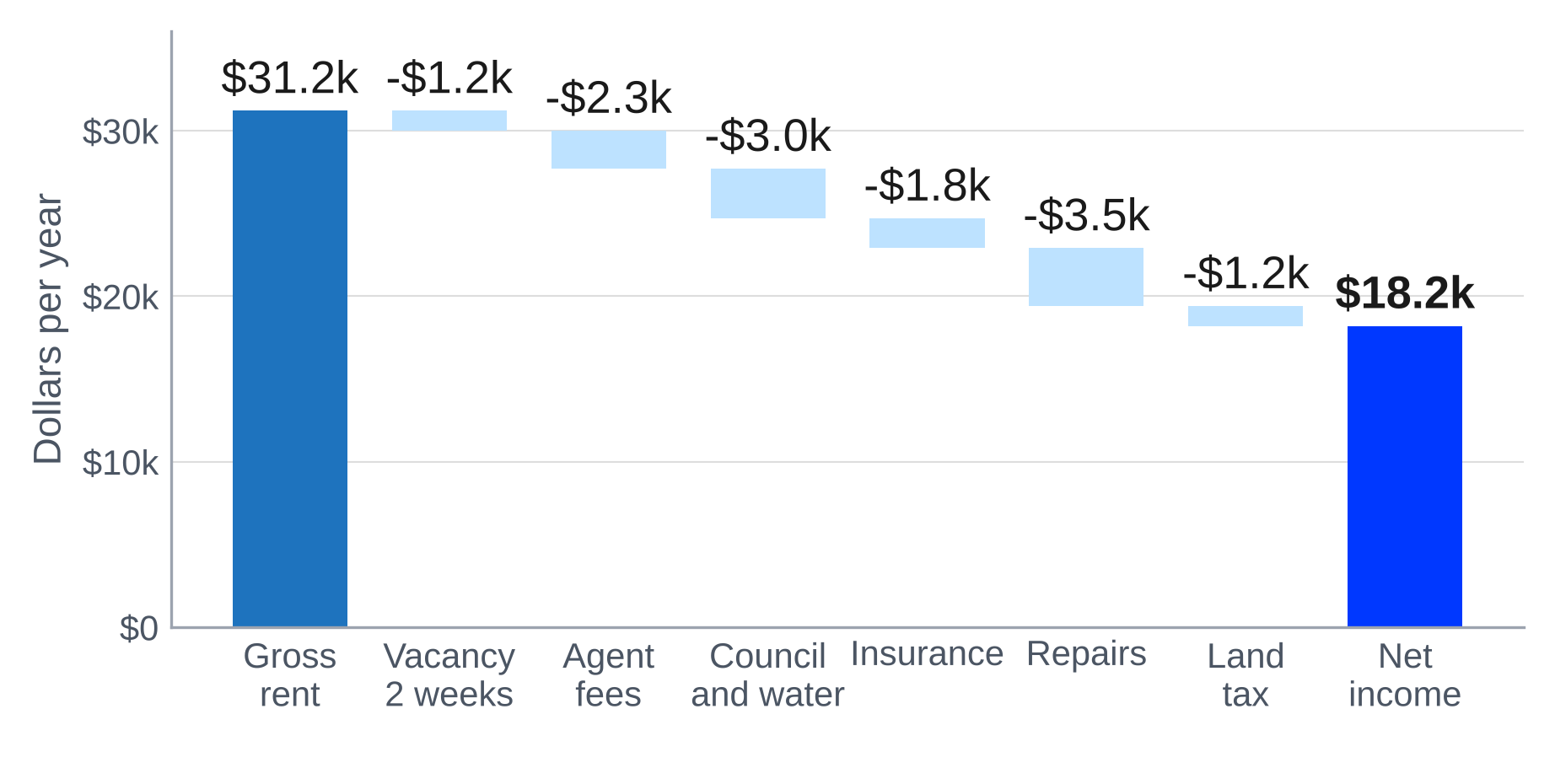
Source: FPW Group illustrative example, October 2026. Costs vary by property and state.
Land tax is one of the most missed costs, and our article on land tax mistakes property investors make shows how it creeps up
Questions to ask before selling, refinancing or restructuring
What does this property earn after all costs?
What would selling cost, including capital gains tax?
Would the sale change my Age Pension?
Could a simpler property do the same job?

How to Protect Property Equity Without Adding Financial Pressure
Equity only protects you if you can hold onto it through a rough patch. The main threats are debt costs, surprise bills and too little cash to cover them.
Check your loan repayments and interest rate exposure
On 29 September 2026, the Reserve Bank lifted the cash rate to 4.60%, its fourth rise this year. If you still carry an investment loan, a mortgage broker can compare paying it down, fixing part of it or restructuring it.
Budget for vacancies, repairs, insurance and maintenance
Older properties need bigger repairs, and those bills do not wait for a good month. Setting aside a fixed share of rent for upkeep, backed by suitable landlord insurance, turns a shock into a planned cost.
Keep enough cash for the unexpected
A useful test is simple: could you cover your largest likely repair bill and several months of living costs without selling anything? Knowing how lenders judge your debt and borrowing capacity at this age also shows how much room you have if plans change.
How Rental Income, Tax and the Age Pension Fit Together
Rental income, capital gains tax and pension rules are linked, so a change in one can ripple through the others. Net rent is taxed as income, while super pension payments from a taxed fund are generally tax free from age 60.
Understand the tax side of selling
Under reforms that are now law, the 50% CGT discount will be replaced with cost base indexation and a 30% minimum tax rate, but only for gains that build up after 1 July 2027. Our article on CGT grandfathering for existing investment properties explains what that means for property you already own.
Properties held before Budget night on 12 May 2026 also keep their current negative gearing treatment, which matters if you plan to use negative gearing in a retirement strategy.
Age Pension Assets Test Limits from September 2026
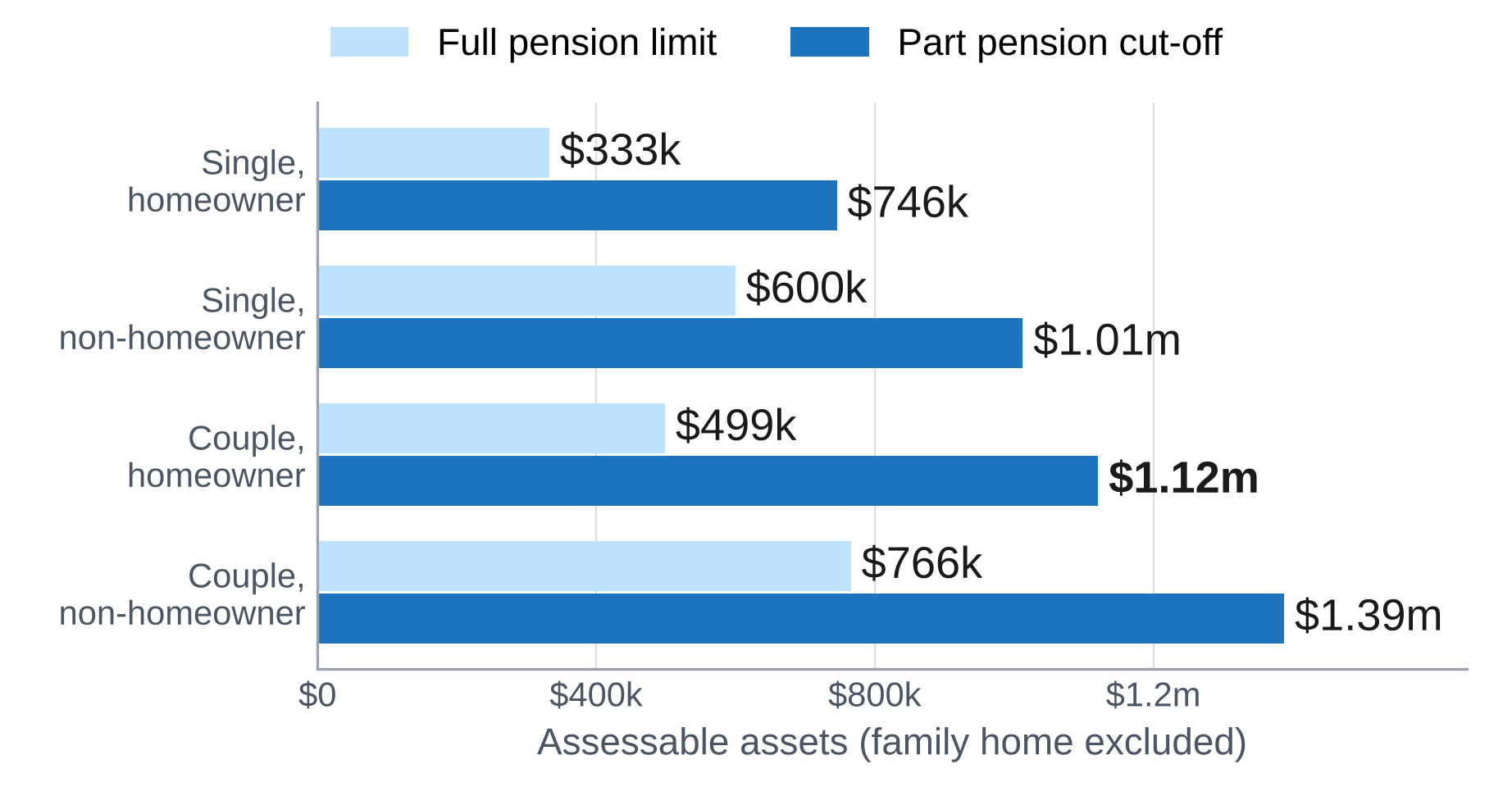
Source: Services Australia, Assets test for Age Pension, 2026
Above the full pension limit, the pension falls by $3 a fortnight for every $1,000 of assets, which works like a 7.8% yearly cost. Cash from a sale still counts as an asset and is deemed to earn income, so selling is not always the boost it seems.
Wealth Preservation Strategies for Different Retirement Situations
The right approach depends more on your situation than on the market. The table matches four common positions with the risk that matters most.
If you want to simplify your assets and estate
Fewer, simpler assets are easier to manage and easier for family to handle later. Some retirees look at downsizing in Australia and the downsizer contribution, which lets people aged 55 and over add up to $300,000 each to super from selling their home.
Simplifying does not mean giving up growth. A plan built around wealth creation through property can balance protection with long term returns.
Common Wealth Preservation Mistakes to Avoid
Most costly errors at this stage come from habits that worked well in earlier decades.
Holding an asset only because it has grown: past growth does not pay future bills.
Underestimating ongoing costs: repairs, rates and insurance tend to rise as a property ages.
Leaving too little cash: small problems turn into forced sales.
Acting before checking tax and pension rules: one sale can change your CGT bill and your pension in the same year.
Final Thoughts
Wealth preservation in your 60s is less about the next opportunity and more about making sure what you have built supports the life you want.
Know what each property earns after all costs, and keep enough cash so a repair or rate rise never forces your hand. Then check debt, tax and the Age Pension together before you sell, refinance or buy.
A property that does a clear job at a cost you can carry belongs in your plan. One that does not deserves an honest review while time is still on your side.
Frequently Asked Questions
Recommended Reading
Two pages selected based on what readers of this article are most likely to need next.
Recommended Video
Australia's record migration surge — peaking at over 528,000 people in a single year — created unprecedented housing demand almost overnight. We explain why the government used population growth as a deliberate tool to avoid recession, how that decision flows directly into property prices Australia-wide, and why rents have surged to record highs as a result.