

Why Falling Property Prices Don't Always Mean Cheaper Homes

Falling property prices do not automatically mean property is getting cheaper. A national or suburb median can drop simply because a different mix of homes changed hands that quarter, while the specific house you want may not have moved at all.
That gap between the headline and your shortlist is where most buyers get caught. Australia's median dwelling value has now fallen for five straight months, yet the size of that fall depends entirely on which city, which property type and which price bracket you look at. One capital is still sitting at its record high. One segment is down almost three times the national figure.
Reading those differences correctly is a basic skill in property investment in Australia, and it decides whether a lower median looks like a discount or a warning.
What a Falling Property Price Actually Tells You
A reported price fall is a statement about a sample of transactions, not about every property in the market. That is a far narrower claim than most headlines suggest.
Price, value and the difference that costs investors money
A transaction price is what one buyer paid one seller on one specific day. Value is an estimate of what a property would fetch under normal selling conditions, built from evidence across many similar sales.
Those two numbers diverge constantly. A single sale can land high because two determined bidders turned up, or low because the vendor needed a fast settlement. Neither says much about the street.
Why the median is useful and why it is not a price tag
The median is the middle sale price in a group of transactions. It is a good summary of what the market transacted at and a poor summary of what any individual home is worth.
Cotality is explicit about this. Its Home Value Index uses a hedonic regression method specifically to deal with the compositional bias that affects median prices, valuing each property by its own attributes such as bedrooms, land area and location rather than averaging whatever happened to sell.
Why Property Prices Can Fall Without Every Home Getting Cheaper
Three things can push a median down. Values can genuinely fall, the mix of what sold can shift toward cheaper stock, or both can happen at once in different corners of the same market.
The mix of homes selling moves the median on its own
Composition is the least understood driver in property reporting. When more entry-level homes transact and fewer premium ones do, the middle of the sample slides down even though nothing repriced.
This is not a theoretical risk right now. Cotality's quarterly estimate of home sales is tracking 15.5% below the same time last year, and thinner volumes make the mix effect larger, not smaller.
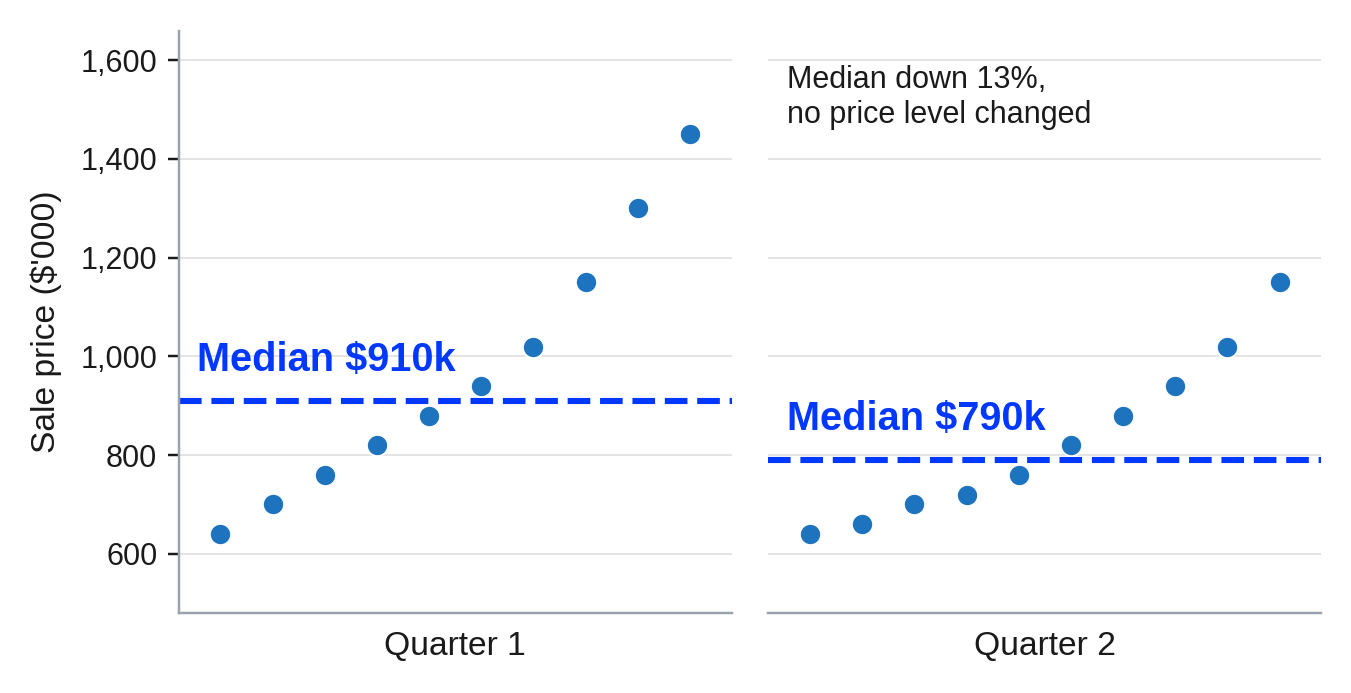
Source: Illustrative model based on Cotality Home Value Index methodology, September 2026.
Houses and units are not moving at the same speed
Over the three months to August 2026, capital city house values fell 4.0% while units fell 2.6%. Same dataset, same period, a gap of 1.4 percentage points that disappears the moment someone says, "property prices are falling".
Sydney houses fell 5.4% against 2.9% for units. Melbourne split 4.6% against 2.4%. Perth reversed it completely, with units down 4.1% and houses down 3.0%
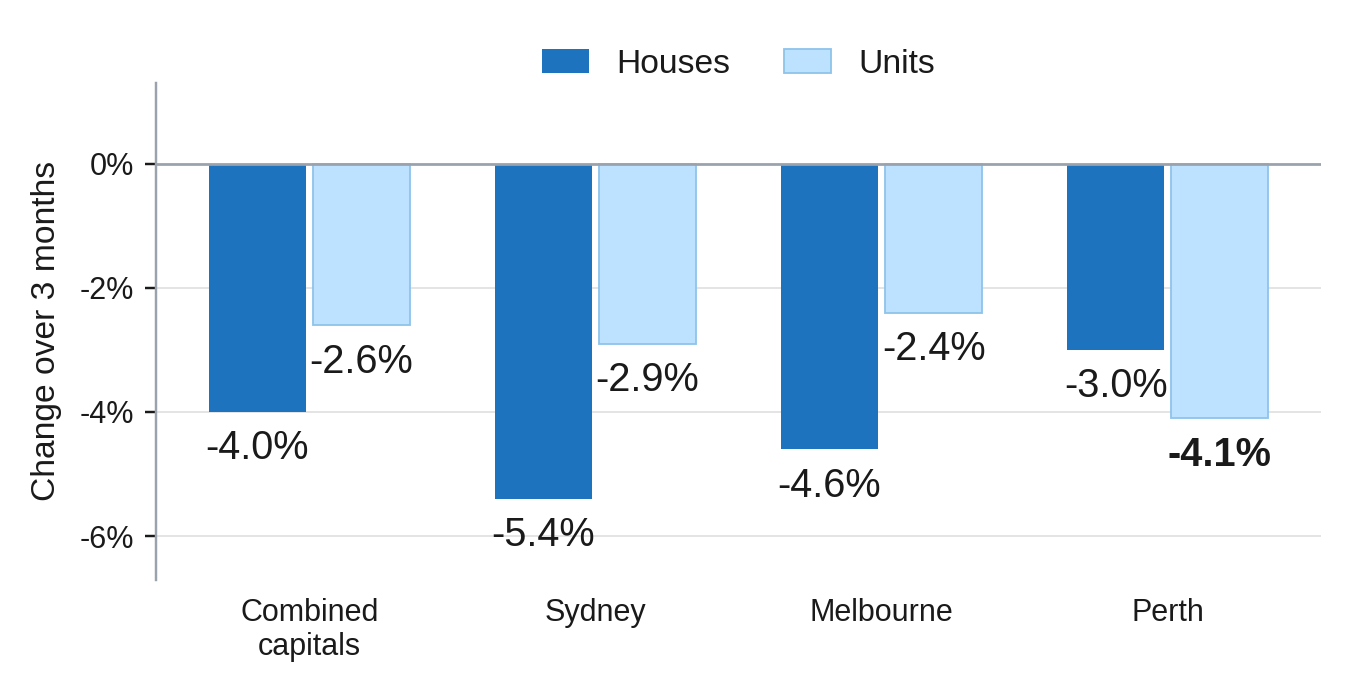
Source: Cotality Home Value Index, houses and units tables, August 2026.
The driver here is purchasing power, not taste. When assessment rates rise, the dollar figure a lender will advance shrinks fastest on the largest loans, which is why premium stock reprices first. Anyone unclear on that mechanism should start with how the borrowing capacity formula works.
At the other end, competition has not disappeared. The housing shortage in Australia keeps pressure on the cheaper end of every capital, which is part of why lower-priced stock held up longer.

Why Australian Property Prices Cannot Be Reduced to One Number
The national figure is an average of markets that are not doing the same thing. Over the twelve months to August 2026 the national index rose 2.7%, a number that describes almost nobody's experience.
Perth gained 15.6% over that year and Darwin 14.6%. Melbourne lost 4.7% and Sydney 4.6%. That is a spread of more than twenty percentage points living inside a single national headline.
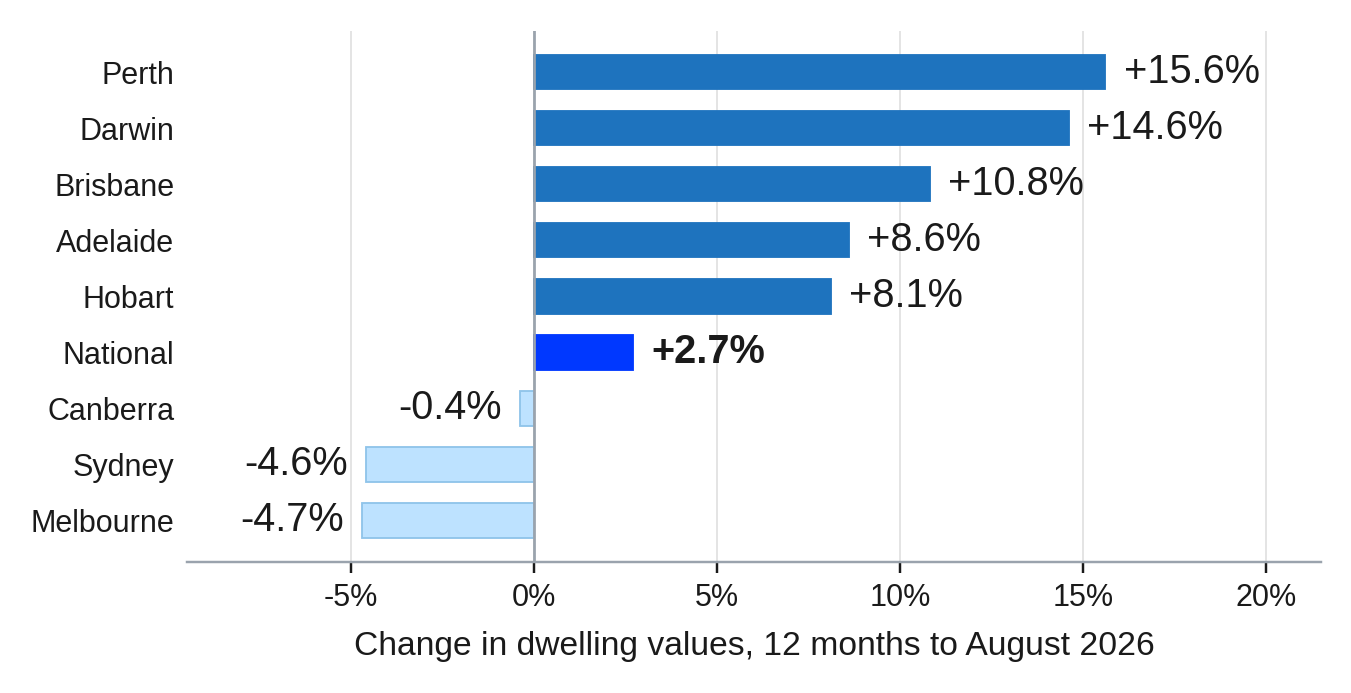
Source: Cotality Home Value Index, August 2026 results.
Quarterly direction can contradict annual direction
Most capitals that are strongly up over the year are down over the quarter. Brisbane is 10.8% higher annually and 2.7% lower across three months.
Both are correct. They answer different questions, and an investor quoting one is often arguing with somebody reading the other. Anyone following the housing market slowdown needs to know which window a commentator is using.
How to Tell Whether Property Is Actually Getting Cheaper
The useful question is narrower than the one most buyers ask. Not "has the suburb median fallen" but "are homes like mine selling for less than they were"
Start with comparable sales, not the suburb median
Pull three or four genuinely similar recent sales. Same property type, similar land size, condition and position, then compare them against equivalent sales from six and twelve months earlier.
That handles the mix problem automatically, because you are holding the property roughly constant. It is the same discipline behind learning how to read a suburb profile properly, and it is where the question of whether buying below market value creates instant equity gets settled
Check the price bracket you are buying into
The correction has been anything but even. Upper-quartile house values sit 10.7% below peak in Sydney and 10.5% below peak in Melbourne, against a national index 3.6% below its March high
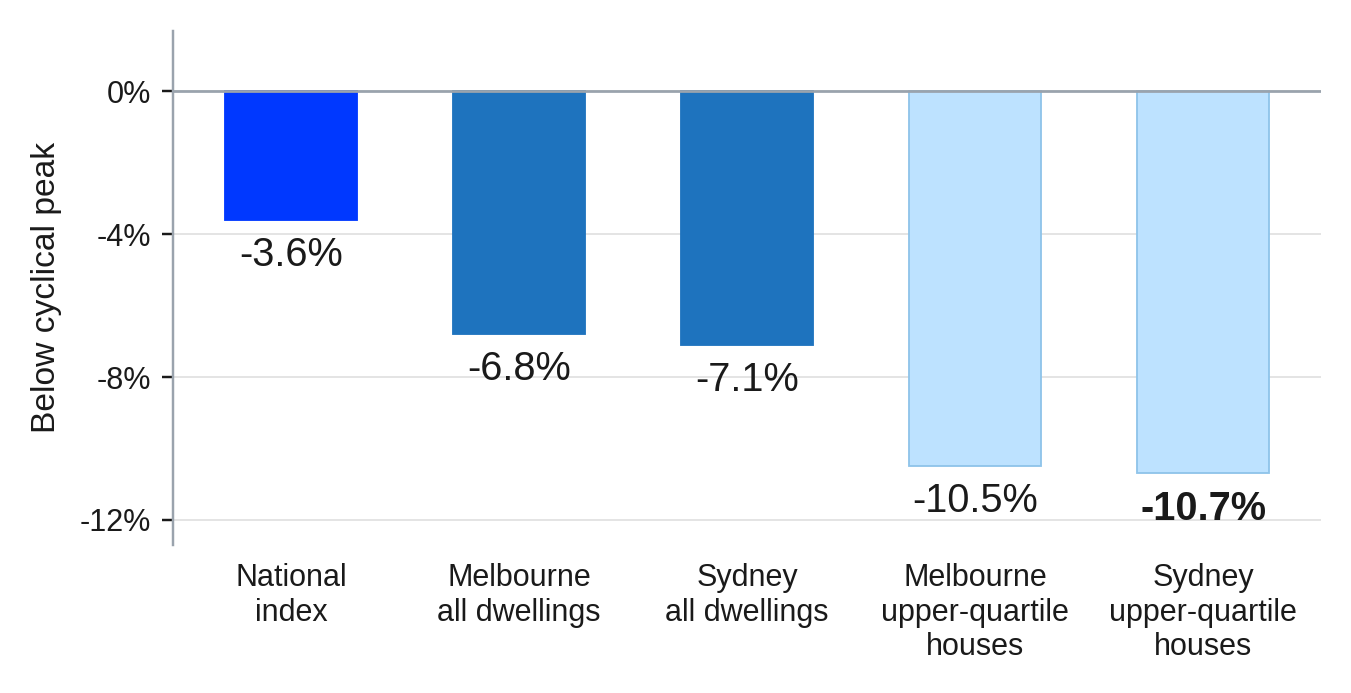
Source: Cotality monthly housing chart pack, September 2026
Shopping in the bottom half of a market, the national figure overstates your discount. Buying premium stock, it understates it badly. Same headline, opposite meaning.
Read days on market and vendor discounting
Prices are the last thing to move. Selling conditions shift first: homes now take a median of 39 days to sell against 28 a year earlier, and the median vendor discount across the capitals has reached 4.2%.
Auction results tell the same story. Clearance rates have held below 50% since early June, and auction clearance rates are usually the fastest read on which side of the table holds the power.
How to Tell Whether Property Is Actually Getting Cheaper
A lower median is an invitation to investigate, not evidence of value. What this market offers is time and negotiating room, which matters a great deal if the asset is the right one.
It is also a market where finance is the binding constraint rather than price. Knowing what you can borrow today, not what you could borrow in 2024, decides which bracket you are shopping in, and a mortgage broker can settle that question in an afternoon.
Falling headlines also push some owners toward the exit, and the record on why investors sell at the worst possible time shows how costly that timing usually is.
Rental conditions are pulling the other way. National gross rental yields reached 3.79% in August 2026, the highest since September 2019, because rents rose 5.7% over the year while values fell. Understanding how interest rates affect house prices explains why those two lines moved apart.
Final Thoughts
Property prices are falling across most of Australia, and that is a real shift after five consecutive monthly declines. What it does not tell you is whether the home you want has become cheaper.
A median moves when values move and the mix of sales moves, and telling those two apart is the whole job. Houses and units are falling at different rates, capital cities sit twenty percentage points apart over the past year, and the premium end carries roughly three times the national decline.
Move the question from the headline to your shortlist. Compare the same property type in the same price bracket, check where your target sits against both, and read selling times alongside the price data. That is how you tell a real price drop from a number that only looks like one

Frequently Asked Questions
Recommended Reading
Two pages selected based on what readers of this article are most likely to need next.
Recommended Video
Most buyers think success comes from timing the market, but the real difference between people who build wealth and people who get stuck comes from buying the right asset with the right strategy, structure and support.