

Property Investing in Your 40s: Accelerating Before Retirement

No, it is not too late to start investing in your 40s. With 15 to 25 years before most people retire, property can still build real wealth, but the loan, the cash flow and the exit plan now matter as much as the property itself.
Your 40s often bring a higher income and more home equity, which makes it tempting to catch up fast. The risk is that a shorter runway leaves less time to recover from a stretched loan or the wrong asset.
Below, we show how your age quietly changes the loan a bank offers, what one property can still do, and how the plan shifts at 40, 45 and 50. See also our guide to property investment in Australia.
Why Your 40s Can Change the Way You Invest
You may have more income, equity and borrowing power
Many people reach their 40s with a higher salary, years of home loan repayments behind them and a longer credit history. That base can make investing in your 40s faster than starting from scratch.
But your investment timeframe is becoming more important
Now the question is how a new loan fits the years you have left. The ABS found people who retired in 2024-25 stopped at 63.8 on average, while workers plan to retire at 65.6.
That gap matters. A plan built on working to 67 can come undone if health, family or work brings the finish line forward.
Your strategy needs to account for more than property prices
When investing in your 40s in Australia, debt, cash flow, family costs, super and your retirement goal all compete for the same income. Our guide to borrowing capacity explains how lenders weigh these together.
Median Super Balance by Age and Sex, 30 June 2024
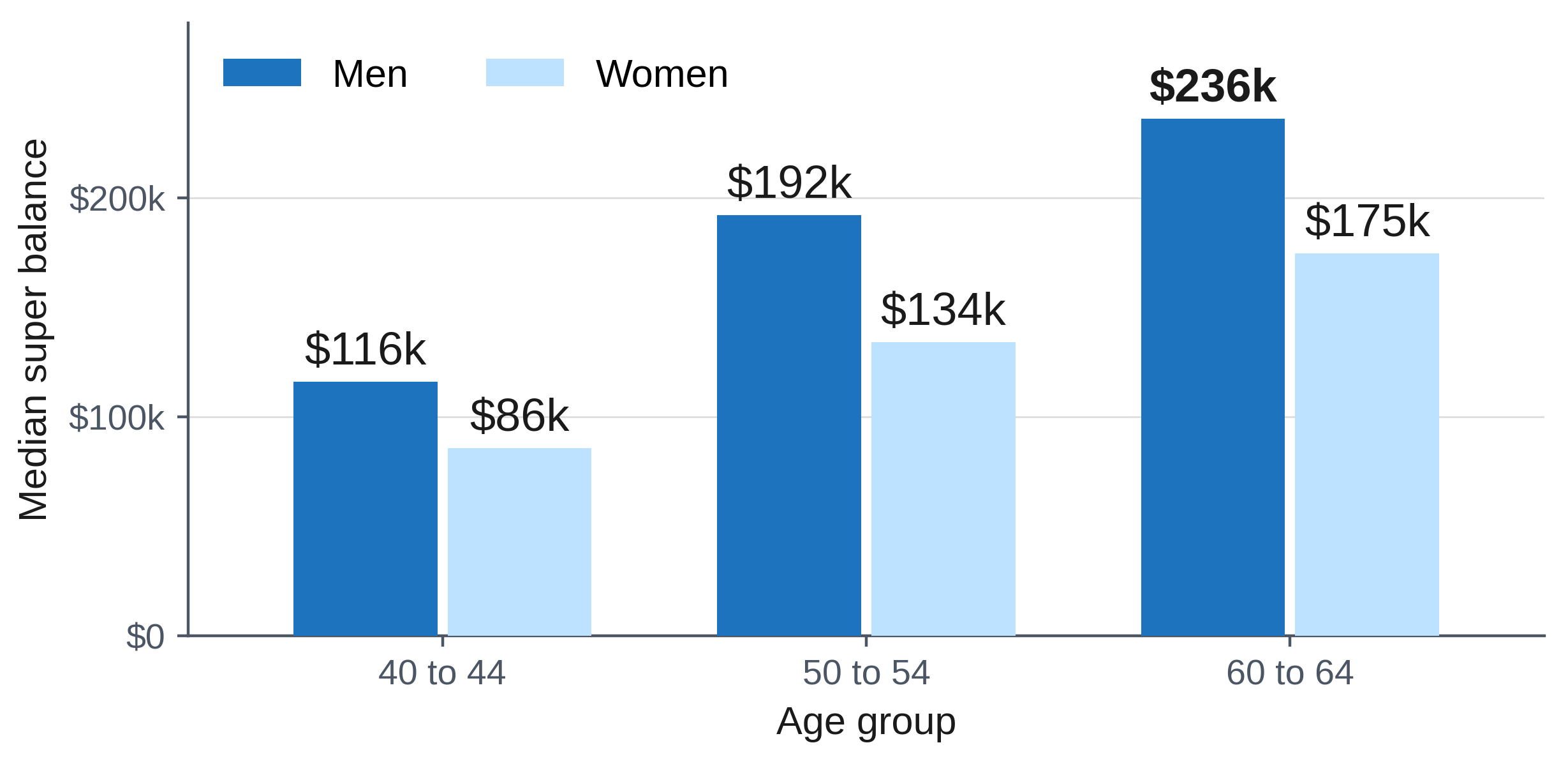
Source: Australian Taxation Office, Taxation Statistics 2023-24, Individuals statistics, released June 2026.
Is It Too Late to Invest in Property in Your 40s?
Why starting later does not automatically mean starting badly
Building wealth in your 40s means fewer years of growth, but usually more income and equity to start with. A later start that is well planned often beats an early start that was rushed.
What you can still achieve over 15 to 25 years
Here is what one property bought at 42 could look like by 67.
A $750,000 Property Bought at 42: Value and Loan Balance to Age 67
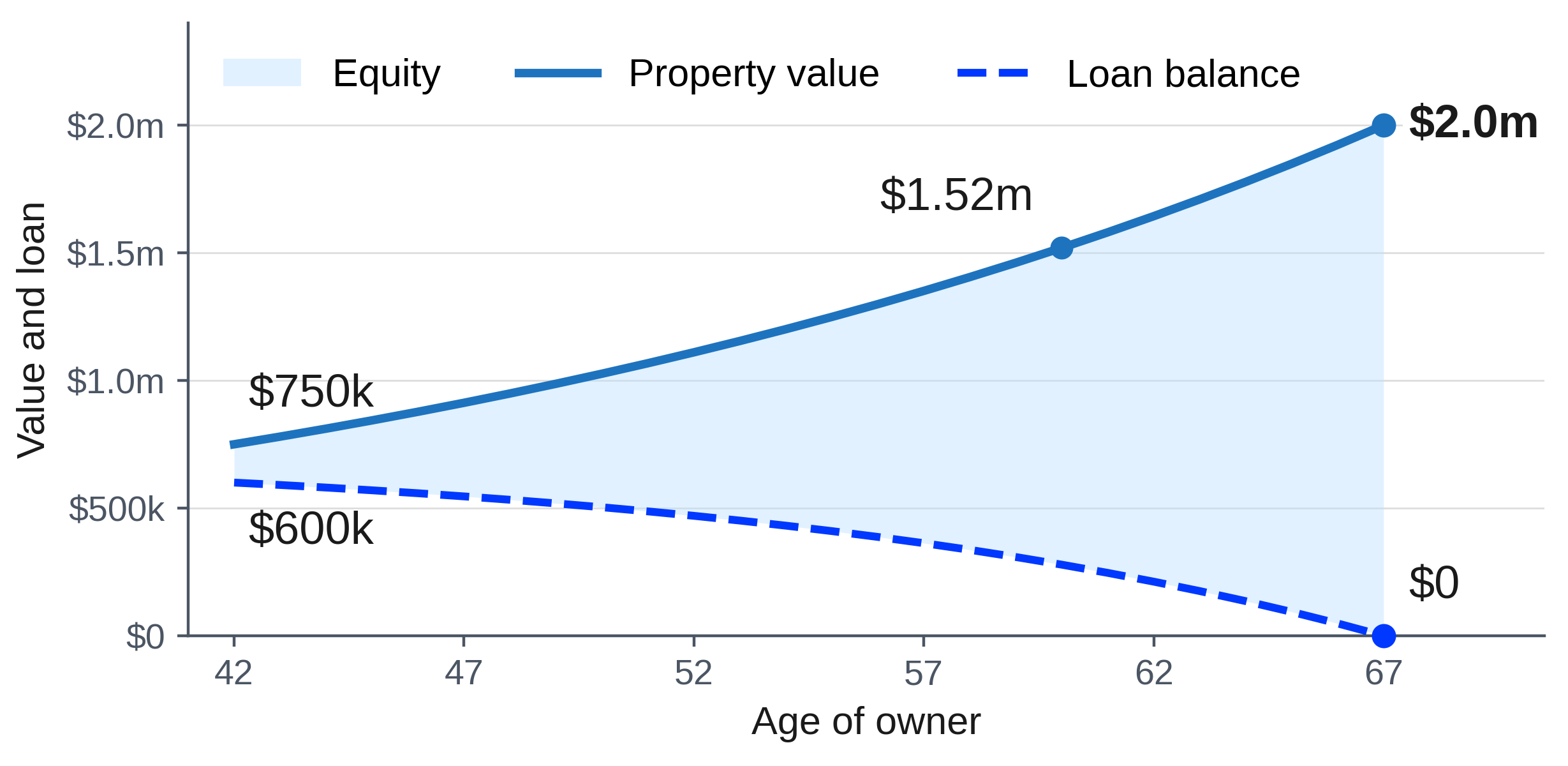
Source: FPW Group illustration: 4% growth, 6.85% rate. Not a forecast.
Why trying to "catch up" can create unnecessary risk
Catching up often means borrowing the maximum or buying several properties close together. In your 40s, there are fewer years to recover if that goes wrong.
Western Australia dominates the top of any Australian yield table, and the numbers are not close. South Hedland apartments post a 14.1% gross yield on a $310,000 median with $838 per week median rent. Newman apartments match that figure on a $225,000 median and $610 per week rent.
But financial commitments can increase too
Your 30s often bring a mortgage, children, childcare and a bigger car. Each one competes for the same income you want to invest, so a plan matters more than speed.
How to Build Wealth in Your 40s Through Property
Start with the outcome, not the property
Decide whether property should provide rent, equity to sell later, or both. Our guide on how much you need to retire in Australia helps you set the number
Work out your borrowing capacity
Lenders test your income, debts and living costs at 3 percentage points above the actual rate, a buffer APRA has kept. Your debt to income ratio also shapes the answer.
Age matters too. Many lenders ask how a loan will be repaid if its term runs past your planned retirement, so a shorter term may be the realistic option.
Monthly Repayment on a $600,000 Loan by Loan Term
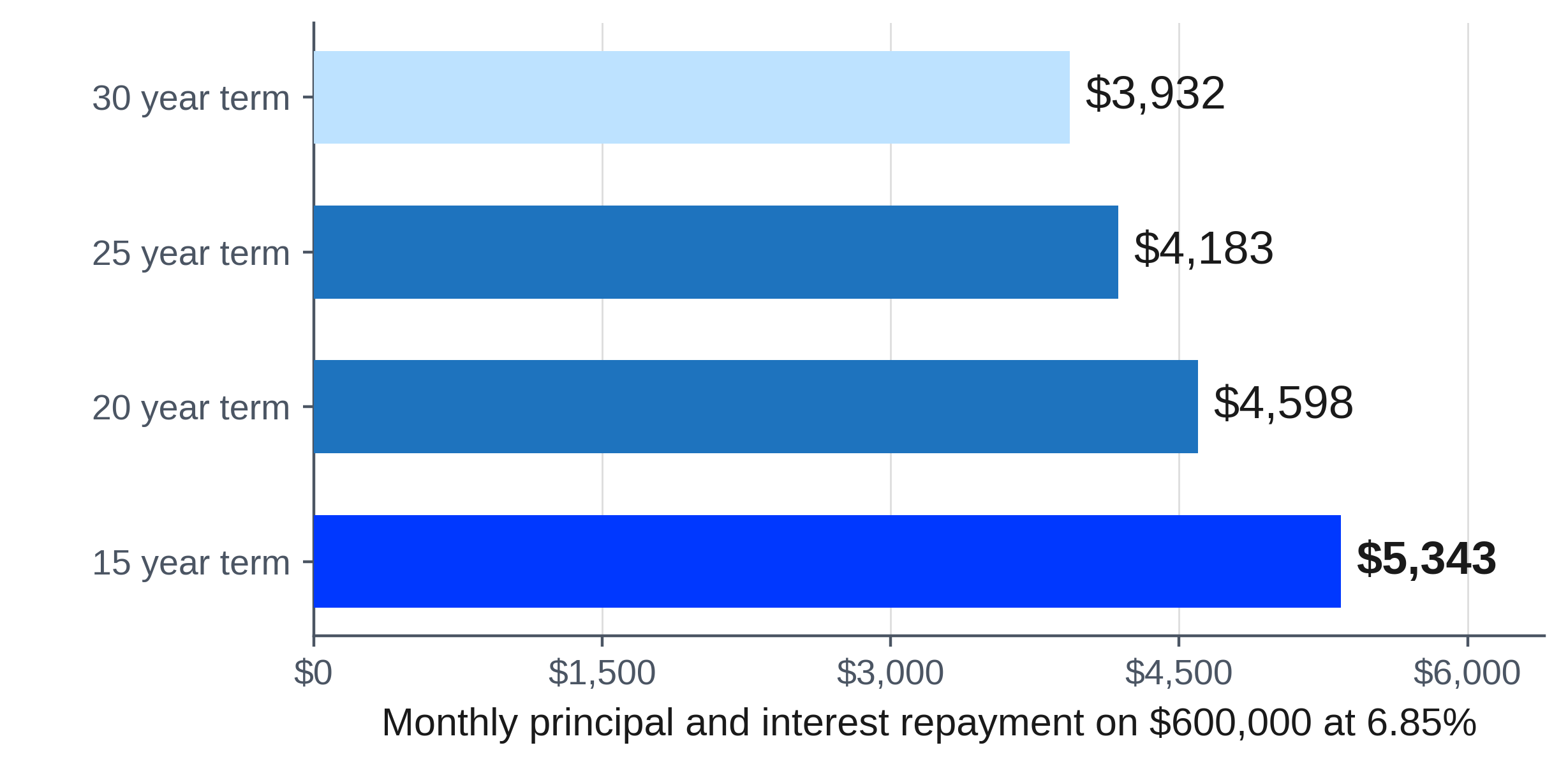
Source: FPW Group calculations assuming a 6.85% investment loan rate.
Assess whether existing home equity can help
Usable equity is generally up to 80% of your home's value, less what you owe. On a $1 million home with $350,000 owing, that is $450,000, and every dollar used is new debt.
Values can move against you. Cotality found national values fell 1.1% in September 2026, leaving them 5.2% below the March peak. See how refinancing an investment property releases equity.
Understand the cash flow impact before buying
Rent rarely covers all the costs at today's rates. Cotality reported a national gross rental yield of 3.79% in August 2026, the highest since 2019, yet still well below investment loan rates.
Yearly Cash Flow on a $750,000 Investment Property
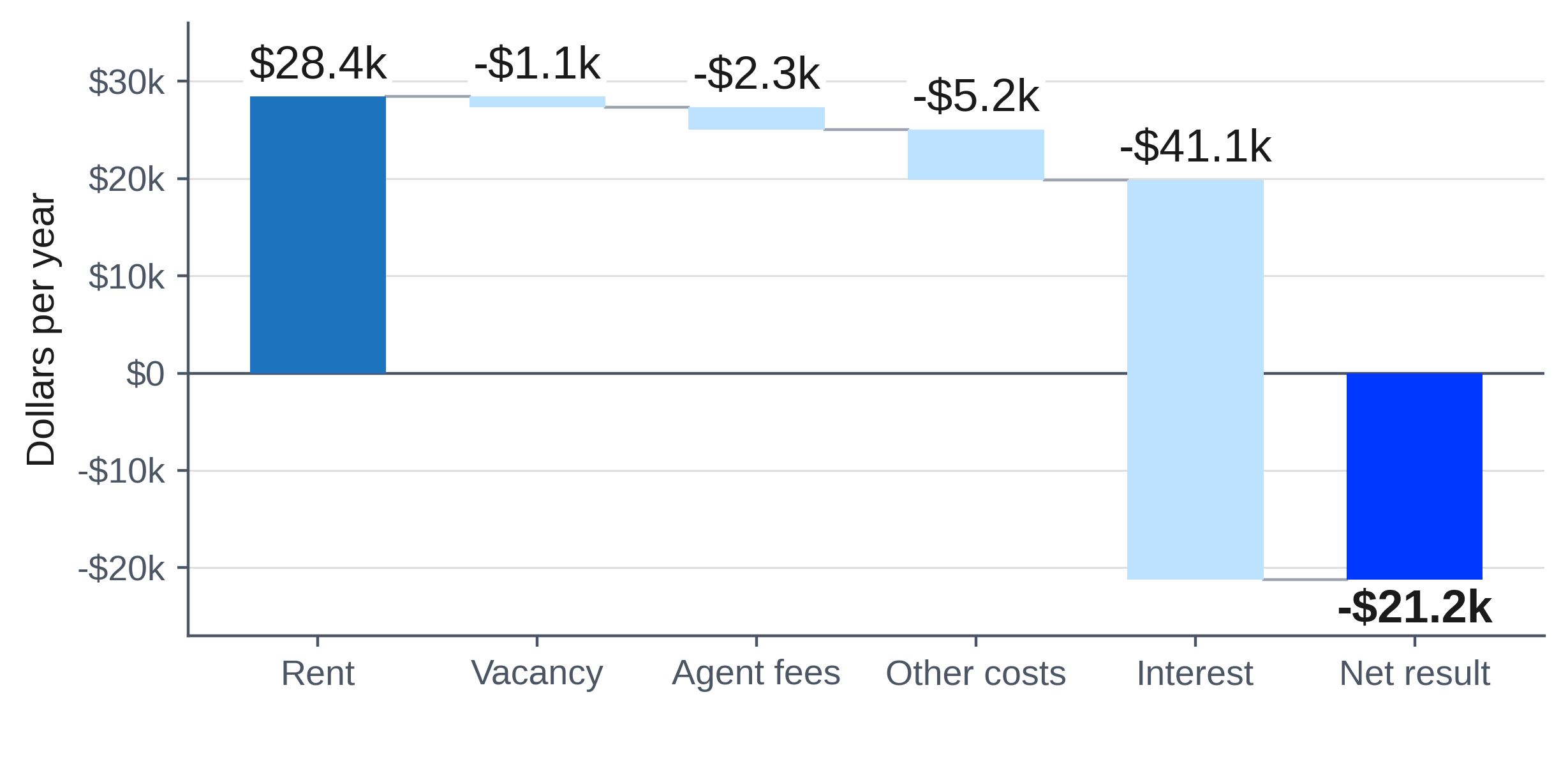
Source: FPW Group example: 3.79% yield, $600,000 interest only loan at 6.85%
Tax rules changed in 2026. From 1 July 2027, losses on established homes bought after 12 May 2026 cannot reduce tax on wages, as our guide to the negative gearing rules explains.

What Should You Look for in an Investment Property in Your 40s?
Growth potential versus immediate cash flow
A growth property can build more equity but costs more to hold. A higher yield property is easier to carry but may grow slower, as our guide to yield vs growth explains.
Location fundamentals matter more than age alone
Strong locations share the basics: jobs, population growth, infrastructure, limited new supply, rental demand and affordability. See our guides to investment grade suburbs and the best places to invest in property in Australia.

Consider the likely holding period
A property bought at 45 may need holding until 60 or later to recover buying costs and grow. If you might sell sooner, choose something easy to sell, not just easy to buy.
Should You Focus on One Property or Build a Portfolio?
Property investment before retirement depends on where you start.
Illustrative scenarios only. Your options depend on your full financial position.
When one well-selected property may be enough
If one property paid off by retirement, plus your super, meets your income target, more debt adds risk without much benefit.
When additional properties could make sense
A second property can help when income is strong, buffers are healthy and the first property is performing. Each purchase should stand on its own numbers.
Why portfolio growth should not become the goal itself
The number of properties is not the measure of success. A property portfolio before retirement only helps if it can be paid down or sold in time.
Common Property Investing Mistakes to Avoid in Your 40s
Borrowing to the maximum because you can
A bank approval is a ceiling, not a recommendation. Our article on maximum borrowing capacity looks at where that line should sit.
Chasing growth without considering cash flow
A shortfall you can carry at 42 can feel very different at 55, with fewer working years left to fund it.
Buying based on a short-term market forecast
Conditions change fast. The RBA lifted the cash rate to 4.60% on 29 September 2026, its fourth rise this year, so a long-term purchase should still work if forecasts prove wrong.
Ignoring the retirement exit strategy
Decide early whether you will sell, pay down or keep the property in retirement. Each choice affects tax and cash flow, as our guide on when to sell an investment property shows.
Assuming property automatically creates retirement income
A property with a large loan produces little spare income. Rent becomes retirement income once most debt is gone, the idea behind negative gearing as a retirement strategy.
How to Build a Property Strategy Before Retirement

Define the wealth target
Set a clear number, such as $80,000 a year of retirement income, and work out how much super, rent and savings will each provide.
Establish your financial limits
Agree on your maximum total debt, your minimum cash buffer and the latest age you are willing to carry a loan.
Set your property criteria
List the price range, locations, property type, yield and growth drivers you will accept before you start looking.
Decide what needs to happen by 50
Name the milestone, such as owning a second property or cutting total debt by a set amount by your 50th birthday.
Review the strategy as your circumstances change
Check the plan every year or two, and after any change in income, health, family or rates. Independent investment property financial advice helps you test each step against your full position.
What Should Your Property Strategy Look Like at 40, 45 and 50?
Around 40: Position and build
Use your income and equity carefully to buy well, while keeping a buffer and enough time to recover from mistakes.
Around 45: Accelerate selectively
Add debt or another property only if it clearly improves the end result. If the first purchase is not performing, fix that first.
Around 50: Consolidate and prepare
Shift the focus to paying down debt, improving cash flow and keeping money easy to access. Super and property can then work together, as our guide to property vs super shows.
The Goal Is Not More Property. It Is More Financial Choice.
Investing in your 40s is not about trying to recreate what you might have done in your 20s. It is about making the years before retirement count.
Higher income and home equity can speed things up, but only when the debt fits your retirement timeline. Know your realistic finish line, test the cash flow at higher rates and buy property you are happy to hold until the loan is under control.
Done well, property can give you more choice about when you stop working and how you live after that. That choice, not the number of properties you own, is the real measure of success.
Frequently Asked Questions
Recommended Reading
Two pages selected based on what readers of this article are most likely to need next.
Recommended Video
As of April 2026, Treasury is actively modelling potential changes ahead of the May Budget. This isn’t speculation—it’s confirmed. In this video, we unpack exactly what’s being proposed, who stands to benefit, who could be impacted, and what it could mean for investors, renters, and first home buyers across Australia.