

Sydney Property Market Forecast 2026: The Suburbs to Watch
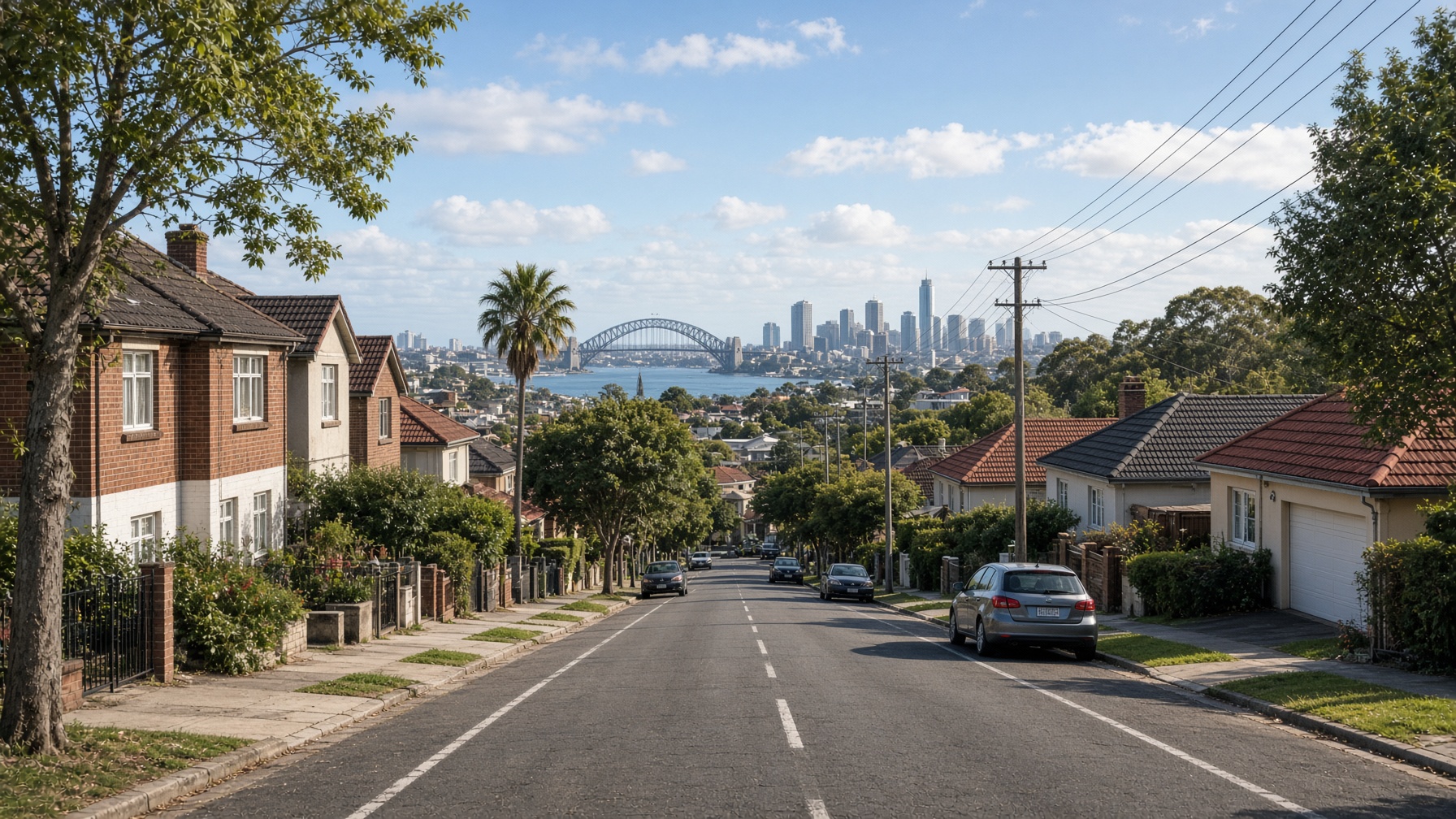
Sydney's citywide figures suggest a market in retreat. Dwelling values are down 5.3% since their January peak, and the big four banks cannot agree on where the year ends. A single average was never going to tell the real story in a city this large.
Beneath the headline numbers, the Sydney property market forecast for 2026 is really two forecasts running side by side. Premium suburbs are absorbing the sharpest corrections, while affordable corridors in the west and southwest are still recording growth in the high single digits and beyond. For an investor, that split matters more than the citywide figure ever could.
This article works through where Sydney prices actually stand, what is driving the divergence between suburbs, which corridors look best positioned through 2026, and what could still change that picture.
Where Sydney Property Prices Stand Right Now
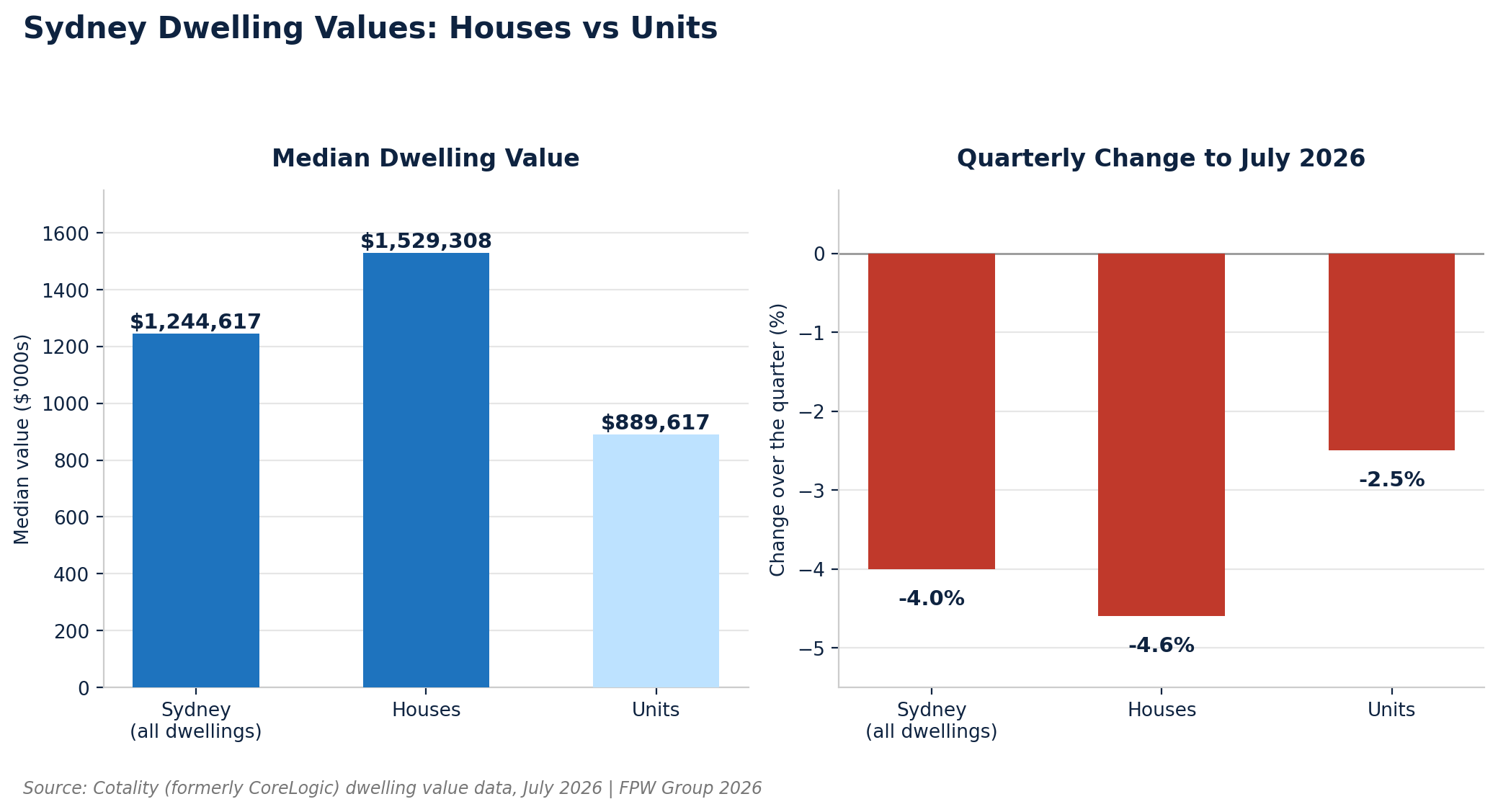
Cotality's July 2026 update put Sydney's median dwelling value at approximately $1,244,617, with houses at $1,529,308 and units at $889,617. Values fell 1.4% over the month and 4.0% over the quarter, leaving the market 5.3% below its January 2026 peak.
Houses are correcting faster than units. House values dropped 4.6% over the quarter compared with a 2.5% fall for units, a gap that points to affordability pressure pushing more buyers toward the cheaper end of the market.
Source: Cotality (formerly CoreLogic) dwelling value data, July 2026 | FPW Group 2026
What Could Move Sydney Prices from Here
The next six to twelve months hinge heavily on interest rates. The RBA cash rate sits at 4.35%, and three of the four majors expect the first cut no earlier than mid-2027, which means borrowing costs are likely to stay a handbrake on demand through the rest of 2026. That backdrop is central to understanding property investment and interest rates more broadly, not just for Sydney.
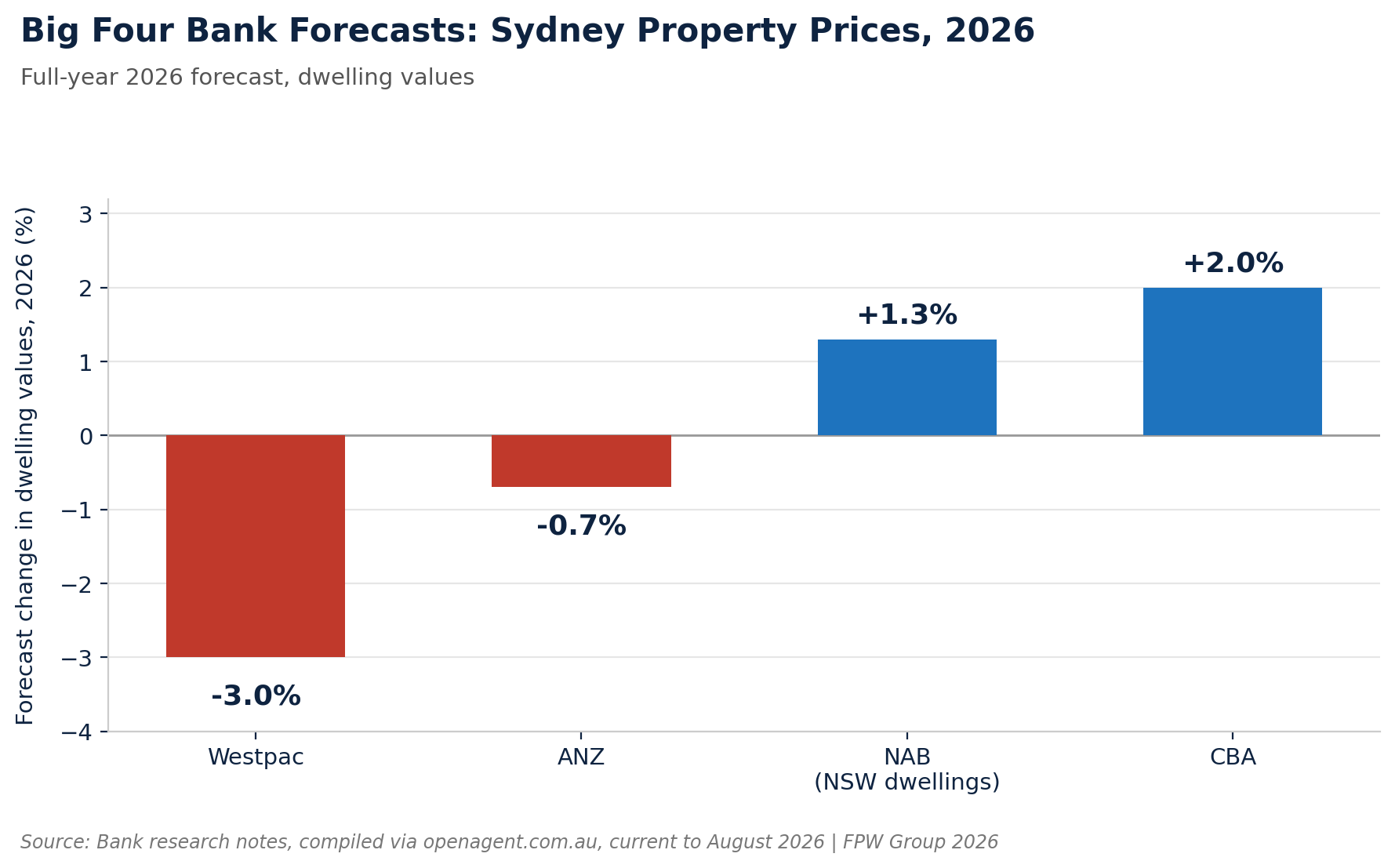
The big four banks are genuinely split on where that leaves prices by December. CBA is the most optimistic at plus 2.0%, NAB's New South Wales dwelling forecast sits at plus 1.3%, ANZ expects a 0.7% fall, and Westpac is the most bearish at minus 3.0%. That spread is wide enough to tell two different stories about the same market.
Source: Bank research notes, compiled via openagent.com.au, current to August 2026 | FPW Group 2026
Supply and migration are pulling in the other direction. Greater Sydney's population grew by 75,200 people in 2024 to 2025, while New South Wales is running roughly 25,000 approvals behind the pace needed to meet its Housing Accord targets. That combination of strong population growth and constrained new supply is a familiar driver behind Australia's broader housing shortage, and it continues to support rents even while prices correct.
Why Suburb Selection Matters More Than the City Average
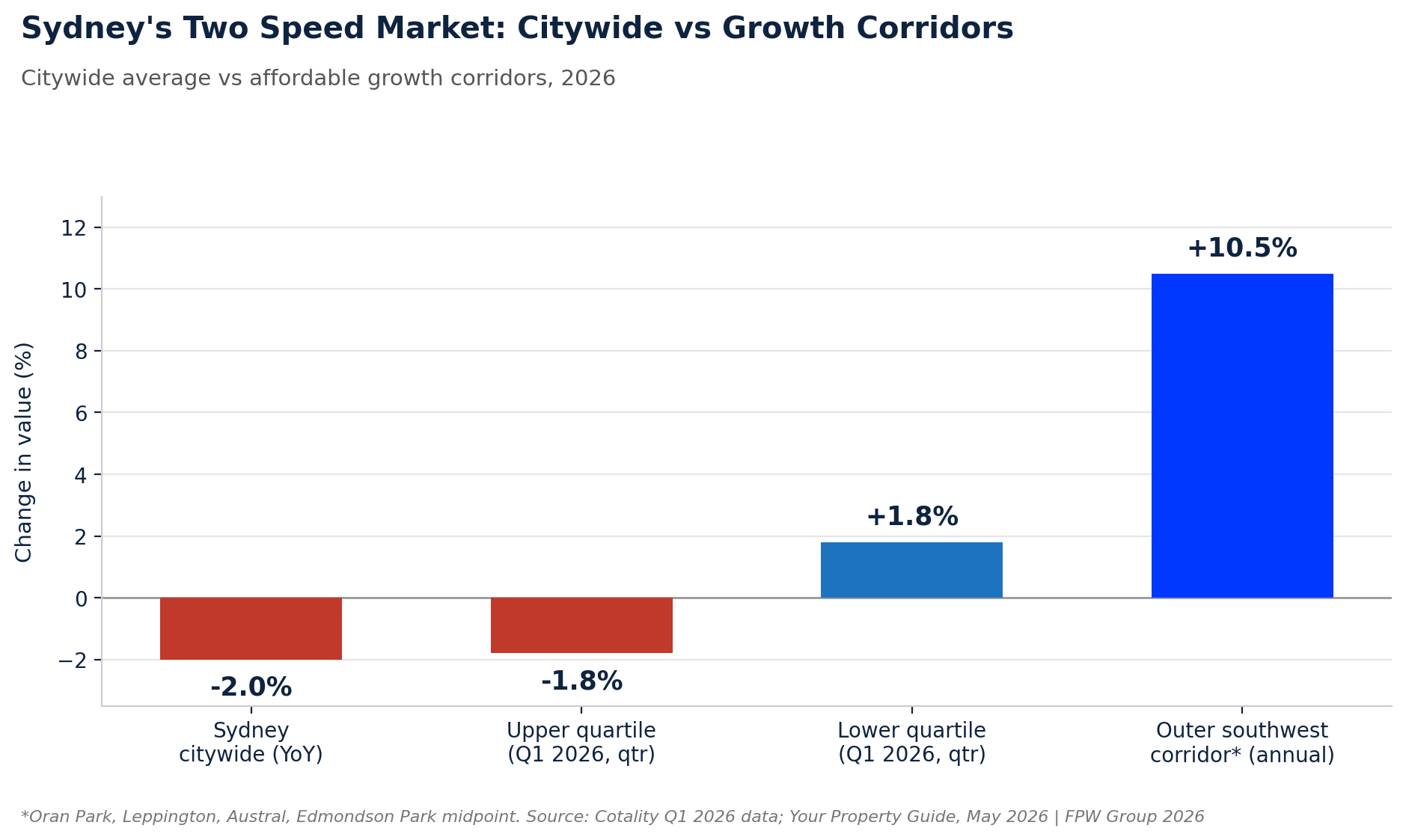
Cotality's Q1 2026 data showed Sydney's lower quartile values rose 1.8% over the quarter while the upper quartile fell 1.8%. That is not a one-off blip. Affordable markets have been outperforming blue chip suburbs across every capital city this cycle, and Sydney has followed the same pattern.
Source: Cotality Q1 2026 data; Your Property Guide, May 2026 | FPW Group 2026
This is the practical argument for looking past the headline figure. Understanding which suburbs have delivered the strongest capital growth historically and reading how to read a suburb's growth signals properly, tells you far more than the citywide median ever will.
Sydney Suburbs Positioned for Growth in 2026
The outer west and southwest corridors combine infrastructure investment, population pressure and constrained supply, a combination that has driven growth in other cities before it. Oran Park, Leppington, Austral and Edmondson Park are recording annual growth of roughly 9 to 12%, well above the citywide trend.
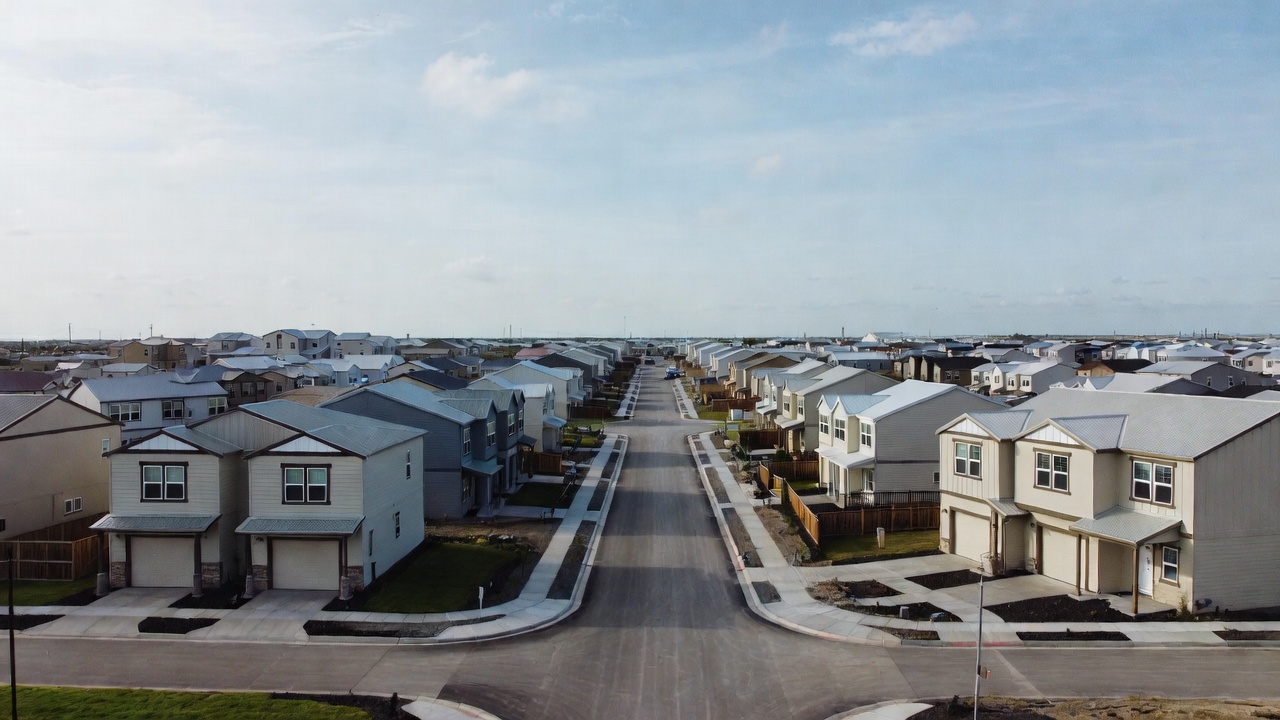
The Western Sydney International Airport opens in October 2026 with Qantas, Jetstar and Air New Zealand confirmed, and the surrounding Aerotropolis is forecast to generate more than 200,000 jobs over time. The M12 Motorway opened toll free in March 2026, and the Sydney Metro Southwest extension is entering its final testing phase, which is turning corridors like Bankstown and Dulwich Hill into higher frequency transit routes for the first time. Choosing between these growth corridors and Sydney's established blue chip suburbs is really a question of how to identify an investment grade suburb in the first place.
For a broader view of how these locations stack up nationally, our Best Places to Invest in Property Australia guide compares Sydney's corridors against opportunities in other capital cities, and our comparison of Sydney vs Melbourne property investment looks at how the two markets are diverging this cycle.
Houses vs Units: Which Could Outperform
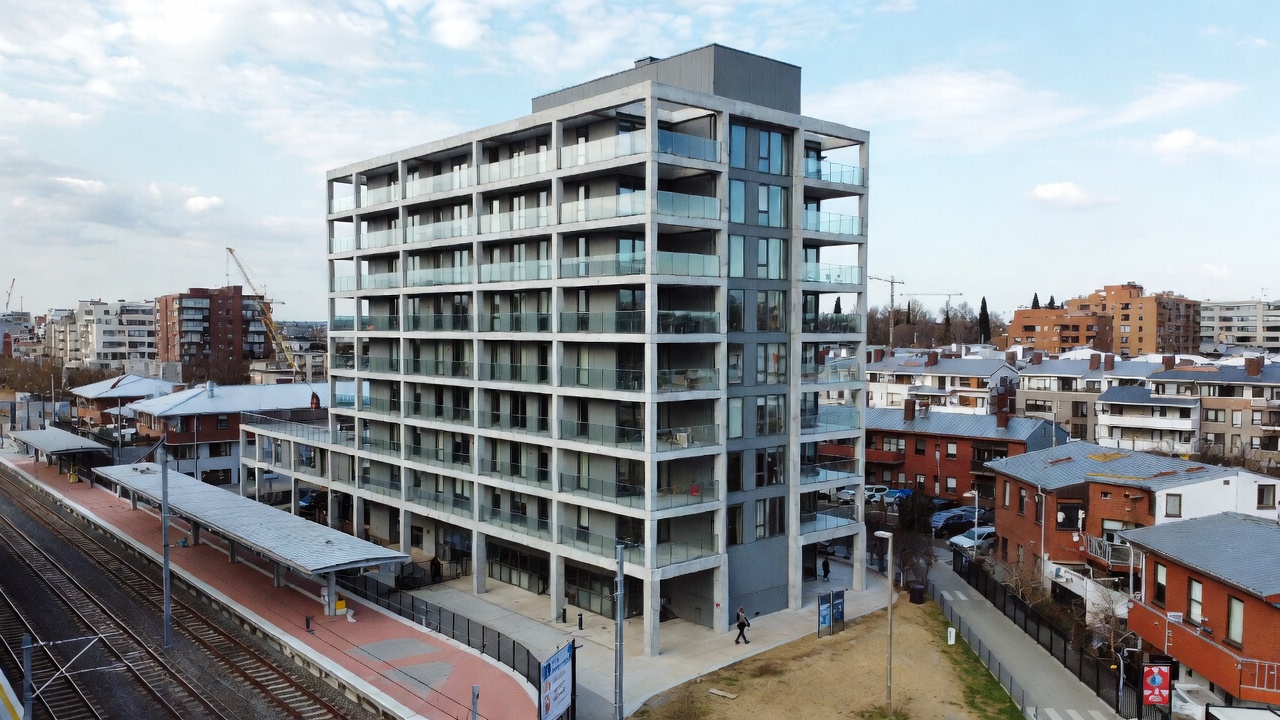
Units are proving more resilient through this correction than houses, both in price and in the pace of decline. Affordability pressure is doing a lot of that work, pushing buyers who are priced out of houses toward units instead, and unit rental yields have strengthened as a result.
That does not make units the automatic choice. Houses still carry the stronger long run land value story in supply constrained corridors, and the two property types are really being driven by different buyers with different budgets and different holding periods.
What Could Make This Forecast Wrong
Every forecast carries assumptions, and this one is no different. A handful of developments could shift the picture meaningfully in either direction over the next twelve months.
Interest rates: A rate cut earlier than the mid-2027 timeline most banks expect would lift borrowing capacity and could pull forward demand faster than current forecasts assume.
Unemployment: A sharper than expected rise in unemployment would weigh on serviceability and confidence, particularly in mortgage belt suburbs already carrying higher debt levels.
Supply surge: Faster progress against the Housing Accord approvals gap, particularly in the growth corridors, could soften the scarcity premium currently supporting outer suburb prices.
Migration slowdown: Any material policy driven slowdown in net overseas migration would ease the population pressure that is currently underpinning both rental and purchase demand.
How to Assess a Sydney Suburb Before You Invest
The citywide forecast is a starting point, not a decision. Before committing to a suburb, it is worth working through the same checklist that separates a genuine growth corridor from a suburb that simply looks cheap and understanding how to read a suburb profile properly is a good place to start.
Recent price growth: Check whether growth is broad based across the suburb or concentrated in a handful of recent sales.
Rental yield and vacancy: Compare yield against Sydney's vacancy rate, currently around 1.6%, since a tight rental market signals genuine demand rather than speculation.
Supply pipeline: Look at approvals and land release in the surrounding area, since oversupply is the fastest way to cap capital growth in a growth corridor.
Infrastructure timeline: Confirm whether transport or employment infrastructure is funded and under construction, not just proposed.
For an understanding of how rental vacancy rates shape suburb selection more broadly, or a practical walkthrough of the purchase process itself, our guide to how to buy an investment property covers the steps in detail.
Final Thoughts
Sydney's citywide numbers describe a market correcting from a January peak, with the banks split on where it lands by December. That figure is real, but it is also an average of two very different markets moving in opposite directions.
The outer west and southwest corridors, supported by genuine infrastructure spend and population growth, are recording growth well above the citywide trend, while premium suburbs absorb the sharper correction. Working out which side of that split a suburb sits on, using price growth, yield, vacancy and supply data rather than the median headline, is what turns a forecast into an investment decision.
Frequently Asked Questions
Recommended Reading
Two pages selected based on what readers of this article are most likely to need next.
Recommended Video
Australia's record migration surge — peaking at over 528,000 people in a single year — created unprecedented housing demand almost overnight. We explain why the government used population growth as a deliberate tool to avoid recession, how that decision flows directly into property prices Australia-wide, and why rents have surged to record highs as a result.