

Property Market Downturn: What Investors Need to Know
A property market downturn does not tell investors to buy, sell or wait. It changes what they need to check before deciding, because falling prices create room to negotiate but also expose weak properties, thin cash flow and too much debt.
Australia is now six months into this downturn, and the falls have reached almost every capital city suburb. The figure that matters most for investors is not the headline price, but how far buyers have pulled back and what that does to negotiating power.
This guide covers what the data shows, how far prices could fall based on published forecasts, and how to judge real value. For the background, see our housing market slowdown analysis.
Is Australia Really in a Property Market Downturn?
What the Latest Property Data Is Showing
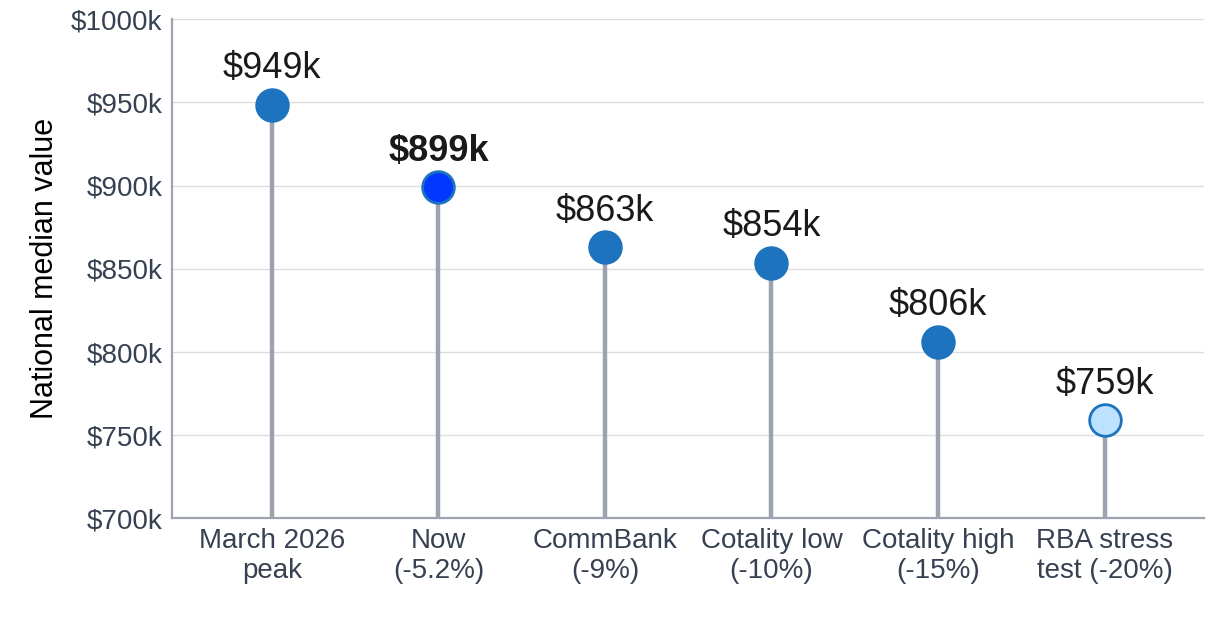
Yes. Cotality's Home Value Index fell 1.1% in September 2026, the sixth monthly fall in a row, leaving national values 5.2% below their March peak.
Over 12 months, national values are now flat. The gains made through late 2025 and early 2026 have been fully wiped out.
How Widespread the Downturn Has Become
This is no longer a Sydney and Melbourne story. Cotality found 97% of capital city suburbs lost value over the three months to September, up from 93% a month earlier.
Monthly Change in Dwelling Values by Capital City, September 2026
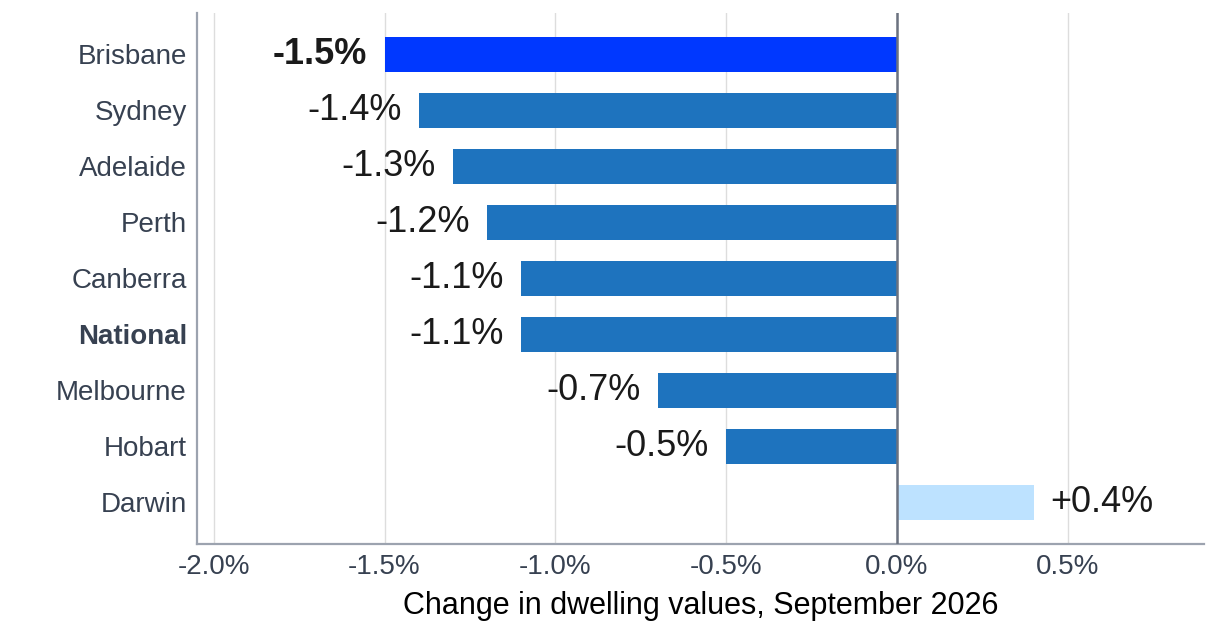
Source: Cotality Home Value Index, September 2026 results
Cotality points to a mix of affordability limits, higher interest rates, high living costs and weak consumer confidence. Our guide to property investment in Australia explains how conditions like these should shape an investor's strategy.
What Is Causing Australia's Property Market Downturn?
Higher Interest Rates Are Reducing Borrowing Power
The Reserve Bank of Australia lifted the cash rate to 4.60% on 29 September 2026, its fourth rise this year. Each rise lowers the loan size lenders will approve, as our guide to borrowing capacity in Australia explains.
Smaller loans mean smaller bids, and that flows straight into prices. Our article on how interest rates affect house prices covers that link in more detail.
Affordability Is Putting Pressure on Demand
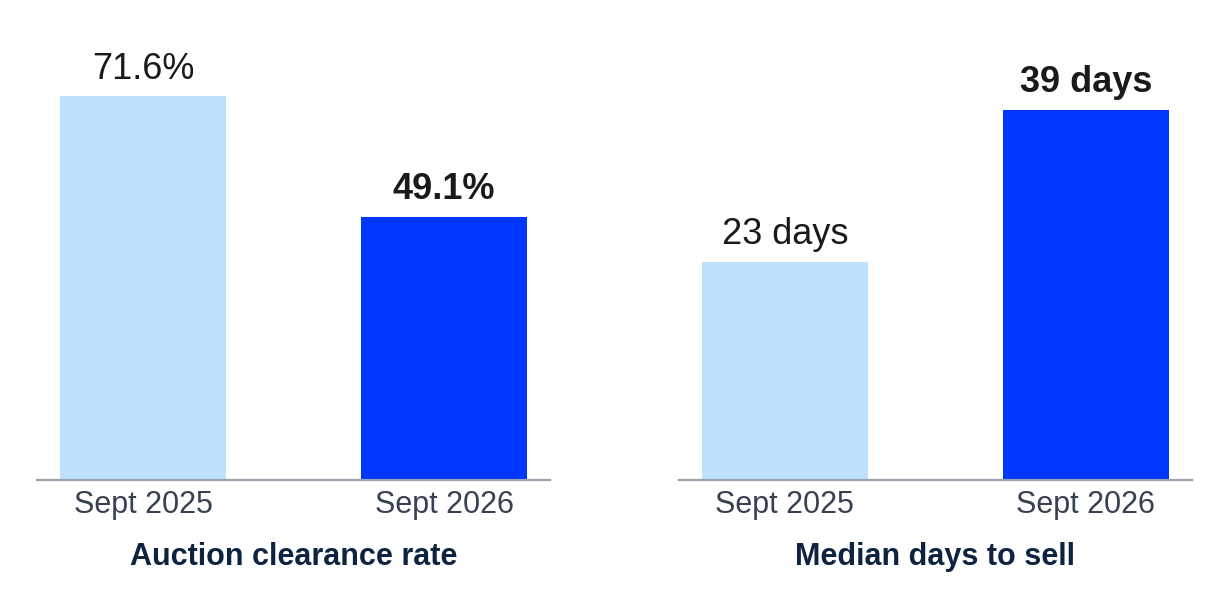
Prices had run well ahead of incomes before this year. With borrowing costs rising at the same time, fewer buyers can bid, and Cotality estimates sales in the three months to September were 19.1% lower than a year earlier.
More Stock Is Shifting the Balance Toward Buyers
Because fewer homes are selling, stock is building up. Capital city inventory is 23.1% higher than a year ago, and the typical home now takes 39 days to sell, up from 23.
Buyer Demand Then and Now: Clearance Rates and Days to Sell
How Bad Could the Property Market Downturn Get?
Why National Averages Can Be Misleading
Each city peaked at a different time. Sydney is 8.6% below its February peak, while Darwin values rose 0.4% in September and regional Western Australia edged higher.
For investors, the national figure is only a starting point. Our ranking of the best capital cities for property investment shows how differently each market is placed.
What Published Downturn Scenarios Mean for the National Median
Why a Downturn Is Not the Same as a Crash
A crash usually involves forced selling, rising defaults and stressed banks. The RBA's October Financial Stability Review estimates fewer than 1% of borrowers are in negative equity, and most hold solid savings buffers.
The RBA's 20% fall is a stress test, not a prediction. Cotality's central case is a gradual drift lower rather than a sharp collapse.
What Does a Property Market Downturn Mean for Investors?
Falling Prices Can Create Room to Negotiate
Longer selling times mean more motivated vendors. Cotality's median vendor discount in the capitals widened to 4.2% over the three months to August, up from 3.0% a year earlier.
But Cheaper Does Not Always Mean Better Value
A property that is 10% cheaper is only a better deal if its rent, demand and resale prospects hold up. Our article on whether buying below market value creates instant equity explains why a discount and real value are not the same thing.
Cash Flow Matters More When Markets Fall
When growth stalls, cash flow carries the investment. National gross yields have risen to 3.85%, the highest since 2019, but higher rates mean most properties still cost more to hold than they earn.
Our guide to balancing yield and growth shows how investors weigh rental income against long term gains.
Unit Gross Rental Yields by Capital City vs the Interest-Cover Line
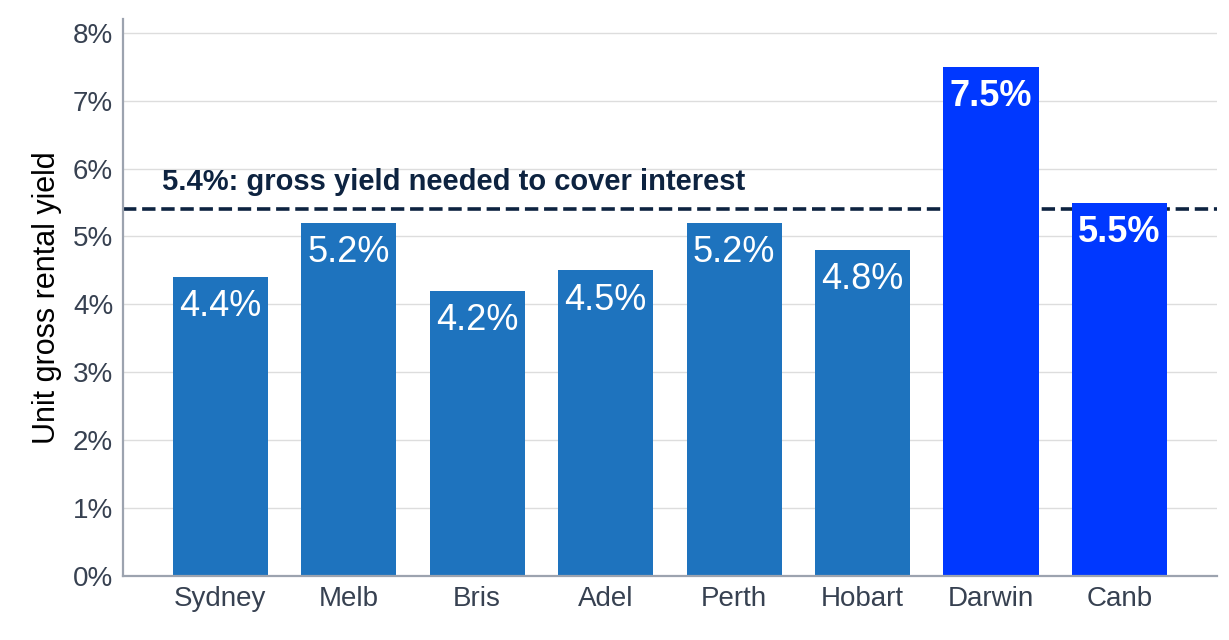
Source: Cotality Home Value Index, September 2026 (yields); threshold is an FPW Group calculation
How to Find Property Opportunities During a Downturn
Look Beyond the Headline Price
Compare the asking price with recent comparable sales, not with last year's peak. A property listed 8% below its peak value may still be priced above what similar homes are selling for today.
Check Whether Rental Demand Is Sustainable
Look at vacancy rates, rent trends and the local job base. Our guide to rental vacancy rates in the best suburbs shows what healthy tenant demand looks like.
Assess Future Supply
New developments can compete for your tenants and buyers. Check approvals and projects nearby, read our overview of housing supply in Australia, and compare locations with our list of the best places to invest in property in Australia.
Stress Test the Numbers
Run the cash flow example above through tougher conditions before you commit:

Should You Buy Property During a Downturn?
When a Downturn Can Create an Opportunity
A downturn can suit investors with stable income, spare cash flow and a long timeframe. Less competition and longer selling times make it easier to buy a quality property on fair terms.
When Waiting May Make More Sense
Waiting is often wiser if you would need to borrow close to your limit, if your job feels uncertain, or if the property would drain your savings. Those are the investors most likely to be forced to sell in a weak market
Why Trying to Pick the Exact Bottom Is Difficult
The bottom only becomes clear months later, after revisions. Our article on why investors sell at the worst possible time shows how timing mistakes happen on both the way down and the way up.
If you want a second view on timing, independent investment property advice can test a purchase against your full financial position.
The Biggest Risks of Investing During a Property Downturn
Buying because it looks cheap. A falling price can reflect real weakness in the property or the area.
Overestimating future growth. Recovery can take longer than expected, so do not rely on quick gains.
Ignoring negative cash flow. A shortfall that feels small today adds up over several slow years.
Taking on too much debt. Our article on whether maximum borrowing capacity builds wealth or risk explains why the biggest loan is rarely the safest.
Concentrating in one property or market. If everything you own is in one falling market, there is no cushion.
Many of these risks show up as warning signs before you sign. Our list of red flags when buying an investment property covers what to look for.
What Should Property Investors Watch Next?
These indicators will show whether the downturn is deepening or starting to level out. Our guide to auction clearance rates in Australia explains how to read the weekly results.
A Property Market Downturn Does Not Make Every Property a Bargain
This property market downturn is broad, but so far it looks like a steady loss of buyers rather than a forced selling crisis. Published forecasts suggest total falls of around 9% to 15%, with big differences between cities.
For investors, the opportunity is real but narrow. Focus on the numbers, not the headline, and buy only a property that still works if rates rise, rents soften or growth takes longer.
Treat the downturn as a risk check, not a prediction game. You do not need to call the bottom to make a sound decision

Frequently Asked Questions
Recommended Reading
Two pages selected based on what readers of this article are most likely to need next.
Recommended Video
Australia's record migration surge — peaking at over 528,000 people in a single year — created unprecedented housing demand almost overnight. We explain why the government used population growth as a deliberate tool to avoid recession, how that decision flows directly into property prices Australia-wide, and why rents have surged to record highs as a result.