

Is Your Retirement Investment Property Built to Last 30 Years?
Most property portfolios in Australia are built for capital growth and never converted into income, and that is the main reason they struggle as a retirement investment. If you own an investment property in Australia and plan to live on it one day, the number that matters is not what the portfolio is worth. It is how much rent is left after costs each year, and whether that amount keeps up with the cost of living.
Treasury has just pushed the retirement horizon out again, while the benchmark most Australians plan against still assumes a much shorter life. The gap between those two numbers is where portfolios quietly run out, and it is wider than most investors expect.
Why the Retirement Horizon Keeps Moving Further Out
Treasury released its 2026 Intergenerational Report in September, and the headline finding for investors is not about tax. It is about time.
The report projects life expectancy at birth reaching 89.5 years for women and 86.1 years for men by 2065-66. The number of Australians aged 85 and over is projected to triple over the same period, from 625,000 now to 1.9 million.
Work patterns are shifting with it. Workforce participation for Australians aged 55 and over has risen from 22% in 1986 to 37% in 2026, which tells you people are already adjusting to a longer life, mostly by staying at work.
For investors the consequence is simple. Every extra year of life is another year the portfolio has to pay you, at prices that will have risen since the year you stopped working.
What a 30 Year Retirement Actually Costs
The most widely used benchmark in Australia is the ASFA Retirement Standard. For the June quarter of 2026 it puts a comfortable retirement at $56,166 a year for a single person and $78,998 for a couple, assuming they own their home outright.
ASFA also publishes the lump sum behind those budgets: $630,000 for a single and $730,000 for a couple at 67. Both figures assume the retiree draws down all their capital and lives to roughly 85.
The gap between what people have and what the benchmark requires
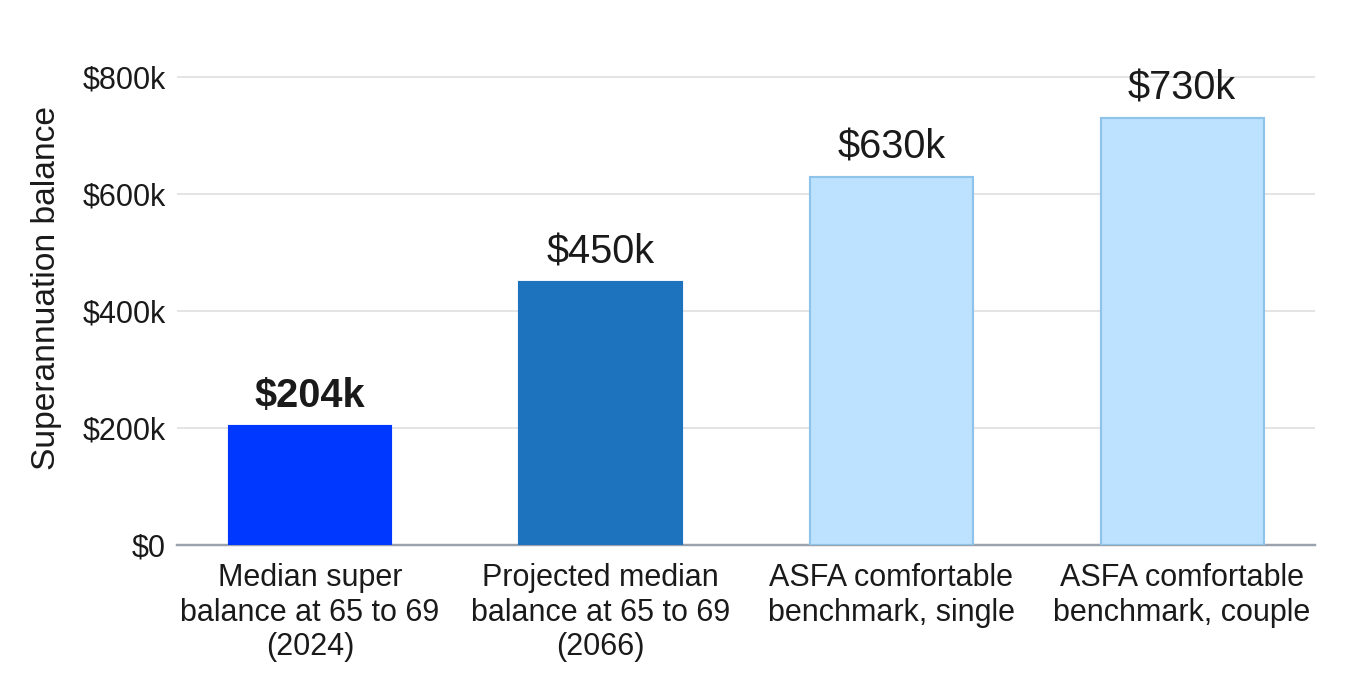
That gap is the whole reason property sits in so many retirement plans. It is also why the question of how much you need to retire in Australia rarely has a super only answer.
Why a fixed income falls behind
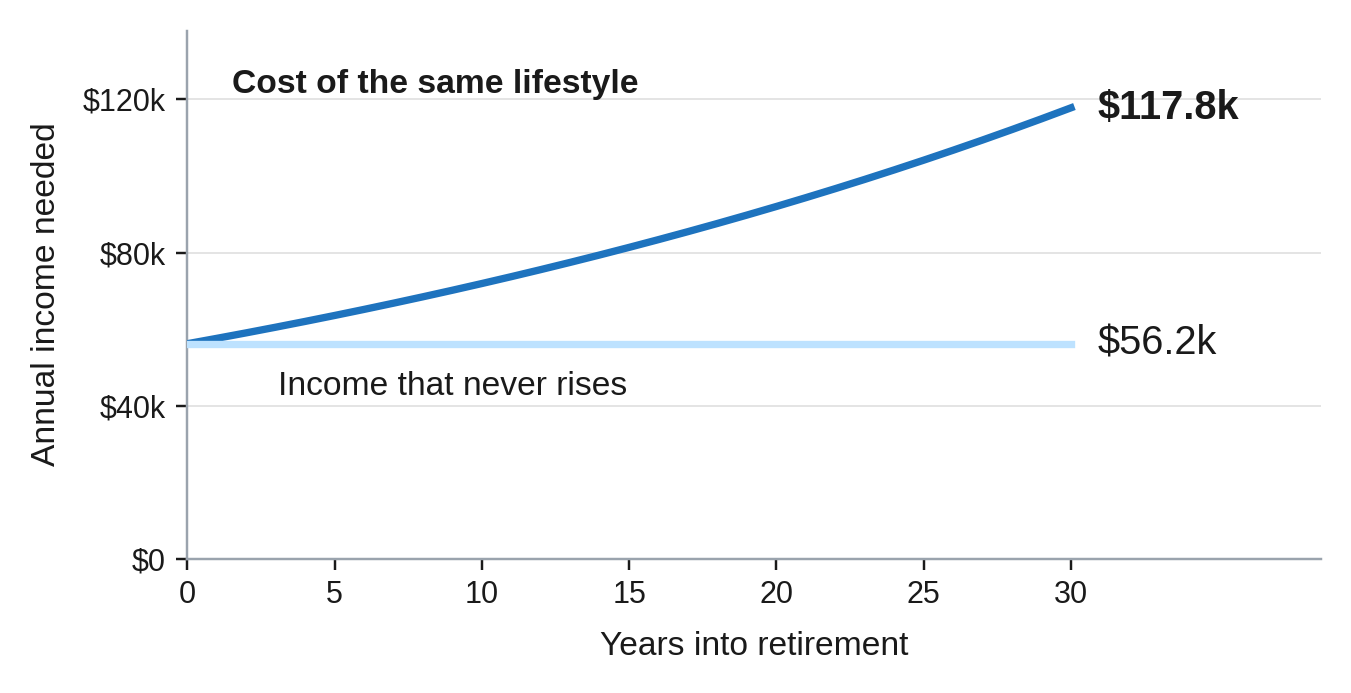
This is the part most plans handle badly. A drawdown strategy that looks sustainable in year one can be short by year 20, and the tax settings changed in the 2026 federal budget have shifted the after tax picture for investors as well.

How an Investment Property Produces Retirement Income
Rent is the mechanism, and yield is the starting point. National gross rental yields reached 3.79% in August 2026, the highest level since September 2019, as rents rose and values fell.
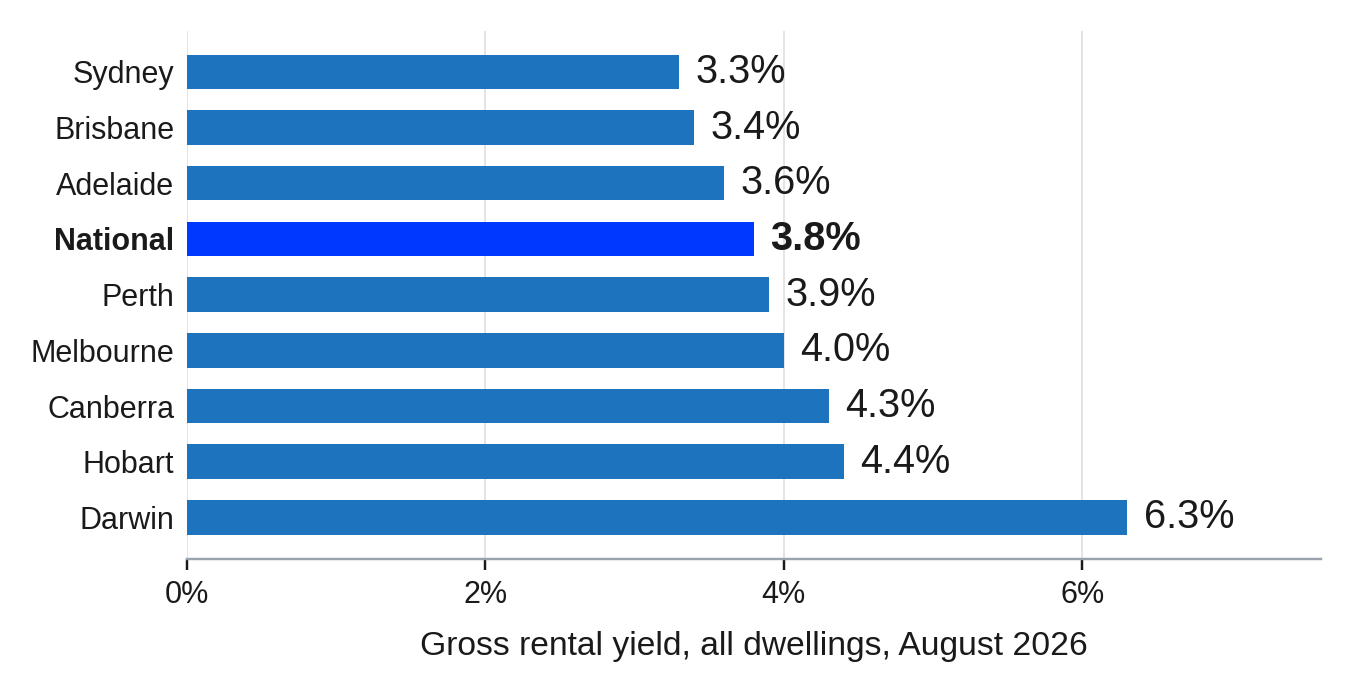
Gross yield is not income, though, and the difference is larger than most investors allow for.
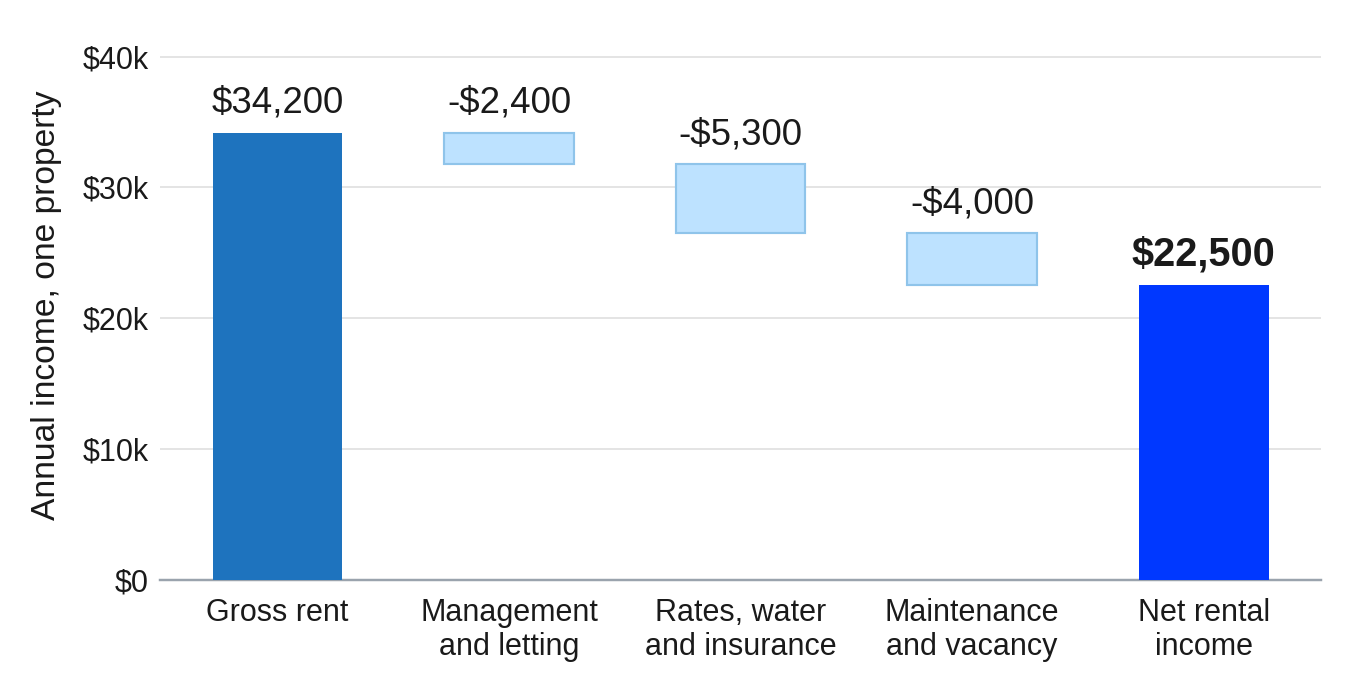
Run that through to the answer people actually want. Two to three unencumbered properties on those numbers cover a single person's comfortable budget, and that is before any loan repayments are considered.
That example is the reason debt level matters more than portfolio size in the income phase. It is also why the balance between yield and capital growth needs to change as you get closer to the date you stop working.

Growth Portfolio or Income Portfolio: Which One Do You Own?
A growth portfolio is built to rise in value. It usually carries high debt, accepts low yields, and depends on the next revaluation to do the work. That is a reasonable design while you have a salary covering any shortfall.
An income portfolio is built to pay you. Debt is low or gone, yields are higher, vacancy risk is spread across more than one market, and the properties are the kind that rent quickly in any season.
When to start the shift
Most investors begin five to ten years out from the date they want to stop working. Leave it later and the two levers that matter, paying down debt and replacing a weak asset, both get harder.
Sometimes the answer is to sell one property and clear the debt on two others. Knowing when to sell an investment property is a bigger part of retirement planning than most investors expect, because the sale is rarely about the market. It is about what the remaining portfolio can produce without it.
How to stress test what you hold
Three tests do most of the work. Take current gross rent, subtract real holding costs, then subtract interest at a rate two percentage points above what you pay now.
Then check how long each property would take to re let. Low vacancy markets protect income, which is why rental vacancy rates across suburbs matter more in the income phase than the growth phase. Finally, ask what happens if one property sits empty for a month while rates are higher.
What to Do If Your Portfolio Is Not Retirement Ready
Start with an audit rather than a purchase. List each property, its current value, its loan balance, its gross rent and its real holding costs, then work out the net figure per property.
That single page usually shows one asset carrying the others. The fix is rarely to sell everything, and it is rarely to buy another property in a hurry either.
Repositioning without a full sale usually means directing spare cash flow at the weakest loan first, restructuring the debt, or replacing one underperforming asset with a higher yielding one. A mortgage broker can tell you what your current structure allows before you commit to any of it, and rental income does affect borrowing capacity if you still plan to add to the portfolio.
Tax settings belong in the same conversation. A property that made sense while it was negatively geared may need a different role in the income phase, which is the trade off covered in negative gearing as a retirement strategy.
Timing matters too. Investors who wait until the year they retire lose the two things that make repositioning work, which are time and the borrowing power that comes with an income, a pattern that shows up repeatedly among common property investment mistakes.
Final Thoughts
Retirement in Australia is now a 25 to 30 year financial commitment, and Treasury's latest projections push that further out rather than pulling it back. The ASFA benchmark most people plan against is priced for a shorter life than many of us will have.
Property can carry a large share of that load. Rents rose 5.7% in the year to August 2026 and gross yields reached a six year high, so the income side of the asset is stronger than it has been for some time.
The risk is structural rather than market related. A portfolio built entirely for capital growth, carrying the debt that usually comes with it, produces very little spendable income at the exact moment you need it. Converting it takes years, not months, which is why the honest audit is worth doing now rather than in the year you plan to finish work.
Frequently Asked Questions

Recommended Reading
Two pages selected based on what readers of this article are most likely to need next.
Recommended Video
If you’re trying to understand how to use equity, improve borrowing power, structure your loans correctly, or build a long-term property portfolio, this video gives you a step-by-step roadmap.